The convection oven just died—again. Two hundred students in line. Last month the walk-in cooler, two weeks ago the dishwasher. Kitchen equipment failures in schools aren't just inconvenient—they're catastrophic, costing thousands in emergency repairs and spoiled food. But these aren't random failures. They're preventable patterns discovered through root cause analysis. Schools using RCA eliminate 60-80% of repeat failures and cut emergency repair costs by 45%. Schedule a demo to see RCA tracking in action.
60-80%
Repeat Failures Eliminated
45%
Emergency Cost Reduction
3-6 Yrs
Equipment Life Extension
Common Kitchen Equipment Failures
School kitchens serve 500-5,000 meals daily under extreme conditions. Most facilities invest $150K-$500K in equipment but lack systematic failure analysis—staff blame "old equipment," replace parts, and wait for the next breakdown. This reactive cycle costs 2-3× more than proactive root cause analysis. Start tracking failures systematically.
Refrigeration Failures
$2,000-$8,000 in lost food per incident
Compressor wear, dirty coils, door seal damage, thermostat drift
Oven & Range Malfunctions
200-500 students affected per event
Heating element burnout, ignition problems, temperature sensor failure
Dishwasher Breakdowns
Sanitation crisis, manual washing backup
Spray arm clogs, pump failures, heating element issues, water quality
Steam Tables & Processors
Food safety violations, prep delays
Thermostat inaccuracy, motor wear, low water levels, electrical issues
Based on typical 500-student facility with $200K equipment investment
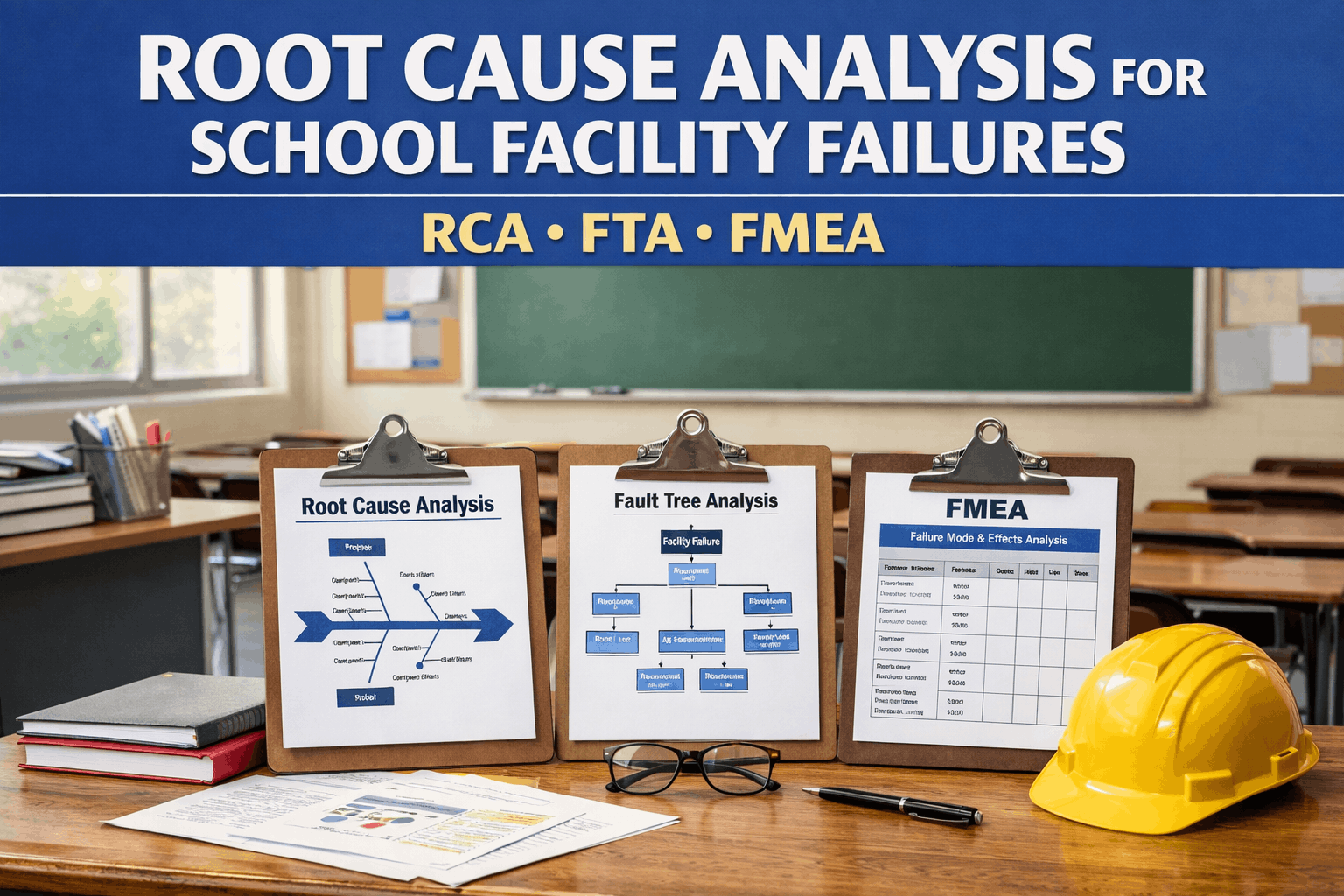
The Six-Step RCA Framework
This systematic methodology reveals genuine failure drivers. Facilities using it reduce repeat failures 60-80% within the first year. See how OXmaint simplifies each step.
1
Incident Documentation
Record failure details immediately: time, symptoms, conditions, recent maintenance. Photograph failed components. Interview staff while memories are fresh.
2
Symptom vs. Mechanism Analysis
Distinguish symptoms from failure mechanisms. The oven won't heat (symptom) vs. heating element failed (mechanism) vs. mineral buildup restricted flow (cause).
3
Systematic Troubleshooting
Eliminate potential causes using manufacturer guides, inspections, and parameter measurements. This identifies what failed—RCA identifies why.
4
Root Cause Identification (5 Whys)
Ask "why" repeatedly until reaching the fundamental cause. Example: Element burned → excessive current → fan failed → belt broke → no PM schedule for fan belts.
5
Corrective Action Development
Design specific, measurable interventions addressing root causes. Assign responsibility, set deadlines, prioritize by impact and feasibility.
6
Verification & Monitoring
Track whether corrective actions prevent recurrence. Monitor failure rates monthly. Adjust if failures continue and apply insights across similar equipment.
Stop Replacing Parts. Start Finding Root Causes.
OXmaint gives your team the tools to document failures, run 5 Whys analysis, and track corrective actions—so the same breakdown never happens twice.
Case Study: University Dining Hall
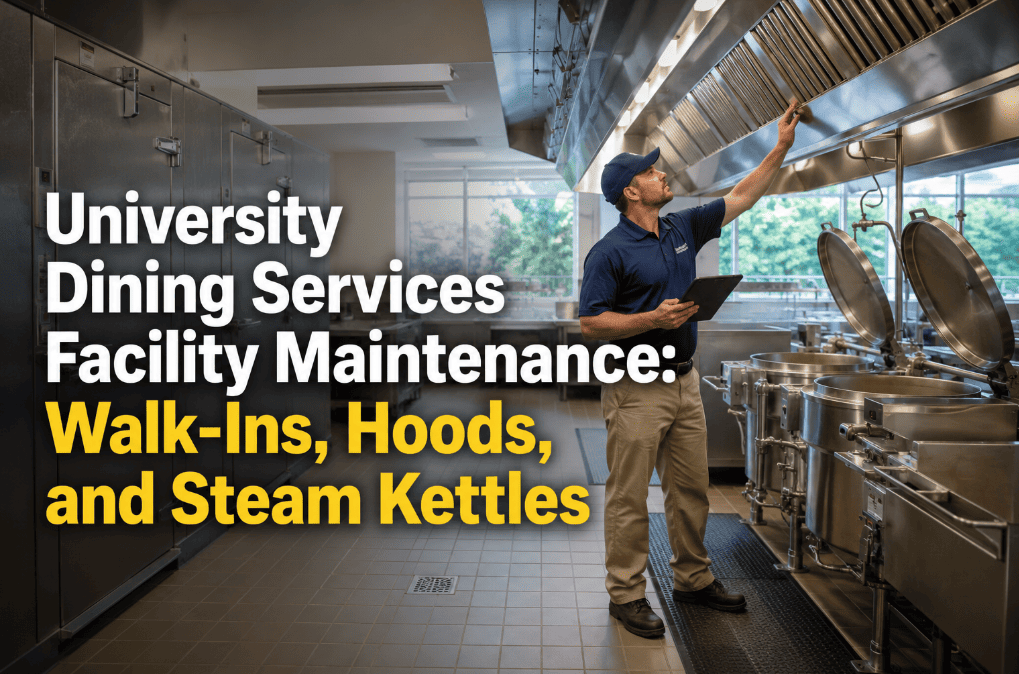
A university dining hall serving 2,400 students had three walk-in cooler failures in eight months—$22,000 in repairs plus $11,500 in spoiled food.
RCA Investigation
Finding 1: Condenser coils coated with grease and dust—restricting airflow ~70%
Finding 2: Compressor forced to run at max load due to reduced efficiency
Finding 3: Door gasket worn—allowing warm air infiltration
Root Cause: No preventive maintenance protocol—coils never cleaned, gaskets never inspected
Top Root Causes in School Kitchen Failures
Analysis of 500+ educational facility failures reveals clear patterns:
Inadequate Preventive Maintenance
38% of failures
Missing PM schedules. Equipment serviced only at breakdown. No CMMS tracking.
Operator Error & Training Gaps
26% of failures
Improper operation, ignored warnings, staff turnover creating knowledge gaps.
Deferred Repairs & Aging Equipment
18% of failures
Budget constraints delaying fixes. Small issues escalating to major failures.
Design, Installation & Parts Issues
18% of failures
Inadequate ventilation, poor water quality, non-OEM parts, insufficient electrical supply.
Implementing RCA in Your Facility
You don't need expensive consultants. Build effective RCA capability with these four steps. Get started with OXmaint's RCA tools.
1
Set Up Failure Reporting
Create a simple process for staff to report issues immediately—breakdowns, unusual sounds, warning lights. Centralize reports in a CMMS to spot patterns.
2
Define RCA Trigger Criteria
Not every hiccup needs full RCA. Focus on: repeat failures (twice in 6 months), repairs over $2,000, safety incidents, and critical service equipment.
3
Train a 2-4 Person Investigation Team
Designate facilities manager, lead kitchen supervisor, and maintenance tech. Provide 4-8 hours of RCA methodology training with standardized investigation templates.
4
Track Actions & Measure Results
Use CMMS to assign corrective actions, set deadlines, and track completion. Monitor repeat failure rates and emergency costs monthly. Share wins with administration.
70% of Reactive Repairs Fail Again Within 18 Months
Break the cycle. Document failures, run 5 Whys analysis, assign corrective actions, and track repeat failure rates—all in one platform built for school facilities.
The ROI of Root Cause Analysis
Financial Impact: 500-Student Facility
Before RCA
Emergency repairs: $48,000
Food spoilage: $12,000
Service disruptions: 42/year
Repeat failure rate: 68%
After RCA
Maintenance costs: $26,000
Food spoilage: $2,400
Service disruptions: 9/year
Repeat failure rate: 12%
Annual Savings
$31,600
420% ROI in first year (assuming $7,500 setup cost)
Frequently Asked Questions
How long does a typical RCA investigation take?
Simple investigations take 2-4 hours: documentation, symptom analysis, 5 Whys, and corrective action planning. Complex multi-system failures may need 8-12 hours spread over several days. One thorough RCA preventing a $15,000 repeat failure delivers 50× return on investigation time.
Do we need expensive consultants for effective RCA?
No. The 5 Whys methodology is intentionally simple. Requirements: 4-8 hours of training for your investigation team, standardized templates, a CMMS to track failures and actions, and management commitment to implementing recommendations. Start with high-cost or repeat failures and build skills gradually.
What if RCA identifies problems we can't afford to fix?
Common situation. Documented root causes support budget requests with concrete justification. Implement tiered actions: immediate low-cost measures now, medium-term fixes next quarter, capital items when funding approved. Even partial corrective actions dramatically reduce failure frequency.
Should we conduct RCA on every failure?
No—focus on repeat failures (twice in 6-12 months), repairs over $2,000, safety incidents, and critical service equipment. Most facilities conduct 6-12 formal investigations annually, targeting equipment responsible for 70-80% of maintenance costs. Routine first-time minor failures need standard corrective maintenance only.
That Cooler Failed Three Times. RCA Made Sure There Wasn't a Fourth.
Every repeat failure is a root cause waiting to be found. OXmaint helps school facilities document, investigate, and permanently solve the breakdowns that drain budgets and disrupt meal service.