Predictive Lighting Maintenance for Campus Energy Savings
By Jamie lanister on April 13, 2026
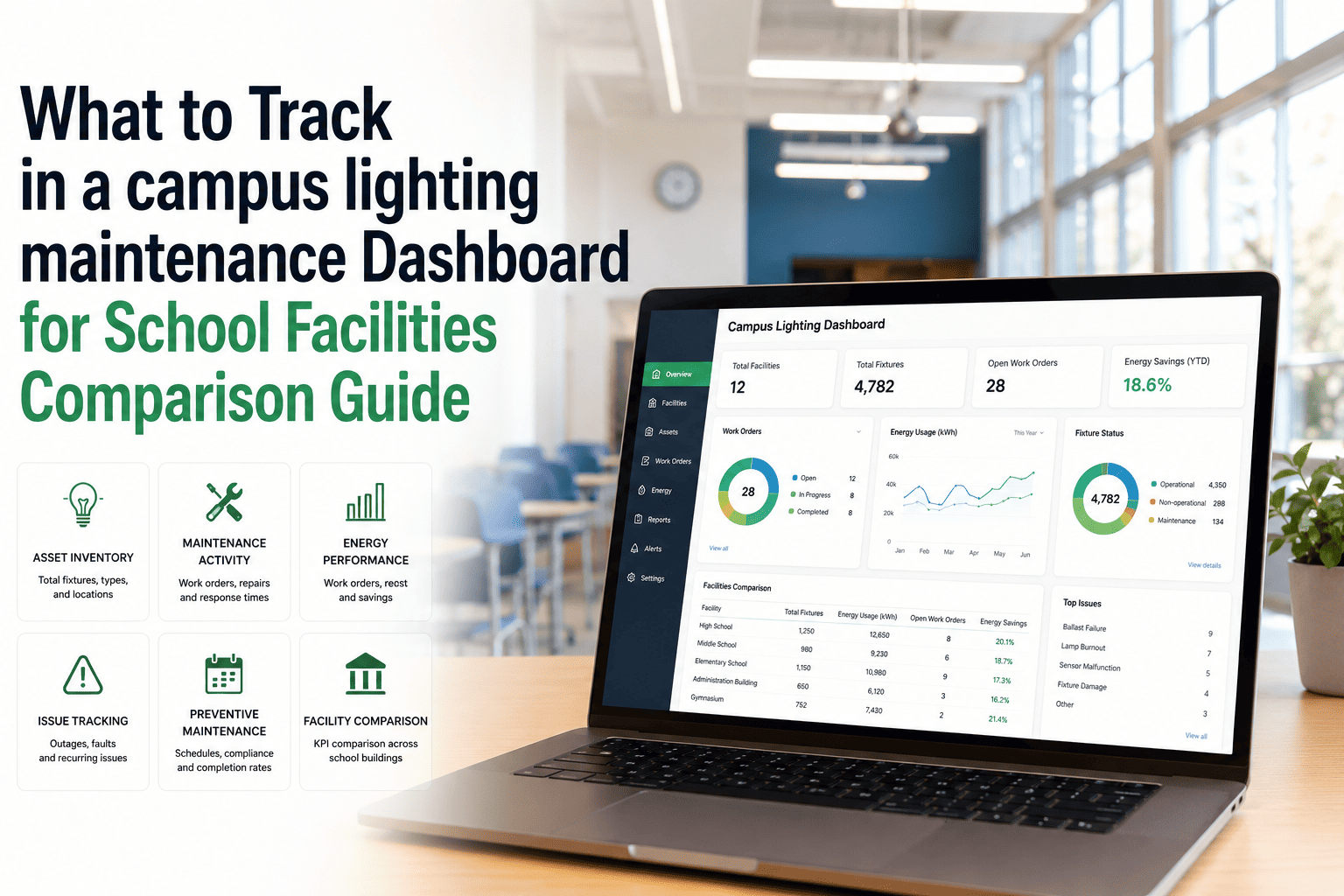
A facilities manager at a large community college campus in Michigan replaced every fluorescent fixture with LED in 2019 — a $1.4 million capital project that the board approved on the basis of a 5-year energy payback projection. By 2023, the LED system had been in place for four years, but the campus was not capturing the full energy savings the project had promised. The problem was not the fixtures — it was the maintenance model. LED lights were failing silently in rarely-visited spaces, occupancy sensors had drifted out of calibration, and nobody had a systematic record of which zones had been dimmed, which sensors were failing, and which fixtures had already exceeded their expected 50,000-hour operating threshold. The campus was running a $1.4 million smart lighting system the same way it had run fluorescent tubes — wait for a complaint, dispatch a technician, replace the bulb. OxMaint predictive lighting CMMS changes the maintenance model to match the technology — monitoring runtime hours, occupancy sensor performance, and energy consumption per zone to predict failures and flag efficiency losses before they compound. Book a demo to see how Michigan campuses recovered full LED energy savings through predictive maintenance.
Predictive Lighting Maintenance — Protect Your LED Investment, Capture Full Energy Savings
Runtime hour tracking · Sensor calibration PM · Zone energy monitoring · Failure prediction — all in OxMaint
LED capital investment at one Michigan college — whose full energy savings were not being captured due to reactive maintenance model
50K hr
LED design lifespan — but actual campus failure rate accelerates past 40,000 hours without predictive maintenance tracking
23%
Additional energy savings captured when predictive lighting maintenance replaces reactive complaint-based replacement
The Campus Lighting Energy Savings Cascade — Where Predictive Maintenance Captures Value
Campus lighting energy savings come from four layers that compound on each other. Most campuses capture only the first two — the fixture efficiency gain from LED replacement — and miss the occupancy, dimming, and predictive layers that add 15–25% on top. OxMaint monitors all four layers and alerts when any layer is leaking energy savings.
Campus Lighting Energy Savings — Four-Layer Cascade
1
LED Fixture Efficiency
Base savings from replacing fluorescent/HID with LED — 40–60% energy reduction per fixture
40–60% savings
2
Occupancy Sensor Control
Lights off in unoccupied spaces — sensor calibration PM required to maintain accuracy
+12% savings
3
Daylight Harvesting
Photosensor-based dimming near windows — sensor drift causes this to fail silently
+8% savings
4
Predictive Replacement
Replacing fixtures at 40,000 hours prevents lumen depreciation — maintaining full efficiency vs degraded output
+3–5% savings
Total potential savings captured with OxMaint predictive maintenance
63–85% vs baseline
Most campuses capture only 40–60% — missing layers 2–4 due to reactive maintenance model
Predictive Lighting — OxMaint
Your LED System Was Designed to Save 65–85%. Are You Capturing It, or Just Waiting for Complaints?
Campus Lighting PM Schedule — What Needs Maintenance and When
LED lighting is not maintenance-free — it is low-maintenance compared to fluorescent, but the maintenance it does require is more technically specific. Occupancy sensors drift, photocell calibration shifts, driver electronics degrade, and fixture lenses accumulate contamination that reduces lumen output without triggering any visible complaint. OxMaint auto-schedules all four on runtime hours and calendar interval.
Campus LED Lighting PM — Three Maintenance Categories
Fixture PM
Lens cleaning — lumen output check
Driver temperature check — heat sign
Runtime hours logged — 40K replace flag
Emergency backup battery test — annual
Sensor PM
Occupancy sensor calibration — semi-annual
Photocell daylight sensor — drift check
Vacancy sensor timeout setting — verify
Sensor lens cleaning — dust accumulation
Controls PM
BAS lighting schedule — verify per zone
Dimming controller firmware update
Zone energy consumption — deviation alert
Holiday schedule update — semi-annual
Lighting Maintenance Outcomes — Reactive vs Predictive
The financial case for predictive lighting maintenance is not just energy savings — it is the total cost of ownership difference between replacing fixtures at 40,000 hours planned vs 50,000+ hours degraded. Degraded LEDs consume the same power while producing 20–30% less light — the worst of both worlds. OxMaint tracks runtime hours per fixture and plans replacement before lumen depreciation erodes the energy investment.
Lighting Function
Reactive Model
OxMaint Predictive
Annual Saving
Occupancy sensor accuracy
Drifts undetected — lights on always
Calibrated semi-annually — 95% accurate
12% energy waste eliminated
Fixture lumen output
Degrades to 70% — same power draw
Replaced at 40K hrs — full output
Equal energy — 30% more light
Daylight harvesting
Photosensor drift — no dimming
Annual recalibration — 8% saving
$18K/year recovered on 50-building campus
Zone energy anomaly
Undetected — shows in utility bill
IoT alert — flagged in 24hr
Weeks of waste prevented per event
Fixture group replacement
Spot replacement — inefficient schedule
Group replacement at threshold — efficient
40% lower labour cost per replacement
"We spent $1.4 million on LED and thought we were done. OxMaint showed us our occupancy sensors had drifted on 40% of zones — lights were running full brightness in empty classrooms from 6 PM until 10 PM every night. We recovered $31,000 per year just from recalibrating sensors. That is not a technology problem — it is a maintenance problem."
— Director of Facilities, Community College · Detroit, Michigan · 28 buildings · 420,000 sq ft
Campus Lighting Maintenance by Space Type
Different campus spaces have different lighting maintenance requirements — classrooms have occupancy sensors and daylight harvesting; corridors have motion detection; labs have task lighting requirements; athletic facilities have high-bay fixtures with different replacement cycles. OxMaint configures separate PM schedules per space type.
Classrooms
Occupancy + Daylight
Occupancy sensor calibration — semi-annual
Daylight photocell — annual recalibration
Dimming range check — 10–100% verified
Whiteboard/task lighting lux level
Runtime hours per zone — OxMaint tracked
Corridors & Common Areas
Motion + Continuous
Motion sensor timeout — verify 15 min
Emergency exit light battery test
After-hours dim level — energy check
High-traffic lens cleaning — quarterly
Holiday schedule — semester breaks
Labs & Specialized
Task Lighting Standard
Minimum 500 lux at workbench — tested
UV sterilization lamp hours tracked
Flicker rate check — microscopy rooms
Emergency lighting — circuit tested
Clean room fixture integrity — annual
Athletic & Gymnasium
High-Bay Fixtures
High-bay LED 25K hr replacement cycle
Sporting event full-output test
Lighting control panel inspection
Glare control lens inspection
Athletic commission lux compliance
Technology: How OxMaint Integrates Smart Lighting for Predictive Maintenance
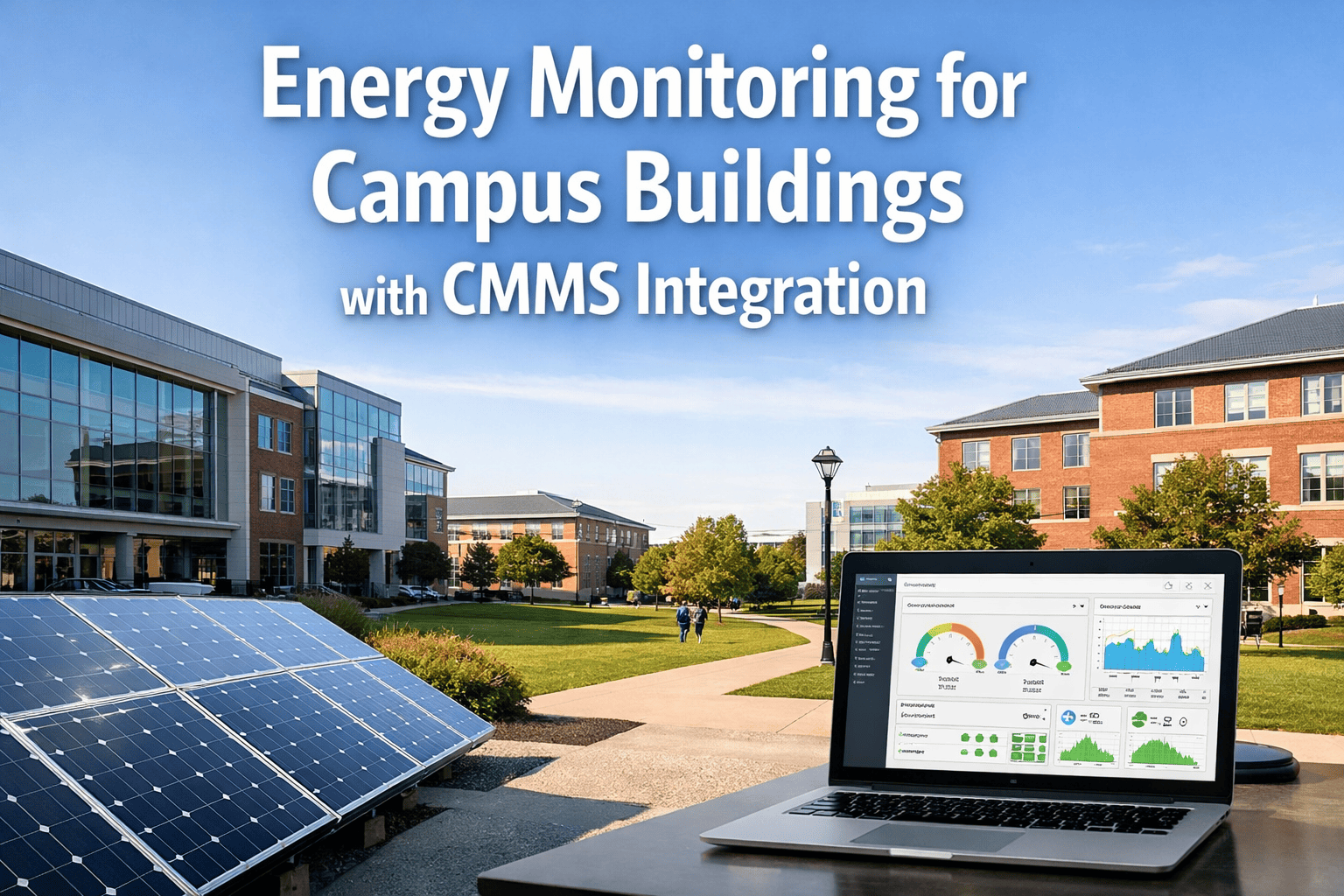
OxMaint connects to smart lighting management systems, building automation, and IoT energy meters — turning the data your lighting system already generates into predictive maintenance triggers. The integration captures the energy savings your LED system was designed to deliver.
IoT Energy Meters — Zone Consumption Anomaly Detection
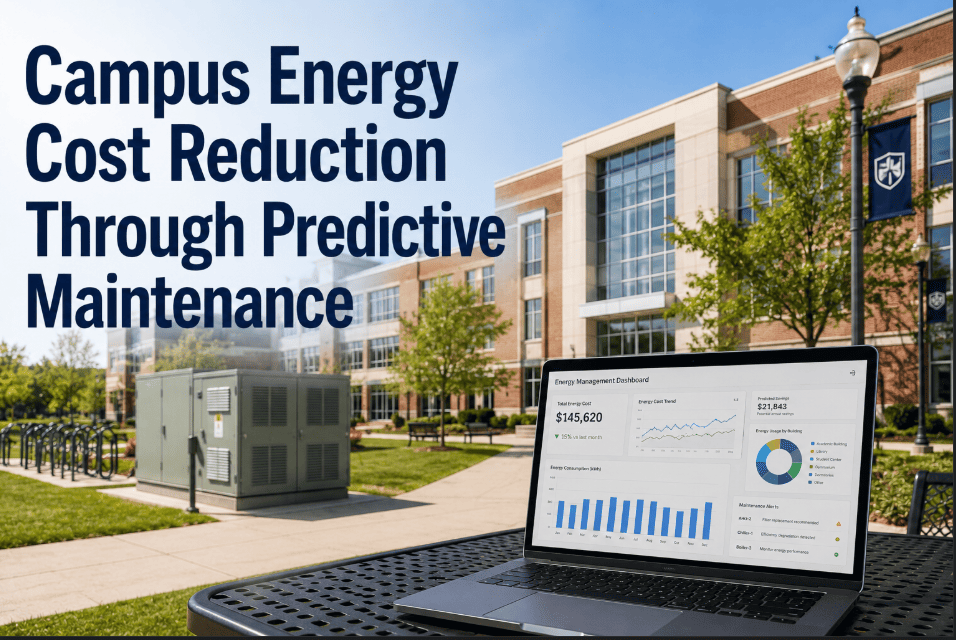
OxMaint connects to campus energy sub-metering systems — monitoring electricity consumption per lighting zone in real time. When a zone's consumption deviates more than 15% from its expected baseline, OxMaint creates a maintenance work order automatically — flagging a failed sensor, a malfunctioning dimmer, or a fixture running continuously when it should be off. Energy waste is detected in hours, not on the monthly utility bill.
BAS Integration — Lighting Schedule Compliance Monitoring
OxMaint integrates with building automation systems — Siemens Desigo, Johnson Controls Metasys, and Schneider Electric EcoStruxure — to monitor whether lighting schedules are operating as configured. When a zone's actual operating hours deviate from the configured schedule (holiday mode left on, summer schedule not applied), OxMaint alerts the facilities team before a full semester of energy waste accumulates.
AI Digital Twin — Fixture Runtime and Replacement Forecasting
OxMaint AI models operating hours per fixture group against the LED design life curve — calculating when each zone will reach the 40,000-hour threshold where lumen depreciation begins to erode energy efficiency. Group replacement work orders are generated 3 months before the threshold — allowing the facilities team to batch replace entire zones during summer break rather than spot-replacing single fixtures reactively.
AI Camera Vision — Lumen Output and Fixture Condition Assessment
OxMaint technicians use mobile camera inspection to assess fixture lumen output using the app's lux measurement integration — comparing actual output to the fixture's design specification. AI camera vision identifies lens contamination, yellowing, and physical damage from inspection photos. Fixtures below 70% of design output are flagged for replacement before occupants notice reduced light levels.
Energy Cost Dashboard — LED ROI Tracking vs Original Projection
OxMaint tracks actual lighting energy consumption versus the baseline from before LED replacement — calculating the real ROI of the capital investment in real time. When predictive maintenance recovers lost savings (sensor recalibration, failed dimmer repair, holiday schedule correction), the energy cost impact is quantified and visible on the facilities dashboard — giving facilities directors the data to justify ongoing maintenance investment to CFOs and boards.
OxMaint's energy consumption data and maintenance records provide the documentation required for utility company lighting maintenance rebate programs — available from DTE Energy, ComEd, Pacific Gas & Electric, and 40+ US utility providers. Campuses capturing predictive maintenance rebates recover an additional $8,000–$22,000 annually on top of direct energy savings, further reducing the LED capital payback period.
23%
Additional energy savings captured with predictive vs reactive lighting maintenance
40%
Lower labour cost per replacement — group vs spot reactive replacement
$31K
Annual savings recovered from sensor recalibration alone — one 28-building campus
20%
Shorter LED capital payback period with predictive maintenance and utility rebates
Frequently Asked Questions
OxMaint integrates with smart lighting management systems — Lutron, Leviton, and Acuity nLight — to read actual operating hours per fixture group. For campuses without smart systems, OxMaint calculates estimated runtime from operating schedule data and meter readings. Fixtures approaching the 40,000-hour threshold receive a predictive replacement work order automatically.
Yes — OxMaint monitors zone energy consumption against expected baselines. When a zone's consumption is consistently above expected (lights running full brightness when the space should be empty), OxMaint flags it as a likely sensor drift event and generates a calibration work order. The anomaly is detected in hours, not on the monthly utility bill.
OxMaint maintains the maintenance record, energy consumption data, and fixture replacement documentation required for utility company lighting maintenance rebate programs available from DTE Energy, ComEd, PG&E, and 40+ US utility providers. The documentation export for rebate applications is generated directly from OxMaint work order and energy data.
OxMaint integrates with Siemens Desigo, Johnson Controls Metasys, and Schneider EcoStruxure via BACnet and API protocols. Lighting schedule deviations — summer mode left on during semester, holiday mode not restored — are detected automatically and generate a facilities alert. The integration setup takes 1–3 days for standard BAS platforms.
Campuses switching from reactive to predictive lighting maintenance typically capture 15–25% additional energy savings from the same LED system — primarily through sensor recalibration (12%), daylight harvesting restoration (8%), and group replacement before lumen depreciation (3–5%). On a 50-building campus with $200,000 annual lighting energy cost, this represents $30,000–$50,000 per year in additional savings.
Predictive Lighting — OxMaint
Your LED Investment Is Worth More Than You Are Capturing.