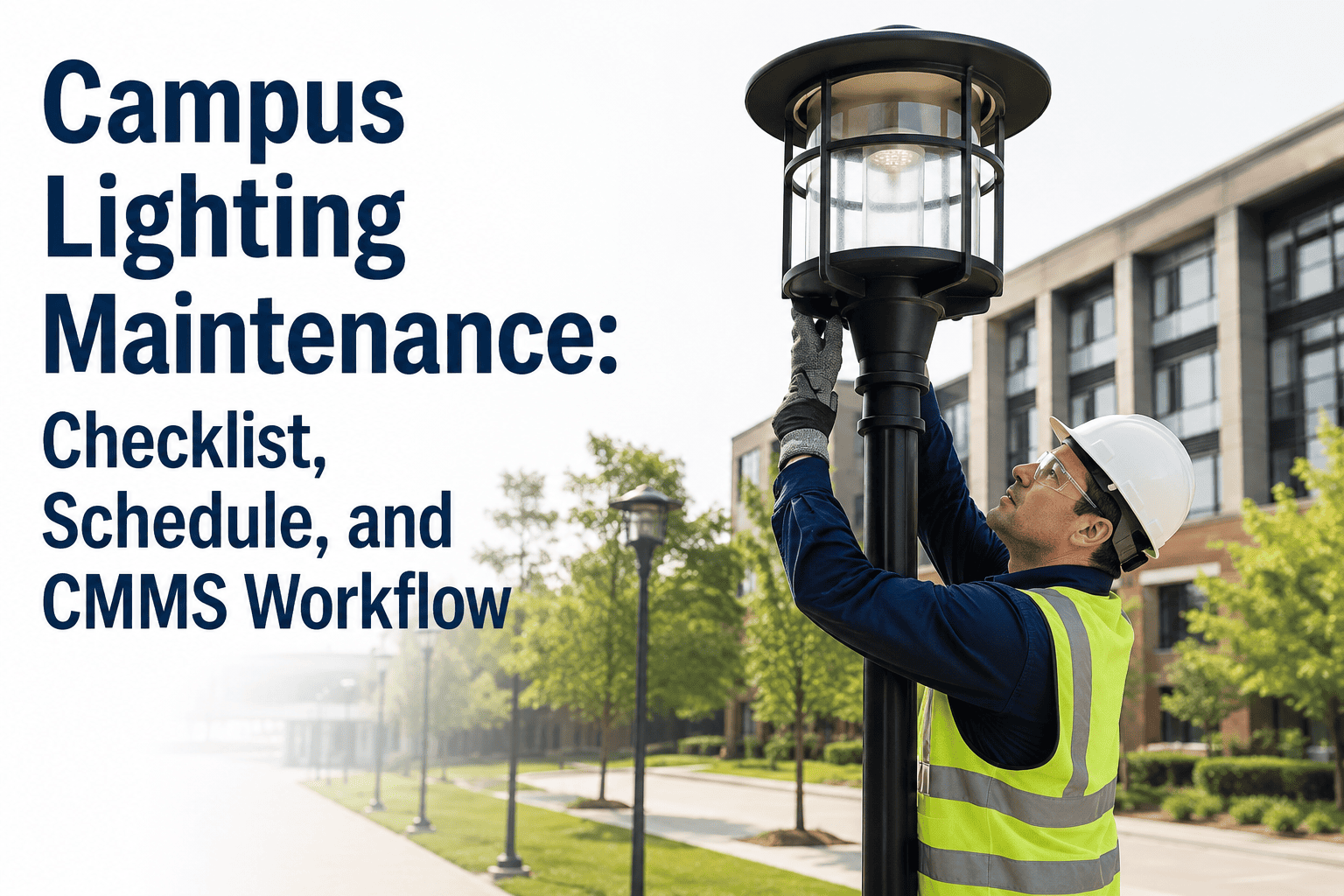
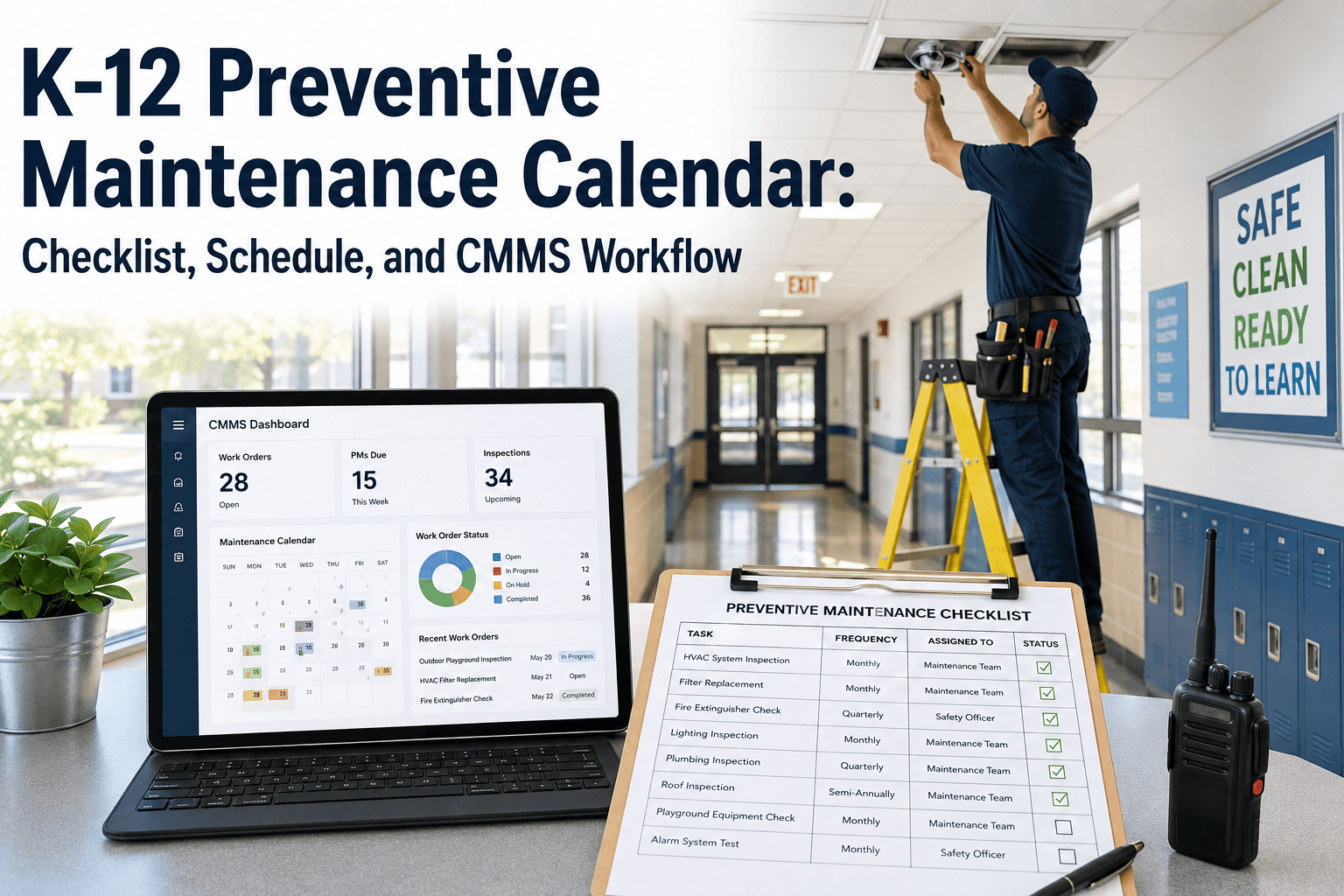
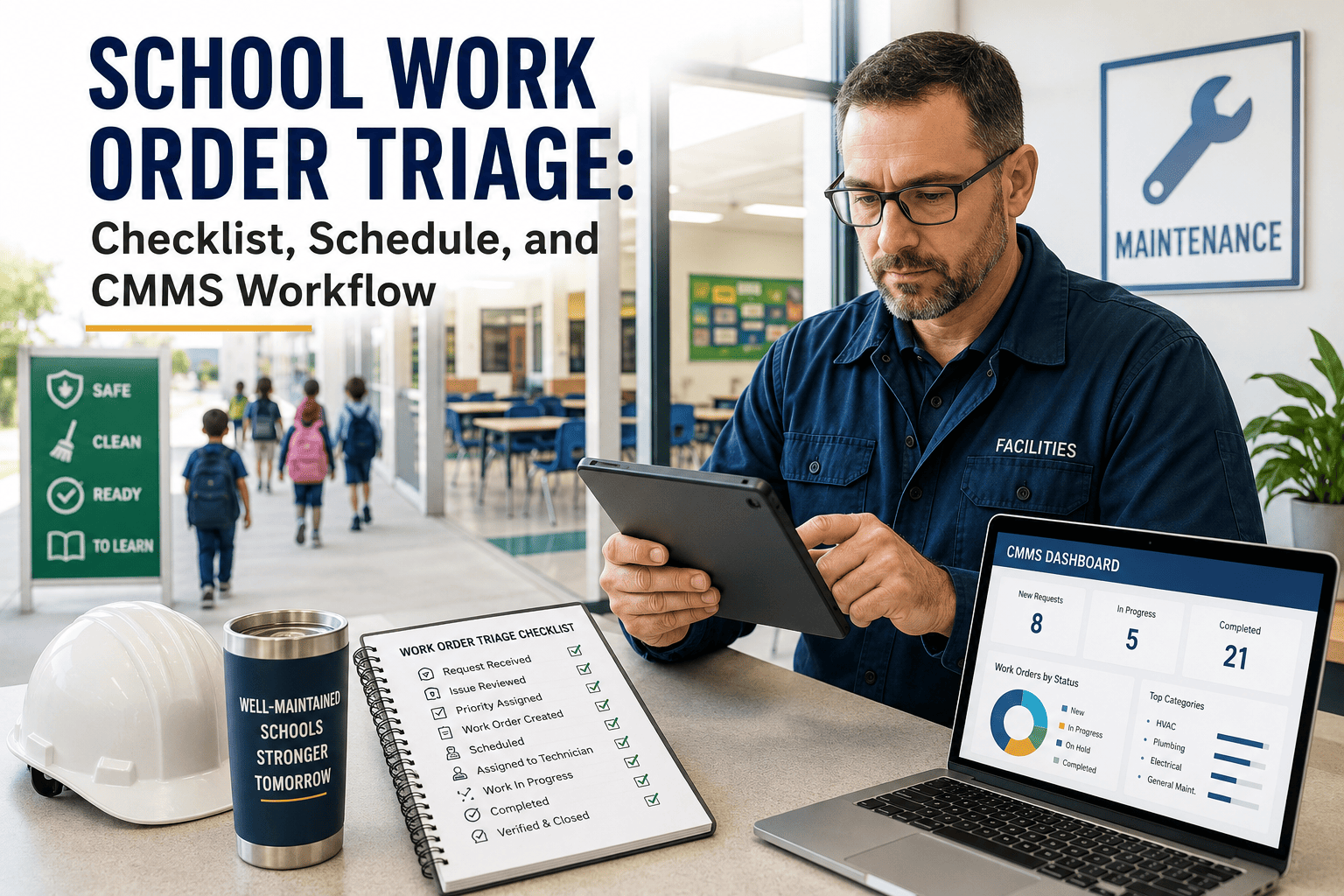
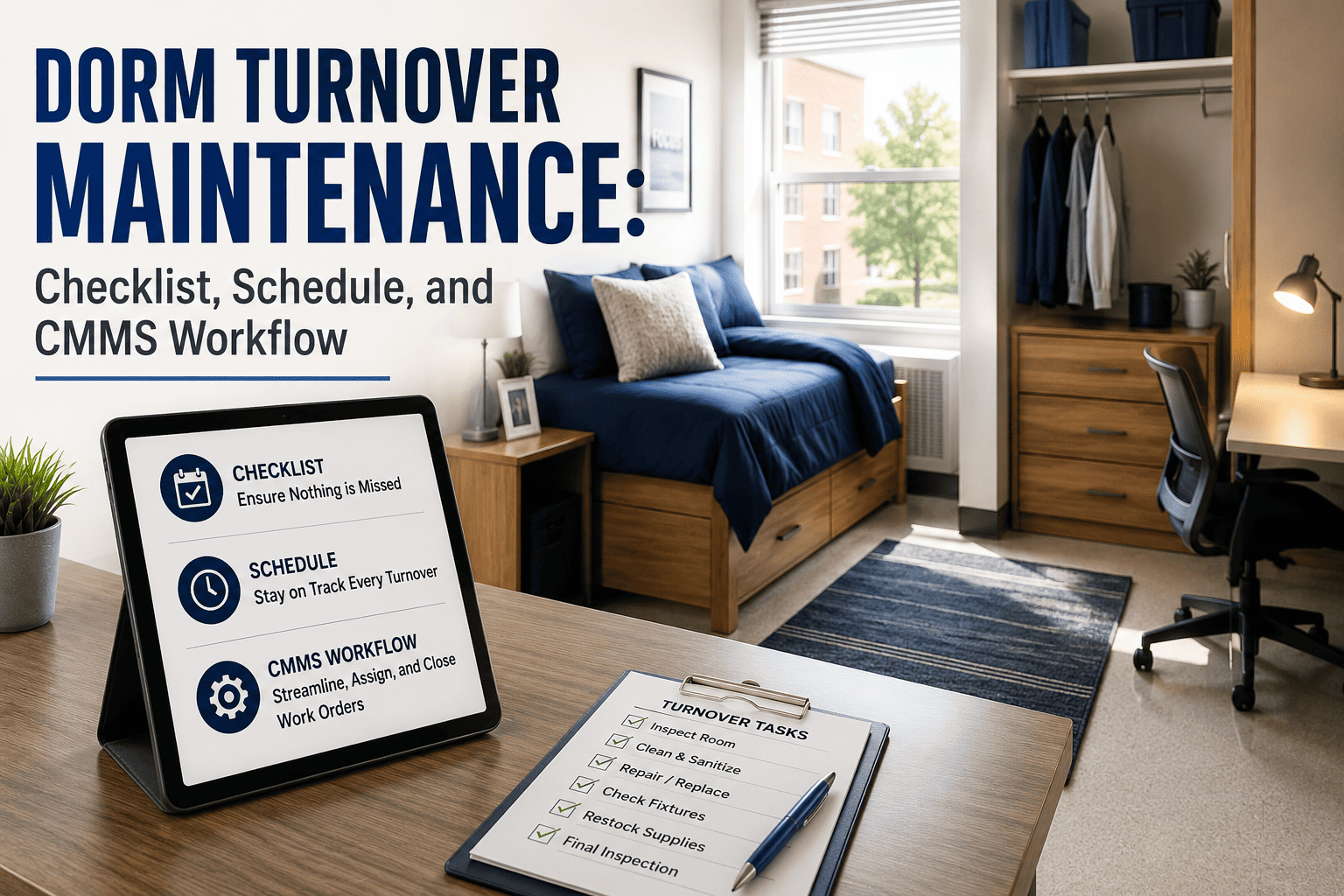
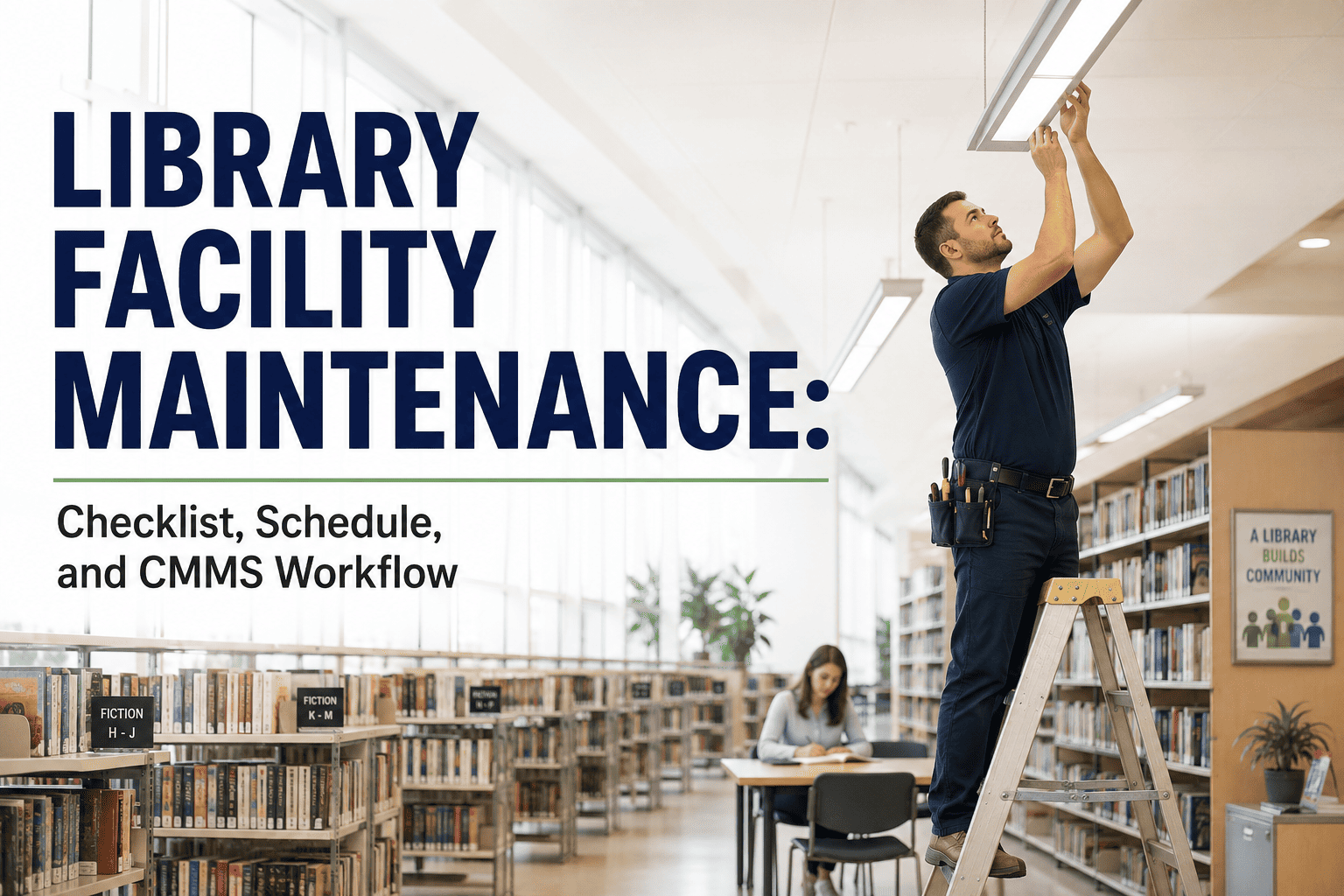
A burned-out hallway light feels minor until it is the third one this month near the same stairwell, or the parking lot fixture a parent mentions right before a school board meeting. Campus lighting touches safety, energy cost, and how a building feels to walk through after dark — and it fails one bulb at a time, which is exactly why it gets missed. This page gives your facilities team a zone-by-zone lighting maintenance checklist, group-relamping schedule, and CMMS workflow built for K-12 and higher education campuses of any size. Use OxMaint to track every fixture by location and never lose another lamp to a forgotten ladder run.
Energy & Lighting · Campus Facilities · CMMS
Campus Lighting Maintenance: Checklist, Schedule & CMMS Workflow
A zone-by-zone preventive maintenance framework for school and university lighting — covering classrooms, gyms, corridors, parking lots, and emergency lighting, with group-relamping schedules built for facilities teams managing buildings of any age.
5
Campus Zones
60%
Energy Savings With LED + Controls
CMMS
Schedule Ready
Why Zones Matter
Lighting Fails Differently in Every Part of the Campus
A burnt lamp in a classroom is an annoyance. The same failure in a stairwell, a parking lot, or an emergency exit sign is a safety incident waiting to happen. Treating every fixture on campus with the same inspection interval wastes effort on low-risk areas and under-protects the high-risk ones. The zones below are ordered by how much a failure there actually costs you — in safety risk first, then in energy and maintenance burden.
These are the fixtures where a failure directly creates a fall risk or an evacuation hazard. They get the shortest inspection interval on campus and the fastest repair turnaround.
Illuminated exit signs tested for visibility and battery backup — each unit confirmed lit and legible from both directions of approach, battery activated on test switch to confirm 90-second minimum backup illumination
MonthlyFacilities Technician
Stairwell and corridor fixtures checked for burnt, flickering, or dim lamps — any fixture below expected output is logged and replaced before the next scheduled walk-through, not left for the next group relamping cycle
WeeklyFacilities Staff
Emergency lighting batteries inspected and replaced per manufacturer schedule — typically every three to five years, tracked per fixture so no unit silently ages past its reliable backup window
AnnualElectrical Contractor
Stairwell handrail and step-edge lighting checked for even coverage along the full run — shadowed steps near a landing or turn are a leading cause of fall incidents and should be corrected the same visit they are found
QuarterlyFacilities Technician
Exit sign placement reviewed against current building occupancy and egress plans — verify every required exit path remains covered after any room reconfiguration, furniture change, or new partition wall
AnnualFacilities Manager
Exterior lighting is the first thing a parent, a night class student, or a security camera depends on after dark. It is also the hardest to maintain because of bucket trucks, weather exposure, and ball or vandalism damage.
Parking lot and pathway fixtures walked at dusk to identify dark spots, flickering poles, or photocell sensors triggering at the wrong time — any gap in coverage is logged with the pole number for repair scheduling
MonthlyFacilities Staff
Fixture housings, lenses, and wire guards inspected for cracking, moisture intrusion, or impact damage from balls or vandalism — weatherproof seals checked on any fixture rated for wet locations
QuarterlyFacilities Technician
Photocell sensors and timers recalibrated for seasonal daylight changes — verified to switch lighting on and off within 15 minutes of actual dusk and dawn, not a fixed clock setting that drifts with the season
SeasonalElectrical Contractor
Light trespass and glare checked against neighboring properties — full-cutoff fixtures and shields confirmed in place where the campus borders residential homes, keeping safety lighting from disturbing nearby residents
AnnualFacilities Manager
Never Lose Track of a Fixture
Facilities teams using OxMaint log every lighting fixture by building and zone, so a dark stairwell or a flickering parking lot pole becomes a tracked work order in seconds instead of a memory someone forgets by Friday.
High-bay fixtures in gyms and auditoriums are the most disruptive to maintain — a ladder or lift in the middle of a game or graduation ceremony is not an option. Group relamping during scheduled breaks is the standard fix.
High-bay fixtures in gyms and auditoriums logged by individual unit with install date and expected lamp life, so group relamping can be scheduled before failure rate climbs instead of one ladder trip at a time
QuarterlyFacilities Manager
Group relamping completed during scheduled breaks — winter or summer recess — rather than reactive single-lamp swaps that require repeated equipment rental and disrupt events already booked in the space
SeasonalFacilities Contractor
Classroom lighting affects teaching time directly — a ladder dragged into a lesson to swap a bulb is a disruption a teacher should never have to plan around.
Classroom and office fixtures visually checked during routine campus walk-throughs — flickering, color-shifted, or dim lamps flagged for replacement before a teacher has to submit a request mid-lesson
MonthlyFacilities Staff
Occupancy sensors and dimmer controls tested for correct timeout settings — most classrooms perform best with a five to fifteen minute vacancy timeout that does not cut lighting mid-lesson during a quiet activity
QuarterlyFacilities Technician
The biggest cost lever on campus lighting is not maintenance frequency — it is fixture type. A structured conversion plan from fluorescent or HID to LED pays for itself through reduced energy use and far fewer relamping trips.
Full fixture inventory maintained by building and zone — lamp type, wattage, install date, and replacement history recorded so conversion planning is based on actual fixture counts, not estimates
AnnualFacilities Manager
Hard-to-maintain, high-fixture-count areas prioritized first for LED conversion — gyms, parking lots, and corridors typically deliver the fastest payback since they combine high run-hours with high replacement labor cost
AnnualFacilities Manager
Field and stadium lighting only matters when an event is scheduled — which means a failure usually surfaces in front of a crowd instead of during a routine walk-through. These fixtures need pre-event verification on top of regular inspection.
Field and stadium pole fixtures tested at full output at least one week before any scheduled night game or event, with enough lead time to source a lift and replace failed lamps before kickoff
QuarterlyFacilities Contractor
Pole bases, anchor bolts, and wiring conduits inspected for corrosion or impact damage after each season — fields exposed to irrigation and weather see faster base corrosion than building-mounted fixtures
SeasonalElectrical Contractor
Backup lighting control plan documented for any event where a partial outage occurs mid-game — including who to call and how quickly a portable light tower can be deployed if a pole fails during play
AnnualFacilities Manager
Lighting KPIs
Three Numbers That Show Your Lighting Program Is Working
| Metric |
How to Measure |
Target |
| Outage Response Time |
Days from fixture reported dark to repair completed |
Under 3 Days |
| Energy Use Reduction |
kWh after LED + controls vs. baseline fluorescent/HID |
20% - 60% Lower |
| Emergency Lighting Pass Rate |
Units passing monthly battery test / total units tested |
100% |
| Pre-Event Fixture Pass Rate |
Field/stadium fixtures passing pre-event test / total tested |
100% |
FAQs
Frequently Asked Questions
How often should emergency exit lighting be tested on a school campus?
What is group relamping and why does it matter for gyms and high-bay areas?
Group relamping replaces all fixtures in a hard-to-reach area at once, usually during a scheduled break, instead of sending a lift up for one bulb at a time. It cuts equipment rental cost and avoids disrupting events booked in the space.
How much can a school save by switching to LED lighting?
Converting from fluorescent or HID fixtures to LED typically reduces lighting energy consumption by 20% to 60%, with the largest savings in high-run-hour areas like gyms, corridors, and parking lots.
Why does exterior lighting need a different maintenance schedule than classrooms?
Exterior fixtures face weather exposure, seasonal daylight shifts, and physical damage from balls or vandalism that classroom fixtures never see, so they need more frequent physical inspection and seasonal photocell recalibration.
Can one CMMS manage lighting across multiple campus buildings?
Built for School & University Facilities Teams
Every Fixture Tracked. Every Outage Logged. Every Hallway Lit.
OxMaint gives your facilities team a live, zone-based lighting maintenance program across every building on campus — with automatic test reminders, group-relamping schedules, and a fixture inventory that makes LED conversion planning simple.