Predictive Maintenance for Elevators and Critical Building Assets

By shreen on February 28, 2026

predictive_maintenance_elevators

Building managers across commercial high-rises and hospitals still rely on fixed maintenance calendars to service elevators, HVAC chillers, and fire suppression pumps. Meanwhile, sensors embedded in these assets stream vibration, temperature, and load data every second — data that goes unread until something breaks. The gap between available intelligence and maintenance action costs building owners thousands in emergency repairs and exposes occupants to safety risks that are entirely preventable. Sign up for Oxmaint to connect your building asset sensors to a maintenance platform that acts on data before failures happen.

76%
Of elevator breakdowns are caused by component wear detectable weeks in advance through vibration analysis
$15K+
Average cost of a single emergency elevator repair including parts, labor, and tenant disruption penalties
4.2 hrs
Average elevator downtime per incident when maintenance teams react instead of predict failure patterns

Why Calendar-Based Maintenance Fails Critical Building Assets

The Problem

Scheduled maintenance treats every elevator and chiller the same regardless of actual usage, load patterns, or wear progression. A freight elevator running 200 cycles daily gets the same quarterly inspection as a low-traffic passenger unit. Components that need attention this week wait until next month while perfectly healthy parts get replaced too early. This approach wastes technician hours, inflates parts budgets, and still allows unexpected failures to occur between service windows. Facilities teams using Oxmaint's predictive workflows eliminate this guesswork entirely.
Unplanned breakdowns between service windows
Healthy parts replaced unnecessarily
Identical schedules for different usage profiles
Key Insight
83% of elevator motor failures
show detectable vibration anomalies 2-6 weeks before breakdown. Buildings with sensor-connected CMMS platforms catch these signals and schedule repairs during low-traffic hours — eliminating emergency calls and tenant complaints entirely.

Predictive Monitoring Across Critical Building Systems

ELV Elevator Systems
Elevators account for the highest volume of tenant complaints and safety incidents in commercial buildings. Predictive monitoring targets the components responsible for 90% of failures.
Door operator motor current — Monitor torque draw patterns to detect roller wear, track misalignment, and belt degradation before doors jam or fail to close
Traction sheave vibration — Continuous vibration analysis identifies bearing wear, rope slippage, and shaft misalignment weeks before audible symptoms appear
Brake pad thickness tracking — Sensor-measured wear rates replace calendar-based pad swaps with condition-based replacement scheduling
Ride quality index — Accelerometer data flags leveling errors, jerk anomalies, and vibration spikes that indicate guide rail or suspension issues
HVC HVAC and Chiller Plants
Chiller failures during peak cooling season create immediate occupant comfort emergencies and can cost tens of thousands per day in temporary cooling rentals. Start monitoring with Oxmaint to prevent seasonal failures.
Compressor vibration spectrum — Frequency analysis detects bearing wear, valve seat erosion, and refrigerant slugging patterns unique to each compressor type
Condenser approach temperature — Rising approach temps signal fouling, airflow restriction, or refrigerant charge loss requiring scheduled cleaning or service
Variable frequency drive health — Monitor harmonic distortion and thermal cycling to predict capacitor and IGBT module failures before drive faults
Refrigerant pressure trends — Slow pressure drift indicates micro-leaks that compound into major charge losses and efficiency degradation over weeks
FLS Fire and Life Safety Systems
Fire pumps, sprinkler systems, and emergency generators must perform flawlessly during the one moment they are needed. Predictive monitoring ensures readiness without relying solely on annual testing.
Fire pump flow and pressure curves — Trend deviations from commissioning baselines to identify impeller wear, valve degradation, or suction problems
Emergency generator battery health — Monitor internal resistance and charge cycle patterns to predict start failures before the next power outage
Sprinkler system pressure integrity — Continuous pressure monitoring detects slow leaks and valve failures between manual inspection rounds
PLB Plumbing and Water Systems
Water damage from burst pipes or failed pumps ranks among the most expensive building insurance claims. Schedule a consultation to see how continuous monitoring prevents catastrophic water events.
Booster pump vibration and flow — Detect cavitation, impeller erosion, and seal wear before pumps lose pressure or fail entirely
Hot water recirculation efficiency — Temperature sensor networks identify dead legs, valve failures, and Legionella risk conditions in real time
Sump and sewage pump runtime — Abnormal cycle frequency and duration patterns signal float switch failures or drain blockages
Every sensor reading your building generates should drive a maintenance decision. Oxmaint connects IoT sensor data directly to prioritized work orders — so your team fixes what matters before tenants notice anything is wrong.

How Sensor Data Becomes Maintenance Action

1
Sensors Stream Continuously
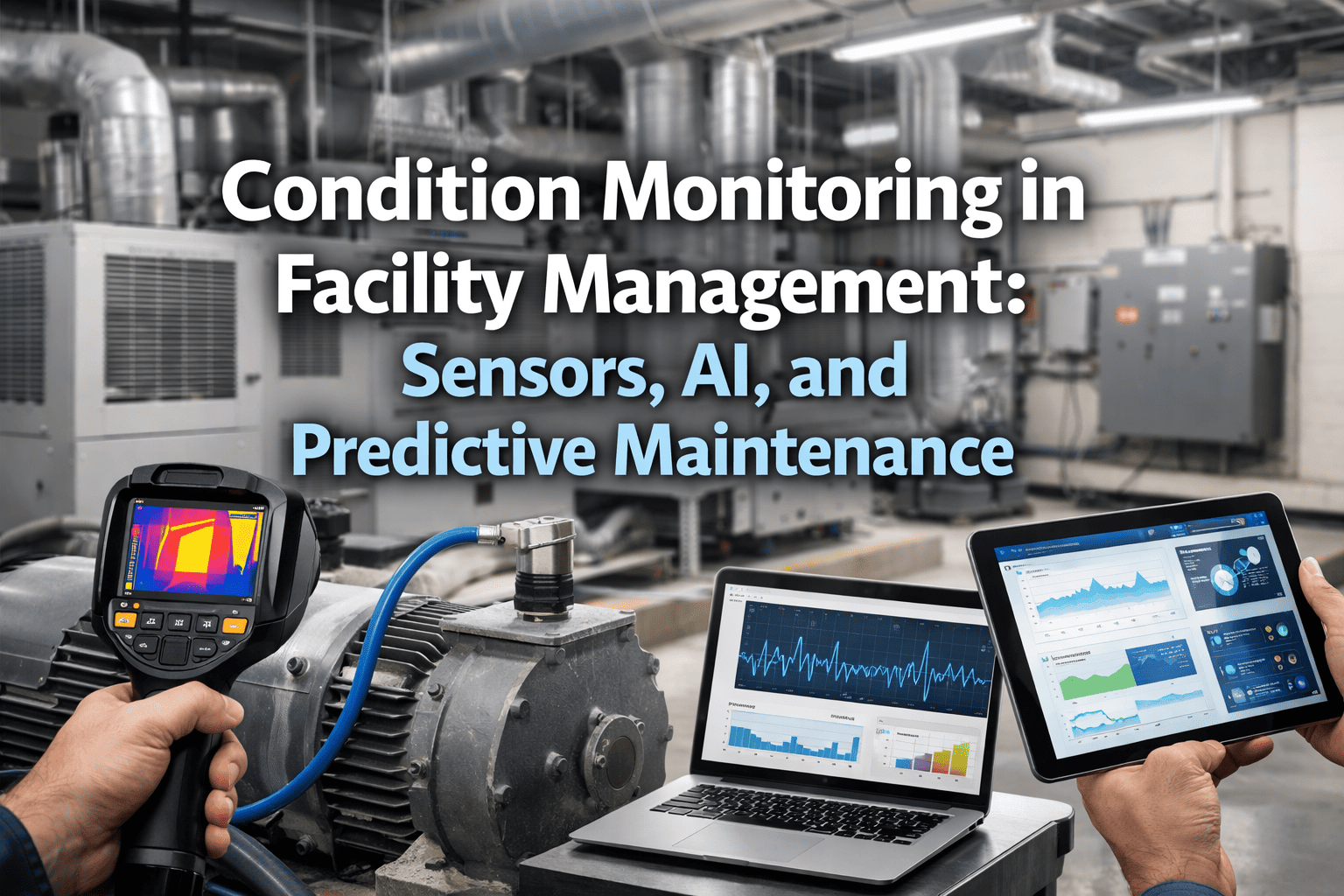
Vibration, temperature, pressure, and current sensors on elevators, chillers, pumps, and generators transmit readings every few seconds. Edge processors filter noise and forward meaningful data to your CMMS.

2
AI Compares Against Asset Baselines
Oxmaint builds a health profile for each asset from its first day of monitoring. Algorithms detect drift, spikes, and pattern changes that indicate developing faults — not just threshold breaches.

3
Anomalies Generate Prioritized Work Orders
When a deviation crosses severity thresholds, Oxmaint auto-creates a work order tagged with asset ID, sensor evidence, failure probability, and recommended corrective action. Sign up to see auto-generated work orders in action.

4
Technicians Execute With Full Context
Maintenance staff receive tickets with sensor trend charts, historical comparison data, parts recommendations, and estimated repair windows. No diagnostic guesswork, no wasted trips, no surprise scope changes.

5
Asset Records Get Smarter Over Time
Every completed repair enriches the asset health model. After months of data, Oxmaint surfaces patterns: this elevator door motor has a 14-month wear cycle, that chiller compressor needs bearing service every 8,000 hours.

What Changes When You Move to Predictive Maintenance

Calendar-Based Maintenance
Same service interval for every asset regardless of actual condition
Emergency repairs at premium rates during off-hours
Tenant complaints drive maintenance priorities
No data trail for insurance or compliance audits
Predictive with Oxmaint
Service triggered by actual sensor-measured wear and degradation
Planned repairs during business hours at standard rates
Sensor intelligence drives priorities before tenants notice issues
Complete digital maintenance history for every asset

Platform Capabilities That Power Predictive Maintenance


IoT Sensor Integration
Connect vibration sensors, temperature probes, pressure transmitters, and current monitors from any manufacturer. Oxmaint normalizes data streams into unified asset health dashboards with configurable alert thresholds.
BACnet CompatibleModbus Support

Auto-Generated Work Orders
When sensor data crosses configured thresholds, work orders appear automatically with asset location, sensor evidence, severity classification, and recommended repair procedures. Sign up to automate your work order creation.
Priority RoutingPhoto Attachments

Asset Health Scoring
Every elevator, chiller, pump, and generator receives a dynamic health score based on sensor trends, maintenance history, age, and usage intensity. Portfolio-level dashboards show which assets need attention first.
Trend AnalysisFailure Forecasting

Compliance Documentation
Elevator inspections, fire pump tests, and generator run logs are captured automatically with timestamps and sensor evidence. Audit-ready reports generate on demand for AHJ inspections and insurance renewals.
ASME A17.1NFPA 25
We went from averaging three emergency elevator callbacks per month to zero in the first quarter after connecting our sensor network to Oxmaint. The system caught a traction sheave bearing issue two weeks before it would have stranded tenants between floors.
— Facilities Director, Class A Office Tower, Chicago

Your Building Assets Are Already Telling You What They Need

Oxmaint transforms sensor signals from elevators, chillers, fire pumps, and generators into prioritized maintenance actions. Stop waiting for failures. Start predicting them.

Frequently Asked Questions

What types of sensors does Oxmaint integrate with?
Oxmaint connects with vibration sensors, temperature probes, pressure transmitters, current monitors, and IoT-enabled controllers from major manufacturers. Integration supports BACnet, Modbus, MQTT, and REST API protocols. If your building management system already collects sensor data, Oxmaint can ingest it directly without additional hardware. Sign up to explore sensor integration options for your building systems.
How quickly can predictive maintenance be deployed across a building portfolio?
A single building can be fully configured in 1-2 weeks including sensor mapping, threshold calibration, and work order routing setup. Multi-building portfolios typically roll out over 4-8 weeks with a phased approach starting with the highest-priority assets. Baseline health profiles begin forming immediately, with predictive accuracy improving over the first 60-90 days of data collection.
Does this work with our existing elevator maintenance contractor?
Yes. Oxmaint provides your maintenance contractors with better diagnostic information than they have ever had. Work orders arrive with sensor trend data, vibration spectra, and historical comparisons — reducing diagnostic time and enabling more accurate first-visit repairs. Many building owners find that sharing Oxmaint data with contractors improves accountability and service quality. Book a demo to see how contractor workflows integrate.
What is the typical payback period for predictive maintenance in commercial buildings?
Most commercial buildings achieve payback within 6-12 months through avoided emergency repairs, reduced overtime labor costs, and extended equipment life. A single prevented chiller failure during peak cooling season — which can cost $25,000-$50,000 in emergency rental and repair — often justifies the first year of investment.
How does Oxmaint handle compliance documentation for elevator and fire system inspections?
Sensor data, maintenance records, and inspection results are stored with timestamps and technician verification in audit-ready formats. When your authority having jurisdiction requests elevator test records or fire pump flow data, reports generate instantly from the platform. Sign up to automate your compliance documentation and eliminate paper-based record keeping.

Share This Story, Choose Your Platform!