A server room that overheats does not give warnings — it gives downtime. For office facilities managing on-premise IT infrastructure, cooling system failures are among the costliest and most disruptive maintenance events. The good news: with the right inspection workflows, temperature alerts, and predictive maintenance schedules, thermal incidents are almost entirely preventable. See how OxMaint helps facility teams protect their server rooms.
Guide · Critical Environments · 2025
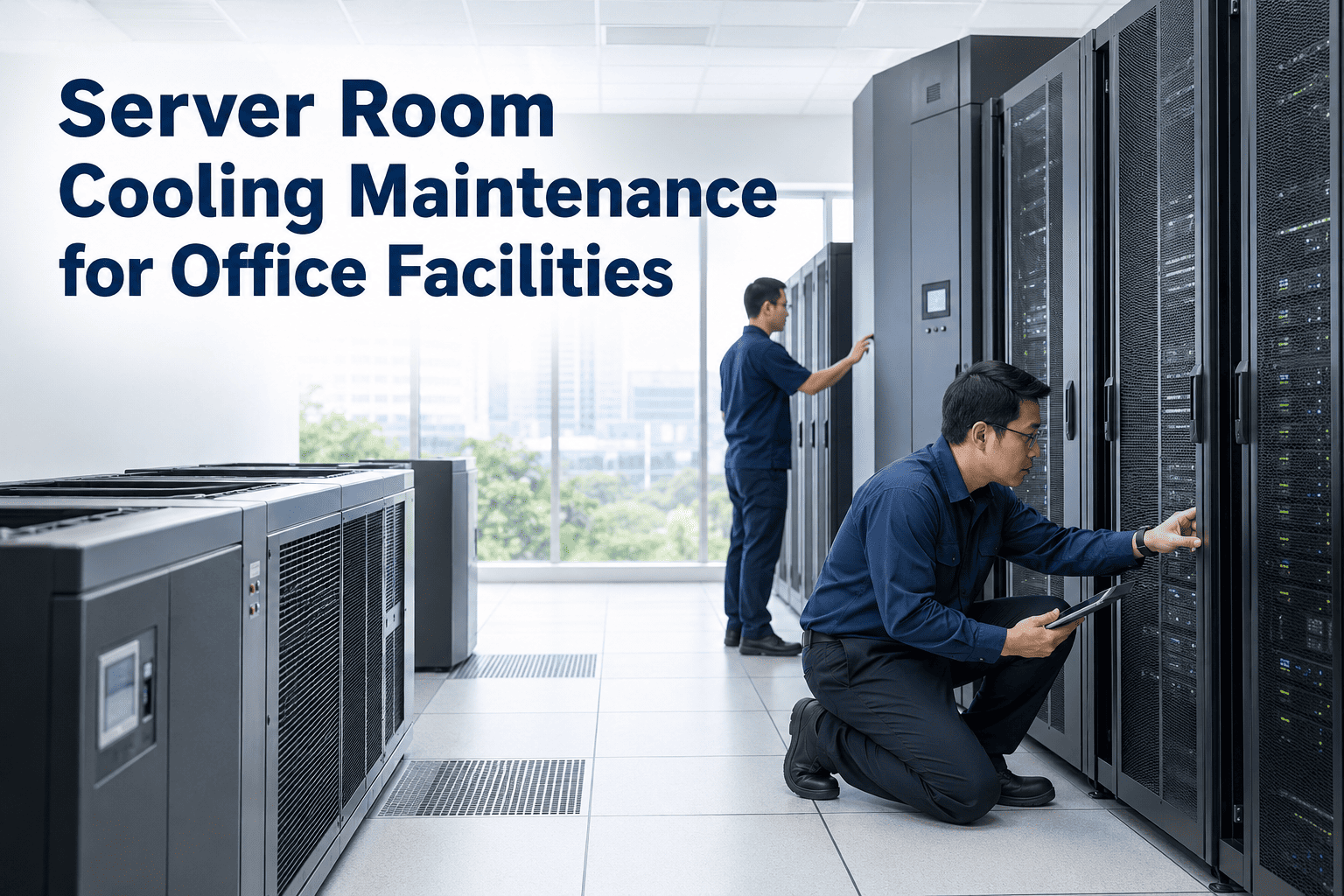
Server Room Cooling Maintenance
for Office Facilities
Prevent IT downtime with structured cooling inspections, real-time temperature alerts, and automated maintenance workflows — built for facility teams, not just IT departments.
The Cost of Cooling Failure
Why Office Facility Teams Own This Problem
$9,000
Per Hour of IT Downtime
Average cost for a mid-size office, including staff productivity loss, transaction interruption, and emergency response
40%
Of Cooling Failures Are Preventable
Caused by clogged filters, refrigerant leaks, and blocked airflow that regular inspection catches before failure
3–5°C
Temperature Rise Before Anyone Notices
The typical threshold before hardware protection circuits activate — by then, degradation has already begun
Maintenance Guide
Server Room Cooling Inspection — Complete Schedule
Air filter inspection and replacement if blocked
CRAC / CRAC unit coil inspection
Supply and return airflow temperature differential check
Condensate drain pan and drain line inspection
Hot aisle / cold aisle blanking panel audit
Refrigerant pressure and charge inspection
Belt tension and fan blade condition
Sensor calibration verification
UPS and backup power cooling review
Cable management for airflow obstruction
Full HVAC commissioning and performance test
Thermal imaging of all electrical panels and racks
Emergency cooling failover test
Redundancy and N+1 capacity review
Full audit log and compliance review
Automate This Schedule
Let OxMaint Run Your Cooling PM Program
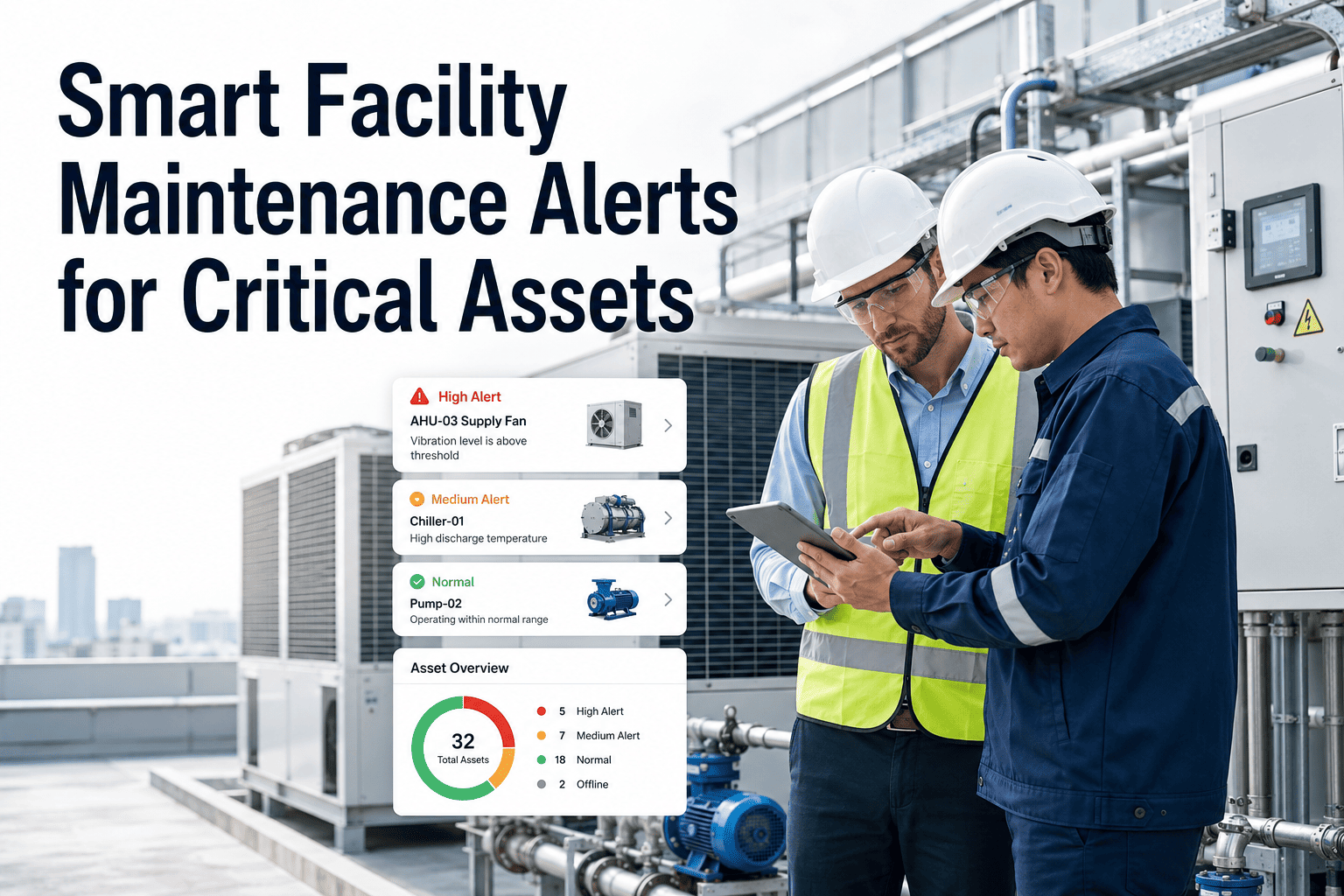
OxMaint schedules and assigns every inspection automatically. Technicians complete tasks on mobile, and managers get real-time dashboards — no spreadsheets, no missed PMs.
Before vs After OxMaint
What Changes When Cooling Maintenance Is Automated
| Metric |
Without OxMaint |
With OxMaint |
| PM Completion Rate |
52% average |
94%+ average |
| Temperature Alert Response |
Manual discovery, hours later |
Automated alert, under 3 min |
| Filter Replacement Timing |
Scheduled by calendar guess |
Triggered by actual condition data |
| IT Downtime Events / Year |
3.2 average (mid-size office) |
0.4 average after 12 months |
| Compliance Documentation |
Paper logs, often incomplete |
Auto-generated, timestamped |
Expert Review
Facility Teams Speak From Experience
★★★★★
We had two server room overheats in 18 months before OxMaint. Both times it was a preventable cooling issue — blocked airflow and a failed filter nobody caught. Since implementing OxMaint's PM schedule with automated alerts, we have been incident-free for over a year. The ROI was obvious within the first quarter.
DK
Daniel K.
Facilities Manager · 12-Floor Corporate HQ, Financial Services
★★★★★
As a facility team we were always last to know about server room issues — IT would call us after hardware was already hot. OxMaint flipped that: now we get the alert first, respond before IT even notices, and have a closed work order ready when they ask what happened. It changed our relationship with the IT department entirely.
NR
Nadia R.
Building Operations Lead · Regional Law Firm, 4 Offices
FAQs
Server Room Cooling Maintenance — What Teams Ask Us
How does OxMaint predict cooling failures before they cause downtime?
OxMaint's AI analyzes temperature sensor trends over time to identify gradual drift — such as average inlet temperatures rising 0.5°C per week — that indicates a developing cooling issue. This pattern-based alerting catches problems weeks before they become failures. Combined with PM checklists that inspect the root causes (filters, coils, refrigerant), the system addresses both symptoms and causes.
See predictive maintenance in action during a demo.
Our facility team doesn't manage the cooling units directly — IT handles some of it. How does OxMaint handle shared responsibility?
OxMaint supports role-based work order routing. You can define which tasks are assigned to facility technicians versus IT staff, and even create shared checklists where both teams sign off. Escalation rules can notify IT managers when temperature thresholds are exceeded while simultaneously alerting facility teams for mechanical response. This eliminates the coordination gaps that usually occur during shared-responsibility maintenance.
Try the role-based assignment workflows free.
What temperature thresholds should we set for server room alerts in OxMaint?
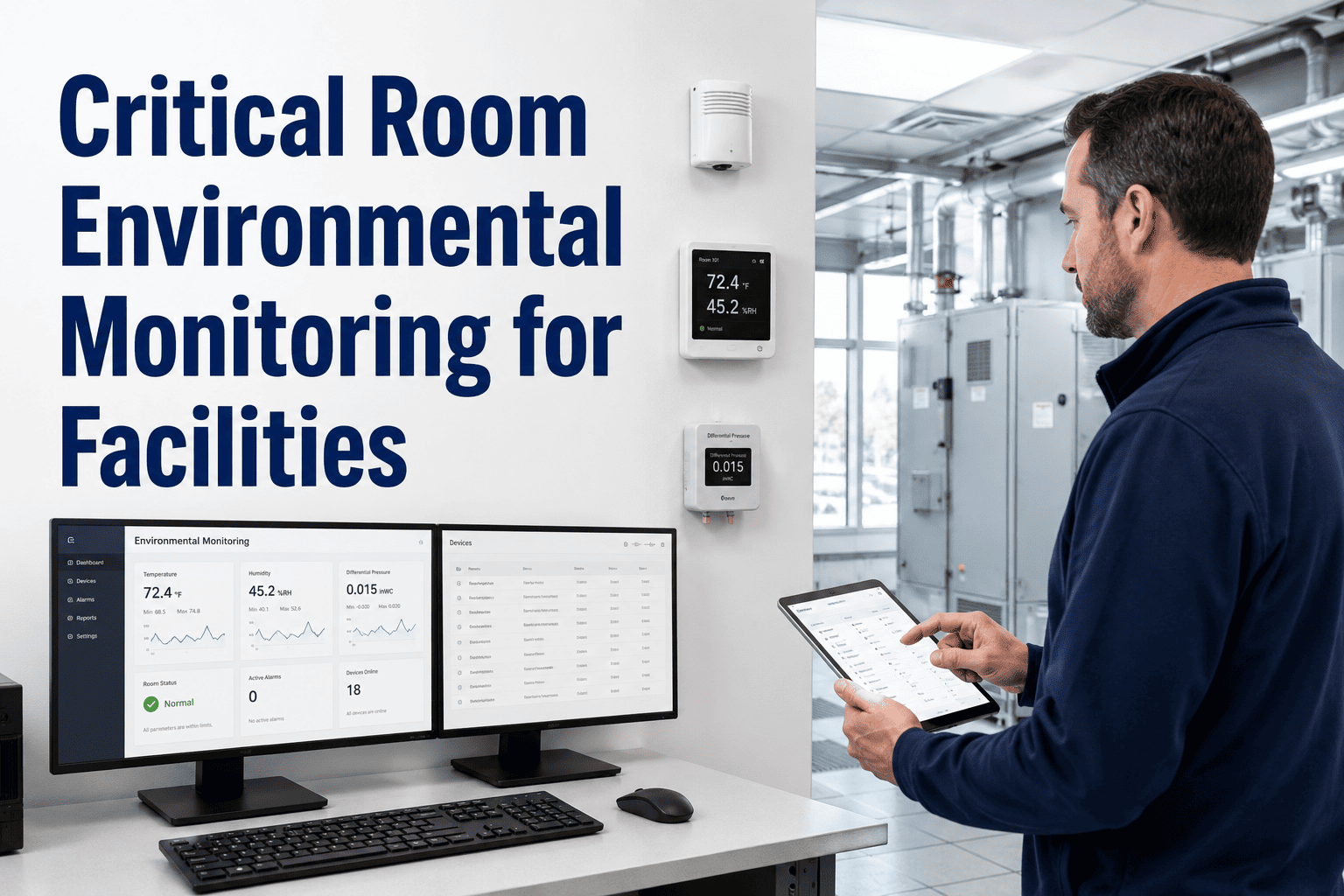
ASHRAE A1 guidelines recommend server inlet temperatures between 15°C and 27°C, with humidity between 20% and 80% non-condensing. A best practice is to set your first alert at 25°C for early warning, a second alert at 27°C for immediate response, and a third at 30°C for emergency escalation. OxMaint allows you to configure three alert tiers per sensor, each routing to different contacts and triggering different urgency levels on work orders.
Can OxMaint integrate with our existing BMS or building automation system to pull temperature data automatically?
Yes. OxMaint integrates with most BMS platforms via BACnet, Modbus, or REST API. Once connected, your existing building automation sensor data flows directly into OxMaint's monitoring dashboard without requiring new hardware. For facilities that want to upgrade to dedicated IoT sensors for finer granularity, OxMaint also supports direct sensor integration alongside BMS data.
Discuss your BMS compatibility in a 30-minute call.
Protect Your IT Infrastructure
Stop Cooling Failures Before They Start
OxMaint gives office facility teams the inspection schedules, temperature alerts, and automated work orders needed to eliminate preventable server room downtime. Live in under 60 minutes.