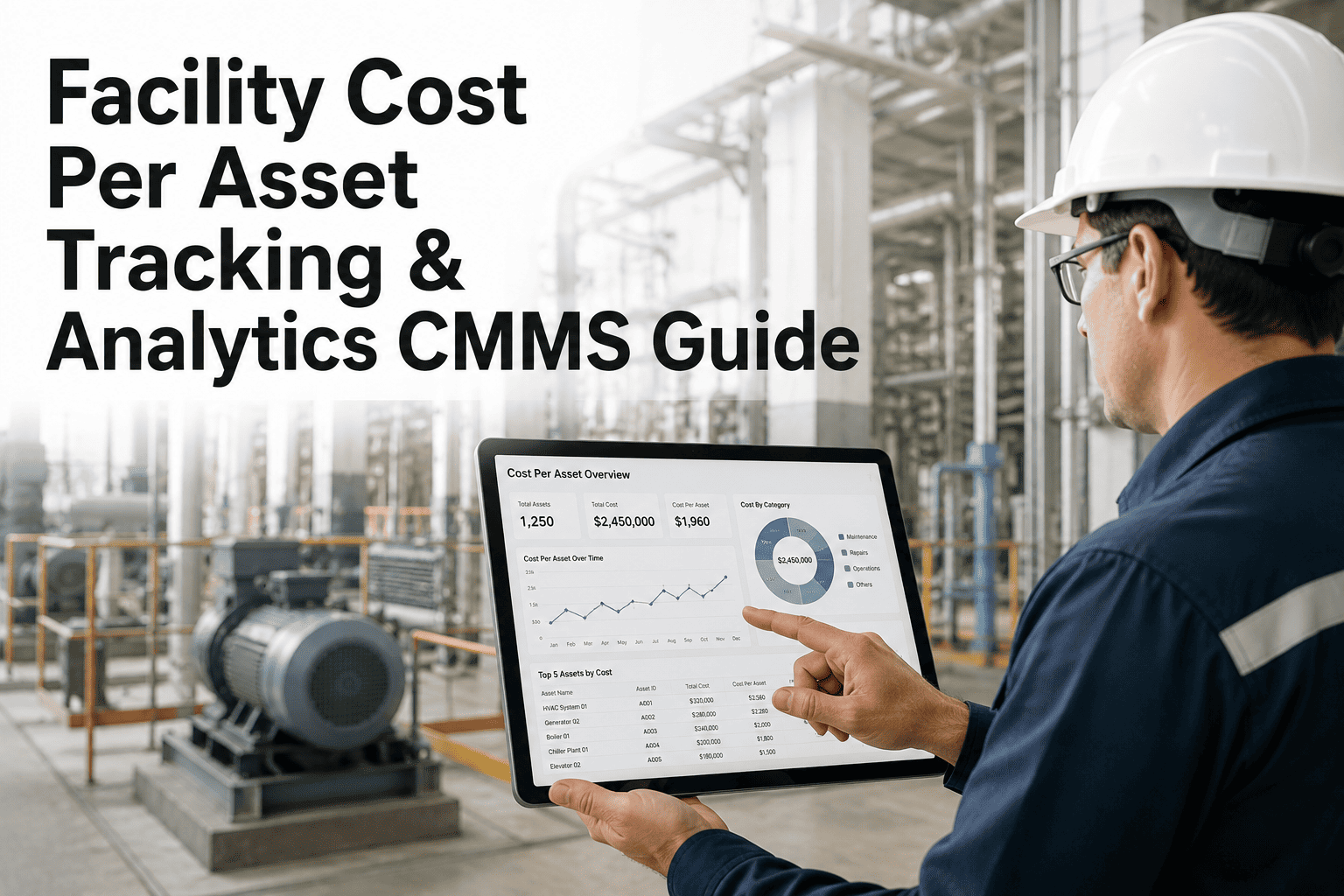
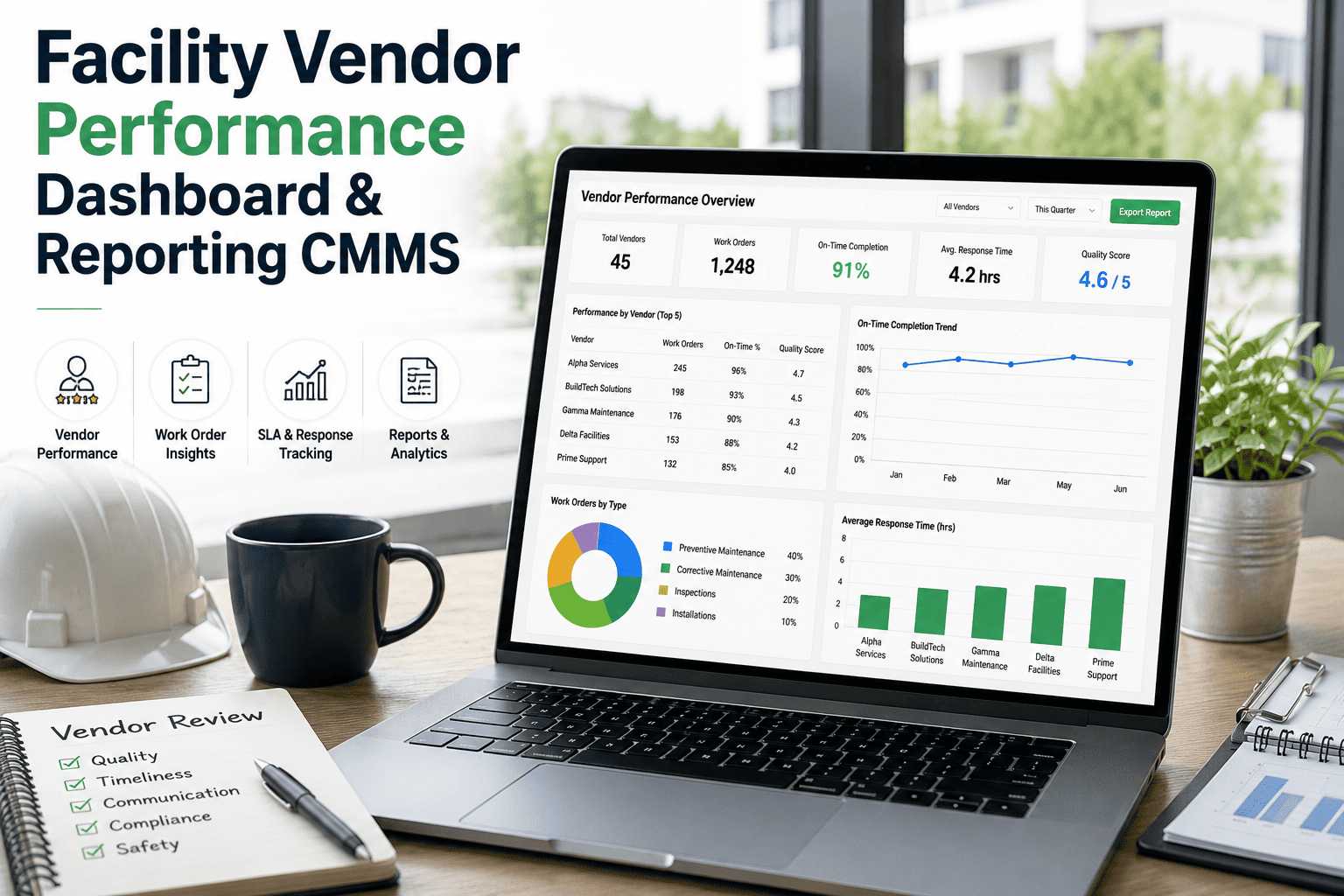
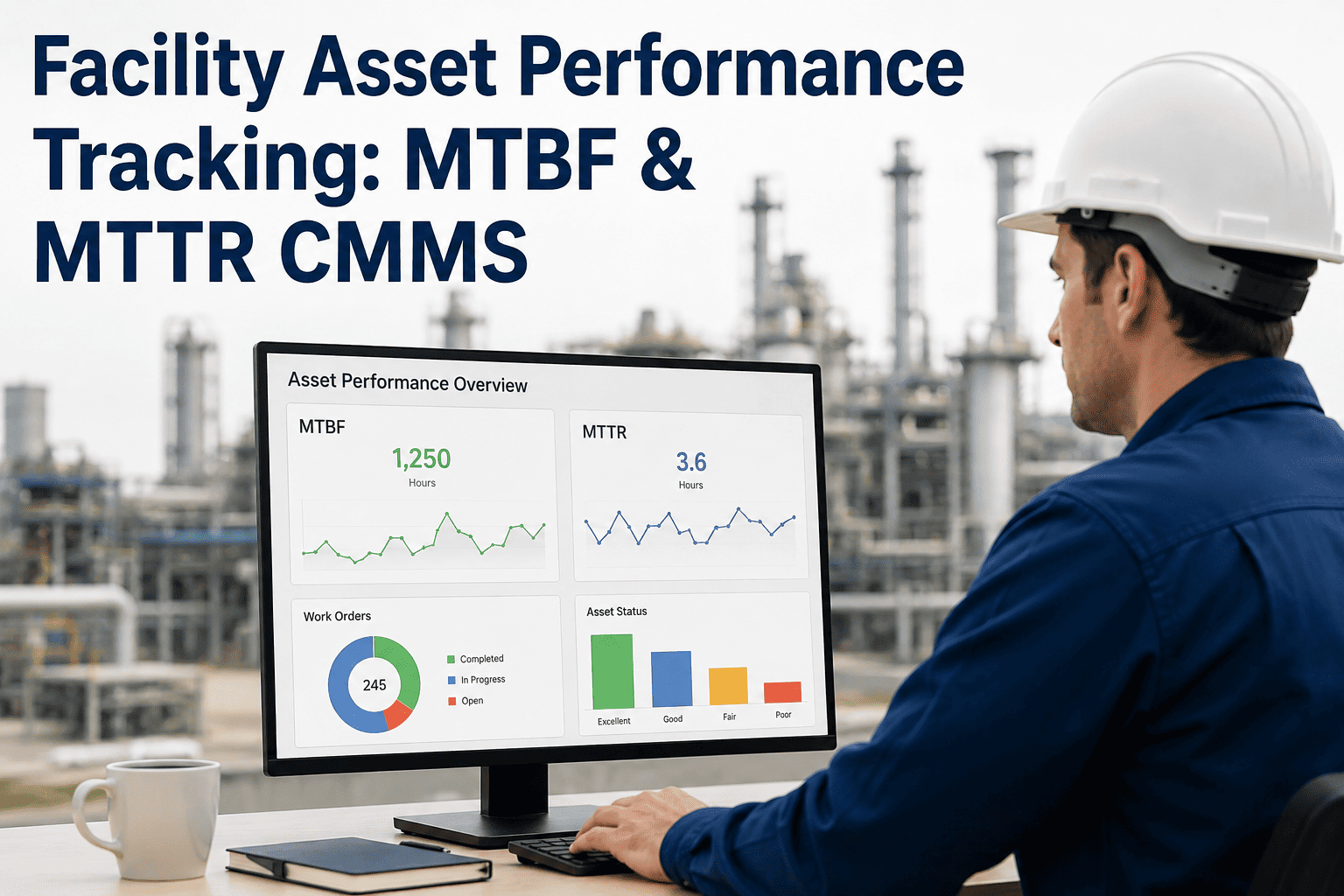
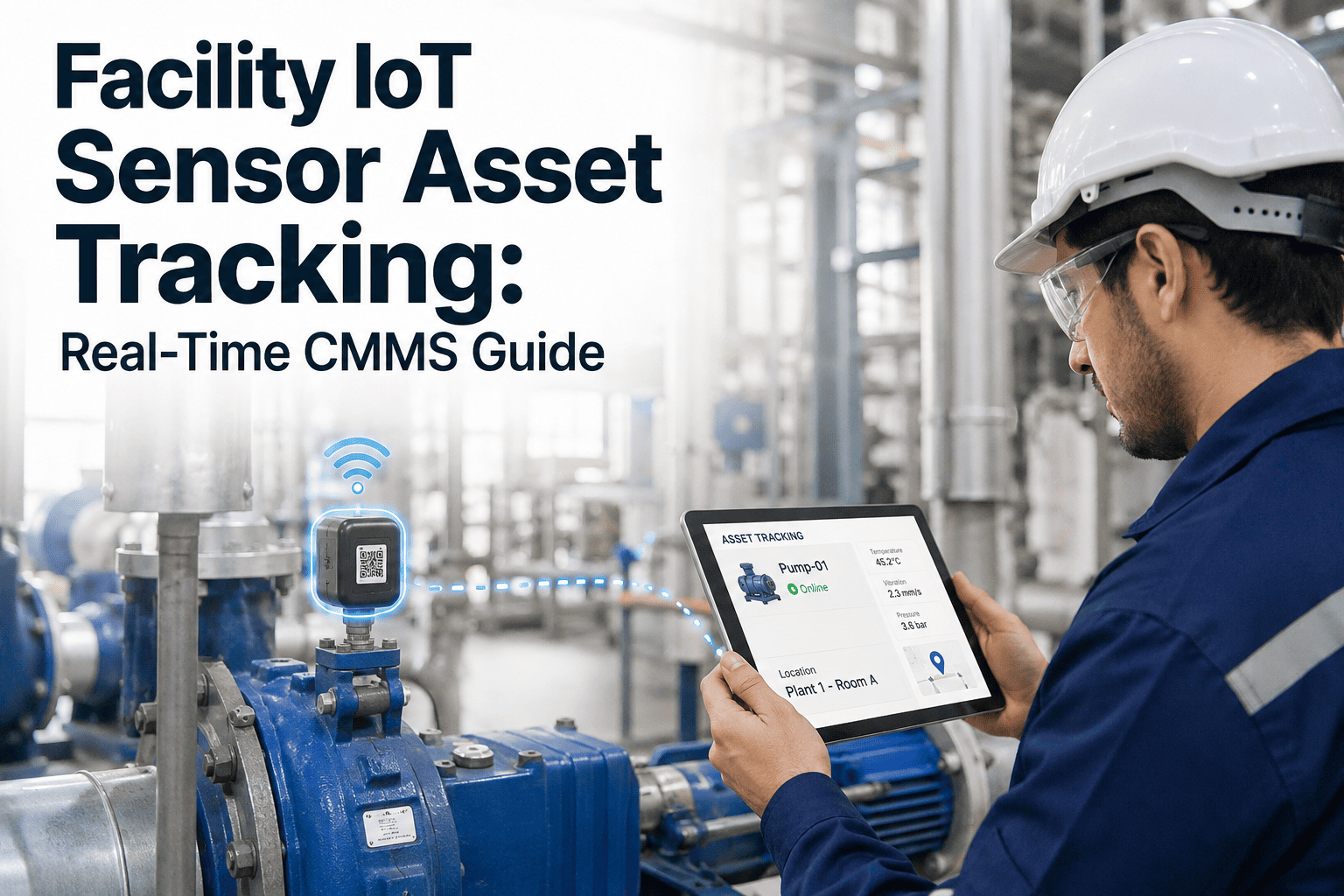
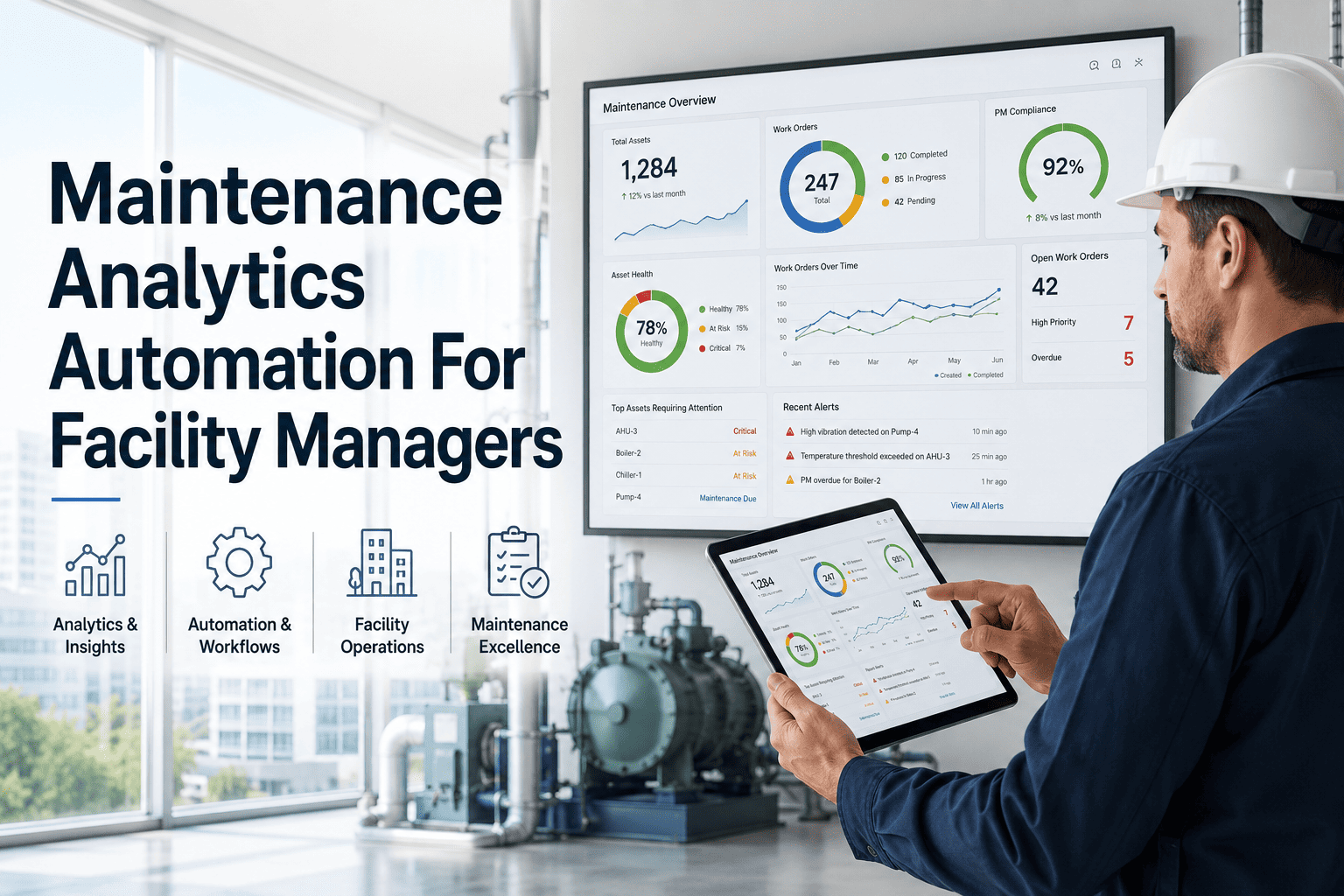
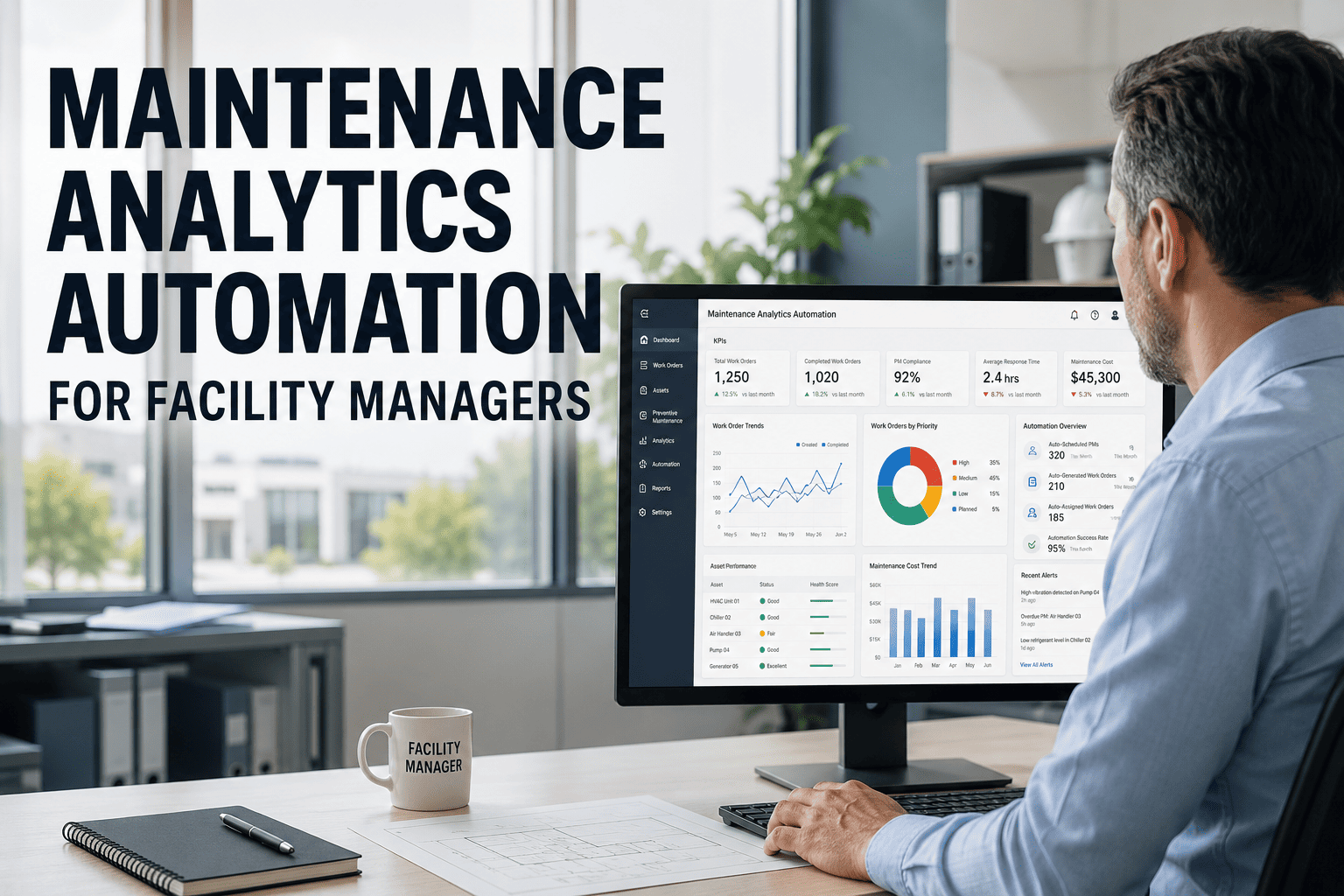
Facility managers have never had more data — and never been more frustrated by it. Work order logs sit in one system, energy consumption in another, asset records in a spreadsheet no one has updated since 2022, and inspection results in a shared drive folder that takes 20 minutes to navigate. The result is a dashboard full of numbers with no story to tell and no actions to take. AI-powered maintenance analytics dashboards change this equation entirely. Instead of compiling reports manually from disconnected sources, AI layers over your CMMS data — surfacing trends, flagging at-risk assets, and calculating the KPIs that C-suite and finance leaders actually ask about. Book a demo to see Oxmaint's AI analytics dashboard running on live facility data.
Your Facility Generates More Maintenance Data Than You Can Manually Analyze. Oxmaint's AI Does It Automatically.
Real-time KPI dashboards, predictive asset health scoring, automated anomaly alerts, and portfolio-level reporting — all powered by AI, all built into your CMMS from day one.
$19B
Global AI in CMMS market projected by 2030, growing at 25%+ CAGR
67%
Of maintenance teams will adopt AI tools by end of 2026, per industry surveys
25%
Higher asset uptime for facilities using standardized maintenance metrics vs. peers
70%
Reduction in reporting time when AI analytics replace manual KPI compilation
What It Is
What Is an AI Maintenance Analytics Dashboard — and Why Do Facility Managers Need One Now?
An AI maintenance analytics dashboard is a real-time intelligence layer built on top of your CMMS and asset records. It does three things that traditional reporting cannot.
Detect
Anomaly Detection in Real Time
AI monitors live data streams — temperature, vibration, energy usage, work order patterns — and flags deviations from baseline behavior before they become failures. A spike in HVAC energy consumption at 2 AM is caught automatically, not discovered in next month's utility bill.
Resolves issues before they cause downtime in 60–80% of detected cases
Predict
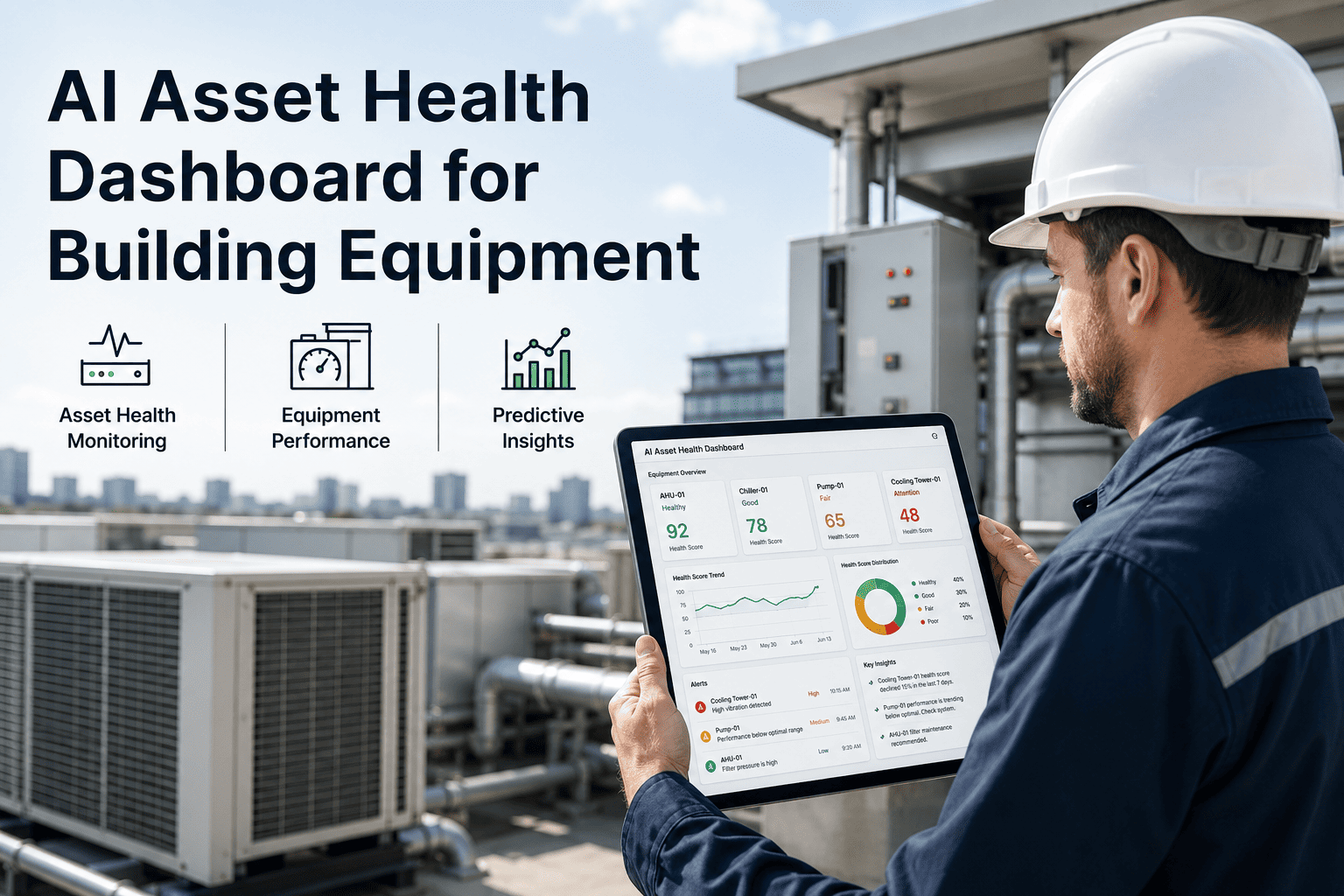
Predictive Asset Health Scoring
Machine learning models analyze historical maintenance records, failure patterns, and usage data to generate an asset health score for every piece of equipment. Assets trending toward failure get flagged for proactive intervention — not reactive emergency repair at 4.8x the cost.
Reduces unplanned downtime by 25–30% in first 12 months
Report
Automated KPI Reporting
AI replaces the 6–8 hours of monthly manual report compilation with automated dashboards that pull live data from work orders, asset records, and inspection results. KPI summaries for finance, operations, and compliance are generated in under 60 seconds — not at the end of the month.
Saves 6–8 hours of report preparation per facility per month
Prescribe
Prescriptive Maintenance Recommendations
Beyond predicting failures, AI recommends the optimal intervention — when to schedule, which technician to assign, which parts to stage, and what SOP to follow. Prescriptive analytics closes the gap between insight and action that most analytics platforms leave open.
Achieves 20% improvement in cost efficiency vs. reactive operations
The 8 KPIs
The 8 Facility Maintenance KPIs Your AI Dashboard Must Track in 2026
Tracking too many metrics creates noise. These eight are the ones finance leaders, operations directors, and compliance teams use to evaluate facility maintenance program performance.
01
PM Compliance Rate
Percentage of scheduled preventive maintenance completed on time. Industry benchmark is 85% or higher. Below 70% signals resource or scheduling gaps that will surface as emergency repairs.
Benchmark: 85%+ on-time completion
02
Mean Time to Repair (MTTR)
Average hours from failure detection to equipment restoration. Persistent MTTR increases signal technician skills gaps, parts availability issues, or escalation process failures. Industry average has risen from 49 to 81 minutes due to workforce gaps.
Target: Under 4 hrs for non-critical assets
03
Reactive vs. Planned Ratio
Proportion of emergency repairs vs. scheduled maintenance. Reactive maintenance costs 3–5x more than planned. Best-in-class facilities keep reactive work below 20%. Most start above 60% and achieve significant cost reduction through AI-prioritized PM scheduling.
Target: Below 20% reactive work
04
Asset Availability Rate
Percentage of time critical assets are operational. Calculated from MTBF and MTTR data. World-class operations achieve 99%+ availability on critical equipment by actively managing the MTBF/MTTR ratio — not just calculating it after failures occur.
World-class target: 99%+ on critical assets
05
Maintenance Cost per Square Foot
Total maintenance spend divided by managed floor area. Enables facility-to-facility comparison across portfolios. AI flags properties where cost per square foot is rising against a declining asset health score — the earliest financial signal of deferred maintenance compounding.
Benchmark varies by facility type and age
06
Corrective Action Closure Rate
Percentage of identified deficiencies resolved within target timeframes. Low closure rates expose facilities to escalating damage costs and regulatory liability. Target under 0.1 open corrective actions per occupant per month, with focus on downward trend over time.
Target: Under 12 hrs resolution for priority items
07
Energy Cost per Asset
AI identifies energy anomalies per asset that manual review misses — HVAC units running outside occupancy hours, motors drawing excess current, and refrigeration systems cycling abnormally. Corporate office AI HVAC monitoring has saved $50,000+ annually per facility in documented cases.
AI-driven savings: $50K+ per facility/year
08
% Replacement Asset Value (%RAV)
Total annual maintenance cost as a percentage of total asset replacement value. Industry benchmark is 2–3% for well-maintained facilities. Above 4% signals aging equipment or inefficient practices. Below 1% often indicates dangerous under-maintenance. AI flags when %RAV trends warrant CapEx review.
Benchmark: 2–3% for well-maintained portfolio
Why Legacy Reporting Fails
What Facility Managers Lose Without an AI Analytics Dashboard
6–8 hrs
Lost to Manual Report Preparation
Every month, facility teams spend 6–8 hours compiling KPI reports from disconnected sources — spreadsheets, work order exports, utility bills, vendor invoices. This is administrative time that adds zero operational value.
25 / mo
Unplanned Downtime Incidents Average
The average facility experiences 25 unplanned downtime incidents per month — 326 hours annually. Without AI anomaly detection, each incident is a surprise. With it, 60–80% are converted to planned maintenance events before failure occurs.
4.8x
Emergency vs. Planned Repair Cost Premium
Emergency repairs cost 4.8x more than planned maintenance. Without predictive AI, facility managers discover equipment failure at the most expensive possible moment — during failure, not before it.
Weeks
Reporting Cycle Delay
Without AI analytics, insights from maintenance data arrive weeks after the activity — when corrective action is already late. Real-time dashboards convert this lag into immediate visibility that operations teams can act on the same day.
Before vs. After
Legacy Maintenance Reporting vs. Oxmaint AI Analytics Dashboard
Capability
Legacy Reporting (Spreadsheets / Basic CMMS)
Oxmaint AI Analytics Dashboard
KPI Calculation
Manual — exported data, formatted in Excel, 6–8 hrs monthly
Automatic — calculated live from every work order close, updated in real time
Asset Health Visibility
Reactive — condition discovered at failure, not before
Predictive — AI health scores per asset, degradation trends visible weeks ahead
Anomaly Detection
None — energy spikes and usage anomalies undetected until bill arrives
Real-time — AI flags temperature, energy, and usage deviations automatically
Multi-Site Benchmarking
Inconsistent — each site reports differently, comparison impossible
Standardized — same KPI definitions across all sites, portfolio view built in
CapEx Forecasting
Guesswork — based on asset age and manager judgment
Data-driven — %RAV trends and declining health scores feed 5–10 year CapEx models
Compliance Documentation
Manual assembly — 4–8 hrs per audit event from binders and spreadsheets
Instant — timestamped, person-attributed records retrievable in under 60 seconds
Reporting to Leadership
Monthly cycle — insights arrive weeks after the activity they describe
Live — executive dashboards show real-time portfolio status, no compilation required
Maintenance Recommendations
None — scheduler decides PM timing based on calendar, not asset condition
Prescriptive — AI recommends when, who, what parts, and which SOP for each asset
How Oxmaint Solves It
How Oxmaint's AI Analytics Dashboard Works for Facility Managers
Oxmaint connects every data stream in your facility operation — work orders, asset records, IoT sensors, inspection results, and energy data — into a single AI-powered analytics layer that calculates, trends, and alerts automatically.
Live KPI Engine
Real-Time KPI Calculation From Every Work Order
Every corrective work order closed in Oxmaint automatically updates PM compliance rate, MTTR, reactive vs. planned ratio, and corrective action closure rate. No exports. No manual entry. Dashboards reflect the current state of your facility every hour of every day.
Asset Health AI
AI Health Scores With Degradation Trend Alerts
Oxmaint's AI assigns a health score to every asset in your registry — calculated from maintenance history, failure frequency, age, and condition data. Any asset whose score drops more than a defined threshold triggers an automatic investigation flag before the decline becomes a failure.
Energy Analytics
IoT-Powered Energy Anomaly Detection
Oxmaint integrates with IoT sensors and SCADA systems to monitor energy consumption per asset in real time. AI detects deviations — HVAC units running outside occupancy hours, motors pulling excess current, refrigeration systems cycling abnormally — and generates alerts before they inflate utility costs.
Portfolio Reporting
Multi-Site KPI Benchmarking Across Your Entire Portfolio
Oxmaint's portfolio dashboard benchmarks KPI performance across every facility simultaneously — using standardized metric definitions that make cross-site comparison meaningful. Corporate leadership sees which sites are underperforming against portfolio benchmarks without waiting for site-level reports to compile.
CapEx Intelligence
Declining Asset Health Feeds Directly Into CapEx Forecasting
When an asset's health score trend indicates end-of-life, Oxmaint surfaces it in the rolling 5–10 year CapEx forecast model. Finance and operations see capital requirements based on actual asset degradation data — not manager estimates or simple age-based rules.
Compliance Automation
Audit-Ready Documentation Generated Automatically
Every inspection, work order, and asset event is timestamped, person-attributed, and stored with digital signatures. OSHA, EPA, and building safety compliance documentation is retrievable in under 60 seconds from the audit dashboard — not assembled over hours from paper binders.
Measurable Results
What Facilities Achieve With an AI Maintenance Analytics Dashboard
30%
Reduction in Operating Costs
Facilities using Oxmaint's AI analytics optimize maintenance spending by 30% through data-driven PM frequency, reduced emergency repairs, and smarter resource allocation.
40%
Longer Asset Lifespan
Proactive AI-driven maintenance extends equipment lifespan by 40% — directly reducing CapEx requirements and deferring major replacement cycles.
70%
Faster Report Generation
Nestlé cut reporting time by 70% after standardizing maintenance KPIs on a unified dashboard. Oxmaint delivers the same outcome for facilities of any scale through automated KPI compilation.
12%
Increase in Equipment Reliability
Standardized KPI frameworks with AI analytics drive 12% overall equipment reliability improvement within the first year — matching outcomes documented in global manufacturing benchmarking studies.
Frequently Asked Questions
AI Maintenance Analytics Dashboards — What Facility Managers Ask First
What data does an AI maintenance analytics dashboard need to start generating useful KPIs?
The minimum data set needed for meaningful AI analytics is 60–90 days of closed work order history with consistent timestamps, asset IDs, and failure codes. This is enough for the AI to calculate baseline MTTR, PM compliance rates, and reactive vs. planned ratios — and to start identifying the assets that are driving the highest downtime frequency. The more data available, the more accurate the predictive health scoring and anomaly detection become. For new Oxmaint deployments, the AI analytics layer begins producing actionable KPIs from the first month of live operations — with accuracy improving significantly by month three as the training dataset grows. IoT and energy data integration enhances the analytics layer further but is not required to start.
Sign up free and see your first KPI dashboard within 30 days.
Book a demo to see how Oxmaint onboards your existing maintenance data.
How does Oxmaint's AI analytics dashboard differ from standard CMMS reporting?
Standard CMMS reporting shows you what happened — closed work orders, completed inspections, PM schedules completed. AI analytics shows you what is happening and what is likely to happen next. The difference is the intelligence layer. Oxmaint's AI calculates asset health scores from historical failure patterns, identifies anomalies in energy and usage data that manual review misses, flags assets whose KPI trends indicate end-of-life before they fail, and generates prescriptive maintenance recommendations — not just records of past activity. Standard reporting requires a human to synthesize data into insight. AI analytics does the synthesis automatically, surfacing only the findings that require action. The 6–8 hours of monthly manual KPI compilation is eliminated entirely.
Book a demo to see the AI analytics layer vs. standard reporting side by side.
Sign up free and experience the difference on your own facility data.
Can the AI analytics dashboard benchmark KPIs across multiple facilities in a single portfolio view?
Yes — and this is one of the highest-value capabilities for multi-site facility managers and portfolio owners. Oxmaint's AI analytics layer uses standardized KPI definitions across every site in your portfolio, making performance comparison meaningful rather than misleading. Corporate operations leaders see PM compliance rates, MTTR, reactive vs. planned ratios, maintenance cost per square foot, and asset health scores for every facility simultaneously — with automatic flagging of sites that are underperforming against portfolio averages. BASF's experience standardizing maintenance KPIs across 300+ production facilities on a unified dashboard reduced reporting cycle times from weeks to real-time and aligned decision-making across the entire network. Oxmaint delivers the same capability for commercial and industrial facility portfolios of any size.
Sign up free and connect your first two sites within days.
Book a demo to see portfolio benchmarking live.
How does AI maintenance analytics support compliance documentation for OSHA and building safety audits?
Every event recorded in Oxmaint — inspection completed, work order closed, deficiency identified, corrective action taken — is timestamped, attributed to a named user, and stored with digital signature verification. The AI analytics layer cross-references this activity against compliance schedules and flags overdue inspections, unresolved corrective actions, and inspection failures that have not received a closed repair work order. When an OSHA inspector or insurance auditor requests documentation, Oxmaint's audit dashboard retrieves the complete, searchable record in under 60 seconds — compared to the 4–8 hours of manual binder assembly that paper-based or disconnected systems require. The audit trail is tamper-evident, version-controlled, and accessible from any device without requiring the original records manager to be present.
Book a demo to see the compliance documentation workflow live.
Sign up free and start building an audit-ready record from day one.
Does Oxmaint's AI analytics work without IoT sensors — and what additional value do sensors add?
Oxmaint's AI analytics layer produces meaningful KPIs, health scores, and trend analysis from CMMS work order data alone — no IoT sensors required to start. The AI uses failure history, maintenance frequency, cost patterns, and condition records to calculate asset health scores and predict degradation. IoT sensors significantly enhance this analytics layer when added, enabling real-time anomaly detection that work order data alone cannot provide. A temperature sensor on a chiller identifies an abnormal reading 48 hours before the unit trips on high-temp protection — the work order data would only show the failure after it occurred. Energy consumption sensors identify assets running outside expected parameters without requiring technician observation. The Oxmaint platform integrates with IoT gateways, SCADA systems, and PLC data feeds — with each additional data source improving predictive accuracy and reducing the gap between anomaly occurrence and detection. Facilities typically start with work order-based analytics and add IoT as they scale their predictive maintenance program.
Sign up free to begin with work order analytics.
Book a demo to see the IoT integration roadmap for your facility type.
Your Facility Data Is Already There. Oxmaint's AI Turns It Into Decisions.
67% of maintenance teams will adopt AI analytics by end of 2026. The facilities that start now build the operational data quality, KPI baseline, and predictive accuracy that make AI increasingly powerful over time. Those that wait start from zero when their competitors are already 12 months ahead. Oxmaint deploys in days, not months. Your first AI-calculated KPI dashboard is live in your first week.