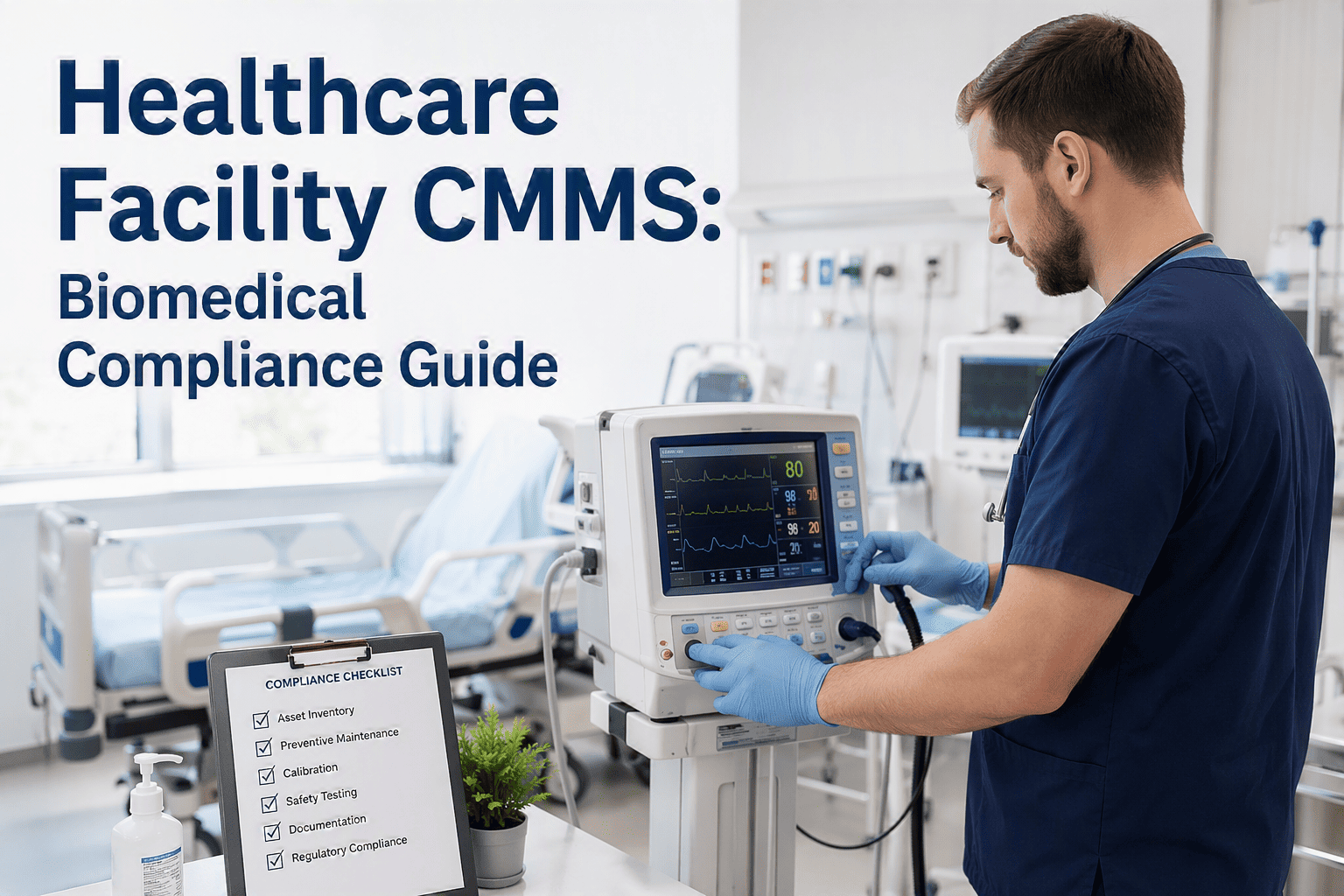
A 7-hospital healthcare system operating across three states had passed every Joint Commission survey for a decade — but only by assembling documentation manually in the weeks before each inspection cycle. Maintenance supervisors described pre-survey preparation as "organized panic": pulling paper logs, chasing technicians for missing signatures, and reconciling spreadsheets that no one had updated consistently. When the system deployed Oxmaint CMMS across all seven facilities, their next Joint Commission survey required no preparation sprint. Every maintenance record was already current, timestamped, and exportable in the format inspectors required. The result was a 100% compliance score — and a 72% reduction in maintenance backlog. Book a demo to see how Oxmaint's compliance tracking works for your healthcare facility, or start a free trial today.
How a Healthcare System Achieved 100% Joint Commission Compliance with CMMS
A 7-hospital system used Oxmaint CMMS to achieve 100% Joint Commission compliance scores, eliminate paper inspection logs, and reduce maintenance backlog by 72% — all within 18 months of deployment.
Seven Hospitals, Seven Disconnected Maintenance Systems
Each hospital in the system had developed its own maintenance tracking approach over decades of independent operation before the system merger. Some used legacy CMMS platforms. Some used paper logs. Two used Excel. None of the systems shared data, which meant system-level compliance reporting required a manual consolidation exercise that took the central FM team 3–4 weeks before every Joint Commission survey cycle.
The Joint Commission's Environment of Care and Life Safety standards require documented PM completion for 14 equipment categories including medical gas systems, fire suppression, emergency generators, and patient-care HVAC systems — with records retention of 36 months minimum. Across seven hospitals with different tracking systems, meeting this requirement consistently was the single greatest compliance risk in the portfolio.
Joint Commission EC and LS Standards — How Oxmaint Covers Each Requirement
| JC Standard | Equipment Category | Documentation Required | Oxmaint Coverage |
|---|---|---|---|
| EC.02.05.01 | Utility systems — HVAC | PM completion + test records (36 mo) | Auto-generated on WO closure |
| EC.02.05.07 | Emergency power — generators | Monthly load test + annual certification | Calendar trigger + test log fields |
| LS.02.01.35 | Fire suppression systems | Quarterly inspection + annual test | Statutory trigger + inspector sign-off |
| EC.02.05.09 | Medical gas systems | Annual inspection + alarm test records | Asset-linked PM with test data fields |
| LS.02.01.20 | Egress and life safety | Door hardware + corridor inspection logs | Mobile inspection with photo evidence |
| EC.02.06.01 | Patient care environment | IAQ records + filter PM documentation | Condition-triggered PM + IAQ log |
18-Month Outcome Summary
First 100% compliance score in the system's history. Zero open Standards of Compliance (SOCs) raised across all 7 facilities in the post-deployment survey cycle. Documentation available instantly for every surveyor request — no pre-survey preparation required.
Open work order backlog reduced from 4,200 items system-wide to 1,176 within 18 months. PM compliance rose from 68% to 93% across all 7 hospitals. Emergency work order ratio dropped from 38% to 16% of total volume.
Combined savings across emergency repair reduction, overtime elimination, manual reporting labor recovery, and avoided compliance penalty risk. Central FM team recovered 140 hours per week previously consumed by cross-facility reporting consolidation.
What Healthcare FM Leaders Say
The relationship between CMMS implementation and Joint Commission compliance outcomes is the most consistent pattern I have seen in healthcare facility management. Every system that moves from paper logs or disconnected spreadsheets to a unified CMMS with automated PM scheduling sees compliance scores improve — not because the maintenance work changes, but because the documentation finally matches the work being done. Joint Commission surveyors are not looking for perfect equipment. They are looking for evidence of a systematic maintenance program. A timestamped, technician-signed, asset-linked maintenance record for every required PM task is that evidence. When that record generates automatically at work order closure rather than being assembled manually before each survey, compliance preparation stops being a crisis and starts being a non-event. The 100% score in this case study is not unusual for healthcare systems that make this transition. What is unusual is that it took this long for the industry to adopt the tools that make it straightforward.
Oxmaint auto-generates every compliance document your surveyors require — from PM completion records to generator test logs — at work order closure. No preparation sprint. No missing signatures. Book a demo to see how it works for your hospital system.
Frequently Asked Questions
Which specific Joint Commission standards does Oxmaint's compliance tracking cover?
Oxmaint covers the Environment of Care (EC) and Life Safety (LS) chapters of Joint Commission standards, with pre-configured PM task templates and documentation fields for EC.02.05.01 (utility systems), EC.02.05.07 (emergency power), EC.02.05.09 (medical gas), LS.02.01.35 (fire suppression), LS.02.01.20 (egress and life safety), and EC.02.06.01 (patient care environment). Each template includes the specific data fields, retention periods, and technician sign-off requirements that surveyors examine during Environment of Care reviews. Book a demo to review the full Joint Commission compliance template library.
How does Oxmaint handle the 36-month documentation retention requirement?
All work order records in Oxmaint are retained indefinitely in the cloud with immutable timestamps and technician digital signatures — well beyond the 36-month minimum requirement. During a Joint Commission survey, the compliance export function generates a date-filtered PDF or CSV report for any equipment category, covering the full required retention period, in under 5 minutes. The export format is structured to match the chronological inspection history format that Joint Commission surveyors typically request. Start a free trial and configure your compliance retention settings today.
Can Oxmaint be deployed across multiple hospital facilities simultaneously?
Yes. Oxmaint's multi-facility deployment framework allows all hospitals in a system to be configured simultaneously using a shared asset template library and compliance calendar, with facility-specific customizations for local vendor contracts, equipment variations, and jurisdiction-specific requirements. The 7-hospital deployment in this case study was completed in 11 weeks — approximately 1.5 weeks per facility — using Oxmaint's parallel implementation methodology with one dedicated implementation manager per hospital group. Book a session to plan your multi-facility deployment timeline.
Oxmaint gives your healthcare system complete, automatically generated maintenance documentation for every Joint Commission-required equipment category — so your surveyors find exactly what they need, every time, without a preparation sprint from your team.