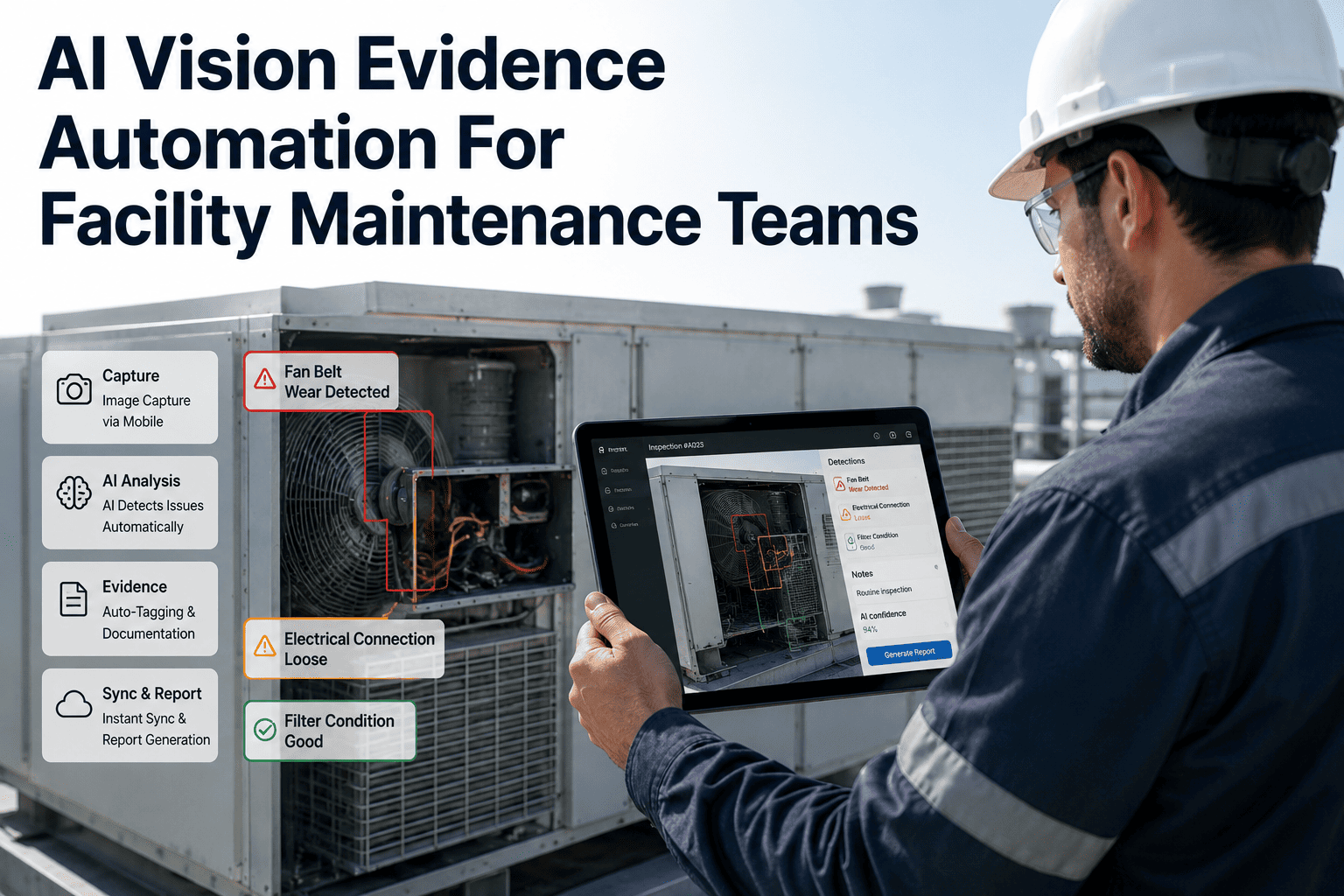
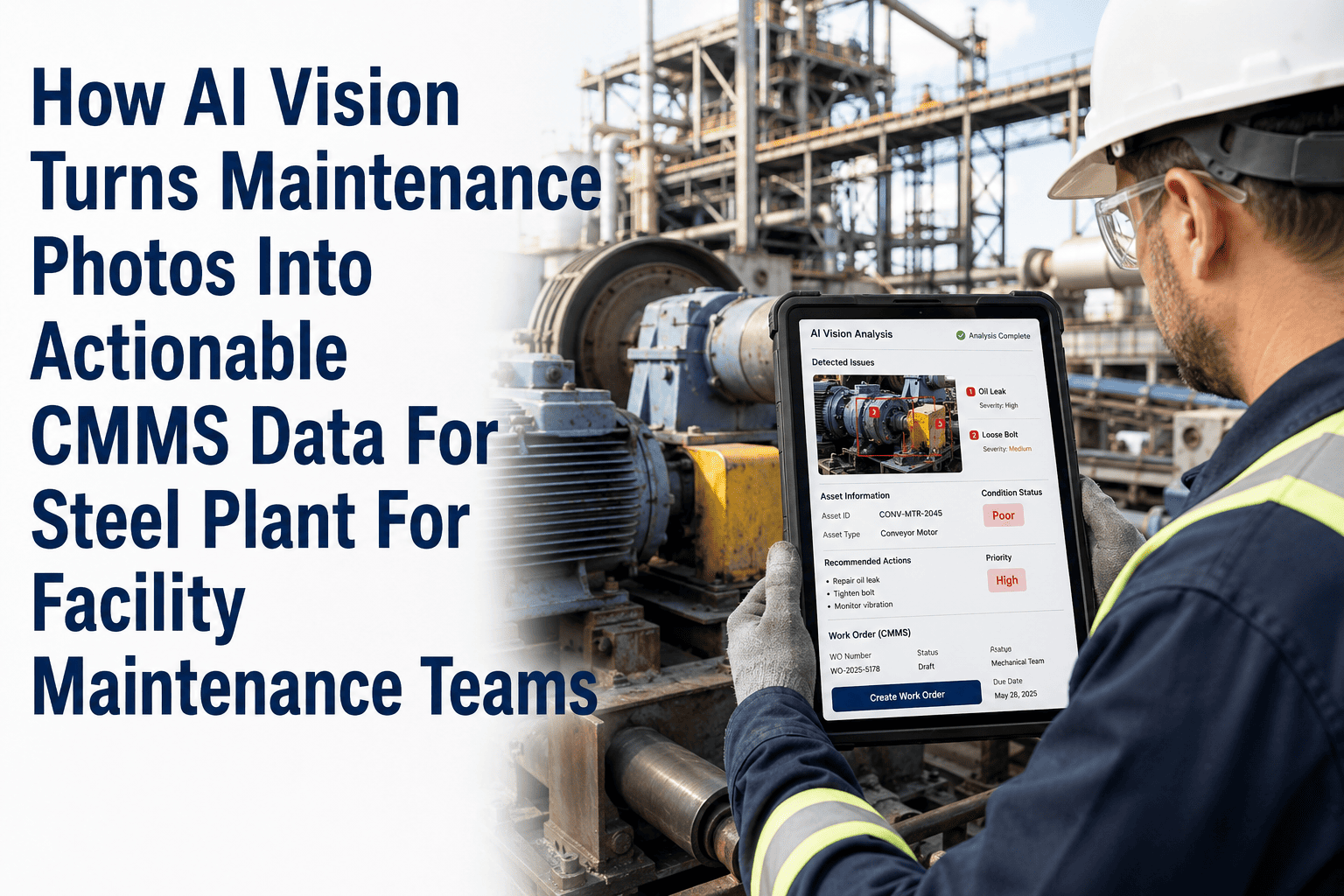
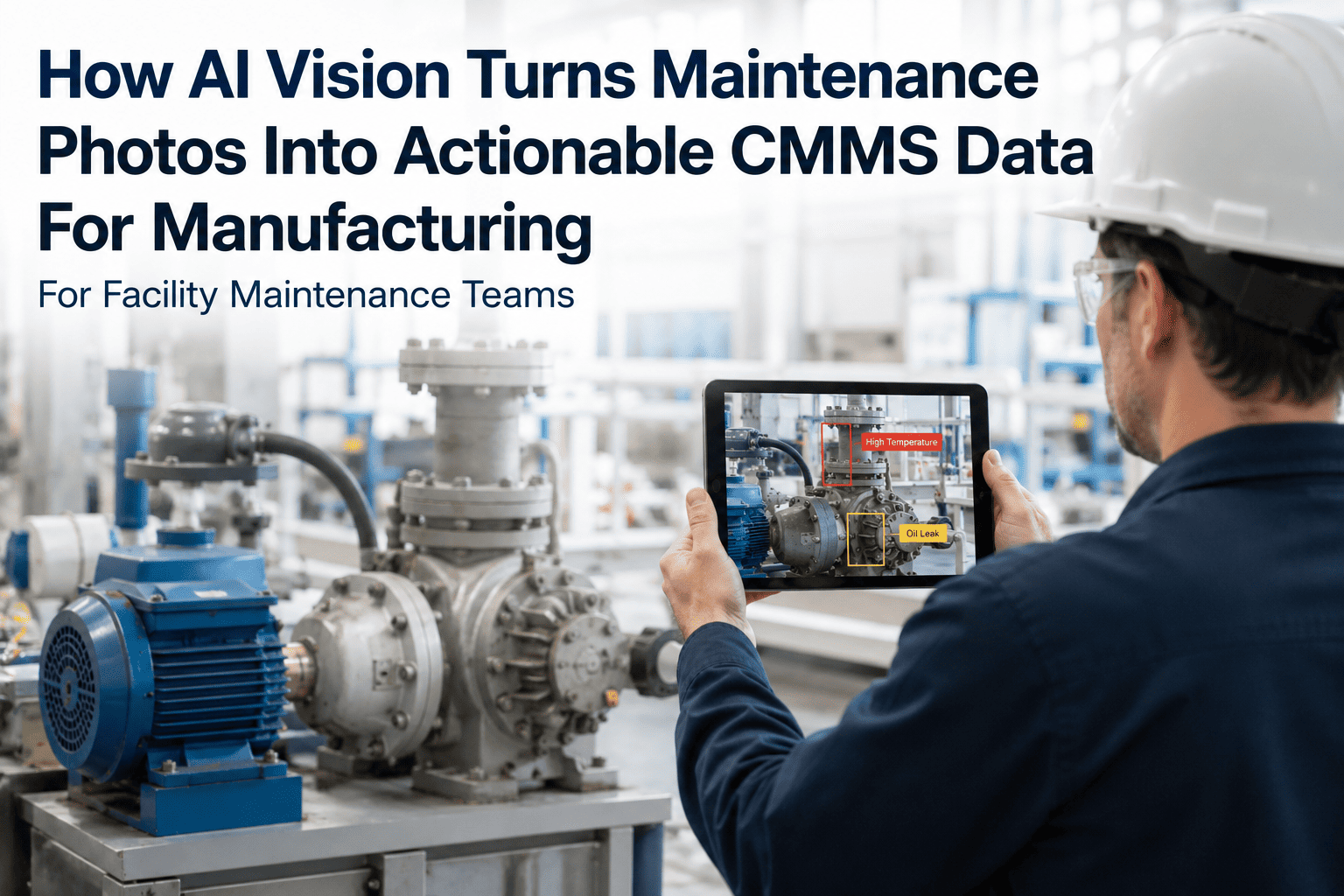
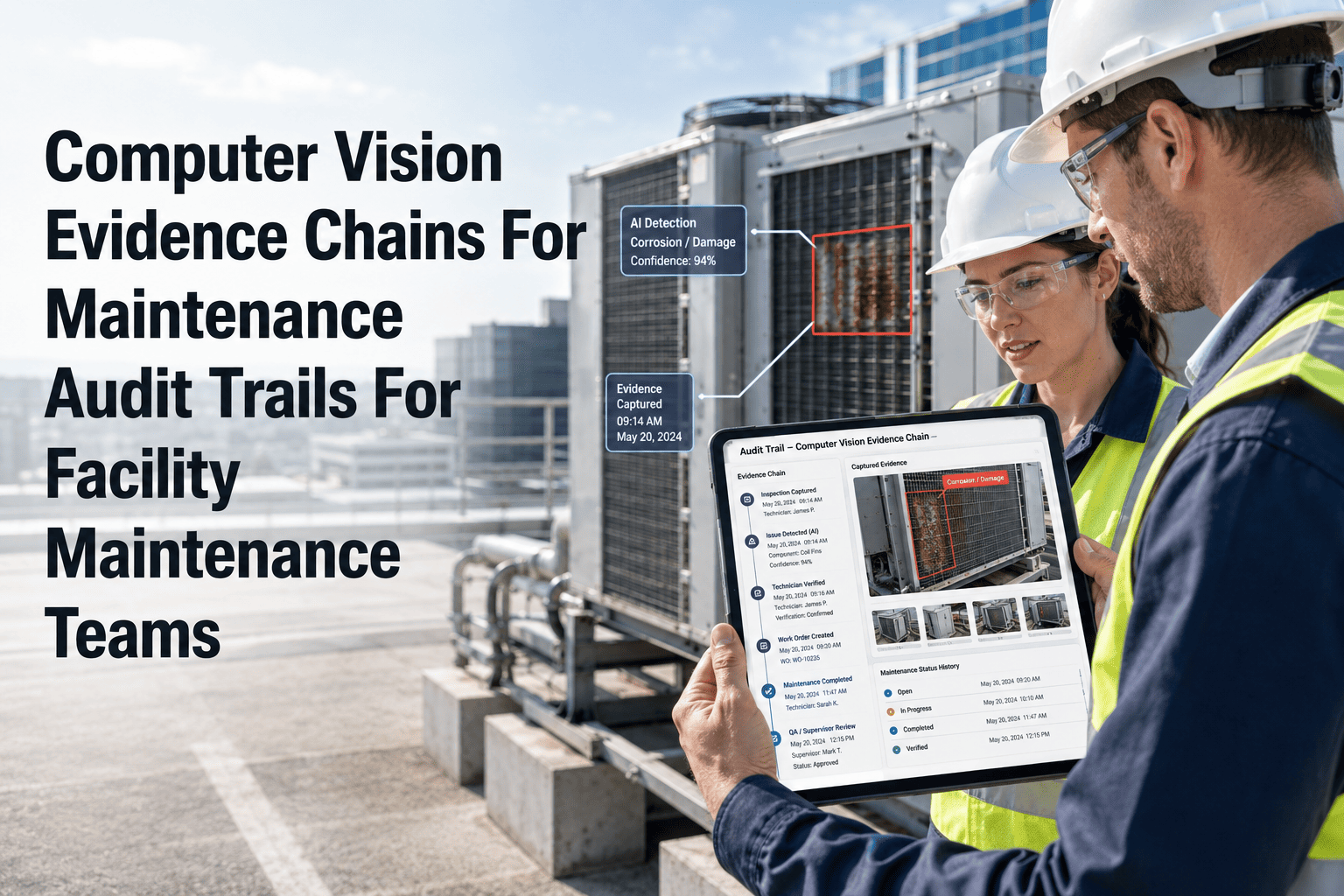
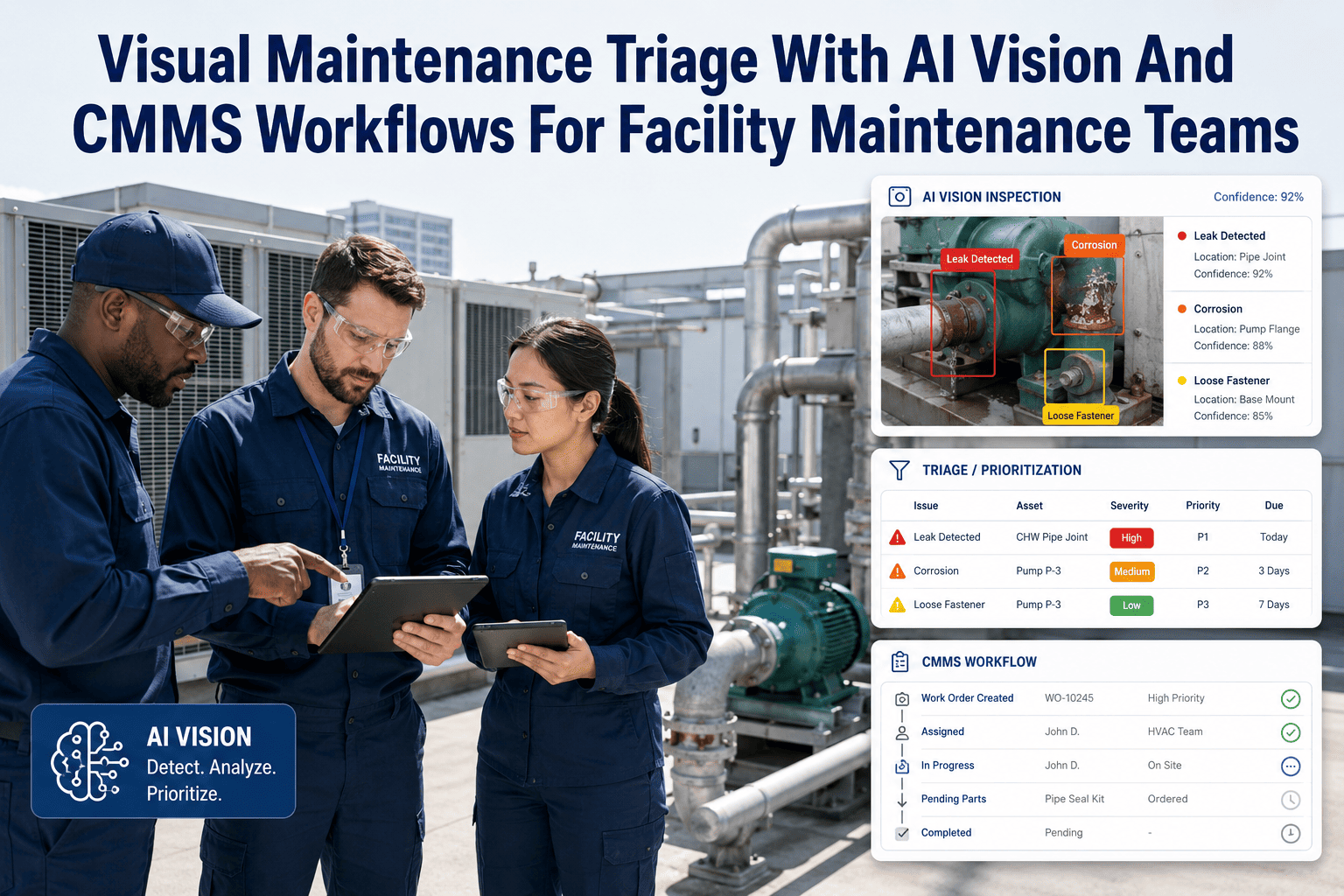
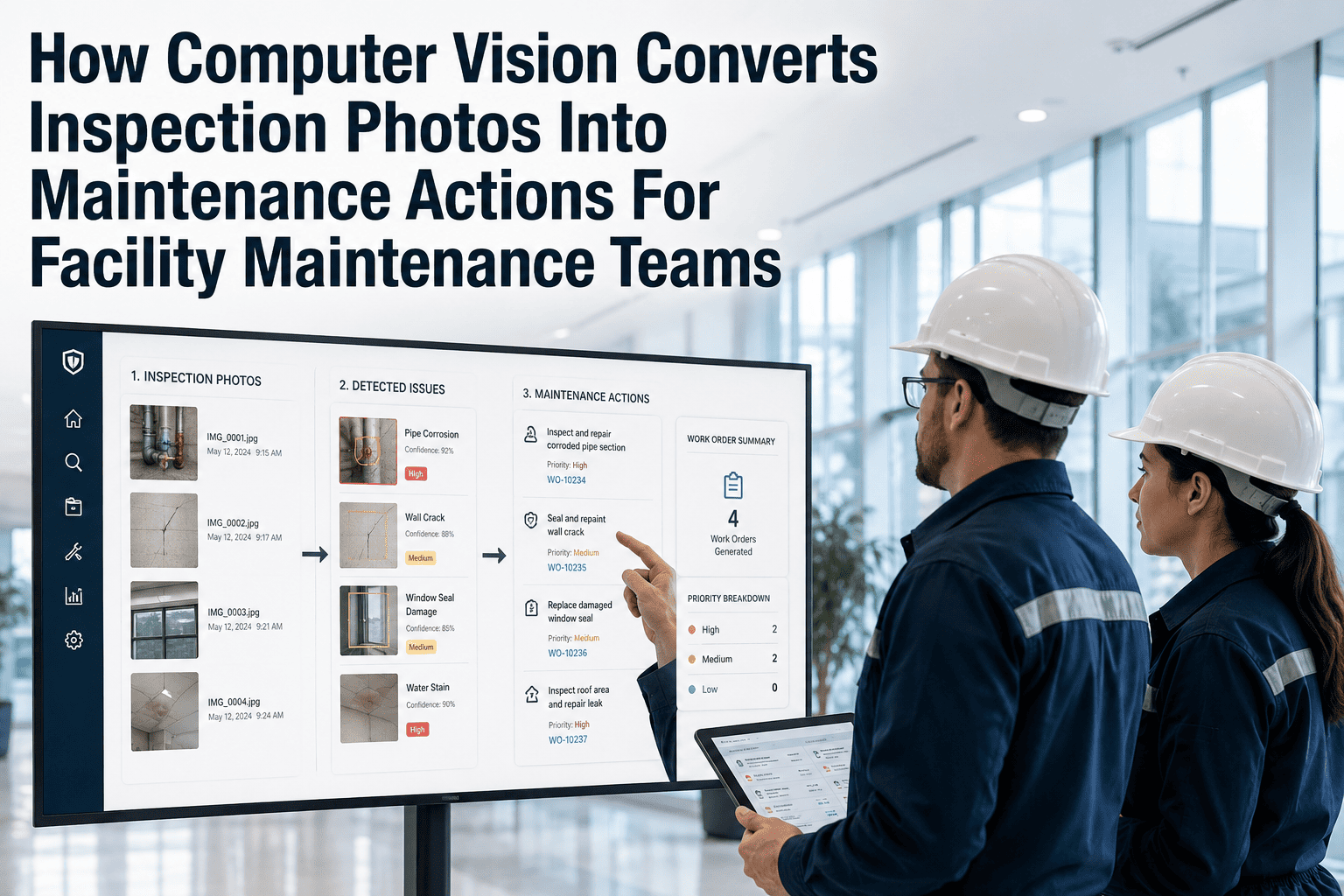
Maintenance exceptions — the conditions that fall outside normal operating parameters and require immediate or planned intervention — are the most time-sensitive category of facility event, and the hardest to catch consistently with manual inspection rounds. An AI vision rules engine addresses this directly by defining, in precise visual terms, exactly what counts as an exception for every asset class and camera zone in a facility, and then triggering structured CMMS responses the moment those conditions are detected. OxMaint's rules engine allows maintenance managers to encode their standard operating procedures visually: specify what a compliant asset looks like, define the deviation thresholds that constitute an exception, and set the automatic response — work order creation, supervisor alert, or shutdown flag — for each rule. The result is a facility that never sleeps and never misses an exception, regardless of shift coverage, inspector availability, or human attention span. Book a demo to see OxMaint's vision rules engine configured for your asset types.
AI Vision · Rules Engine · Exception Detection · CMMS
Define the Rule. Let AI Catch Every Exception. Automatically.
OxMaint's AI Vision Rules Engine lets you encode what "normal" looks like for every asset — and automatically triggers a structured CMMS response the instant a camera detects a deviation.
Rules Engine Architecture
Anatomy of an OxMaint Vision Rule
IF
Visual Condition
Camera detects a defined visual condition — fluid pooling, surface corrosion, PPE absence, door left open, structural crack — on a specified asset class or zone
→
MEETS
Threshold Rule
Condition matches a pre-defined exception threshold — severity tier, size threshold, frequency of recurrence, or proximity to critical asset — set by the maintenance manager
→
THEN
CMMS Action Triggered
OxMaint automatically creates a work order, sends an alert, or triggers a shutdown request — with photo evidence, asset context, and assigned team pre-filled — in seconds
Rule Library
Pre-Built Vision Rules Available in OxMaint by Exception Category
| Exception Category |
Vision Rule Condition |
CMMS Response Triggered |
Severity |
| Fluid / Leak |
Pooled liquid detected within 30cm of pipe joint or valve |
Leak Investigation Work Order + Supervisor Alert |
Urgent |
| Electrical Safety |
Panel door open for > 60 seconds or heat signature detected |
Electrical Safety WO + Shift Manager Notification |
Urgent |
| PPE Compliance |
Worker in restricted zone without helmet, vest, or gloves |
Safety Alert + Incident Log Entry |
Urgent |
| Mechanical Wear |
Belt tracking deviation exceeds ±15mm or surface tear detected |
Conveyor Corrective Maintenance WO |
High |
| Corrosion |
Rust bloom exceeding 5% of surface area on structural steel |
Structural Condition Assessment WO |
Medium |
| Housekeeping |
Aisle obstruction or spill present in designated clear zone |
Housekeeping Request Work Order |
Medium |
| HVAC / Filter |
Filter discolouration or condensate overflow visible at unit |
HVAC Corrective Work Order |
High |
OxMaint Vision Rules Engine · Automate Exception Response
Set the Rules Once. OxMaint Catches Every Exception, Every Shift.
OxMaint's AI Vision Rules Engine converts your maintenance SOPs into automated exception detection — triggering the right CMMS response at the right time without any manual monitoring.
Rules Engine vs Manual Monitoring
Why a Rules Engine Outperforms Manual Exception Detection at Scale
● Inspector-dependent — exceptions missed during off-shifts
● Inconsistent severity assessment across different inspectors
● 30–90 min lag from detection to work order creation
● No exception history unless manually logged
● Rules exist in SOPs but are not consistently applied in the field
✓ 24/7 camera monitoring — no off-shift gaps
✓ Consistent rule application — same thresholds every detection
✓ Under 60 seconds from exception to CMMS work order
✓ Full exception log with timestamps and photo evidence
✓ SOPs encoded directly into rules — enforced automatically
Expert Perspective
"
A vision rules engine is the operational equivalent of encoding your maintenance standards into the facility itself. Instead of relying on an inspector to remember what constitutes an exception on a pump versus a conveyor, the rule is applied identically every time a camera frame is processed. The compliance value alone — being able to demonstrate that every deviation was caught, logged, and responded to — changes the conversation with auditors and insurers entirely.
James Okafor
Industrial Reliability Engineer · 20 years in process plant maintenance and CMMS deployment · CRE, CMRP
FAQs
AI Vision Rules Engine for Exception Detection — Common Questions
Can maintenance managers create custom rules for their specific asset types and thresholds?
Yes. OxMaint provides a rule builder interface where maintenance managers can define exception conditions, thresholds, and CMMS responses per asset class, camera zone, or site. Custom rules can reference your facility's own severity definitions and SOP language.
Book a demo to walk through the rule builder for your specific asset types — most facilities configure their first set of rules in the same session.
How does the rules engine handle exceptions that require different responses depending on the time of day or shift?
OxMaint rules support time-based and shift-based conditions — a panel door open during a scheduled maintenance window may generate a log entry rather than an urgent alert, while the same detection during a non-maintenance shift triggers an immediate supervisor notification. Shift schedules are synchronized with the OxMaint team schedule, ensuring rules fire the correct response based on who is on duty and what maintenance activities are in progress.
Start a free trial to configure shift-aware exception rules.
Is there a way to review which rules are triggering most frequently and why?
OxMaint provides a rules analytics dashboard showing exception frequency per rule, per asset, and per camera zone over configurable time periods. High-frequency rule triggers are surfaced as potential systemic issues requiring root cause investigation, while rules that never trigger may indicate misconfigured camera zones or asset conditions that have since been resolved. This data is directly actionable for continuous improvement of both asset condition and maintenance SOPs.
Can rules suppress duplicate exceptions when the same defect triggers multiple detections in a short window?
Yes. OxMaint rules include configurable de-duplication logic — when a defect is detected multiple times within a user-defined window (e.g. every 5 minutes for the same defect on the same asset), the system creates a single work order with a detection frequency count rather than generating a new WO per frame. This prevents planner queue flooding while maintaining a complete record of detection frequency, which is valuable evidence for priority escalation.
See de-duplication and escalation logic in a live demo.
OxMaint · AI Vision Rules Engine · Free to Start
Your Maintenance SOPs Should Run Automatically. The Rules Engine Makes Them.
OxMaint encodes your exception definitions into a live visual monitoring system — so every deviation from normal is caught, classified, and responded to without waiting for the next inspection round.