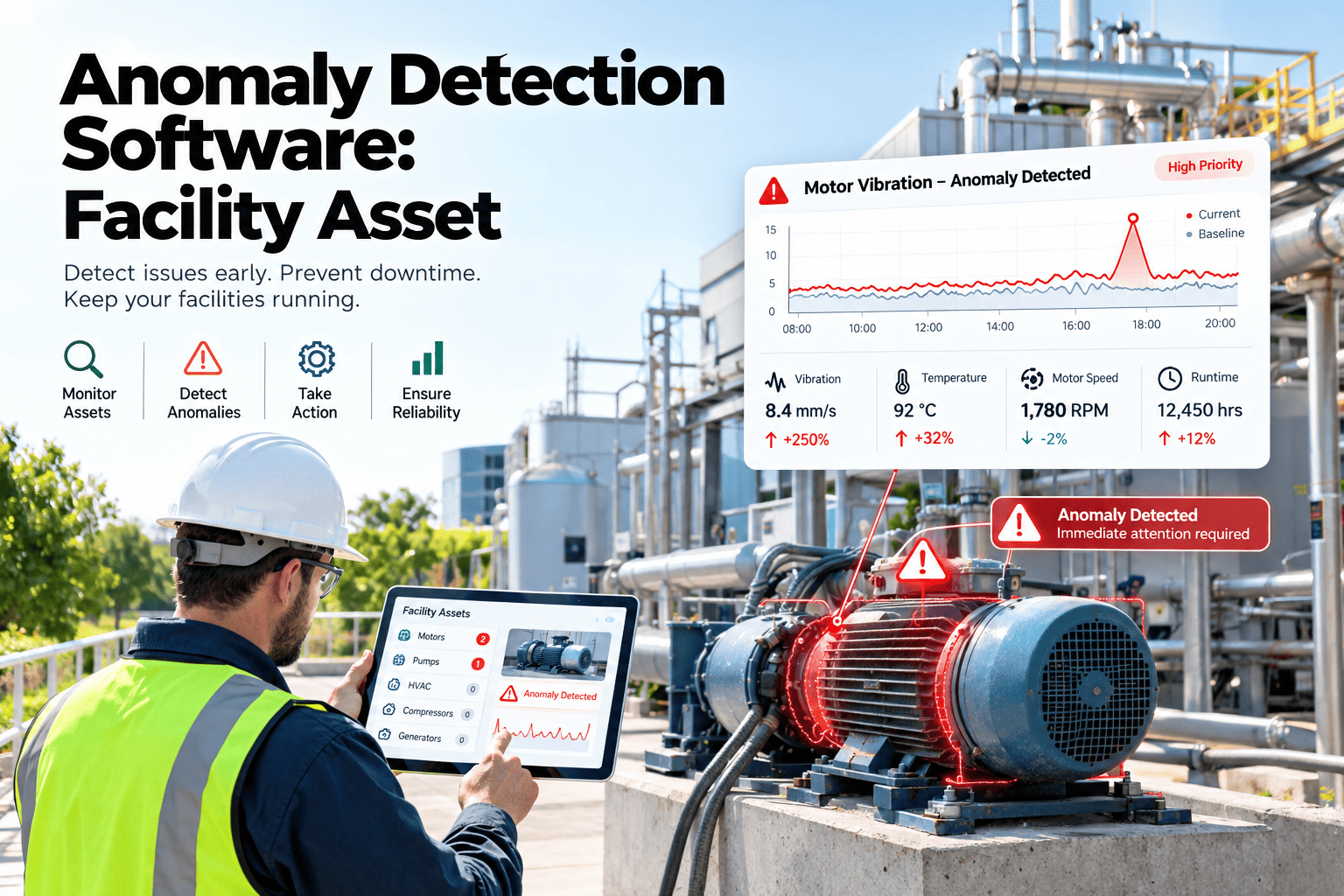
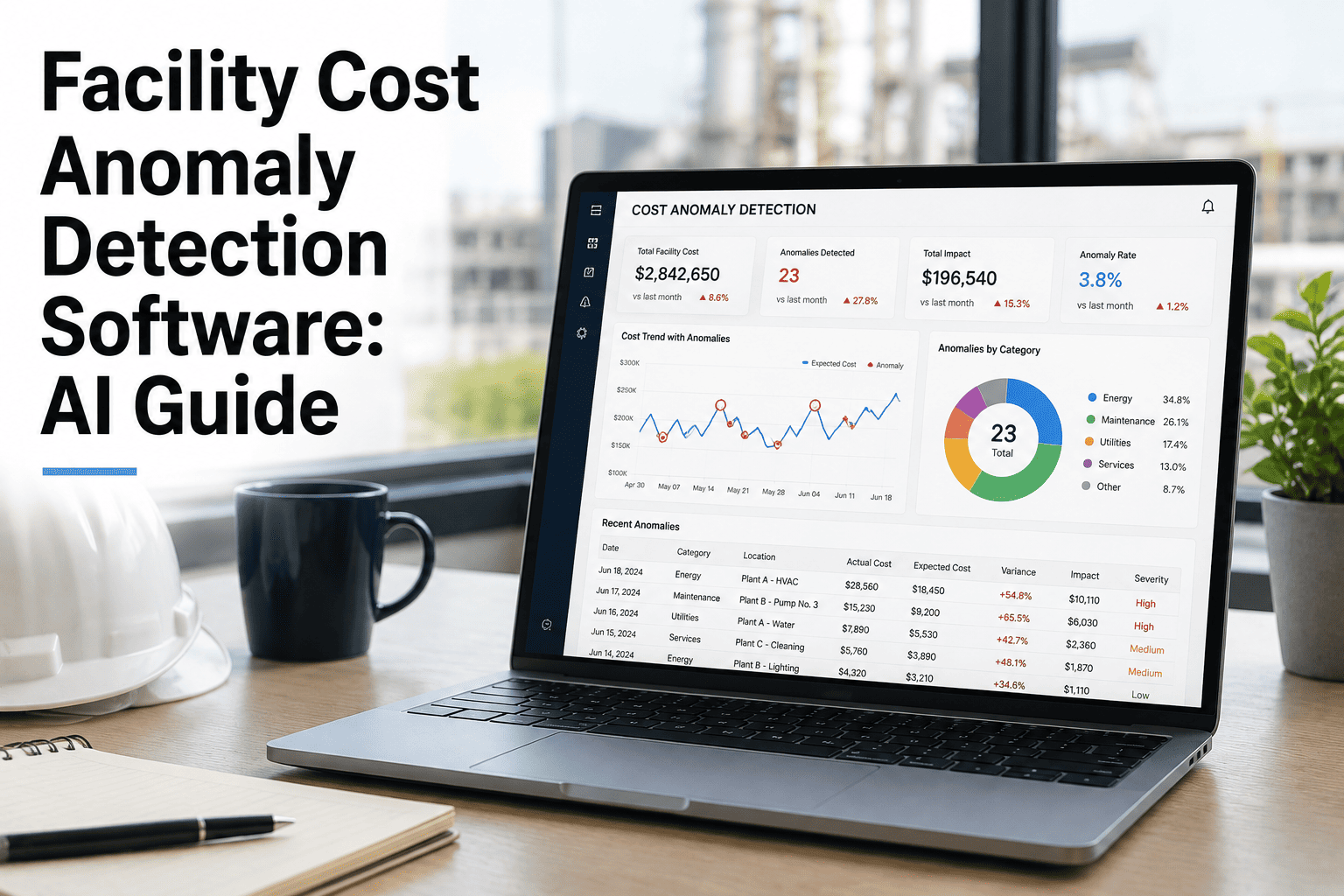
Most equipment does not fail without warning. It drifts. A bearing runs a fraction of a degree warmer, a motor draws slightly more current, a compressor cycles a little more often than it did last month, and none of those changes are large enough to trip a fixed alarm threshold. Anomaly detection software is built to catch exactly that kind of drift, comparing what an asset is doing right now against its own normal behavior instead of waiting for a hard limit to be crossed. This page looks at how facility teams are using anomaly detection to catch abnormal asset conditions weeks before a threshold alarm would ever fire, and where the technology fits into a practical maintenance program rather than a research lab. You can try OxMaint's anomaly detection tools for free to see how it reads your own equipment data.
From Normal Range to Failure: The Anomaly Timeline
Every equipment failure has a shape, and that shape almost always starts long before anyone notices a problem. Understanding the four stages below is the difference between a maintenance program that reacts to alarms and one that catches problems while they are still cheap to fix.
Baseline Behavior
The asset runs within its normal operating pattern across temperature, vibration, current, and cycle frequency.
Gradual Drift
Readings shift slowly away from baseline, still well inside any fixed alarm limit, invisible to threshold monitoring.
Threshold Breach
A fixed alarm finally trips, but by this stage the underlying wear is often already advanced.
Unplanned Failure
The asset stops or degrades unexpectedly, taking production, comfort, or safety systems down with it.
Anomaly detection software is designed to raise a flag during the drift stage, while a fixed threshold system by definition cannot say anything until stage three. That gap between drift and breach is where most of the maintenance savings live.
3-6 wks
earlier warning
Typical lead time gained by flagging drift instead of waiting for a threshold alarm
80%
failures show drift first
Share of mechanical and electrical failures preceded by a detectable behavioral drift period
60%
fewer false alarms
Reduction in nuisance alerts when detection is based on learned patterns instead of fixed limits
Stop waiting for threshold alarms. Let anomaly detection flag the drift while a fix is still a small one.
Not every asset drifts the same way, and a model tuned for one equipment type will miss the signature of another. These are the systems where behavioral drift shows up earliest and most reliably across a typical facility portfolio.
01
HVAC and Chillers
Compressor cycling frequency and discharge temperature drift ahead of refrigerant loss or bearing wear.
02
Motors and Pumps
Vibration signature and current draw shift as bearings, seals, and alignment slowly degrade.
03
Electrical Panels
Thermal patterns and load balance across phases drift before a connection loosens enough to arc.
04
Compressed Air Systems
Run time percentage and pressure decay rate creep upward as leaks accumulate across a distribution loop.
05
Refrigeration Units
Defrost cycle length and suction pressure drift ahead of coil fouling or a slow refrigerant leak.
06
Building Automation Sensors
Sensor readings that drift from paired sensors nearby often signal calibration failure, not a real condition change.
How Detection Methods Compare
Facility teams reach anomaly detection from very different starting points, from a fully manual trend review to a vendor-supplied black box tied to one piece of equipment. Here is how the common approaches stack up against each other.
Method
Detects
Lead Time
False Alarm Rate
Best Fit
OxMaint AI Anomaly Detection
Behavioral drift across asset types
Weeks ahead of failure
Low, learns per-asset baseline
Multi-site facility portfolios
Fixed Threshold Alarms
Hard limit breaches only
Minimal to none
High during normal variation
Safety shutoffs and interlocks
Manual Trend Review
Whatever a technician happens to spot
Depends on review frequency
Inconsistent
Very small equipment counts
Vendor Black-Box Analytics
Single equipment brand only
Moderate
Varies by vendor
Single-vendor mechanical rooms
No Monitoring
Nothing until it stops working
None
Not applicable
Low-criticality, disposable assets
See how OxMaint learns a normal baseline for every asset instead of relying on one fixed number.
A monitoring program can look sophisticated on paper and still fail to catch anything useful. Run through this list honestly before assuming your current setup is working.
Alarms only fire after a hard limit is crossed, never during a gradual drift period
Technicians routinely dismiss alerts because most of them turn out to be false
Every asset uses the same alarm limit regardless of its age, load, or condition history
Nobody can pull up a trend chart for a specific asset without exporting raw data manually
Unplanned failures are still the main way the team learns an asset was degrading
55%
Fewer Unplanned Failures
Assets caught during drift instead of after a breakdown
4x
Faster Triage
Time from flagged anomaly to assigned technician
90%
Critical Asset Coverage
Portfolio share with an active behavioral baseline
30%
Lower Diagnostic Labor
Technician hours spent chasing down what triggered an alert
We used to only find out a chiller was struggling when it tripped on high head pressure, usually on the hottest day of the year. Now the drift shows up on the dashboard weeks earlier, while it is still a simple coil cleaning instead of an emergency compressor replacement. Our team plans the work instead of scrambling for it.
Reliability Engineer, Regional Data Center Operator
Frequently Asked Questions
How is anomaly detection different from a fixed threshold alarm?
A fixed threshold only fires once a hard limit is crossed. Anomaly detection learns each asset's normal pattern and flags gradual drift long before any fixed limit would trigger. Sign up for OxMaint to see this run against your own equipment data.
Does anomaly detection require new sensors?
Not always. Many facilities already have enough BAS, IoT, or meter data to build a useful baseline, and additional sensors can be layered in for critical assets that need finer detail.
How long before a baseline is reliable?
Most assets build a usable baseline within a few weeks of normal operation, though seasonal equipment like chillers benefits from a full cycle to account for weather-driven variation.
Will this replace preventive maintenance schedules?
No, it complements them. Scheduled PM still handles known wear items on a calendar, while anomaly detection catches the unexpected drift that a fixed schedule was never designed to find.
What should I look for in an anomaly detection platform?
Look for per-asset baselines rather than one-size-fits-all limits, clear trend visibility, and alerts that route straight into a work order. Book a demo to see this workflow end to end.
Catch the Drift Before It Becomes a Failure
OxMaint learns a normal baseline for every critical asset in your facility and flags the moment behavior drifts away from it, turning surprise failures into planned repairs.