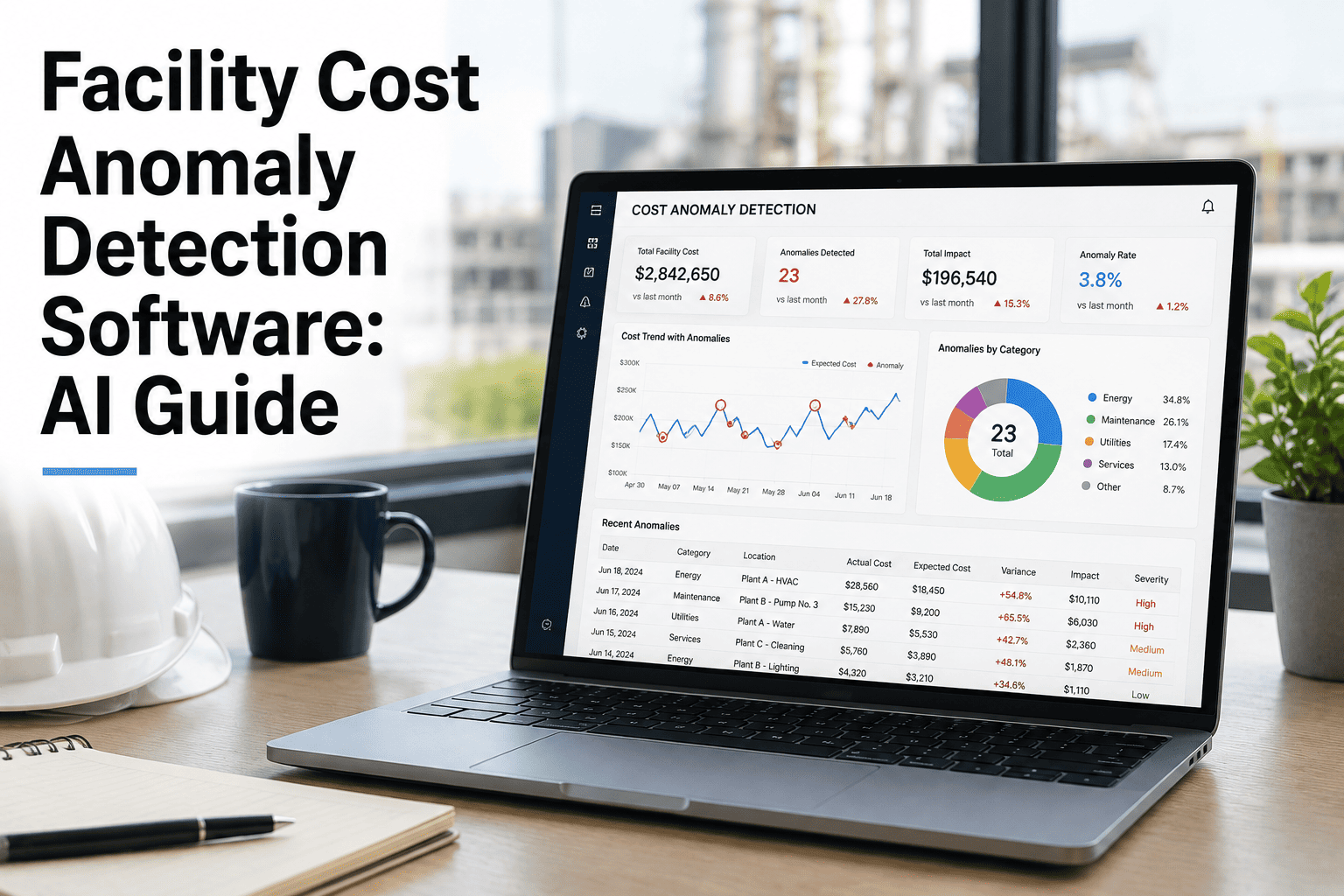
A facility rarely loses money in one dramatic event — it leaks it quietly, invoice by invoice and kilowatt-hour by kilowatt-hour, until a quarterly budget review finally asks why costs are up. A vendor billed twice for the same repair. A rooftop unit running 40% over its normal energy draw for months because a damper actuator failed. A "maintenance vendor" with no matching work order or asset record anywhere in the system. Each one is small enough to slide past a manual review, and together they can quietly drain tens of thousands of dollars before anyone notices. Catching them as they happen, not months later, is what OxMaint's AI-powered facility management platform is built to do.
Your Facility Is Losing Money Right Now — You Just Can't See It Yet
Duplicate invoices, inflated line items, phantom vendors, and energy usage that quietly drifts off baseline rarely trip a manual review. AI cost anomaly detection connects every invoice and every asset's energy signature to a baseline, flags the deviation within days, and stops the bleed before the next budget cycle does the math for you.
Four Ways Facility Costs Quietly Go Sideways
Most cost anomalies do not look like fraud on first glance — they look like a normal invoice or a slightly higher utility bill. AI trained on your own facility's baseline is what turns "slightly higher" into a flagged, investigated line item.
How Severe Is the Anomaly? Severity Decides the Response
Not every flagged deviation needs the same urgency. Grading anomalies by how far they sit from the established baseline is what keeps a facility team from drowning in low-value alerts.
The Anomaly-to-Recovery Table Every Facility Team Should Have
The same anomaly type rarely shows up the same way twice, so the detection signal and the response window need to match the pattern — the table below lines up the four most common cost anomalies against how fast a facility can realistically act on each one.
| Anomaly Type | Detection Signal | Typical Cost Impact | Response Window |
|---|---|---|---|
| Duplicate Invoice | Matching PO and vendor billed a second time | Full amount of the repeated invoice | Same-day automated match |
| Energy Baseline Drift | Asset consumption 20%+ above its own history | Thousands per month until repaired | Flagged within 72 hours |
| Phantom Vendor | No linked asset, work order, or technician log | Entire invoice value at risk | Held before payment release |
| Inflated Line Item | Unit price outlier vs. vendor's own history | 10-40% overcharge per line item | Automatic approval hold |
OxMaint links every work order, invoice, and energy reading back to the asset that generated it, learns what normal looks like, and raises a flag the moment something drifts away from it.
From Raw Invoice to Flagged Anomaly in Four Steps
The facilities I have audited rarely have one big theft or one obvious scandal. They have a hundred small deviations that nobody was ever positioned to catch — a vendor invoice that quietly crept up over two years, an air handler that has been running hot since a damper failed last spring, a repeat charge that slipped through because two invoices had different reference numbers. None of it looks urgent in isolation. Add it up over a fiscal year and it is often the single largest controllable cost a facility carries, and almost none of it shows up until someone finally goes looking with the right baseline in hand.
Frequently Asked Questions
How does AI actually detect a facility cost anomaly?
It compares every new invoice, work order cost, and energy reading against a learned baseline for that specific asset or vendor, then scores how far the new value drifts from what is normal. Start a free trial to see your own facility's baseline take shape.
Can it catch duplicate or inflated vendor invoices before they're paid?
Yes. Matching invoices are compared against purchase orders and prior billing history, and anything repeated or priced above a vendor's normal range is held for review before payment is released.
Do we need IoT sensors on every asset for this to work?
No. Invoice and cost anomaly detection runs on your existing work order and billing history, though assets with utility or sensor data get an added layer of energy-based anomaly detection.
How is this different from a standard monthly spend report?
A spend report shows totals after the fact. Anomaly detection flags the specific invoice, vendor, or asset causing the deviation while it is still actionable, not months later. Book a demo to see the difference on real data.
Can it flag phantom or fraudulent vendors specifically?
Yes. Invoices from vendors with no linked asset, work order, or technician activity are flagged as high-risk automatically, since legitimate billing always traces back to real work performed.
Stop Finding Out About the Loss After It's Already Gone
OxMaint learns your facility's real cost baseline across every asset and vendor, then flags the deviation the moment it starts — not the quarter it finally gets noticed.