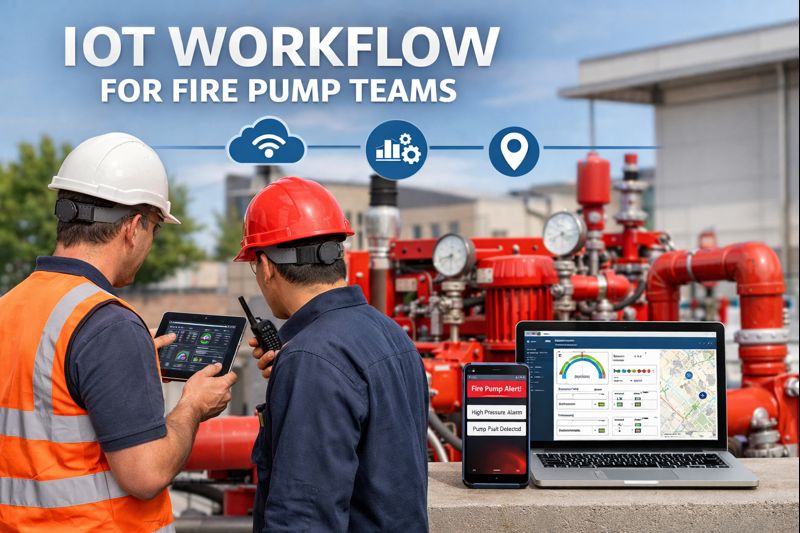
Fire pump teams face a unique challenge that most maintenance departments never encounter: maintaining equipment that must work flawlessly despite sitting idle for months or even years. When a fire emergency strikes, there's no second chance for a pump that fails to start. Traditional paper-based inspection logs and spreadsheet tracking simply cannot provide the reliability assurance that life-safety systems demand. Schedule a consultation to discover how a structured asset master workflow can transform your fire pump maintenance program.
Why Fire Pump Teams Need Structured Asset Workflows
Fire pumps represent the heart of water-based fire protection systems, yet they operate under conditions that make maintenance uniquely challenging. Unlike production equipment that runs continuously and shows gradual wear, fire pumps must transition from standby to full operation instantly during emergencies—often after extended periods of inactivity.
The Case for Digital Asset Management
73,000+
Buildings globally fail fire compliance inspections annually due to system maintenance gaps and documentation errors
$100K+
Average fire pump replacement cost when preventive maintenance is neglected and systems degrade beyond repair
Weekly
NFPA 25 requires weekly inspections for diesel pumps and monthly no-flow tests for most electric fire pumps
16%
Of industrial sites report that scheduled maintenance downtime affects operations due to poor planning and coordination
Ready to eliminate compliance gaps and missed inspections? Join fire protection teams using digital workflows to maintain NFPA 25 compliance effortlessly.
An effective asset master workflow transforms scattered maintenance activities into a coordinated system that ensures nothing falls through the cracks. The workflow connects asset data, inspection schedules, work orders, and compliance documentation into a unified process.
Fire Pump Asset Workflow ComponentsFrom asset registration to compliance reporting
01
Asset Registration and Hierarchy
Create detailed asset profiles for each fire pump including manufacturer data, installation dates, rated capacity, pump curves, and associated components like controllers, jockey pumps, and diesel fuel systems. Establish parent-child relationships between systems.
02
Preventive Maintenance Scheduling
Configure automated PM schedules aligned with NFPA 25 requirements: weekly visual inspections, monthly churn tests for electric pumps, weekly 30-minute no-flow tests for diesel pumps, and annual flow tests. Set calendar-based triggers with automatic work order generation.
03
Digital Inspection Checklists
Deploy mobile-accessible inspection forms with pass/fail criteria for control panels, battery voltage, pressure gauges, valve positions, packing glands, and oil levels. Include photo documentation requirements and automatic flagging of deficiencies.
04
Test Data Recording and Analysis
Capture suction and discharge pressures, flow rates, voltage and amperage readings, and pump speed at each test point. Compare results against manufacturer pump curves and historical baselines to identify performance degradation trends.
05
Compliance Documentation
Generate audit-ready reports showing complete inspection history, test results, corrective actions, and maintenance records. Sign up for Oxmaint to maintain digital documentation that satisfies AHJ requirements and insurance audits.
NFPA 25 Inspection and Testing Requirements
Understanding the specific requirements of NFPA 25 is essential for building effective workflows. The standard establishes minimum frequencies for inspection, testing, and maintenance activities that your asset management system must support.
Fire Pump ITM Frequency Requirements
Activity
Frequency
Key Checkpoints
Documentation Required
Visual Inspection
Weekly
Pump room conditions, valve positions, gauge readings, controller status
30-minute run time, battery voltage, oil pressure, cooling water
Start time, run duration, pressure readings, observations
Churn Test (Electric)
Monthly
10-minute run, suction/discharge pressure, unusual sounds or vibrations
Pressure readings, amperage, operational notes
Annual Flow Test
Annually
Full performance curve at churn, 100%, and 150% of rated flow
Complete test data, pump curves, comparison to baseline
Five-Year Performance Test
Every 5 Years
Comprehensive evaluation per manufacturer specifications
Full performance documentation, recommendations
NFPA 25 compliance requires maintaining complete written records of all inspection, testing, and maintenance activities for review by AHJ and insurance auditors.
See how automated scheduling ensures NFPA 25 compliance. Book a demo to explore how Oxmaint tracks every inspection deadline automatically.
The difference between paper-based fire pump management and digital asset workflows reveals why progressive fire protection teams are transitioning to CMMS-based approaches.
Fire Pump Management Approach Comparison
Paper-Based Management
X
Manual logbooks prone to incomplete entries
Inspection reminders depend on memory
Test data buried in filing cabinets
No trending or performance analysis
Audit preparation requires days of searching
27%of facilities miss required inspections
Digital Asset Workflows
✓
Structured digital checklists ensure completeness
Automated scheduling with mobile notifications
Centralized data with instant search
Automatic trend analysis and alerts
One-click compliance report generation
99%+on-time inspection completion
Key Workflow Features for Fire Pump Teams
Effective fire pump asset management requires specific workflow capabilities that address the unique demands of life-safety equipment maintenance and NFPA compliance requirements.
Essential Workflow Capabilities
Automated PM Scheduling
Calendar-based triggers automatically generate work orders for weekly, monthly, and annual inspections. Never miss an NFPA 25 deadline with proactive scheduling and mobile alerts.
Digital Inspection Checklists
Mobile-accessible forms guide technicians through every inspection point with pass/fail criteria, required measurements, and photo documentation for comprehensive records.
Performance Trending
Track pump curve data over time to identify gradual performance degradation before pumps fall below the 95% threshold required by NFPA 25 compliance standards.
Parts and Inventory Tracking
Maintain minimum stock levels for packing, bearings, lubricants, and other consumables. Link parts usage to work orders for accurate cost tracking and reorder automation.
Document Management
Store manufacturer manuals, pump curves, installation drawings, and historical test reports directly linked to each asset for instant access during inspections or audits.
Compliance Reporting
Generate audit-ready reports showing complete maintenance history, test results, and corrective actions with one click. Satisfy AHJ requirements and insurance auditors instantly.
Transform Your Fire Pump Maintenance Program
Oxmaint provides fire protection teams with the structured workflows needed to maintain NFPA 25 compliance, track performance trends, and ensure pumps perform when emergencies strike. Move from reactive paper-based tracking to proactive digital asset management.
Transitioning from paper-based fire pump management to digital asset workflows requires careful planning. A phased approach delivers quick wins while building toward comprehensive maintenance optimization.
Digital Workflow Deployment Timeline
Week 1-2
Asset Inventory
Document all fire pump assetsGather manufacturer dataEstablish asset hierarchies
Week 3-4
Workflow Configuration
Set up PM schedulesCreate inspection checklistsConfigure notifications
Week 5-6
Team Training
Mobile app deploymentTechnician training sessionsPilot inspections
Week 7+
Full Operation
Complete workflow activationHistorical data migrationContinuous optimization
Fire pumps must operate when called upon to do so. The fact is many fire pumps fail to perform either adequately or even at all. This failure almost always results from inadequate or non-existent preventative maintenance. A structured digital workflow eliminates the gaps that lead to these failures.
— Fire Protection Engineering Best Practice
Build Your Fire Pump Asset Master Workflow
Your paper logbooks cannot track performance trends, automatically schedule inspections, or generate compliance reports instantly. Oxmaint helps fire pump teams implement structured workflows that ensure NFPA 25 compliance, prevent costly failures, and provide audit-ready documentation—transforming maintenance from reactive firefighting to proactive asset management.
A CMMS automates inspection scheduling based on NFPA 25 requirements, ensuring weekly, monthly, and annual tests are never missed. Digital checklists guide technicians through required inspection points, while centralized documentation provides instant access to complete maintenance histories for AHJ audits. Schedule a consultation to see how Oxmaint simplifies NFPA 25 compliance.
What fire pump data should we track in the asset master?
Essential data includes manufacturer information, rated capacity, pump curves, installation dates, controller specifications, and all associated components. For each inspection, record pressure readings, flow rates, voltage/amperage, run times, and any deficiencies observed. This data enables performance trending and early detection of degradation.
Can technicians complete inspections on mobile devices?
Yes, mobile CMMS apps allow technicians to access inspection checklists, record measurements, capture photos, and document deficiencies directly from smartphones or tablets in the pump room. Work orders sync automatically to the central system for immediate supervisor review and compliance tracking. Sign up for a free account to explore mobile inspection capabilities.
How do we identify fire pump performance degradation?
Digital workflows capture test data from each annual flow test and compare results against the manufacturer pump curve and historical baselines. NFPA 25 requires pumps to deliver at least 95% of rated pressure. Trending this data over time reveals gradual degradation before pumps fall out of compliance.
What reports does a CMMS generate for fire pump audits?
Compliance reports include complete inspection histories, test results with actual vs. required values, corrective action documentation, parts usage records, and maintenance costs. These reports can be generated instantly for AHJ inspections or insurance audits without searching through paper files. Book a demo to see sample compliance reports.