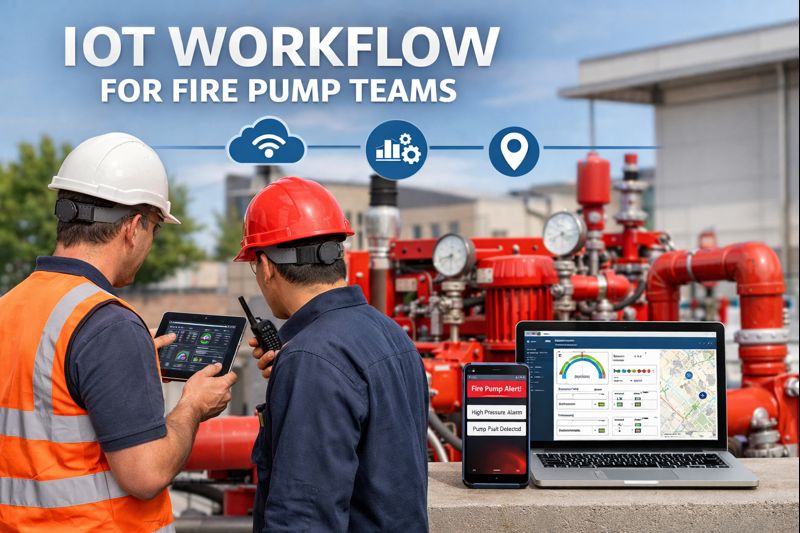
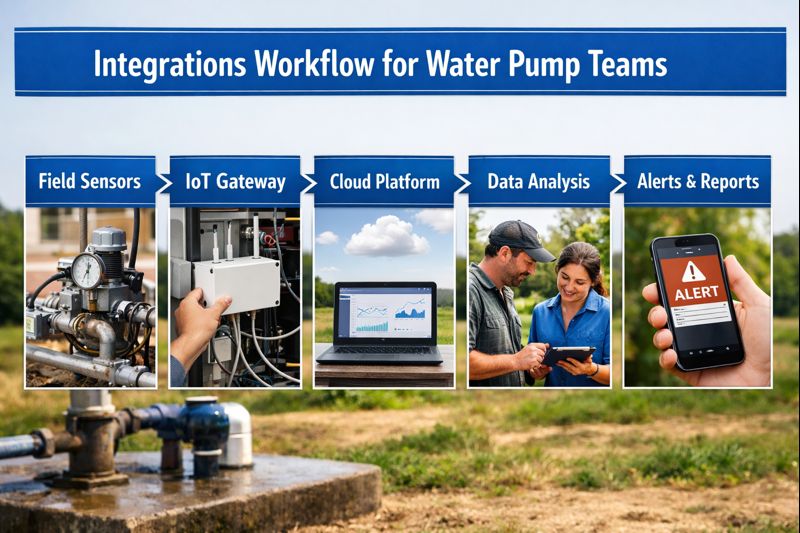
Fire pump teams face mounting pressure to maintain NFPA 25 compliance while managing complex weekly, monthly, and annual inspection schedules across multiple facilities. Traditional paper checklists and manual tracking methods create compliance gaps, missed deadlines, and incomplete documentation that put both safety and regulatory standing at risk. IoT-enabled workflow automation transforms fire pump maintenance from reactive firefighting to proactive asset management—connecting sensors, automating inspections, and delivering real-time performance data directly to your team. Schedule a consultation to explore how IoT workflows can streamline your fire pump operations.
Why IoT Workflows Matter for Fire Pump Teams
Fire pumps sit idle for months or years, then must perform flawlessly when lives depend on them. This unique operational reality makes traditional maintenance approaches fundamentally inadequate—you cannot know if a fire pump will work until it actually needs to work. IoT workflows bridge this gap by providing continuous visibility into pump health, automating compliance documentation, and enabling predictive maintenance before failures occur.
The Case for IoT-Enabled Fire Pump Management
96%
Success rate for properly maintained fire pumps during emergencies—dropping significantly when maintenance is neglected
75%
Reduction in inspection time through automated data collection and digital checklists versus manual paper processes
<15min
Time to detect and alert on pressure anomalies or pump failures versus days with manual weekly inspections
100%
Documentation completeness with automated compliance records ready for fire marshals and insurance audits
Ready to modernize your fire pump maintenance? Join fire protection teams using IoT workflows to achieve 100% NFPA compliance with less effort.
Modern fire pump IoT workflows combine smart sensors, edge computing, and cloud-based CMMS platforms to create seamless maintenance operations. The architecture enables automated testing, real-time monitoring, and predictive analytics while maintaining complete NFPA 25 compliance documentation.
Fire Pump IoT Workflow ComponentsFrom sensor data to actionable maintenance intelligence
01
Smart Sensor Network
Pressure transducers, flow meters, vibration sensors, and temperature monitors capture pump performance data continuously. Sensors track suction pressure, discharge pressure, RPM, and operating hours with high accuracy for trend analysis.
02
Controller Integration
IoT gateways connect directly to fire pump controllers, capturing automatic start events, alarm conditions, and test results. Integration supports electric, diesel, and jockey pump controllers with NFPA 20 compliant data logging.
03
Automated Test Scheduling
Workflow automation triggers weekly no-flow tests for diesel pumps and monthly churn tests for electric pumps per NFPA 25 requirements. System records all test parameters automatically without technician intervention.
04
Digital Inspection Checklists
Mobile-enabled checklists guide technicians through weekly, monthly, and annual inspection requirements. Photo documentation, GPS timestamps, and digital signatures create audit-ready compliance records.
05
CMMS Work Order Integration
Anomaly detection automatically generates maintenance work orders in your CMMS. Corrective actions are tracked from identification through completion with full documentation. Sign up for Oxmaint to centralize fire pump workflows across all facilities.
NFPA 25 Compliance Automation
NFPA 25 mandates specific inspection, testing, and maintenance frequencies for fire pumps. IoT workflows automate compliance tracking, ensuring nothing falls through the cracks while reducing the administrative burden on fire protection teams.
Automated Compliance Schedule
Requirement
Frequency
Manual Approach
IoT Workflow Approach
Pump Room Inspection
Weekly
Physical walkthrough, paper checklist
Digital checklist with environmental sensors for temperature and humidity
No-Flow Test (Diesel)
Weekly
30-minute attended run, manual logging
Automated test initiation with real-time data capture and alerts
No-Flow Test (Electric)
Monthly
Scheduled technician visit, paper records
Remote-initiated test with automatic performance documentation
IoT platforms monitor critical fire pump parameters that indicate equipment health, predict maintenance needs, and ensure readiness for emergency operation. Each monitoring point serves specific compliance and reliability purposes.
Pressure Monitoring
Continuous suction and discharge pressure tracking with automatic alerts when readings deviate from baseline performance curves established during commissioning.
Vibration Analysis
Real-time vibration monitoring detects bearing wear, misalignment, and impeller damage early. Trend analysis predicts failures before they cause emergency downtime.
Temperature Tracking
Monitor pump room temperature, bearing temperatures, and diesel engine coolant. Alerts trigger when temperatures fall below 40°F or exceed safe operating limits.
Battery Health
Continuous voltage and charging current monitoring for diesel pump batteries. Degradation trending ensures batteries are replaced before they fail to start the engine.
Fuel Management
Ultrasonic tank level monitoring ensures diesel pumps maintain required fuel reserves. Automatic alerts when levels drop below the two-thirds full NFPA requirement.
Runtime Analytics
Track operating hours, start counts, and run duration for maintenance scheduling. Oil changes, filter replacements, and overhauls trigger automatically based on actual usage.
Traditional vs. IoT-Enabled Fire Pump Management
Understanding the operational differences between traditional and IoT-enabled fire pump management reveals why leading fire protection teams are adopting connected workflows.
Fire Pump Management Approach Comparison
Traditional Management
✖
Paper checklists prone to errors and omissions
Weekly visits required for diesel pump tests
Compliance gaps discovered during audits
Reactive maintenance after failures occur
Manual data entry and report generation
35%of inspections have documentation gaps
IoT-Enabled Workflows
✔
Digital checklists with automatic data capture
Remote test initiation and monitoring
Real-time compliance dashboards
Predictive maintenance before failures
Automatic report generation and distribution
100%documentation completeness with audit trails
Transform Fire Pump Maintenance with IoT Workflows
Oxmaint connects your fire pump systems to a centralized CMMS platform—automating compliance tracking, enabling predictive maintenance, and providing real-time visibility across all your protected facilities.
IoT workflows deliver specific advantages to each member of your fire protection organization, from field technicians to compliance managers and facility executives.
Role-Specific Benefits
Role
Traditional Challenge
IoT Workflow Benefit
Field Technician
Driving to sites for routine checks, manual paperwork
Remote monitoring reduces site visits, mobile app streamlines documentation
Implementing IoT workflows for fire pump management follows a proven path from assessment through deployment. Most organizations achieve full operational capability within 6-8 weeks.
Implementation Roadmap
Week 1-2
Assessment
Inventory existing fire pumps, controllers, and monitoring capabilities. Identify gaps in current compliance processes and documentation.
Week 3-4
Sensor Installation
Deploy IoT sensors and gateways at each fire pump location. Configure controller integration and verify data transmission.
Week 5-6
Workflow Configuration
Set up automated test schedules, alert thresholds, and digital inspection checklists aligned with NFPA 25 requirements.
Week 7-8
Training and Go-Live
Train technicians on mobile apps and dashboards. Begin automated monitoring with full NFPA compliance tracking.
Fire pumps can sit idle for years until the one moment they absolutely must work. IoT monitoring gives us confidence that when that moment comes, our pumps will perform exactly as they should. The compliance documentation practically writes itself now.
— Fire Protection Systems Manager
Modernize Your Fire Pump Operations
Paper checklists and manual tracking cannot provide the continuous visibility and predictive intelligence modern fire protection demands. Oxmaint helps fire pump teams automate NFPA 25 compliance, enable remote monitoring, and transform maintenance from reactive to predictive—ensuring your fire pumps are always ready when lives depend on them.
Can IoT monitoring replace required physical inspections?
IoT monitoring supplements but does not replace physical inspections required by NFPA 25. However, it dramatically reduces the time needed for inspections by pre-populating data and guiding technicians through digital checklists. Some jurisdictions accept remotely monitored automated testing in accordance with NFPA 25 Section 8.3.1.1.4 for certain test types. Schedule a consultation to discuss compliance requirements for your specific situation.
What happens if connectivity is lost to a fire pump?
IoT gateways store data locally during connectivity interruptions and transmit when connection is restored. Fire pump controllers continue normal operation independent of monitoring systems—IoT adds visibility but does not affect pump functionality. Most systems are designed to buffer several weeks of data locally.
How do IoT workflows handle diesel versus electric pump differences?
Workflows are configured specifically for each pump type. Diesel pumps have additional monitoring for fuel level, battery condition, engine temperature, and weekly 30-minute run requirements. Electric pumps focus on motor current, phase balance, and the monthly churn test schedule. Sign up for a free account to see pump-specific workflow templates.
Will fire marshals and insurance auditors accept IoT-generated compliance records?
Yes. IoT systems generate audit-ready documentation that meets NFPA 25 record-keeping requirements. Digital records with timestamps, GPS locations, photos, and signatures are typically preferred by auditors over paper records because they cannot be backdated or easily altered.
How quickly can we implement IoT workflows across multiple facilities?
Most organizations achieve full implementation across 5-10 facilities within 8-12 weeks using a phased rollout approach. Start with pilot sites to refine workflows, then deploy rapidly across remaining locations. Book a demo to discuss a deployment timeline for your facility portfolio.