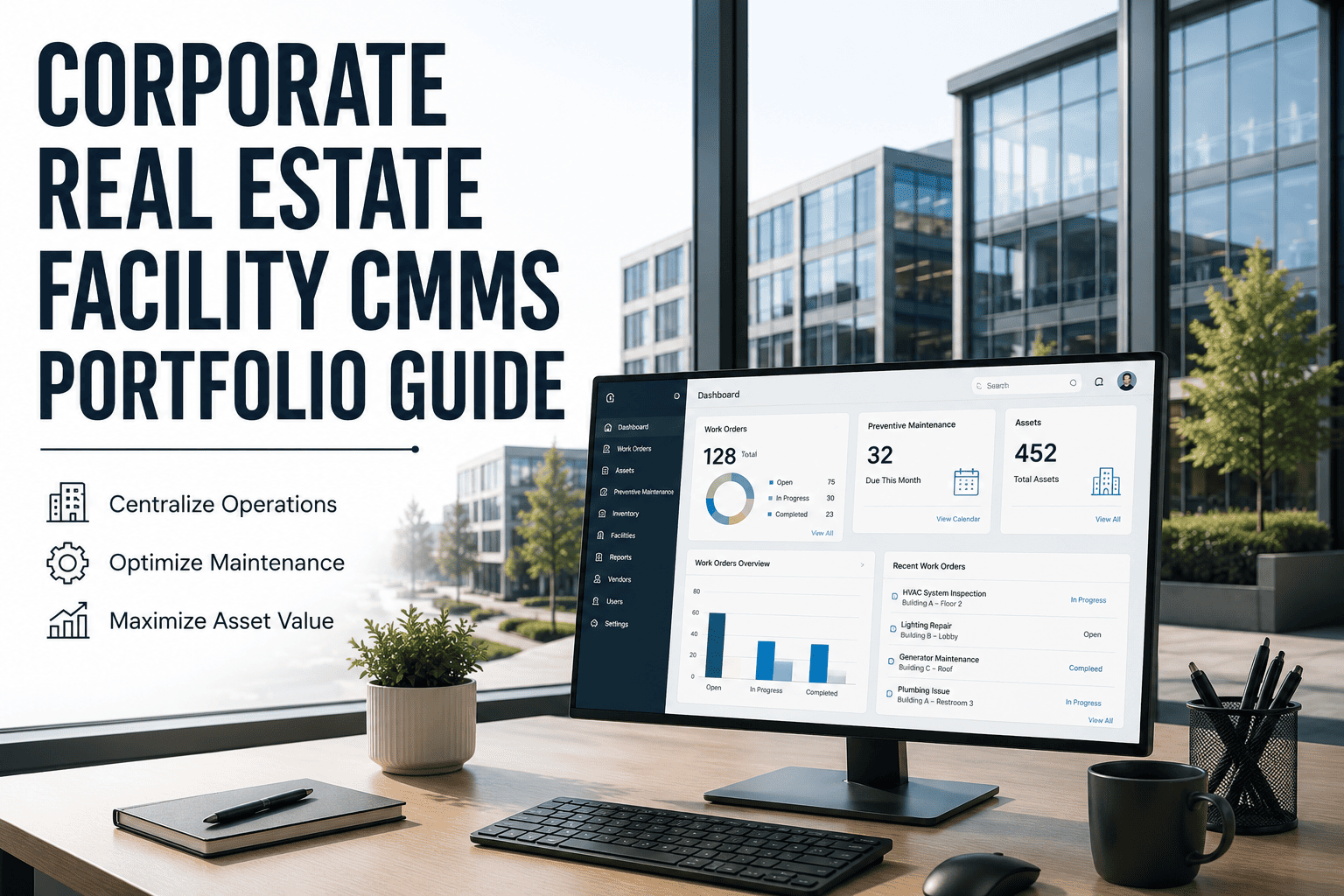
A regional CRE portfolio owner managing 15 Class A and Class B commercial office buildings across 4 US Sun Belt markets was spending $6.8 million annually on energy across the portfolio. HVAC systems were running on fixed schedules that did not respond to occupancy, weather, or real-time building load. Energy costs per square foot varied 34% across comparable buildings in the same markets, with no diagnostic data explaining why some buildings were performing well and others were not. The Director of Asset Management had no energy dashboard, no building-to-building comparison tool, and no mechanism to verify that HVAC maintenance was actually being performed on the schedule the FM contractors were billing for. Two years of energy rate increases had added $480,000 in annual cost without any increase in occupancy. The business case for action was clear. The tool to act with was not. Sign up free on Oxmaint to see how IoT energy monitoring and HVAC optimisation reduce energy costs across a CRE portfolio, or book a demo to model the energy savings case for your building portfolio.
Case Study
CRE Portfolio Saves $2M Annually in Energy Costs with Oxmaint Smart FM
Spoke · P2 · 8 min read
Portfolio Profile
15 commercial buildings · 4 Sun Belt markets · 2.1M sqft total · Class A and B office · 8 owned, 7 managed
Baseline Problem
$6.8M annual energy spend · 34% cost-per-sqft variance · fixed HVAC schedules · no IoT monitoring
Solution Deployed
Oxmaint Energy Module · IoT HVAC monitoring · occupancy-based scheduling · automated PM verification
Primary Result
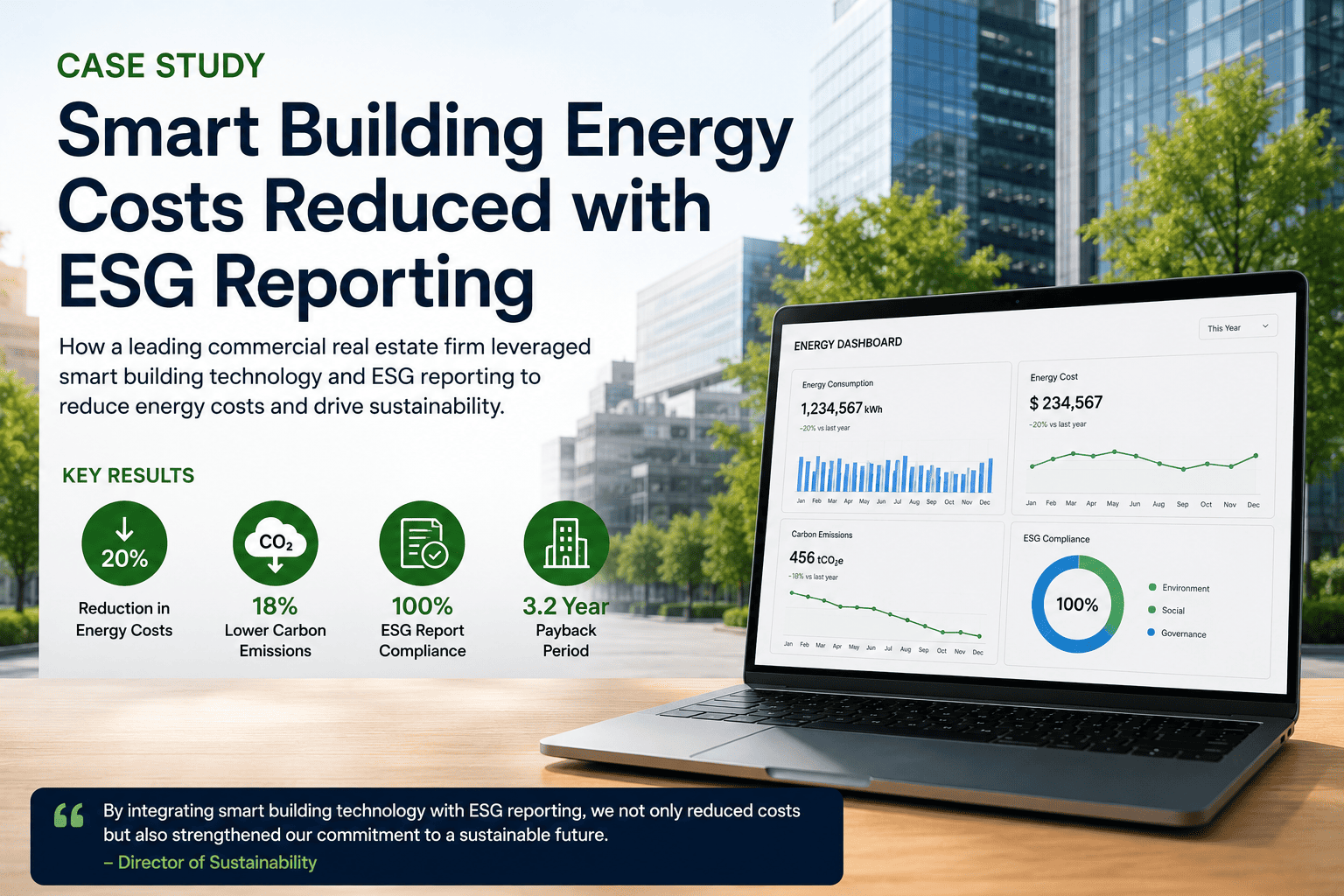
$2M annual energy saving · 29% portfolio energy reduction · 7.2-month payback · 91% HVAC PM compliance
$2M
annual energy cost saving across all 15 buildings at Month 18 versus pre-deployment baseline
29%
portfolio-wide energy consumption reduction driven by HVAC optimisation and IoT-based scheduling
7.2 mo
full deployment cost payback from energy savings alone before Month 8 of live operation
$0.94
reduction in energy cost per sqft across the portfolio at Month 18 versus $3.24 pre-deployment baseline
Case Summary
Before Oxmaint, this 15-building CRE portfolio was running HVAC on fixed daily schedules that did not respond to occupancy patterns, weather conditions, or real-time energy loads. Oxmaint's Energy and Sustainability Module was deployed across all 15 buildings in 52 days: IoT energy monitoring sensors installed on all major HVAC systems, occupancy-based scheduling activated from BMS integration, real-time energy dashboards live for all 15 buildings, and HVAC PM verification connected to contractor billing. By Month 12, portfolio energy consumption had fallen 24%. By Month 18, total energy saving had reached $2 million annually, a 29% reduction in consumption, and energy cost per square foot had fallen from $3.24 to $2.30. Three buildings that had been the highest energy cost per sqft in the portfolio were brought within 8% of the portfolio median within 9 months of targeted HVAC PM and scheduling optimisation.
The Problem: Energy Spend Rising With No Diagnostic Visibility
The portfolio's energy cost problem had two compounding sources: HVAC systems running on fixed schedules that ignored actual building load, and HVAC maintenance being deferred or skipped by FM contractors with no verification mechanism to catch it. The two problems were connected. Deferred HVAC maintenance led to degraded system efficiency, which increased energy consumption, which drove cost increases that appeared as market rate movements rather than maintenance failures.
01
Fixed HVAC Schedules Running 24/7 in Part-Occupied Buildings
HVAC systems across all 15 buildings ran on the same daily schedule regardless of occupancy. Buildings with occupancy patterns concentrated in morning and early afternoon were running full HVAC conditioning from 6am to 8pm. Analysis post-deployment identified $840,000 in annual energy spend on HVAC conditioning in periods where building occupancy was below 15%.
02
34% Energy Cost Variance With No Diagnostic Data
Energy cost per sqft across 15 comparable buildings in similar markets ranged from $2.61 to $4.38. Without building-level energy monitoring and HVAC performance data, the Director of Asset Management had no way to diagnose why 4 buildings were performing significantly above the portfolio median or to direct targeted intervention where it would have the greatest impact on cost reduction.
03
HVAC PM Being Billed But Not Verified
FM contractors across 7 managed buildings were billing for HVAC PM on quarterly schedules. Post-deployment audit of the first 6 months under Oxmaint verification found that 4 of 7 managed buildings had at least one quarterly HVAC service cycle that was billed but not completed to specification. Estimated unverified billing value: $214,000 in the 18-month pre-deployment period.
04
Deferred HVAC Maintenance Compounding Energy Inefficiency
Buildings with the highest energy cost per sqft were also the buildings with the lowest verified HVAC PM completion rates. Dirty coils, clogged filters, and uncalibrated controls were increasing energy consumption by an estimated 12 to 18% above the same equipment maintained to specification. The energy cost premium from deferred maintenance was invisible without building-level monitoring data to attribute it.
Why Oxmaint Was Selected for the CRE Energy Programme
The Director of Asset Management evaluated three platforms over 45 days before selecting Oxmaint. A building management system vendor's energy module required dedicated on-site hardware at each building at a cost of $380,000 per building. An energy consultancy's managed service model required a 24-month minimum contract with no FM integration. Oxmaint was selected on four criteria specific to the multi-building CRE portfolio context.
Real-Time Energy Dashboard Across All 15 Buildings
Energy cost per sqft, HVAC runtime hours, and consumption by building type visible in a single portfolio dashboard. First building-to-building energy comparison in portfolio history live within Week 8 of deployment.
Occupancy-Based HVAC Scheduling via BMS Integration
Oxmaint integrates with existing building management systems to apply occupancy-based HVAC scheduling. HVAC conditioning reduced to setback mode during documented low-occupancy periods, saving $840,000 annually from scheduling optimisation alone.
HVAC PM Verification Tied to Contractor Billing
Every contractor HVAC service work order closes with timestamped GPS verification, photo evidence of completed tasks, and IAQ readings before invoice approval. Eliminated $214,000 in unverifiable billing identified in pre-deployment audit of 18 months of contractor invoices.
52-Day Deployment Across All 15 Buildings
IoT sensors, BMS integration, energy dashboards, and HVAC PM verification live across all 15 buildings in 52 days at a fraction of the per-building BMS hardware cost. No on-site servers, no building infrastructure modification, no dedicated IT project.
Your HVAC Systems Are Running 24/7. Your Buildings Are Not Occupied 24/7. That Gap Is Your Energy Saving.
This portfolio identified $840,000 in annual energy spend on HVAC conditioning during periods of under 15% occupancy across 15 buildings. That spend existed before Oxmaint. It was only visible after IoT monitoring and occupancy-based scheduling revealed it. Book a demo to model the energy savings case for your building portfolio.
Implementation: 52 Days to Live Energy Dashboard Across 15 Buildings
Weeks 1 to 3
IoT Energy Sensor Deployment Across All 15 Buildings
Wireless IoT energy monitoring sensors installed on all major HVAC systems across 15 buildings: main air handling units, chiller plants, cooling tower arrays, and electrical sub-metering for HVAC circuits. 847 individual monitoring points across the portfolio. BMS integration configured at 11 of 15 buildings with existing compatible systems. All sensor data routing to Oxmaint Energy Module within 72 hours of installation at each building. No building infrastructure modification required at any site.
Weeks 4 to 6
Occupancy-Based HVAC Scheduling Activated and HVAC PM Verification Live
Occupancy-based HVAC schedules pushed to all 15 buildings through BMS integration, reducing conditioning hours to match verified occupancy patterns. Contractor PM work order portal activated for all 7 managed buildings. First contractor HVAC service cycle completed under Oxmaint verification: 3 of 7 managed buildings produced incomplete photo evidence on first submission, prompting follow-up visits at contractor cost before invoice approval was released.
Week 8 — The Pivotal Moment
Portfolio Energy Dashboard Reveals $840K Scheduling Waste and Identifies 4 High-Cost Buildings
In Week 8, the Director of Asset Management ran the first portfolio-wide energy comparison report from Oxmaint. The report revealed two critical findings: HVAC runtime during sub-15% occupancy periods was generating $840,000 in identifiable waste annually across the portfolio, and 4 specific buildings — Buildings 3, 7, 11, and 14 — were running at energy cost per sqft 28 to 41% above the portfolio median. Building 11's HVAC coil fouling was identified as the primary driver, with a 22% efficiency loss compared to baseline. A targeted coil cleaning programme across these 4 buildings was completed within 3 weeks. Energy cost at Building 11 fell 19% in the following 30 days.
Months 3 to 12
24% Energy Reduction at Month 12 — ESG Reporting Activated
By Month 12, portfolio energy consumption had fallen 24% versus the pre-deployment baseline. All 4 high-cost buildings had been brought within 12% of the portfolio median. HVAC PM compliance across all 15 buildings had reached 91% versus 52% pre-deployment across the managed buildings. Oxmaint's ESG reporting module was activated for all 15 buildings, generating GRESB-aligned energy performance reports for the portfolio's institutional investor submissions without manual data compilation.
Month 18
$2M Annual Energy Saving Confirmed — 29% Consumption Reduction
Month 18 portfolio energy review confirmed total annual energy saving of $2 million versus pre-deployment baseline, representing a 29% reduction in consumption across all 15 buildings. Energy cost per sqft had fallen from $3.24 to $2.30 portfolio-wide. The 4 previously high-cost buildings were all within 8% of the portfolio median, having been brought from 28 to 41% above median at the start of deployment. Total deployment cost was $1.2M including sensors, BMS integration, and software. Month 18 confirmed savings of $2M annually, representing full payback achieved in 7.2 months from energy savings alone.
Results: 18-Month Outcomes
Annual Energy Saving
$2M
Total annual energy cost saving at Month 18 versus pre-deployment baseline across all 15 buildings
Consumption Reduction
29%
Portfolio-wide energy consumption reduction from HVAC optimisation and occupancy-based scheduling
Payback Period
7.2 months
Full $1.2M deployment cost recovered from energy savings before Month 8 of live operation
$0.94
Reduction in energy cost per sqft from $3.24 to $2.30 across the 15-building portfolio at Month 18
$840K
Annual saving from occupancy-based HVAC scheduling — eliminating conditioning during sub-15% occupancy periods
91%
HVAC PM compliance rate at Month 12 across all 15 buildings versus 52% in managed buildings pre-deployment
$214K
Contractor billing disputed and recovered from 18-month pre-deployment audit of unverified HVAC service invoices
Key Metrics: Before and After Deployment
| Metric |
Before Oxmaint |
After Oxmaint (Month 18) |
| Total annual energy spend | $6.8M across 15 buildings — fixed HVAC schedules with no occupancy response | $4.8M — $2M annual reduction through scheduling optimisation and HVAC PM improvement |
| Energy cost per sqft | $3.24 portfolio average — 34% variance between highest and lowest performing buildings | $2.30 portfolio average — 29% reduction with all 4 high-cost buildings within 8% of median |
| HVAC PM compliance | 52% in managed buildings — contractor billing not tied to completion verification | 91% across all 15 buildings — GPS-verified completion required before invoice approval |
| Portfolio energy visibility | No building-to-building comparison data — Director of Asset Management had no energy diagnostic tool | Live portfolio energy dashboard with per-building cost per sqft, HVAC runtime, and PM compliance |
| HVAC scheduling basis | Fixed daily schedules running HVAC regardless of occupancy — $840K in identifiable waste annually | Occupancy-based scheduling through BMS integration — HVAC in setback mode during low-occupancy periods |
| ESG reporting capability | Manual energy data compilation for GRESB submissions requiring 6 to 8 weeks per reporting cycle | Automated GRESB-aligned energy performance reports from Oxmaint — generated in under 4 hours per cycle |
Total Deployment Cost
$1.2M
IoT sensors, BMS integration, software, and onboarding across all 15 buildings
Annual Energy Saving
$2M
Energy cost reduction from scheduling, HVAC PM, and contractor billing verification
Full Payback Period
7.2 months
Deployment cost fully recovered from energy savings before Month 8
"Before Oxmaint, I was managing 15 buildings with no way to compare energy performance between them. I knew our energy costs per sqft varied significantly but I had no data to direct where to intervene first. The Week 8 portfolio energy report changed everything. It identified 4 buildings that were running 28 to 41% above our portfolio median, showed that HVAC coil fouling was the primary driver at Building 11, and revealed $840,000 in annual HVAC conditioning spend during periods where our buildings had essentially no occupancy. By Month 18, we had saved $2 million annually. The deployment paid for itself in 7 months from energy savings alone."
Director of Asset Management
15-Building Commercial Real Estate Portfolio, US Sun Belt
Continue Reading: Case Studies
Frequently Asked Questions
QHow does Oxmaint integrate with existing building management systems across a CRE portfolio without replacing hardware?
Oxmaint integrates with existing BMS platforms via standard protocols including BACnet, Modbus, and REST API. Wireless IoT sensors supplement BMS data for buildings without compatible systems. This portfolio connected 11 of 15 buildings via existing BMS integration with no hardware replacement at any site.
Sign up free or
book a demo to confirm BMS compatibility for your specific building portfolio.
QHow does Oxmaint verify that HVAC contractors are actually completing the work they are billing for?
Every HVAC service work order closes in the Oxmaint contractor portal with GPS-confirmed location, timestamped task completion, and required photo evidence before invoices are released for payment approval. This portfolio recovered $214,000 in previously unverifiable contractor billing through Oxmaint verification in the first 18 months.
Book a demo to see contractor verification configured for your portfolio.
QCan Oxmaint generate GRESB-aligned ESG energy performance reports for institutional investor reporting?
Yes. Oxmaint's ESG reporting module generates GRESB-aligned energy performance reports from live building monitoring data for all buildings in the portfolio. This portfolio reduced ESG report preparation from 6 to 8 weeks of manual data compilation to under 4 hours.
Sign up free to activate the Oxmaint ESG reporting module for your portfolio.
QWhat data does a Director of Asset Management or CFO need to approve this energy investment?
Two inputs: current total annual energy spend across the portfolio and average energy cost per sqft. At this portfolio: $6.8M annual energy spend, $3.24 per sqft average. Deployment cost: $1.2M. Month 18 saving: $2M annually. Payback: 7.2 months.
Book a demo to model the energy savings case for your building portfolio.
$2M Annual Energy Saving. 29% Consumption Reduction. Payback in 7.2 Months. 15 Buildings. 52 Days to Deploy.
Your HVAC systems are running on fixed schedules. Your contractors are billing without verification. Your energy costs per sqft vary significantly across your portfolio with no diagnostic data explaining why. Oxmaint gives your Director of Asset Management the live energy dashboard, occupancy-based scheduling, and contractor verification infrastructure to address all three simultaneously. Go live in 52 days. No building hardware replacement. No consulting fees.
IoT Energy Monitoring
Occupancy-Based HVAC Scheduling
Contractor PM Verification
GRESB ESG Reporting
52-Day Deployment