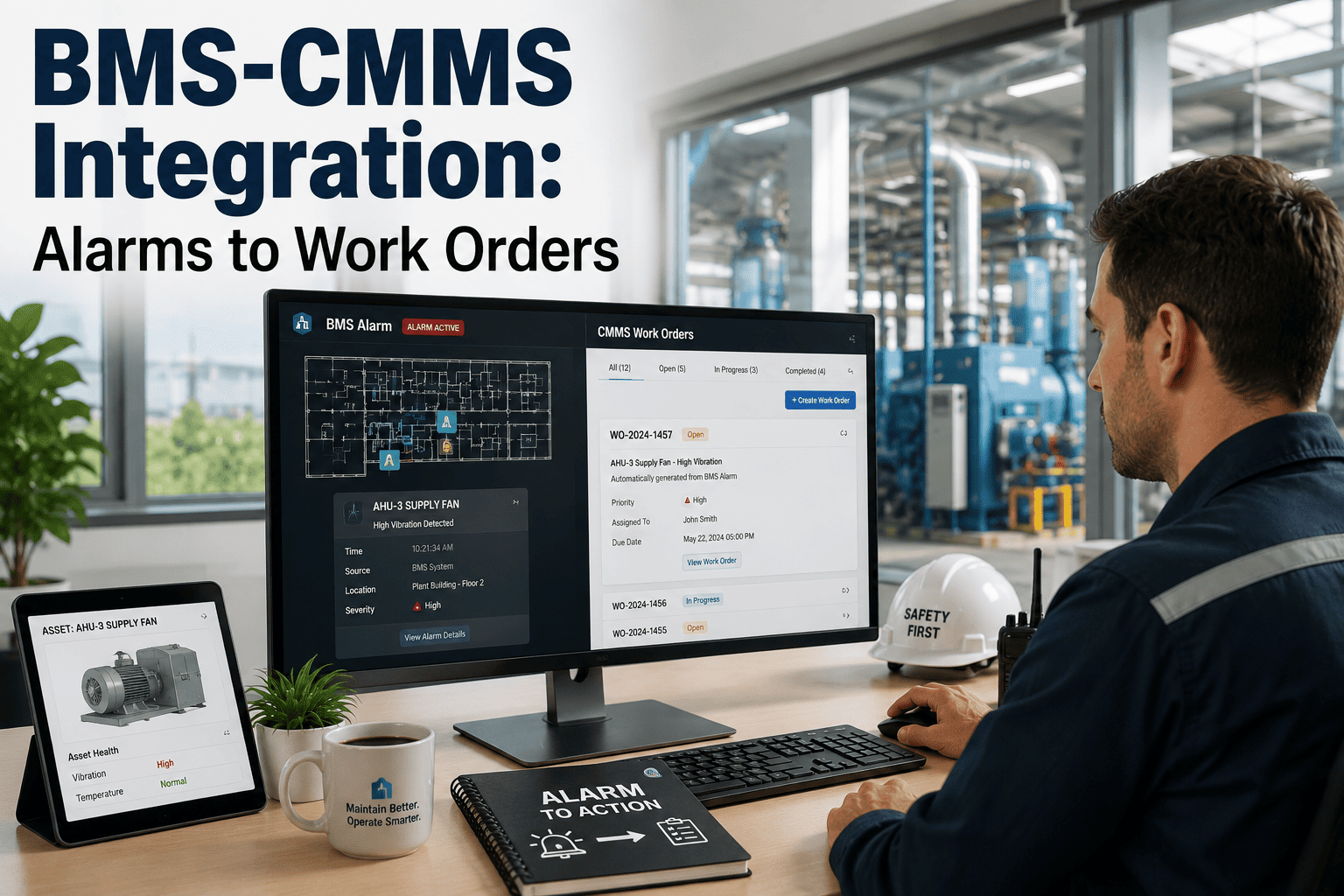
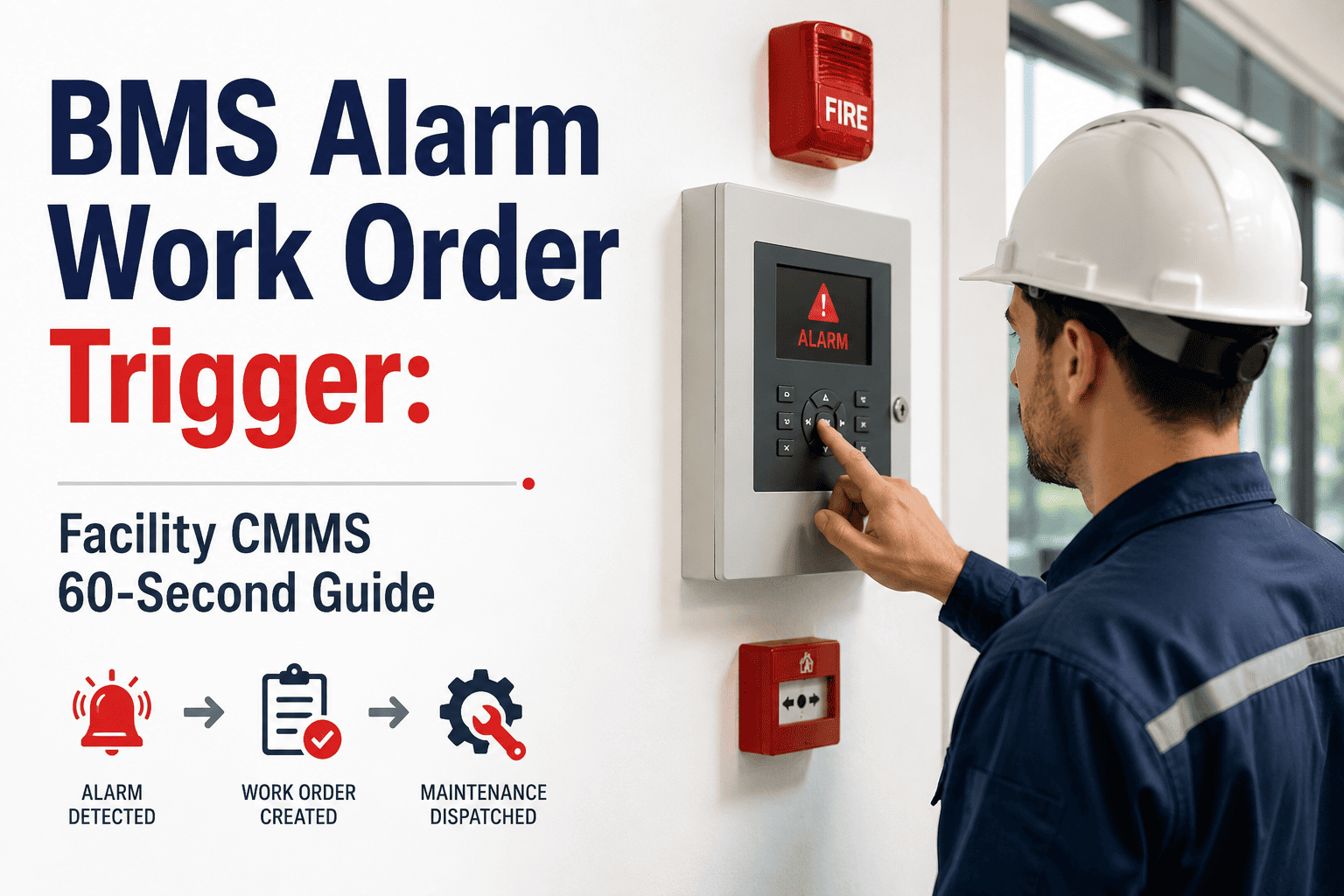
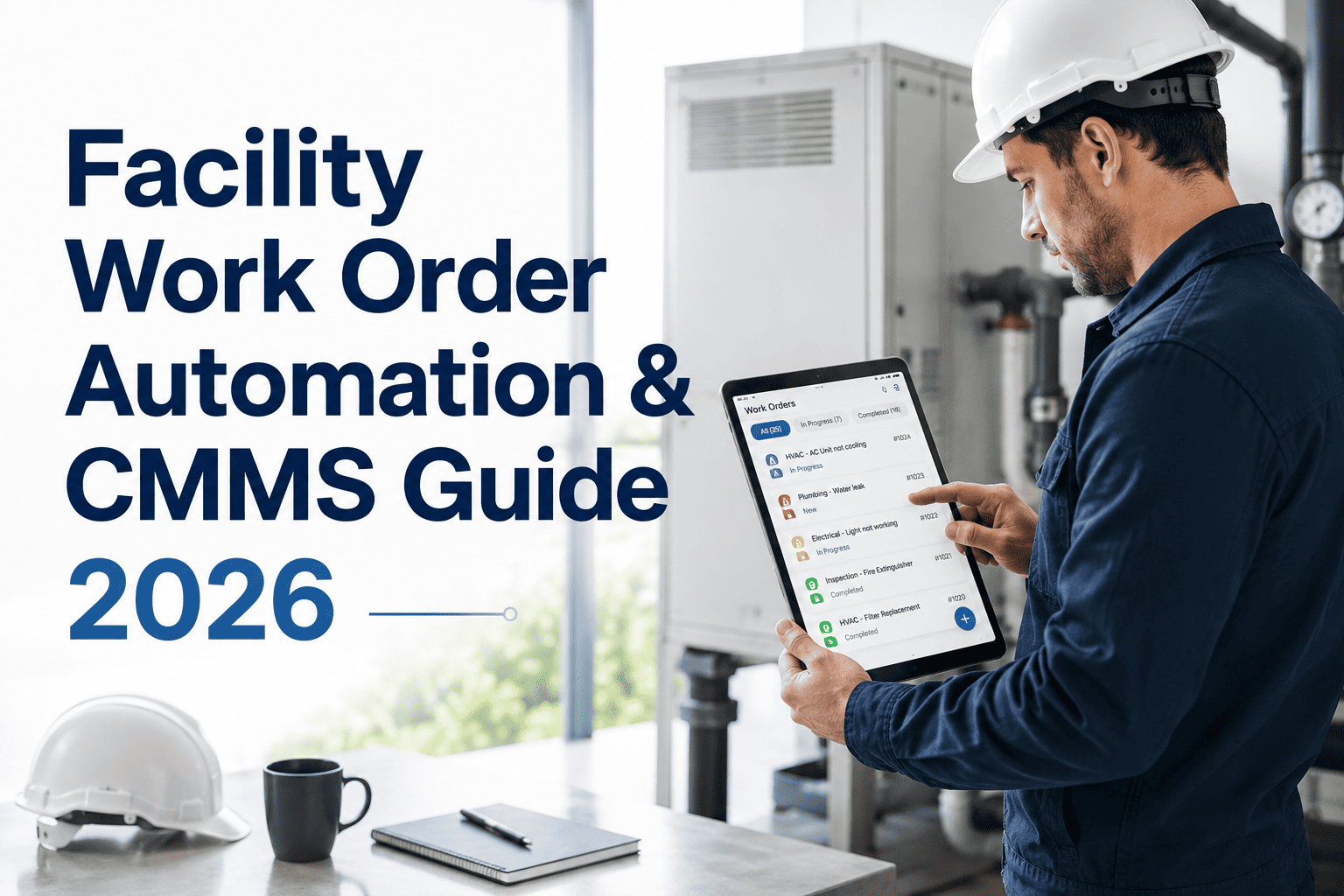
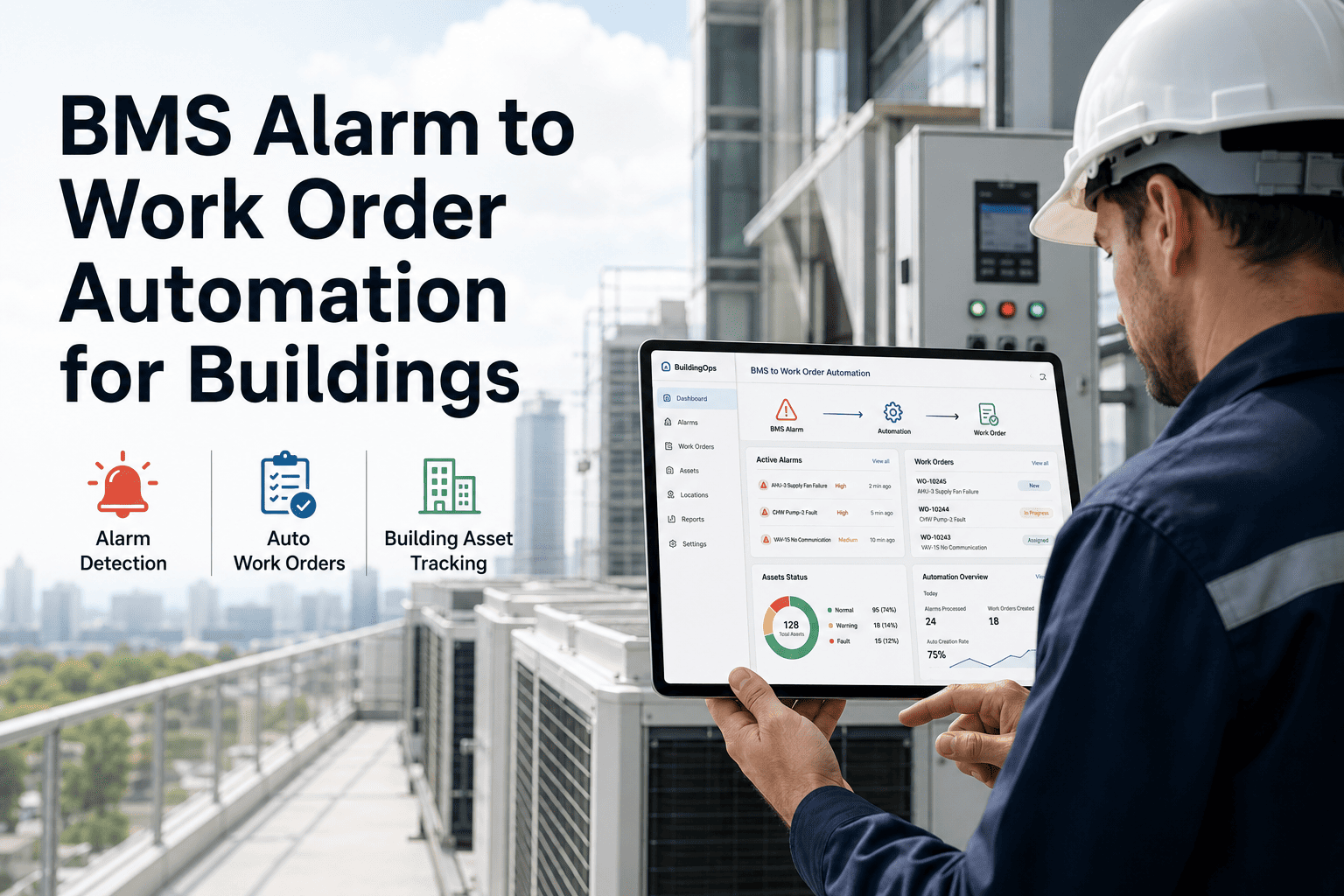
The CMMS market reached USD 1.46 billion in 2025 and is forecast to more than double by 2034, driven by one structural gap: the distance between fault detection and maintenance action. A building automation system that generates an alarm but requires a technician to manually create a work order, assign priority, identify the responsible asset, and dispatch a crew introduces delays that directly compound into MTTR. Planned repairs triggered through automated FDD-to-work-order workflows are 40 to 60% faster than emergency reactive repairs for identical fault types. The closed-loop BAS-CMMS architecture eliminates this administrative lag entirely. When a BACnet device signals an HVAC fault, Modbus registers return an out-of-range reading, or an OPC-UA data point crosses a configured threshold, Oxmaint creates the work order, populates the asset record, assigns priority, and dispatches the technician without human intervention at any step. Deloitte and McKinsey research confirms integrated predictive maintenance eliminates 25 to 30% of building equipment breakdowns. ROI payback for BAS-CMMS integration arrives within 6 to 24 months depending on asset criticality and data readiness. This guide defines the integration architecture, the BAS protocols Oxmaint connects to, the FDD alarm categories that trigger automated work orders, and the MTTR and PM compliance improvements FM teams achieve after deployment. Sign up free to connect your first BAS data source, or book a demo to see automated fault-to-work-order workflows configured for your building's BAS platform and protocol stack.
Connect Your BAS to Oxmaint and Eliminate the Gap Between Fault Detection and Work Order Dispatch
Oxmaint connects to BACnet, Modbus, OPC-UA, and REST API data sources. When a threshold is crossed, a work order is created automatically with the asset linked, priority set, and technician assigned. Zero manual steps between fault and fix.
What CMMS-BAS Integration Means Operationally for FM Teams
A building automation system manages setpoints, controls mechanical equipment, and generates alarms when parameters drift outside acceptable bounds. A CMMS manages work orders, asset records, PM schedules, and technician dispatch. Without integration, these two systems create a notification-to-action gap: BAS generates an alert, someone reads it, decides it warrants a work order, creates it manually, assigns it, and the clock runs while the fault progresses. Integration closes this gap by making every BAS threshold breach, alarm, or FDD diagnostic output a direct, automatic input to the CMMS work order engine.
The notification-to-action gap
- BAS generates alarm: technician manually reviews dashboard
- Analyst decides severity and creates email or phone notification
- FM supervisor manually creates work order in CMMS
- Work order assigned, technician dispatched 2 to 6 hours later
- Asset condition data and maintenance history in separate systems
- No automated escalation when alarm sits unacknowledged
Closed-loop fault-to-fix automation
- BACnet or Modbus threshold breach detected in real time
- Oxmaint creates work order automatically within seconds
- Asset record, fault code, and condition history pre-populated
- Technician dispatched with full diagnostic context on mobile
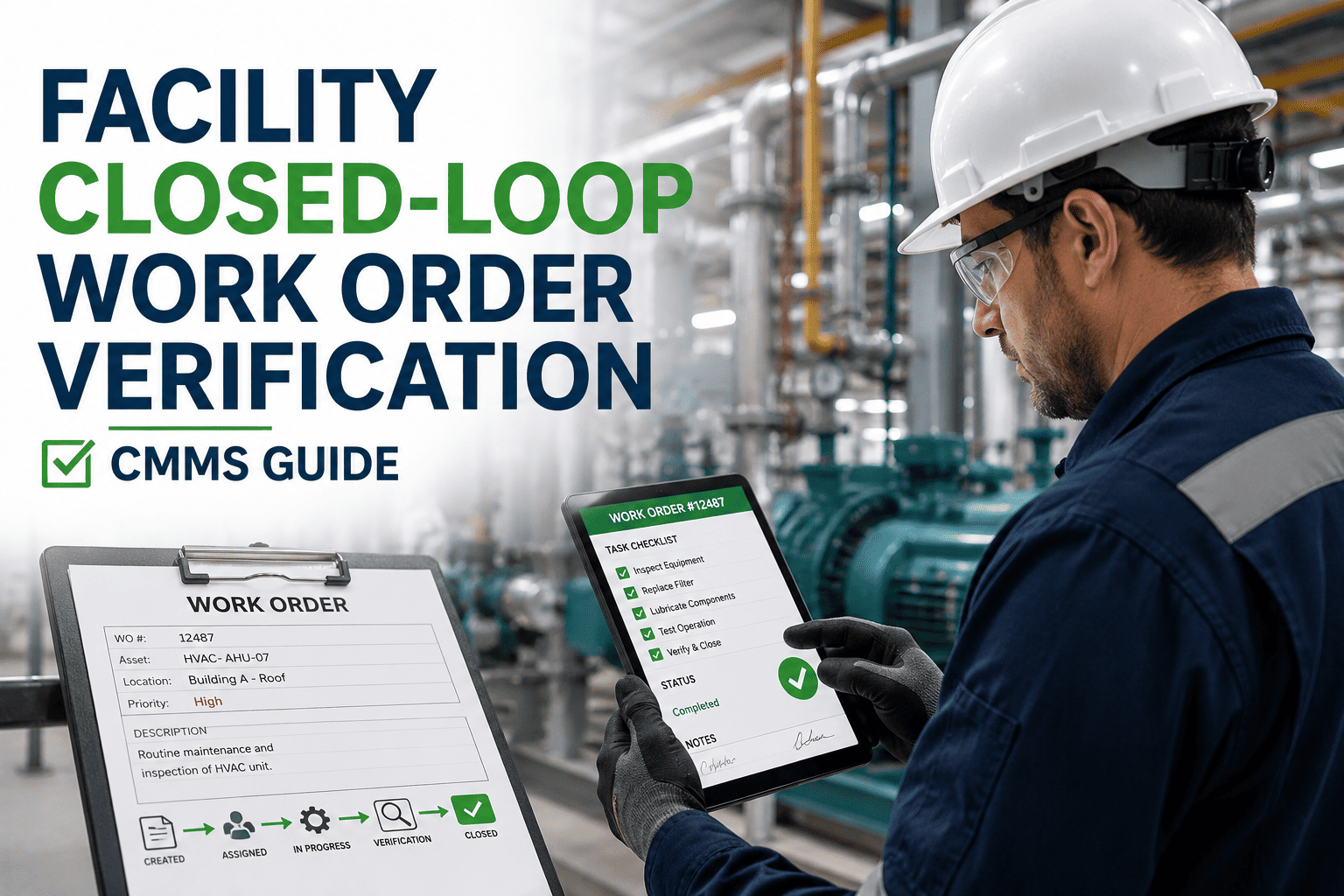
- Resolution closes the loop: BAS data linked to work order outcome
- MTTR tracked continuously from fault timestamp to repair completion
Four BAS Protocols Oxmaint Integrates With in 2026
Building automation systems use a variety of communication protocols depending on equipment vintage, manufacturer, and building type. Oxmaint connects to all four primary protocols in commercial building environments, enabling FM teams to aggregate fault data from every BAS layer into one work order engine regardless of the vendor mix on site.
Configure Automated FDD Work Orders for Any BAS Protocol Your Building Uses
Oxmaint connects to BACnet, Modbus, OPC-UA, and REST API sources in a single integration layer. FM teams configure fault thresholds per asset, set priority rules, and assign dispatch queues once. Every subsequent threshold breach creates a work order automatically with no ongoing manual intervention required. Book a demo to see your building's protocol stack configured in Oxmaint.
BAS Fault Categories and Automated Work Order Priority Mapping
Not all BAS alarms warrant the same response priority. Oxmaint maps BAS fault categories to work order priority levels using configurable rules per asset class and building system. The priority mapping below represents the standard Oxmaint configuration for commercial building portfolios, which FM teams customise to their specific SLA obligations and tenant requirements.
| BAS Fault Category | Example Signals | Default WO Priority | Response Target | Oxmaint Automation |
|---|---|---|---|---|
| Life Safety Critical | Fire suppression fault, CO alarm above OSHA limit, emergency egress door held open, elevator controller fault | P1 Critical | Immediate dispatch, 15-minute response target | Instant work order creation, simultaneous SMS and push notification to on-call technician and supervisor |
| HVAC Comfort Failure | Zone temperature more than 4 degrees above or below setpoint, CO2 above 1,200 ppm, supply air temperature sensor fault | P2 Urgent | 4-hour response, same-day resolution target | Work order created with affected zone, current vs setpoint readings, asset linked, PM history visible |
| Mechanical Equipment Fault | Chiller compressor high discharge pressure, cooling tower fan VFD fault, AHU supply fan trip, boiler low water cutoff | P2 Urgent | 2-hour response for active trip, 8-hour for non-critical | Work order with fault code, equipment runtime hours, last PM date, and recommended inspection checklist pre-populated |
| Energy Performance Deviation | Chiller kW per ton above benchmark, AHU static pressure outside band, economizer not activating when outdoor conditions permit | P3 Standard | Next business day investigation, scheduled work window | Work order linked to energy baseline data, scheduled during next available PM window to minimise disruption |
| Sensor and Communication Fault | BACnet device offline, sensor reading stuck at last value, controller communication timeout, meter pulse failure | P3 Standard | 48-hour resolution to restore monitoring coverage | Work order flagged as data quality issue, linked to network segment, suppressed from energy KPI calculations until resolved |
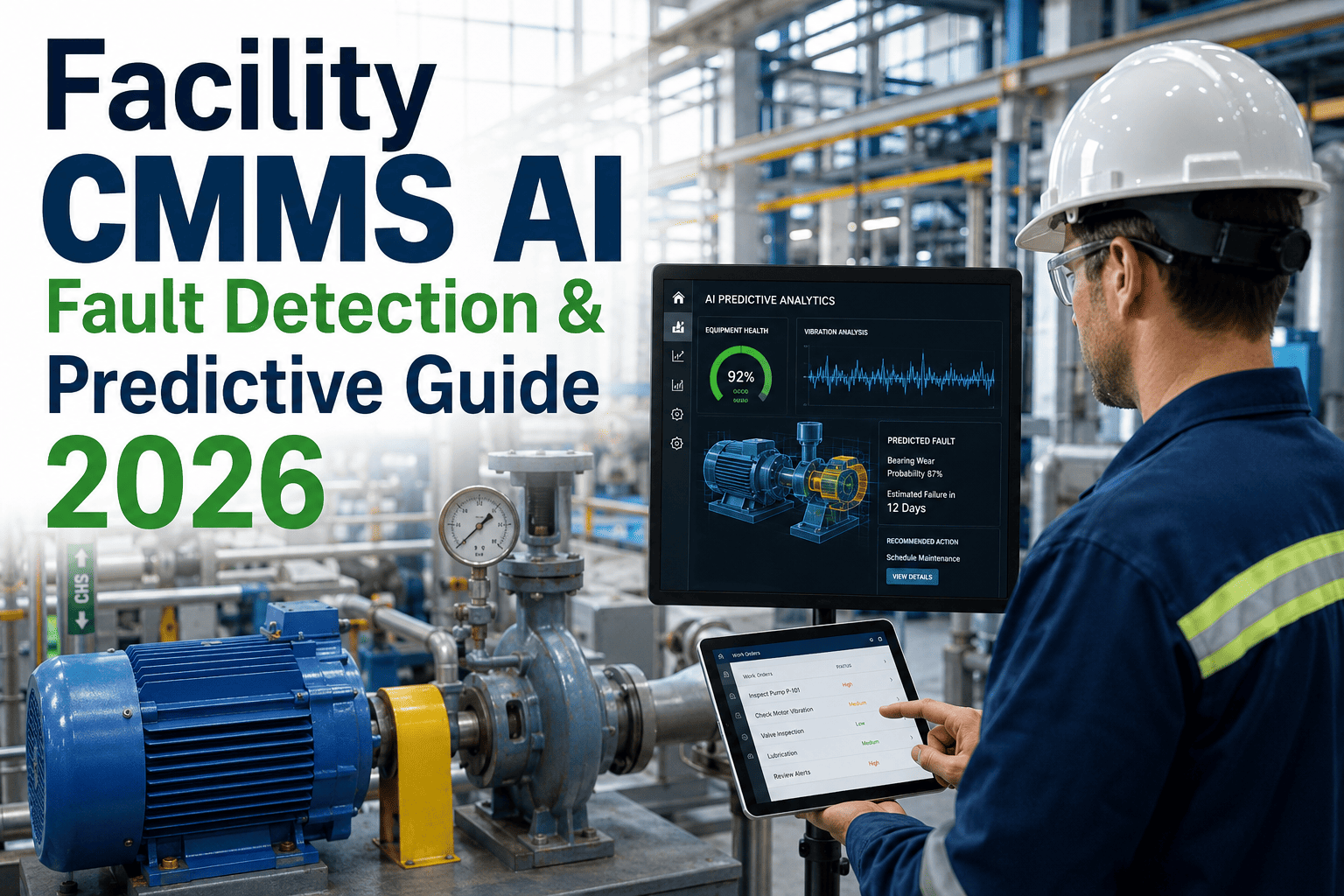
| Predictive FDD Diagnostic | Chiller COP degradation trend, AHU filter loading rate above model, cooling coil fouling coefficient increasing, valve hunting pattern detected | P4 Planned | Schedule within 2-week PM planning window | Work order created with FDD algorithm output, trend data attached, scheduled in PM calendar for planned shutdown window |
The Closed-Loop Integration Architecture: From BAS Signal to Completed Work Order
The closed-loop BAS-CMMS integration operates across four layers. Each layer is purpose-built to eliminate the manual handoffs that create the notification-to-action gap. Understanding all four layers helps FM teams identify where their current setup breaks down and what integration investment resolves it most efficiently.
BAS-CMMS Integration: Before vs After Comparison for FM Teams
| Operational Area | Without Integration | With Oxmaint BAS Integration |
|---|---|---|
| Fault to work order time | 2 to 8 hours: BAS alarm reviewed, email sent, WO manually created, priority assigned by supervisor judgment | Under 60 seconds: threshold breach triggers automatic WO creation with all asset context pre-populated in Oxmaint |
| MTTR on HVAC faults | Industry average 6.2 hours for commercial building HVAC faults when notification-to-dispatch adds administrative delay | 40 to 60% faster on planned FDD-triggered interventions vs emergency reactive repairs for identical equipment faults |
| Asset condition history | BAS trend data in BMS platform. Maintenance history in CMMS. No link between condition readings and repair outcomes | All BAS readings stored against asset record in Oxmaint alongside PM history, work order outcomes, and failure mode trends |
| PM scheduling intelligence | Calendar-based fixed intervals regardless of actual equipment condition. Same PM interval in January and August | Condition-triggered PM scheduling adjusts intervals based on actual equipment operating data from BAS integration |
| Energy fault detection | Energy performance degradation discovered in monthly utility review, often 4 to 8 weeks after onset of fault condition | Chiller COP degradation, AHU economizer failure, and valve hunting detected within hours of onset via BAS data monitoring |
| Compliance documentation | BAS fault logs and CMMS maintenance records in separate systems. Reconciliation requires manual export and comparison | Every BAS-triggered work order creates timestamped compliance documentation: fault onset, response time, resolution code, and technician attribution in Oxmaint |
| Alarm fatigue management | All BAS alarms route to same notification channel. Critical and nuisance alarms compete for FM team attention equally | Oxmaint priority rules filter, deduplicate, and suppress nuisance alarms. Only threshold-validated, asset-linked faults generate work orders |
Four Oxmaint BAS Integration Capabilities for FM Teams
Oxmaint connects to all primary building automation protocols through a single integration layer. Buildings with mixed vendor environments, retrofit systems, and legacy controllers connect through the same Oxmaint interface without separate integration middleware or protocol conversion hardware. Protocol configuration is completed at setup. Subsequent threshold changes and asset additions are made directly in Oxmaint without re-engineering the integration.
Each BAS data point connected to Oxmaint is assigned a threshold rule: absolute high or low limits, setpoint deviation bands, rate-of-change triggers, or multi-condition FDD logic expressions. Thresholds are configured per asset and can reflect ASHRAE equipment benchmarks, manufacturer alarm setpoints, or building-specific performance targets. Rules adjust automatically as the asset condition baseline matures, reducing false alarm work order generation while improving detection sensitivity for developing faults. Book a demo to see threshold configuration for your building systems.
When Oxmaint detects a threshold breach, the resulting work order is pre-populated with the asset name, location, fault description, current and threshold reading, fault onset timestamp, last PM completion date, open work order history, and recommended inspection checklist. The technician receives a fully-documented task on mobile, not a blank work order requiring manual asset lookup. This pre-population reduces time-on-task for every FDD-triggered repair and is the primary driver of the 40 to 60% MTTR improvement on planned interventions vs emergency reactive repairs.
Oxmaint tracks MTTR continuously from the BAS fault timestamp through to work order completion, generating live dashboards showing response time trends, fault recurrence rates, and PM compliance against BAS-defined performance bands. Work order completion data feeds back to asset condition records, enriching the FDD baseline that drives future threshold detection accuracy. FM teams can benchmark MTTR improvements month-over-month and produce the closed-loop maintenance documentation that WELL v2, LEED O+M, and cyber insurance OT audit requirements demand. Book a demo to see the live MTTR dashboard.
BAS-CMMS Integration Performance Benchmarks
Frequently Asked Questions: CMMS and BAS Integration for FM Teams
QWhich BAS vendors and platforms does Oxmaint integrate with natively?
QHow long does a BAS-CMMS integration implementation take?
QHow does Oxmaint handle alarm floods and prevent nuisance work order generation?
QCan Oxmaint connect to both legacy BACnet/IP and modern BACnet/SC secure devices simultaneously?
Close the Loop Between BAS Fault Detection and Maintenance Completion
Oxmaint connects to BACnet, Modbus, OPC-UA, and REST API sources in one integration layer. Every threshold breach creates a documented work order with full asset context, assigned technician, and compliance timestamp automatically. FM teams stop managing two disconnected systems and start measuring MTTR improvement from a single platform. Book a 30-minute demo to see automated FDD work orders configured for your building's BAS protocol stack.