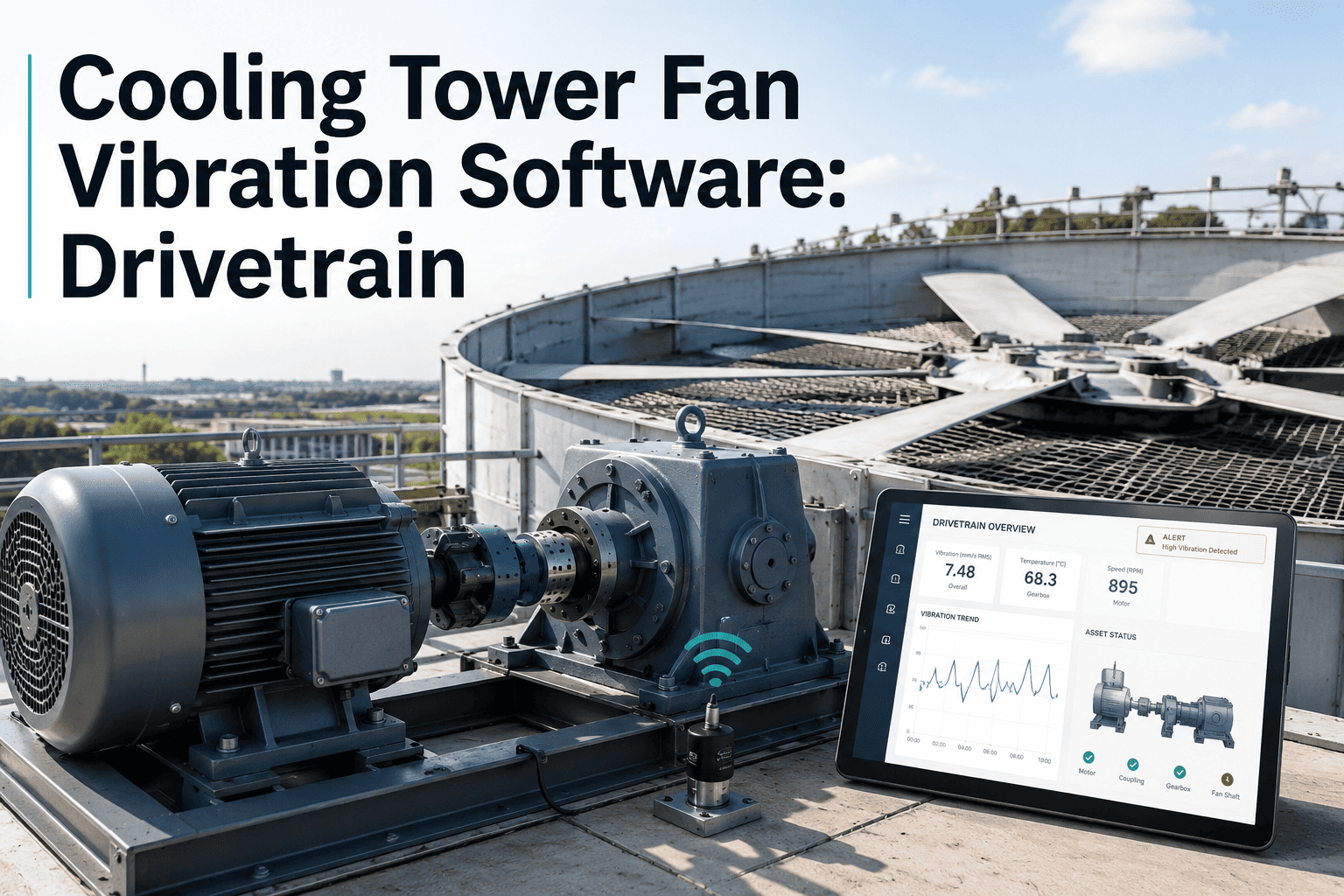
A cooling tower fan rarely fails without warning — it usually tells you weeks in advance, through a vibration signature that starts subtle and gets louder. The problem is that most facility teams only check for it during a monthly walk-around with a handheld meter, long after the drivetrain has already moved from a minor imbalance to a bearing that is about to seize. By the time anyone notices, the fix has gone from a bolt-torque adjustment to an emergency motor swap and a shut cooling loop. Continuous vibration monitoring closes that gap by tracking fan drivetrain health through four escalating severity stages, so your team acts at stage one instead of stage four. See how a four-stage alert actually looks on your own fans by booking a demo at OxMaint.
Cooling Tower Fan Health
Catch a fan drivetrain fault before it becomes a shutdown
OxMaint tracks cooling tower fan vibration continuously and scores drivetrain health against four escalating severity stages, so a minor imbalance turns into a scheduled work order instead of an emergency call.
The Severity Model
The four-stage drivetrain severity tracker
Every fan drivetrain fault moves through the same four stages before it causes a shutdown. Catching it early is entirely a matter of which stage your monitoring can actually see.
Baseline drift
Vibration amplitude shifts slightly from the fan's established baseline. Usually resolved with a belt tension or bolt-torque check under $200.
Early imbalance
A repeating frequency pattern appears, pointing to blade imbalance or misalignment. A scheduled work order prevents further wear.
Bearing wear
High-frequency spikes indicate bearing degradation. Replacement at this stage is planned, not emergency, and far cheaper.
Critical failure risk
Amplitude and heat both spike sharply. Without intervention within days, the fan seizes and the cooling loop goes down.
Why It Matters
What early detection is actually worth to a fan fleet
These figures come from facilities that moved from periodic manual checks to continuous stage-based monitoring across their cooling tower fan fleets.
Method Comparison
How vibration monitoring approaches actually compare
| Monitoring Method | What It Catches | Detection Lead Time | Where OxMaint Fits |
|---|---|---|---|
| Handheld meter walk-around | Stage 3-4 issues only, once vibration is already audible | Days | Logged as a single reading, no trend line |
| Manual logbook and spreadsheet | Whatever the last inspection happened to catch | Inconsistent | No baseline to compare against |
| Continuous IoT vibration sensor | Stage 1 imbalance through stage 4 failure | 3+ weeks | Auto-tagged to the fan asset with severity stage |
| OxMaint stage-based alerting | Escalating drivetrain wear against a fixed baseline | 3-6 weeks | Work order auto-created the moment stage 2 is reached |
Field Result
From 11 unplanned shutdowns to 2: a chiller plant's fan fleet turnaround
A 24-fan cooling tower bank at a chiller plant logged 11 unplanned shutdowns in a year, each traced back to a bearing or belt fault that had gone unnoticed for weeks between manual checks.
With continuous stage-based monitoring across the fleet, the same plant caught 9 of those fault patterns at stage 1 or 2, cutting unplanned shutdowns to 2 for the following year and avoiding three motor replacements entirely.
Put your fan fleet on a four-stage severity tracker
Bring your cooling tower asset list and we will map out exactly which fans would benefit most from continuous vibration monitoring first.
FAQ
Cooling tower fan vibration monitoring: frequently asked questions
What is the four-stage severity model for fan drivetrains?
It scores vibration signatures from stage 1, a small baseline drift, up to stage 4, imminent seizure. Each stage maps to a specific fix, from a bolt-torque check to an emergency motor swap. Book a demo to see your own fans scored.
How much earlier does this catch faults than a manual check?
Continuous monitoring typically flags a stage-1 signature three to six weeks before the same fault would surface in a monthly handheld reading. That window is usually enough to schedule the fix during normal maintenance hours.
Do I need new sensors on every fan to use this?
Most cooling towers can be retrofitted with vibration sensors on existing fan motors without downtime. OxMaint ingests the readings and applies the four-stage model automatically, so no manual scoring is required.
What happens when a fan reaches stage 2 or higher?
OxMaint automatically creates a work order tagged to that fan and severity stage, with the relevant vibration history attached, so the technician arrives already knowing what to check. Start a free trial to see this workflow.
Does this replace preventive maintenance schedules entirely?
No — it complements them. Scheduled PM still covers lubrication and general inspection, while stage-based alerting catches the faults that develop between scheduled visits and would otherwise go unnoticed until stage 3 or 4.
Stop finding out about fan faults at stage 4
Join the facility teams using OxMaint to track cooling tower fan drivetrains through four severity stages — and fix problems while they're still cheap.
Free 14-day trial · No credit card