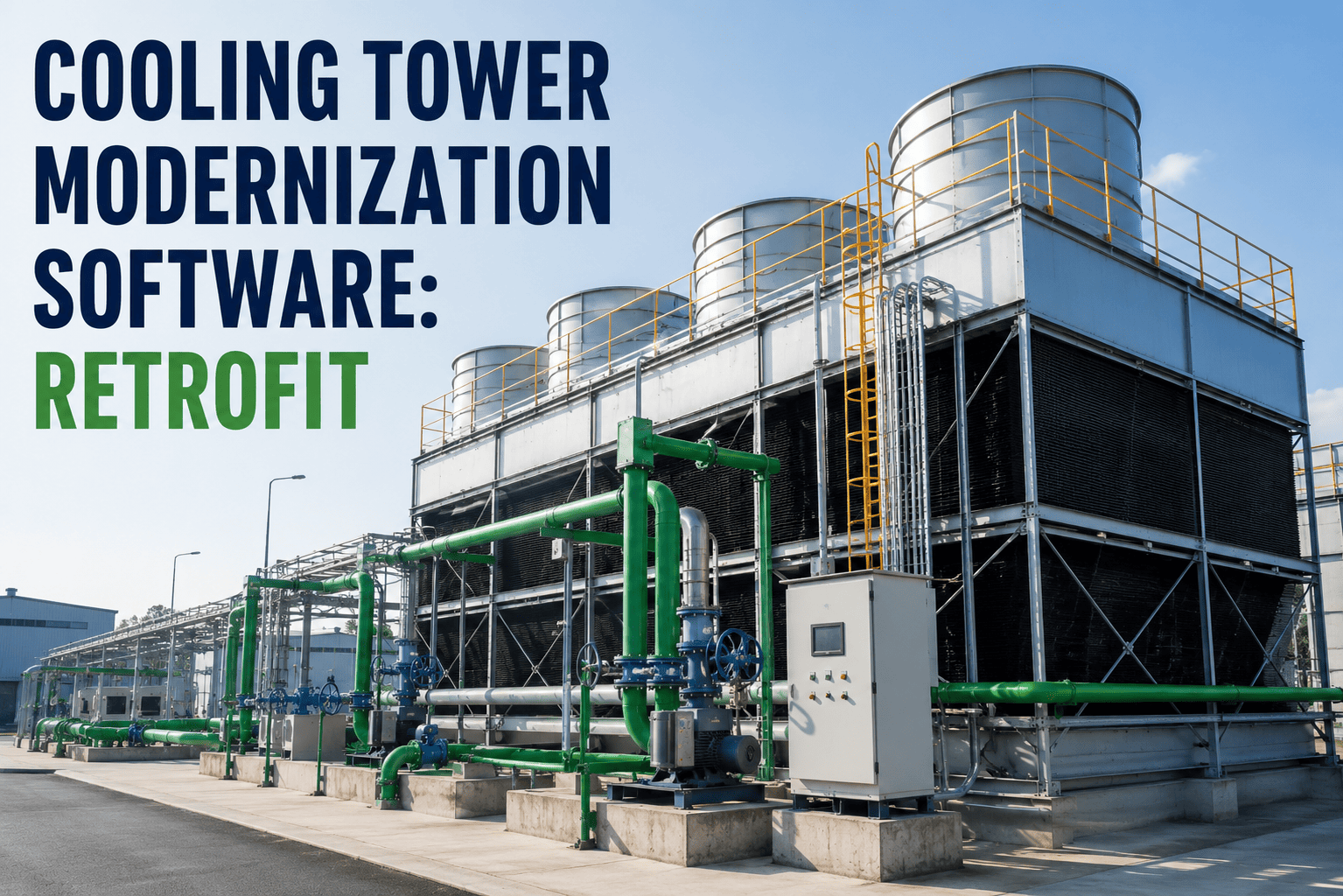
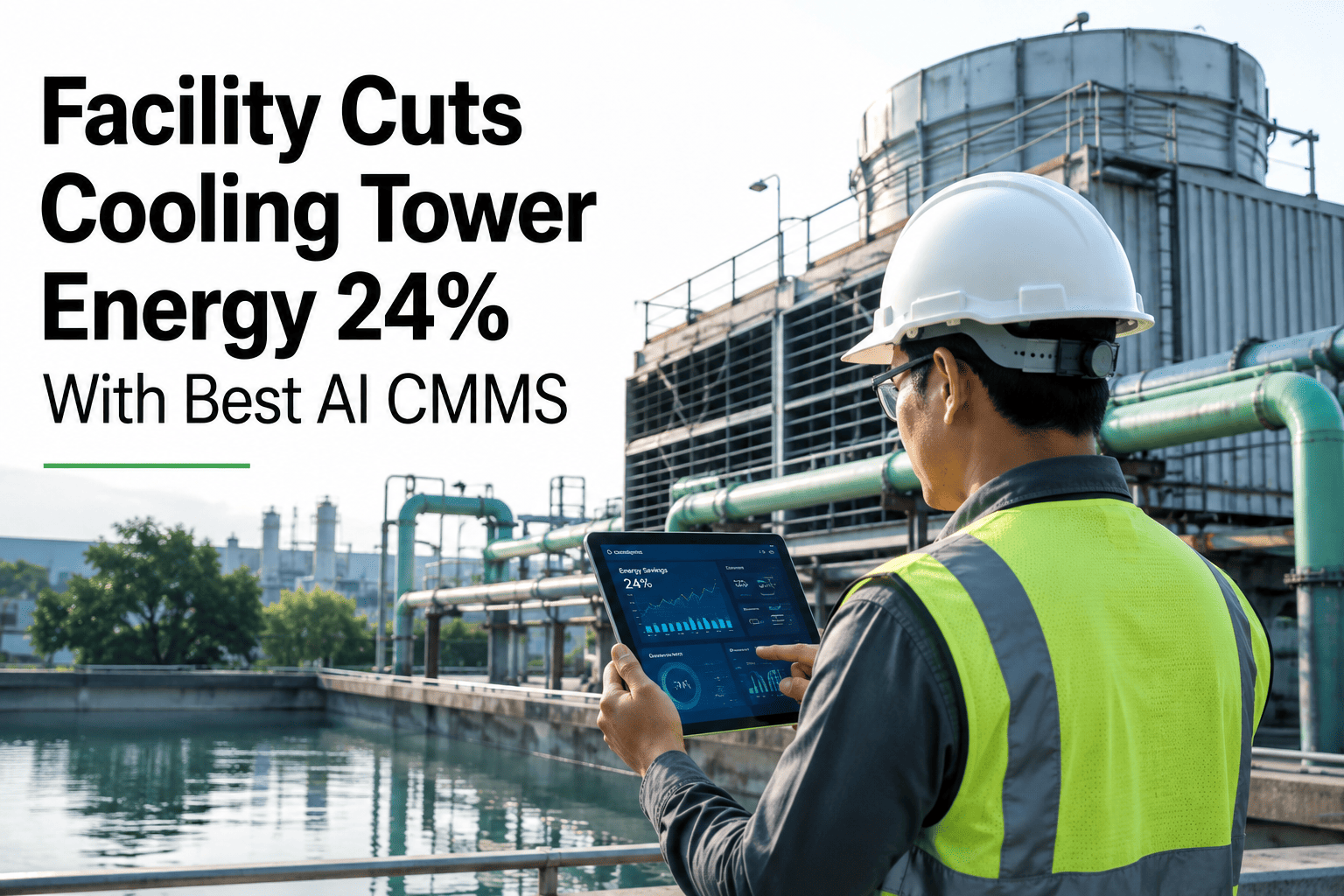
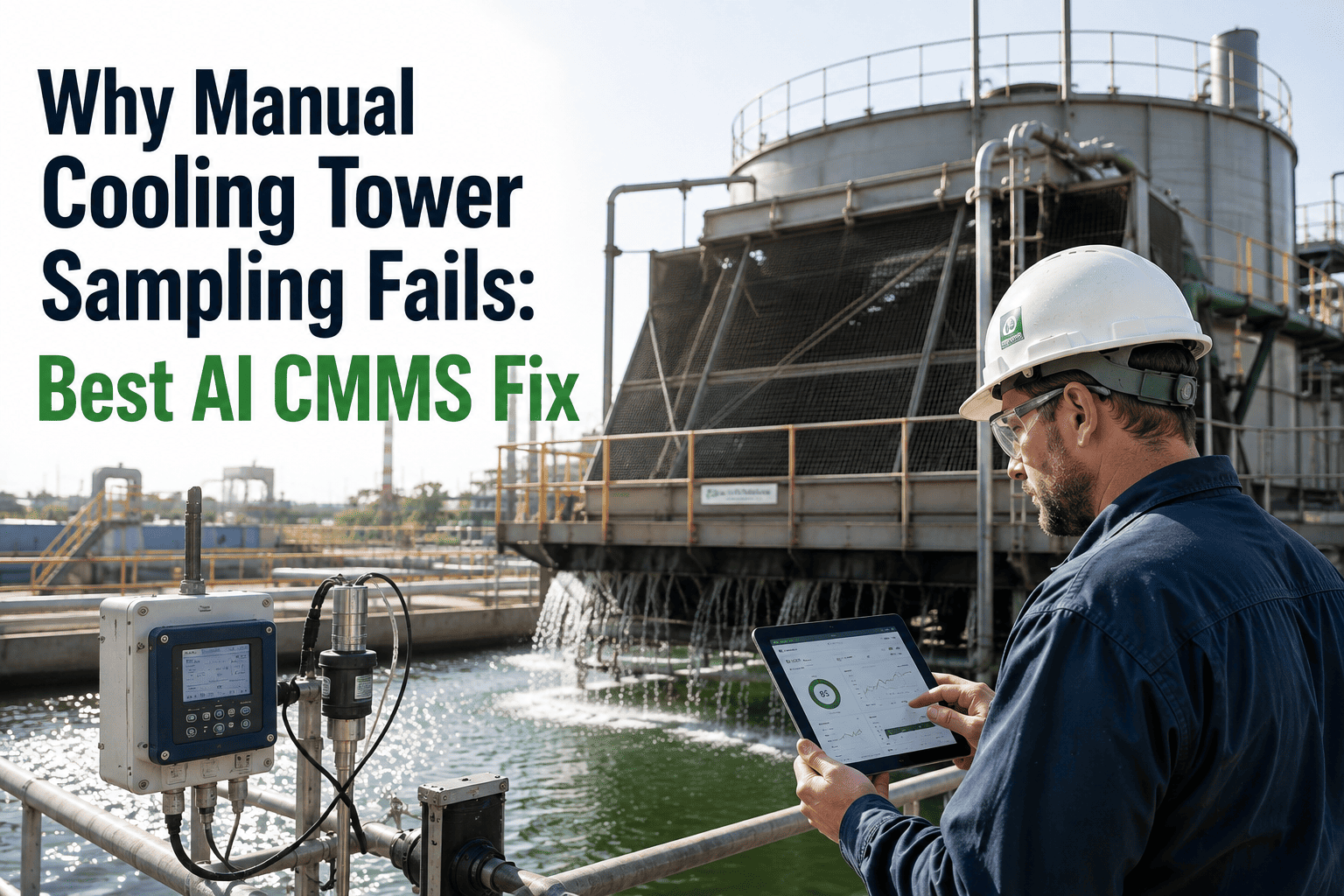
Most cooling towers were never designed to talk to software. They were built to reject heat, not to report on themselves — so when fill starts fouling, a fan bearing starts wearing, or basin chemistry drifts out of range, nobody finds out until energy bills spike or a compliance inspector does. Cooling tower modernization software closes that gap without tearing out a single cell of working structure. It layers sensors, automated work orders, and real-time dashboards onto the tower you already own, turning years of silent degradation into something your team can actually see and act on. Facility and reliability teams that modernize this way typically see the return inside a single cooling season, which is why more of them are starting with a live look at OxMaint.
Facility CMMS · Cooling Tower Modernization
Modernize Your Cooling Tower in Weeks, Not a Full Rebuild Cycle
Keep your existing structure, fans, and fill. Add connected monitoring, automated inspections, and predictive work orders that catch fouling, drivetrain wear, and basin chemistry problems before they become downtime or a compliance letter.
60-80%
fewer unplanned cooling events after modernization
5-8 yrs
extra equipment life from structured monitoring
15-30%
cooling energy saved through tuned VFDs and controls
6-14 wks
typical timeline from kickoff to live monitoring
The Hidden Cost
Why an Aging Cooling Tower Costs More Than the Repair Bill
A cooling tower rarely fails all at once. It fails slowly, through four mechanisms that run on their own timelines — and every one of them is invisible until someone measures it. Software-driven modernization exists precisely to catch these signals early, before they turn into an emergency call or a six-figure remediation.
Scale on Heat Transfer Surfaces
Just a fraction of a millimeter of scale buildup can carry a measurable energy penalty on chiller heat transfer, quietly raising your cooling cost every single day it goes undetected.
Fill and Airflow Degradation
Aging or fouled fill media stops the tower from reaching design cold-water temperature, forcing chillers to work harder to compensate for heat that never got rejected properly.
Undetected Water Chemistry Drift
When conductivity, pH, or biocide dosing drifts without anyone noticing, bacterial growth risk climbs fast — and a documented Legionella event can carry remediation costs well past six figures.
Drivetrain and Fan Wear
Gearbox and bearing wear develops gradually through vibration and heat, and without continuous monitoring it's usually a seized fan motor that announces the problem, not a work order.
Three Ways In
Pick the Modernization Path That Fits Your Tower Fleet
Not every facility needs a full teardown. Depending on how many towers you run, how they're configured, and what sensors are already in place, one of three proven paths gets you to connected, predictive operation without disrupting your current water treatment program, CMMS, or control system.
6-8 Weeks
Augment in Place
Add sensor coverage and dashboards on top of your existing towers and water treatment program, with zero structural changes and no disruption to daily operations.
8-12 Weeks
Hybrid Migration
Combine new monitoring hardware with select mechanical upgrades — fill replacement, VFD retrofits, or basin work — phased tower by tower to keep the site running.
10-14 Weeks
Full Modernization
A complete rebuild of monitoring, control, and reporting across your entire tower fleet, reusing sound structural elements while replacing every point of failure.
The Modernization Flow
From Legacy Tower to Connected Asset in Four Steps
01
Assess the Asset
A structural and mechanical review establishes exactly what's degrading, at what rate, and whether the tower qualifies for augment, hybrid, or full modernization.
02
Connect the Sensors
Temperature, vibration, conductivity, and flow sensors — new or already installed — feed continuously into the platform without touching your existing DCS.
03
Automate the Workflow
Inspections, seasonal startup and shutdown checklists, and water chemistry logging move into structured digital work orders assigned automatically by tower and cell.
04
Predict and Prevent
Trend analysis flags fill fouling, drivetrain faults, and chemistry excursions days in advance, generating a work order before the failure ever reaches the floor.
See Your Own Tower Data Inside OxMaint
Bring your tower count, cell configuration, and current sensor coverage to a live session, and we'll map the exact modernization path — augment, hybrid, or full — that fits your fleet.
Side by Side
Legacy Tower Operations vs a Software-Modernized Program
| Capability |
Legacy Operations |
Modernized with OxMaint |
| Fill and airflow condition |
Discovered during scheduled inspection |
Flagged automatically as fouling severity rises |
| Water chemistry logging |
Paper sheets or scattered spreadsheets |
Logged by technician or synced from sensors |
| Fan and gearbox health |
Found after a bearing seizes |
Fault detection days ahead of failure |
| Seasonal startup and shutdown |
Relies on one technician's memory |
Structured checklist work orders every season |
| Compliance reporting |
Rebuilt manually before an audit |
Timestamped and exportable at any moment |
| Fleet-wide visibility |
One building, one spreadsheet at a time |
Every tower across every site on one screen |
The Payoff
What Facilities Actually Gain After Modernization
60-80%
fewer unplanned cooling tower events across a modernized fleet
15-30%
lower cooling energy spend from tuned VFDs and economizers
5-10%
energy penalty eliminated by catching scale before it builds
2-7 days
advance warning on chemistry excursions before they become violations
Who Relies On It
Built for Every Type of Cooling Infrastructure
01
Power and Utility Plants
Multi-cell towers running around the clock get continuous fan and basin monitoring so reliability engineers see wear building long before a forced outage.
Data Center Operators
Cooling capacity is uptime. Modernized towers give facility teams the early warning they need to protect compute load without over-cooling and wasting energy.
02
03
Manufacturing and Process Plants
Process cooling loads that vary by shift benefit from runtime-based fill cleaning triggers instead of fixed calendar intervals that waste labor and water.
04
Multi-Site Commercial Campuses
Each building keeps its own sensor coverage and technician assignments while a portfolio view gives the central team visibility across every tower on site.
From the Field
What Reliability Teams Say After Modernizing
5 / 5
We augmented four towers across two plants without touching our water treatment vendor or shutting anything down. Within the first quarter we caught a fan gearbox fault that would have taken a cell offline during peak summer load, and that alone paid for the project.
DP
Daniel Petrov
Reliability Manager, Process Manufacturing
5 / 5
Our old towers were tracked on paper, and audits used to take a full week of reconstructing logs from memory. Now every chemistry reading and inspection is timestamped automatically, and our last compliance review took under a day.
SA
Sarah Ahluwalia
Facility Engineer, Data Center Operations
Common Questions
Cooling Tower Modernization — Frequently Asked Questions
Do we need to shut down the tower to modernize it?
No. Augment and hybrid paths run alongside daily operations, with sensors and dashboards added while the tower keeps rejecting heat.
Start a free trial to see the setup steps.
Will this replace our current water treatment vendor?
No. Modernization is designed to keep your existing water treatment program, CMMS, and control system intact while adding the monitoring layer on top.
How fast does a typical project actually move?
Augment-in-place projects run 6-8 weeks, hybrid migrations run 8-12 weeks, and a full fleet modernization runs 10-14 weeks from kickoff to live monitoring.
Can Oxmaint use sensors we've already installed?
Yes. Existing temperature, flow, conductivity, and vibration sensors are reused wherever possible, and only genuine coverage gaps get new hardware added.
How do we know which modernization path fits our towers?
It depends on tower count, cell configuration, and current sensor coverage.
Book a demo and we'll map the right path for your fleet.
Facility CMMS · Cooling Tower Modernization
Stop Reacting to Cooling Tower Failures. Start Predicting Them.
Every week you run without connected monitoring is another week of scale, wear, and chemistry drift building up unseen. Map your modernization path and start seeing your tower data the way your team was always meant to.