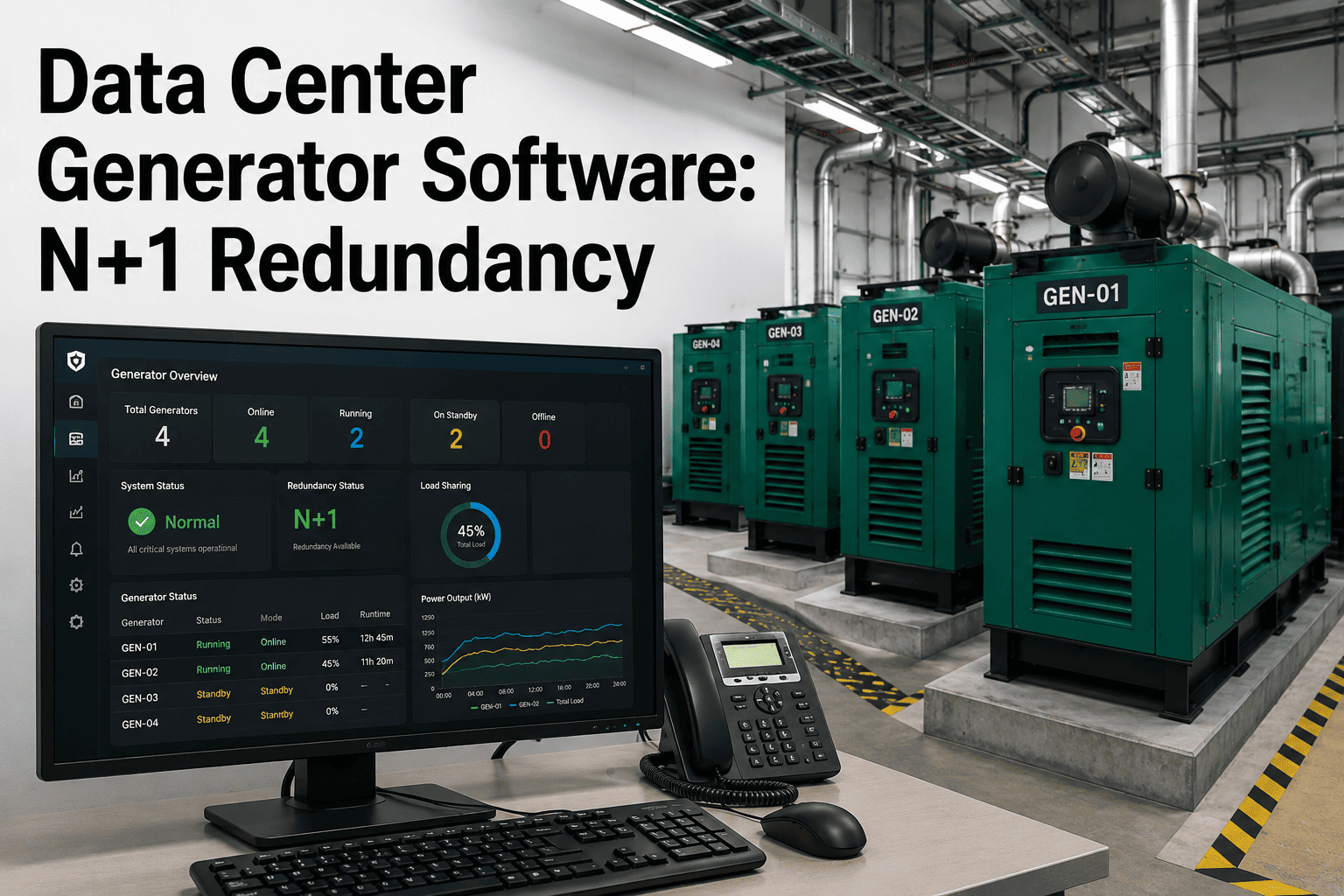
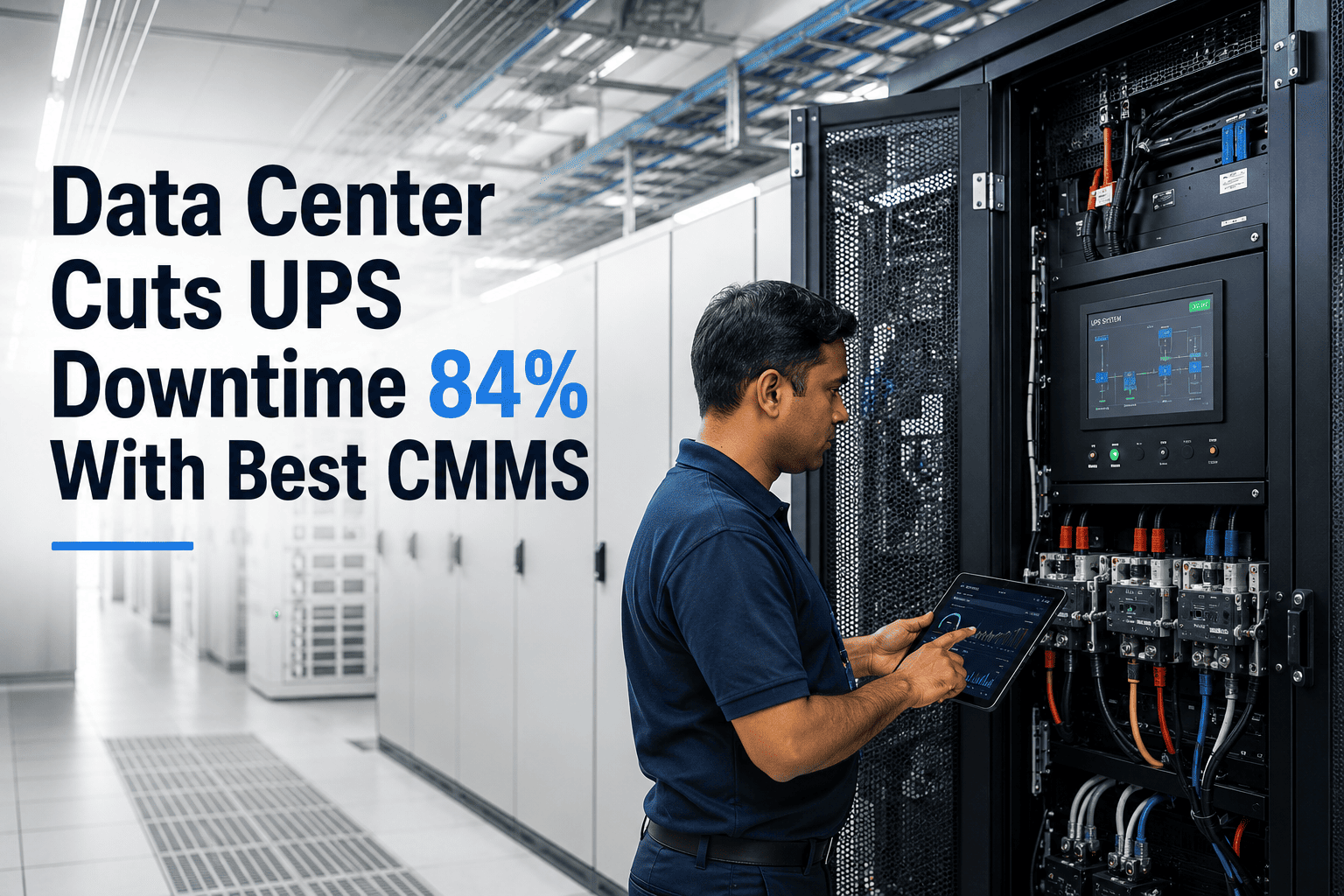
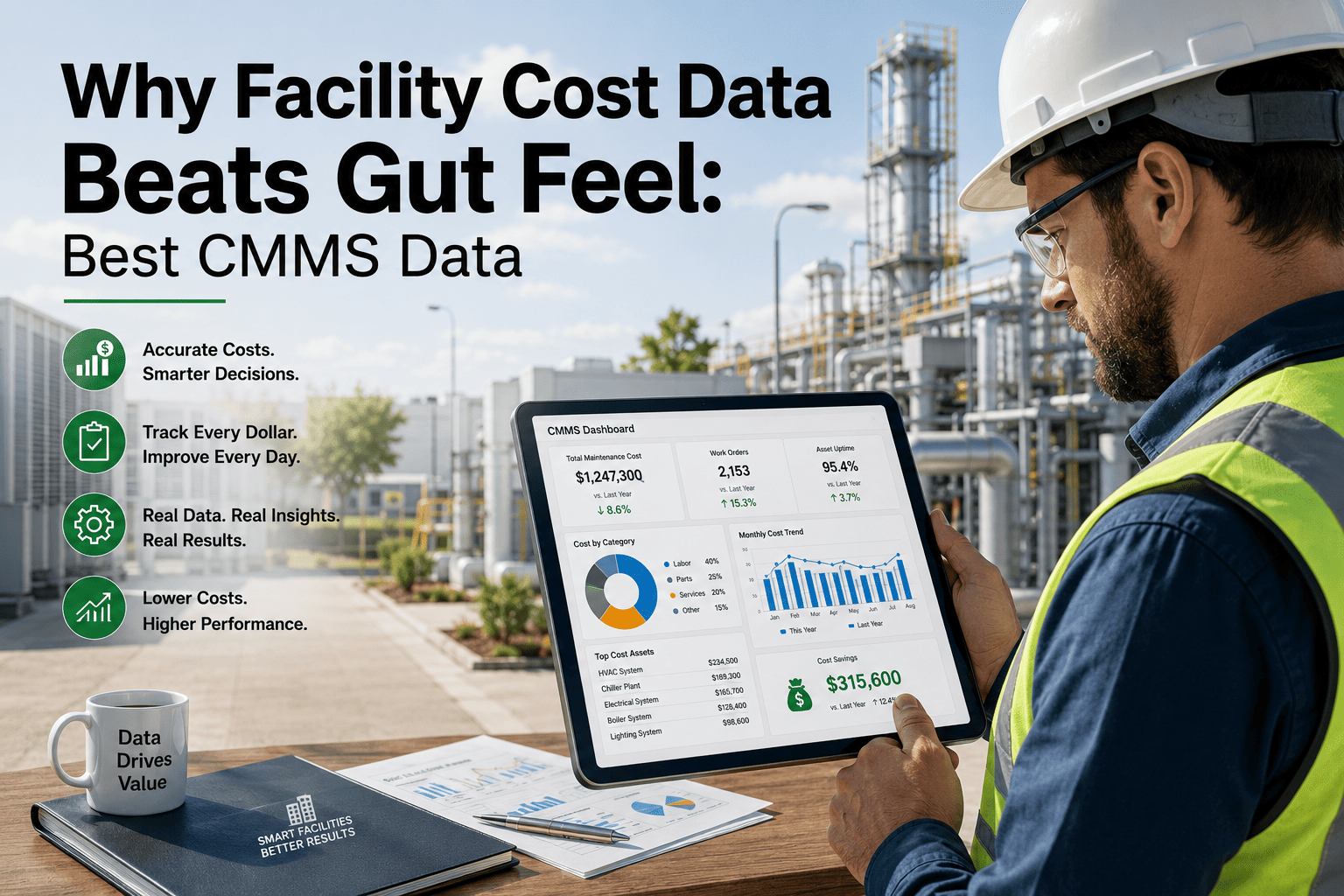
When a utility feed drops at 2 a.m., your data center's entire uptime commitment rests on whichever generator is sitting in reserve — and whether it actually picks up the load. N+1 redundancy means running one more generator than your facility's minimum requirement, so a single unit failure never reaches the IT floor. But redundancy on paper and redundancy in practice are two different things: a generator that passes its monthly exercise run in isolation can still fail to synchronize when the paralleling switchgear calls on it mid-outage. Facility and critical infrastructure teams are moving away from scattered run-hour logs toward CMMS platforms built specifically for N+1 fleets — tracking load-share data, resynchronization checks, and NFPA 110 testing as one connected, audit-ready record. Book a demo to see how Oxmaint keeps every generator in your N+1 fleet outage-ready, not just paperwork-ready.
Data Center Power
Generator Compliance
2026 Guide
What Your Redundancy Model Actually Buys You
29 hrs
N — Tier I
No Redundancy
1.6 hrs
N+1 — Tier III
Concurrently Maintainable
~1 hr
2N — Tier IV Component
Full Duplicate Path
26 min
2N+1 — Tier IV
Fault Tolerant
Approximate annual downtime by Uptime Institute tier alignment — the redundancy model you pick sets the ceiling on how reliable your facility can ever be, regardless of how well individual units are maintained.
Redundancy Models Compared
N, N+1, 2N, and 2N+1 — What Each Model Requires From Your Generator Fleet
See Your Actual Redundancy Posture, Not the Assumed One
Oxmaint tracks every generator, ATS, and paralleling switchgear panel in your N+1 fleet as one connected asset record — so you know your real coverage before an outage tests it for you.
The Hidden Gap
Why a Generator That Passes Its Monthly Test Can Still Fail During an Outage
Unit-Level Testing
Each generator exercised alone, once a month
Passes on paper, in isolation
Sync failures with switchgear stay hidden
Undersized voltage under real load goes undetected
Redundancy is assumed, never proven
→
System-Level Testing
All N+1 units loaded together, as a system
One unit intentionally dropped mid-test
Remaining units verified to absorb load in seconds
Voltage, frequency, and load-share % all documented
Redundancy is proven, not assumed
Compliance Cadence
The NFPA 110 Testing Calendar Every Data Center Generator Fleet Runs On
Weekly
Visual & Operational Inspection
Fluid levels, battery condition, coolant concentration, exhaust system integrity, and active alarm status checked and logged for every unit in the fleet.
Monthly
Load Exercise Run
Minimum 30-minute run under sufficient load to avoid wet stacking — unburned fuel building up in the exhaust from chronic light-load operation.
Annual
Supplemental Load Bank Test
Applied whenever building load can't reach the monthly threshold, plus a full N+1 system test that simulates a single-unit failure under real load share.
36 Months
Full EPSS Load Bank Cycle
Complete emergency power supply system test with full documentation review — the record set an AHJ or SOC 2 auditor will ask for first.
Built for N+1 Fleets
What a Purpose-Built CMMS Tracks That a Spreadsheet Can't
Paralleling Switchgear PM
Scheduled inspection of sync panels, breakers, and controls that determine whether units actually parallel when called on.
Load-Share Verification Logs
Records the load percentage each unit carries during a system test — the number that proves redundancy instead of assuming it.
ATS Transfer Records
Captures transfer time, voltage, and frequency at every automatic transfer switch event, planned or real.
Fuel Quality & Polishing
Tracks polishing cycles and fuel sampling results so stored diesel is still combustion-ready when an outage finally calls on it.
NFPA 110 Documentation
Generates the audit-ready record set that an AHJ, insurer, or SOC 2 Type II reviewer expects to see on request.
Resynchronization Checks
Confirms a restored unit re-parallels cleanly after a simulated failure, closing the loop on every system test.
From the Field
What Critical Facilities Teams Say About Managing N+1 Generator Fleets
Our monthly exercise logs looked perfect for years. It wasn't until we started running full system tests — dropping one unit while the others carried real load — that we found a synchronization delay that would have taken down a rack row during an actual transfer. The individual units were never the problem. The system, tested as a system, was.
Director of Critical Facilities
Colocation Provider — Multi-Site N+1 Deployment
Before Oxmaint, our generator records lived in three places: a binder in the plant room, a shared spreadsheet, and whatever the vendor emailed after service visits. Consolidating that into one system didn't just save time during our last audit — it caught a fuel polishing cycle that had quietly lapsed for two quarters.
Data Center Operations Manager
Enterprise Colocation Facility, Tier III
Stop Managing Generators as Individual Assets
Oxmaint connects every generator, ATS, and switchgear panel in your N+1 fleet to one maintenance and compliance record, so your redundancy is documented the way it's actually tested — as a system.
Frequently Asked Questions
Data Center Generator N+1 Redundancy — Common Questions
What does N+1 redundancy actually mean for data center generators?
N+1 means one generator more than the minimum your facility needs at full load. If four units cover your load, N+1 means running five, so any single failure never touches the IT floor.
Start a free trial to map your own N+1 requirement against your current fleet.
How is N+1 different from 2N or 2N+1?
N+1 adds one spare unit to a shared pool. 2N duplicates the entire power path end to end. 2N+1 duplicates the path and adds a spare, allowing full redundancy even during planned maintenance. Each step up trades cost for fault tolerance.
How often must data center generators be tested under NFPA 110?
Weekly visual inspections, monthly load exercise runs, annual supplemental load bank testing when needed, and a full EPSS test cycle roughly every three years.
Book a demo to see this cadence scheduled automatically in Oxmaint.
Why does a generator that passes its monthly test still fail during an outage?
Monthly tests usually run one unit at a time. A real outage calls on the whole N+1 system at once, including synchronization through the paralleling switchgear — a step unit-level testing never checks.
Can a CMMS replace manual generator logs for compliance audits?
Yes — a CMMS timestamps every inspection, test, and repair against the specific asset and technician, producing the audit trail a binder or spreadsheet can't reliably reproduce.
Start a free trial to build that record from your next test.
Your Redundancy Is Only as Real as Your Last System Test
Oxmaint gives critical facilities teams one platform for N+1 generator maintenance, paralleling switchgear PM, NFPA 110 compliance, and audit-ready documentation.