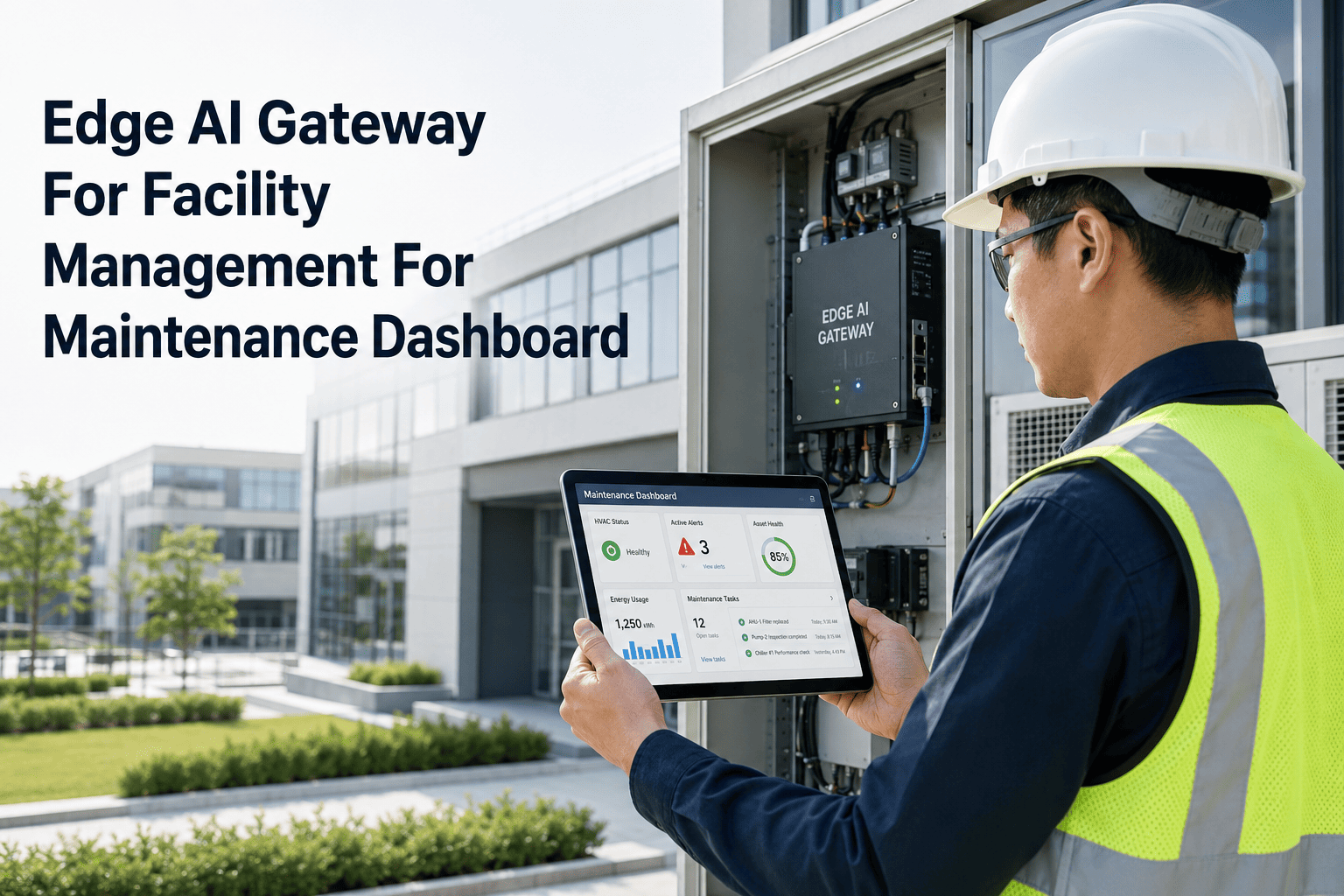
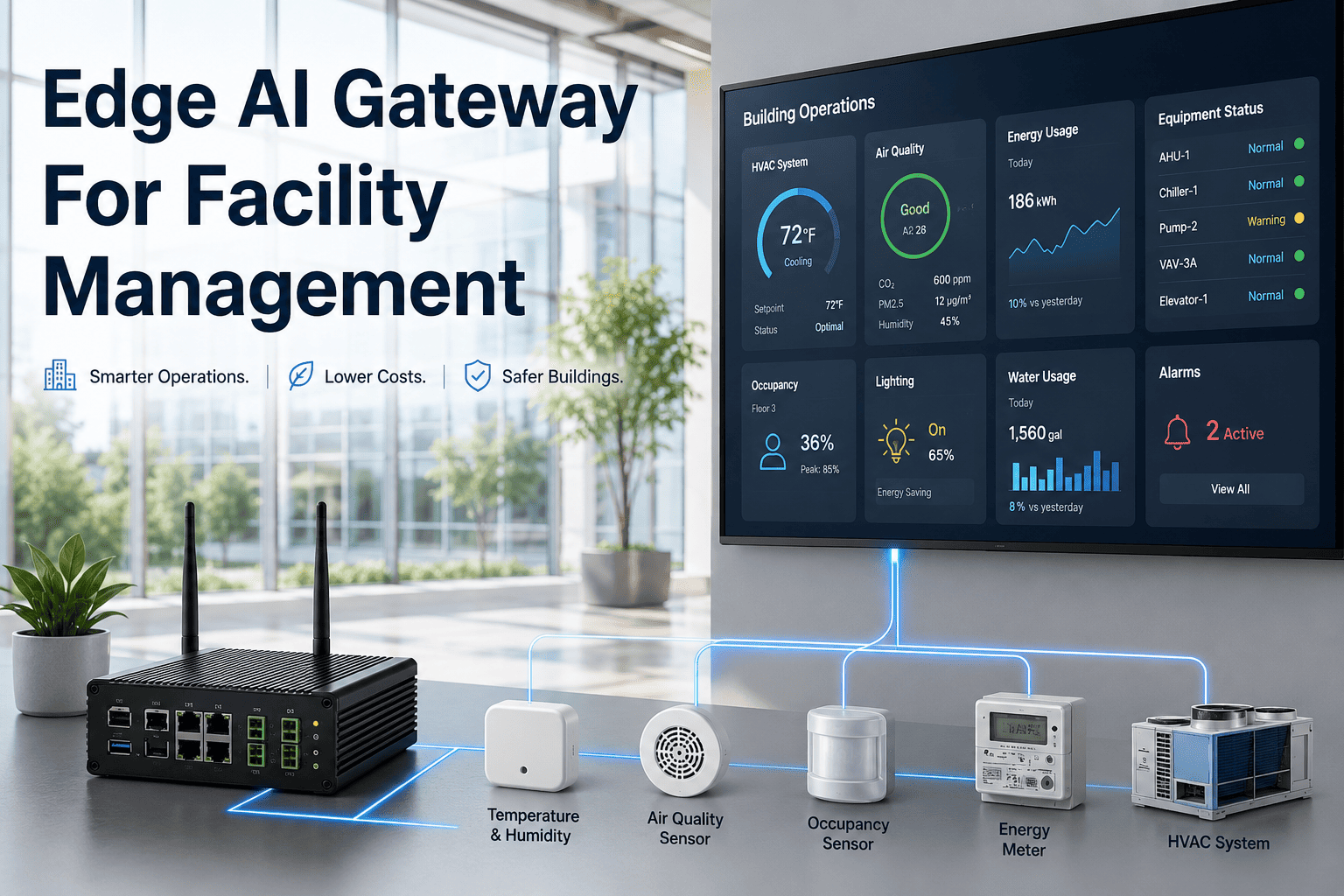
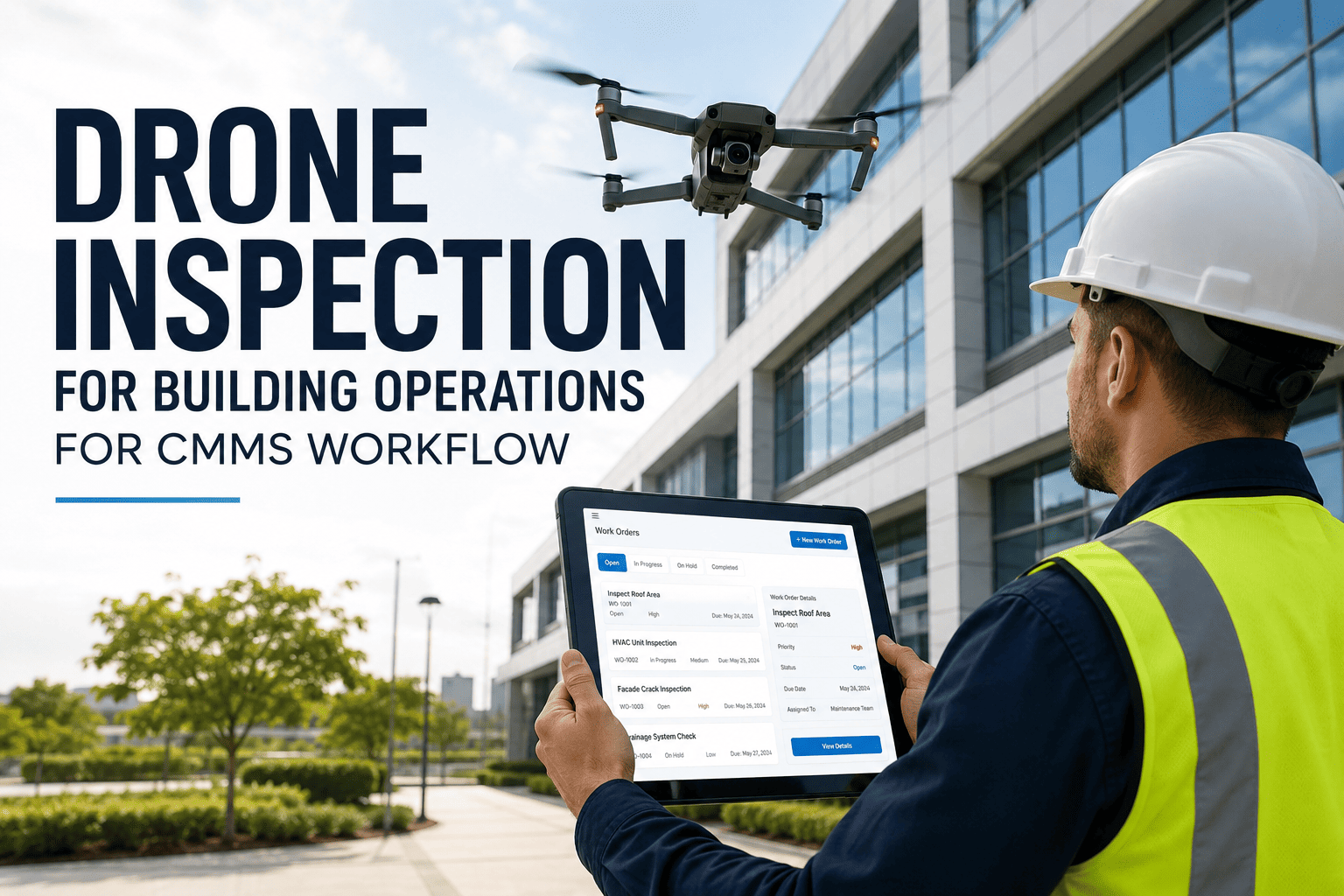
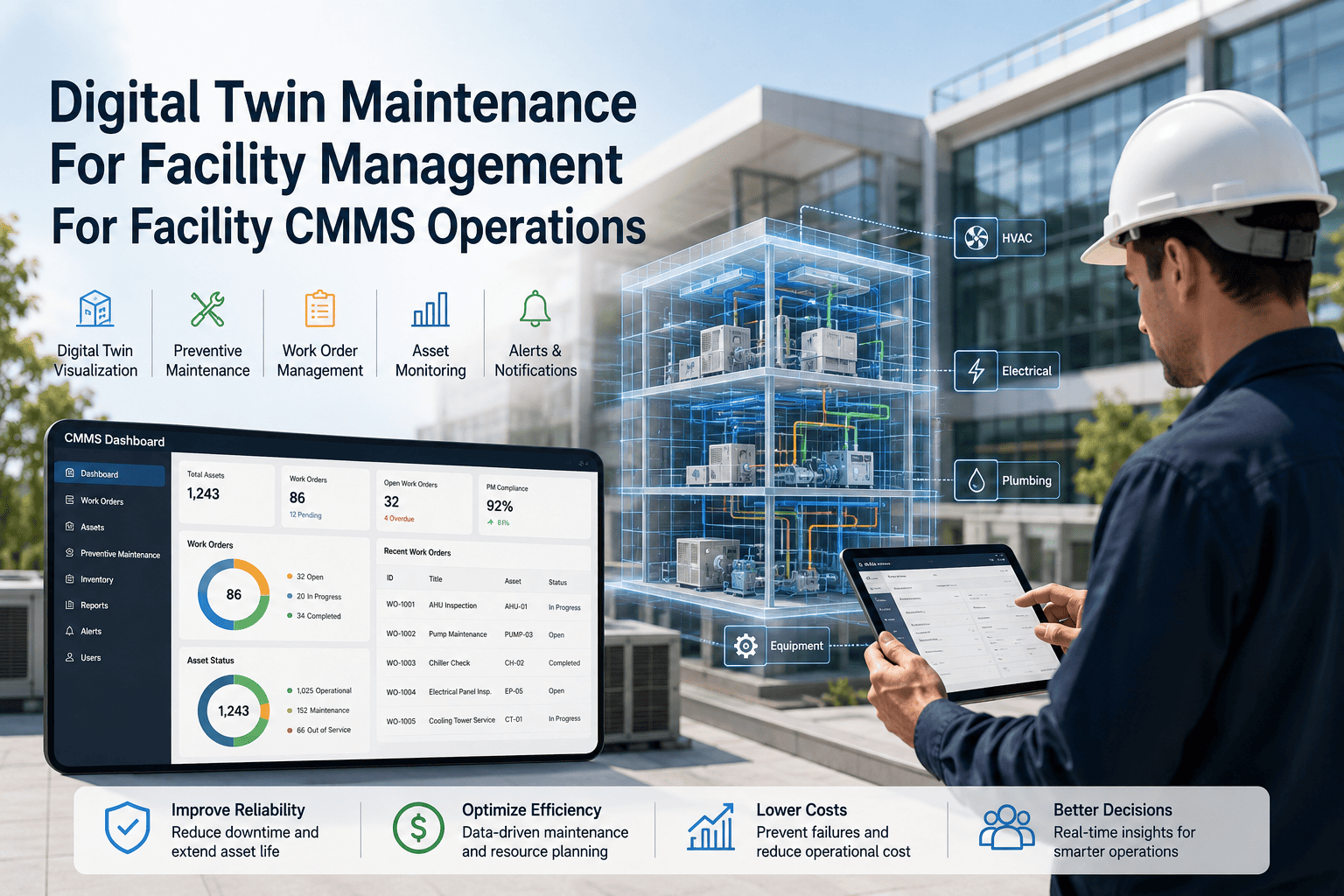
Building systems generate more data than any facility team can manually process — HVAC sensors, access logs, energy meters, inspection records, and equipment alerts all running in parallel, each in its own silo. An Edge AI Gateway for Facility Management sits between those building systems and your CMMS, translating raw sensor signals into structured maintenance actions without waiting for data to travel to a cloud server and back. The result is faster fault detection, automated work order creation, and a CMMS workflow that reflects the actual condition of your building in real time — not yesterday's reading. Sign in to OxMaint to connect your building systems to a live CMMS workflow, or book a demo to see how Edge AI integration works with your existing facility infrastructure.
Why Edge Matters For Facilities
The Gap Between Sensor Data And Maintenance Action
Without Edge AI
Sensor Triggers
Data Sent To Cloud
Alert Processed
Work Order Created — Hours Later
Equipment runs in fault condition while data travels and waits for human review
With Edge AI Gateway
Sensor Triggers
Edge Processes Locally
Work Order Auto-Created
Fault is actioned at the building edge — no cloud round-trip, no manual triage delay
System Architecture
How Edge AI Connects Building Systems To Your CMMS
Building Data Sources
HVAC Sensors
Energy Meters
BMS / BAS
Access Control
Fire Safety
Plumbing Flow
Lighting Systems
Lift / Elevator
Edge AI Gateway
Anomaly detection at the building edge
Alert classification and prioritisation
Work order payload generation
Local data storage for offline resilience
Structured maintenance triggers
OxMaint CMMS
Auto Work Orders
Asset History
Technician Dispatch
Compliance Records
PM Scheduling
Analytics Dashboard
Connect Your Building Systems To A CMMS That Acts On The Data
OxMaint with Edge AI integration turns sensor alerts into work orders, tracks asset condition in real time, and closes the loop between detection and repair — without manual triage.
Workflow Reference
Edge AI Actions By Building System Type
| System |
Edge AI Detection |
CMMS Action Triggered |
Response Priority |
| HVAC |
Temperature deviation, airflow drop, coil fouling signal |
PM work order + technician alert |
High |
| Electrical / BMS |
Voltage anomaly, circuit overload, tripped breaker event |
Priority corrective work order |
Critical |
| Plumbing |
Flow rate abnormality, pressure drop, leak detection signal |
Urgent work order + location tag |
Critical |
| Lift / Elevator |
Fault code, door cycle anomaly, motor load spike |
Vendor dispatch work order |
High |
| Energy Meters |
Consumption spike above baseline threshold |
Investigation work order + cost flag |
Medium |
| Fire Safety |
Sensor test failure, suppression system signal |
Compliance work order + audit log |
Critical |
What You Get
CMMS Capabilities Unlocked By Edge AI Integration
01
Automated Work Order Creation
Sensor faults become structured work orders without a technician or manager in the loop — asset ID, fault type, severity, and location pre-filled from the edge signal.
02
Real-Time Asset Condition Tracking
Every edge event updates the asset record in OxMaint — condition history builds automatically, giving maintenance planners data to schedule PM before failure, not after.
03
Offline Edge Resilience
If cloud connectivity drops, the edge gateway continues to detect faults, queue work orders, and store data locally — syncing to the CMMS the moment connection restores.
04
Compliance Evidence Auto-Logged
Sensor readings, fault events, and repair responses are timestamped and stored against the asset record — creating an audit trail with zero manual documentation effort.
05
Technician Workflow Integration
Edge-triggered work orders arrive on technician mobile devices with full context — asset history, fault details, and checklist — so the first visit is also the informed visit.
06
Maintenance Analytics Dashboard
Edge event frequency, response times, repeat faults, and cost per asset all surface in the OxMaint dashboard — the data that drives capital planning and vendor decisions.
From The Operations Floor
What Facility Technology Leads Experience After Integration
"
Our BMS was generating hundreds of alerts every week and a technician was manually reading through them each morning to decide what needed a work order. It was a full-time job just to triage data we already had. After connecting through the Edge AI gateway to OxMaint, the classification and work order creation happens automatically. Our technicians now arrive at assets with context — not a pager alert and a guess. MTTR dropped significantly in the first quarter and our PM compliance went up because the system schedules based on actual condition trends, not just calendar intervals.
Common Questions
Facility Teams Ask Before Connecting Edge AI To Their CMMS
Do we need to replace our existing BMS or building sensors to use this?
No. The Edge AI gateway is designed to sit alongside existing building systems — BMS, BAS, and third-party sensors — acting as a translation and intelligence layer between what those systems produce and what OxMaint needs to create a work order. Your current infrastructure remains in place.
Book a demo to map your current systems to the integration.
How does the edge gateway decide which sensor events become work orders?
Threshold rules and anomaly detection logic run at the gateway level — you define what constitutes an actionable event per system type (for example, HVAC temperature deviation above 3°C for more than 10 minutes), and the gateway classifies, prioritises, and packages the alert into a structured work order payload. Rules are configurable without code.
Sign in to configure your alert thresholds in OxMaint.
What happens to edge data and pending work orders if the internet connection drops?
The gateway stores data and work order queues locally during connectivity loss and syncs everything to OxMaint when the connection restores. Fault detection and local event logging continue uninterrupted — the offline window does not create gaps in the asset history or compliance record.
Book a demo to see the offline resilience model in action.
Can compliance teams use edge event logs for audit purposes?
Yes. Every edge event — sensor reading, fault trigger, work order creation, and repair response — is timestamped and stored against the asset record in OxMaint. Compliance teams can pull a full audit trail by asset, system type, date range, or building without any manual documentation.
Sign in to view your asset compliance history.
Your Building Systems Are Already Detecting Faults. Your CMMS Should Act On Them.
OxMaint with Edge AI integration closes the loop between what your sensors detect and what your technicians act on — automated, tracked, and audit-ready from the first alert. Free trial, no implementation fees.