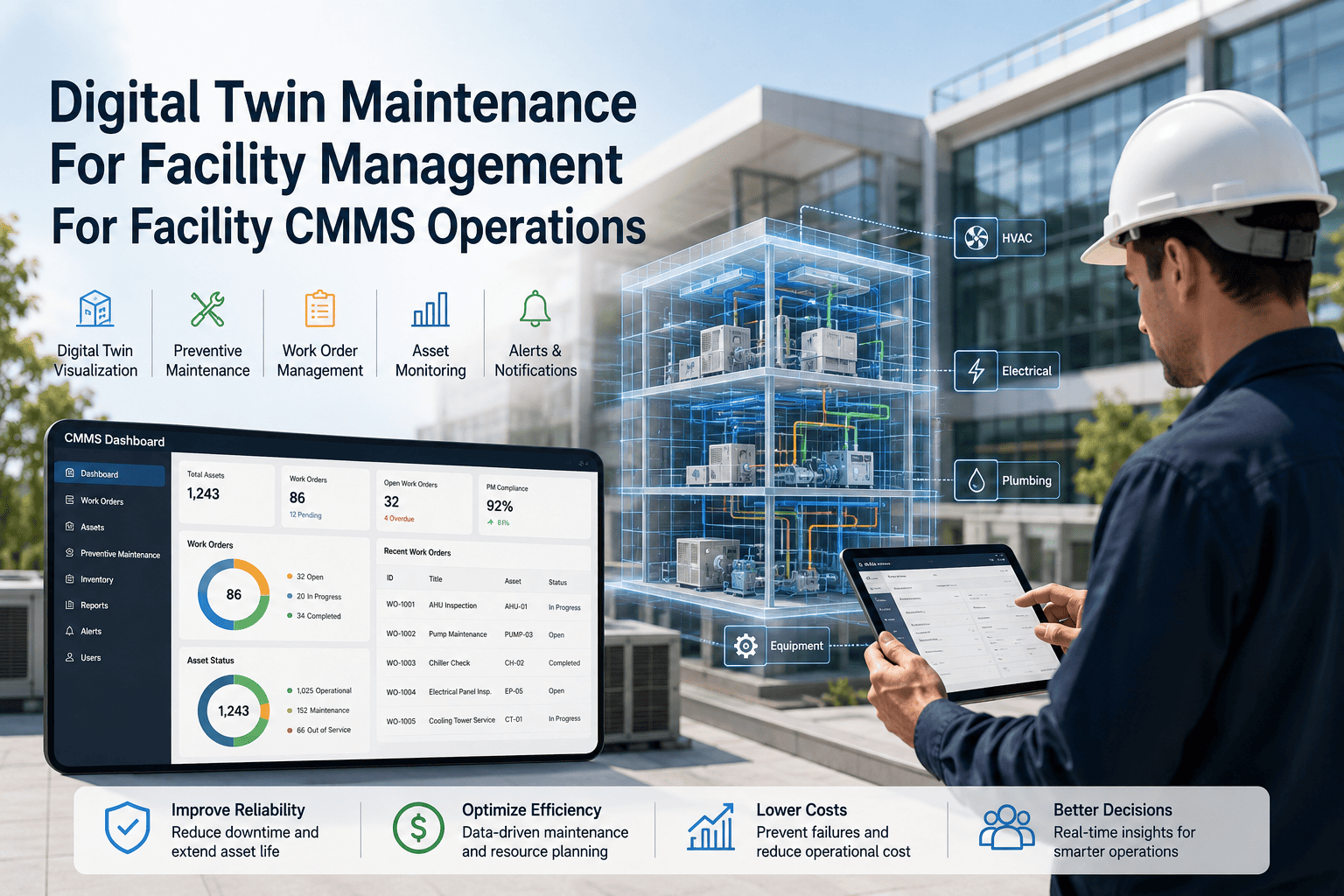
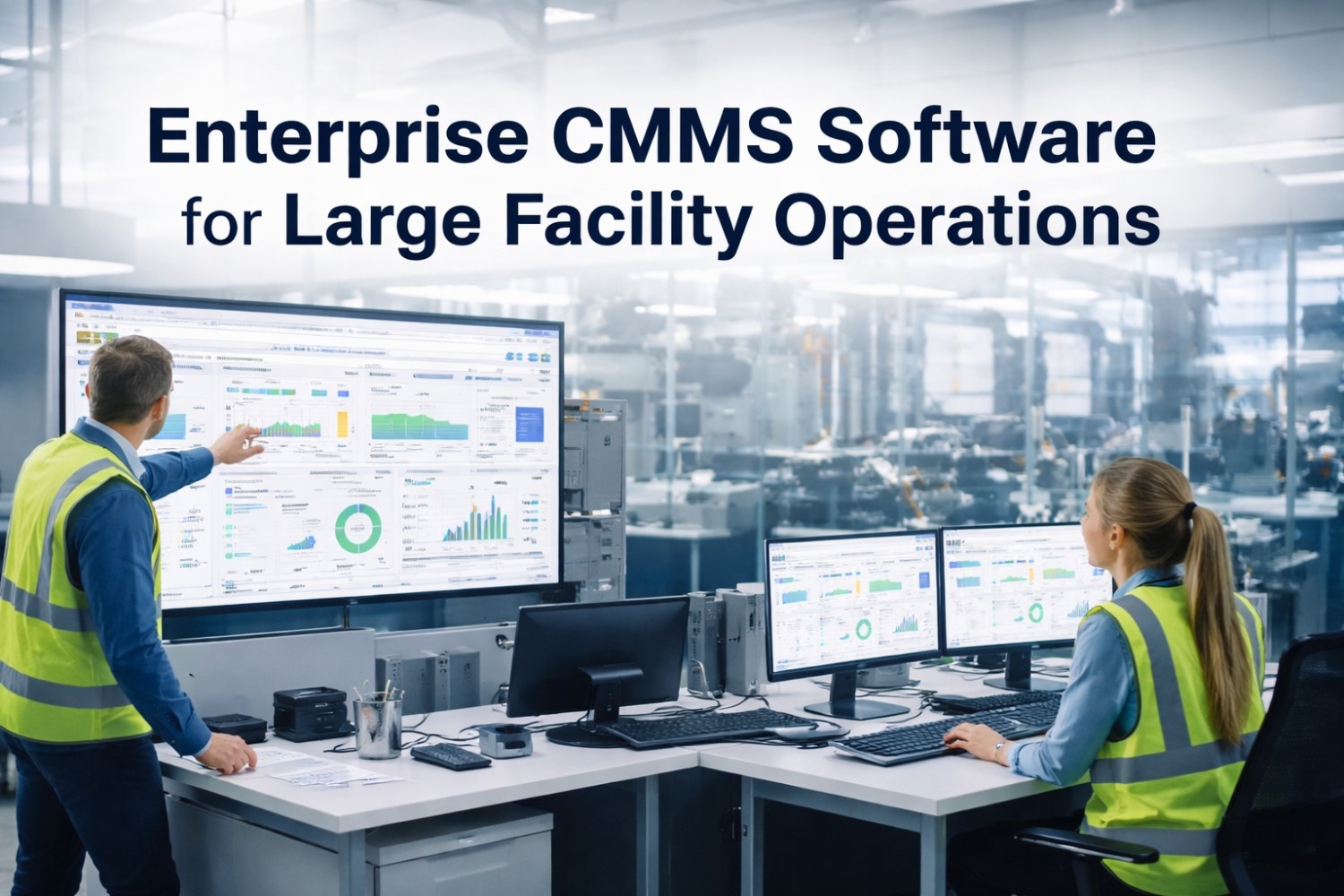
Facility operations teams running aging buildings face a relentless problem: maintenance is reactive, asset history is scattered, and no one knows the true condition of critical systems until something fails. Digital Twin Maintenance for Facility CMMS changes this by creating a live, synchronized virtual replica of every physical asset in your building — so repairs, inspections, and preventive schedules are driven by real-time data, not guesswork. OxMaint's digital twin platform connects sensors, BMS feeds, work orders, and asset history into one unified model that facility directors can query, audit, and act on instantly. When a chiller's performance drifts outside its baseline range, the twin flags it, triggers a PM work order, and logs the event — before the unit fails. For facility managers responsible for building uptime, compliance records, and capital planning, digital twin maintenance is no longer a future investment — it is the operational standard that reduces costs, extends asset life, and satisfies auditors.
Digital Twin · Facility CMMS · OxMaint
Your Building Has a Digital Twin. Does Your CMMS Know About It?
OxMaint connects real-time asset data, sensor feeds, and work order history into a live facility model — so maintenance decisions are driven by truth, not intuition.
38%
reduction in unplanned downtime reported by facilities using digital twin CMMS integration
2.4x
longer average asset lifespan when maintenance is driven by twin-monitored condition data
62%
faster audit response — full asset history retrievable from one dashboard in minutes
$0
manual data entry overhead when OxMaint auto-syncs twin signals to work orders
What a Facility Digital Twin Actually Tracks
RT
Real-Time Asset State
Temperature, vibration, pressure, runtime hours — the twin mirrors every sensor reading to a live asset record inside OxMaint, updated continuously.
PM
Predictive PM Triggers
Instead of calendar-based schedules, the twin initiates preventive work orders when asset condition crosses configured thresholds — not when 30 days pass.
HX
Full Maintenance History
Every repair, inspection, part replacement, and technician note is logged in the twin — creating an unbroken lifecycle record from commissioning to replacement.
AL
Automated Alert Routing
When sensor drift or fault codes appear, the twin routes alerts to the right technician team automatically — with asset context attached to every notification.
CP
Capital Planning Data
Facility directors use twin performance trends to forecast equipment replacement cycles, budget maintenance spend, and justify capital requests with hard data.
CX
Compliance Export
Inspection schedules, service records, and corrective action logs are exportable on demand — so audits are answered in minutes, not filing cabinet searches.
Digital Twin vs. Traditional CMMS: What Changes
| Maintenance Area |
Traditional CMMS |
OxMaint Digital Twin CMMS |
| PM Scheduling |
Fixed calendar intervals — time-based, not condition-based |
Condition-triggered — work orders fire when asset data demands it |
| Asset Condition Visibility |
Updated when a technician manually logs an inspection |
Live sensor sync — condition visible in real time from any device |
| Fault Detection Speed |
Detected after failure or during next scheduled inspection |
Twin flags anomalies before failure — alert in minutes, not days |
| Audit Readiness |
Requires manual record compilation across systems |
One-click export — full asset history with timestamps and evidence |
| Capital Planning |
Based on asset age estimates and gut feel |
Data-driven projections using twin performance trend analysis |
How OxMaint Digital Twin Works: Signal to Work Order
1
Sensor or BMS Feed Connects
IoT sensors, BMS controllers, and facility systems push live data to OxMaint via API or direct integration.
2
Twin Mirrors Asset State
OxMaint builds a live digital replica — tracking performance baselines and flagging deviations as they appear.
3
Threshold Crossed — Work Order Auto-Created
When condition data crosses configured limits, OxMaint auto-generates a work order with full asset context attached.
4
Technician Dispatched — Twin Updated
Repair is completed, parts logged, and the digital twin's history record is updated — closing the loop on every event.
Expert Review — Facility Asset Management
The most expensive mistake facility teams make is treating CMMS as a record-keeping system rather than a decision engine. A digital twin changes that equation entirely — the CMMS becomes the source of truth for what every asset is doing right now, what it's done historically, and what it's likely to need next. Facilities that integrate sensor feeds with work order logic stop chasing failures and start preventing them.
Director of Asset Reliability, Integrated Facility Services Group
See Your Facility's Digital Twin in Action
OxMaint connects your building's sensors, BMS, and asset history into one live maintenance platform. Book a demo to see how condition-based work orders reduce downtime and simplify compliance.
Frequently Asked Questions
Does OxMaint require replacing our existing BMS or sensor infrastructure to enable digital twin maintenance?
No replacement is required.
OxMaint integrates with existing BMS platforms, IoT gateways, and sensor networks via standard API and webhook protocols. The platform receives data feeds from your current infrastructure and maps them to asset records in the CMMS — so you get digital twin visibility without ripping out installed systems.
Book a demo to review compatibility with your current building stack.
How does OxMaint convert sensor alerts into work orders automatically?
OxMaint's alert routing engine lets facility managers configure condition thresholds per asset — for example, chiller supply temperature above 48°C or motor vibration exceeding 8 mm/s. When the twin detects a reading beyond the threshold, a work order is automatically created, assigned to the relevant trade crew, and prioritized by severity. The triggering sensor data is attached to the work order so technicians arrive with full context. All events are logged to the asset's maintenance history with timestamps for compliance purposes.
Can digital twin data be used for capital planning and asset replacement forecasting?
Yes.
OxMaint builds performance trend reports from twin data — showing degradation patterns, maintenance frequency increases, and repair cost trajectories per asset over time. Facility directors use these reports to build evidence-based replacement schedules, justify capital budget requests, and avoid emergency procurement costs. The platform supports multi-asset comparison so you can prioritize replacement spend across an entire building portfolio.
How long does it take to implement OxMaint digital twin maintenance for a mid-size facility?
Most mid-size facilities are operational on
OxMaint within two to four weeks. The implementation process covers asset register import, BMS and sensor integration mapping, threshold configuration, and technician onboarding. OxMaint's implementation team handles the technical connection layer — facility teams do not need internal IT resources to go live.
Book a demo to receive a scoped implementation timeline for your specific building type and size.
Stop Managing Facilities by Failure. Start Managing by Data.
OxMaint's Digital Twin CMMS gives facility teams real-time asset visibility, automated work orders, and audit-ready records — all from one connected platform.