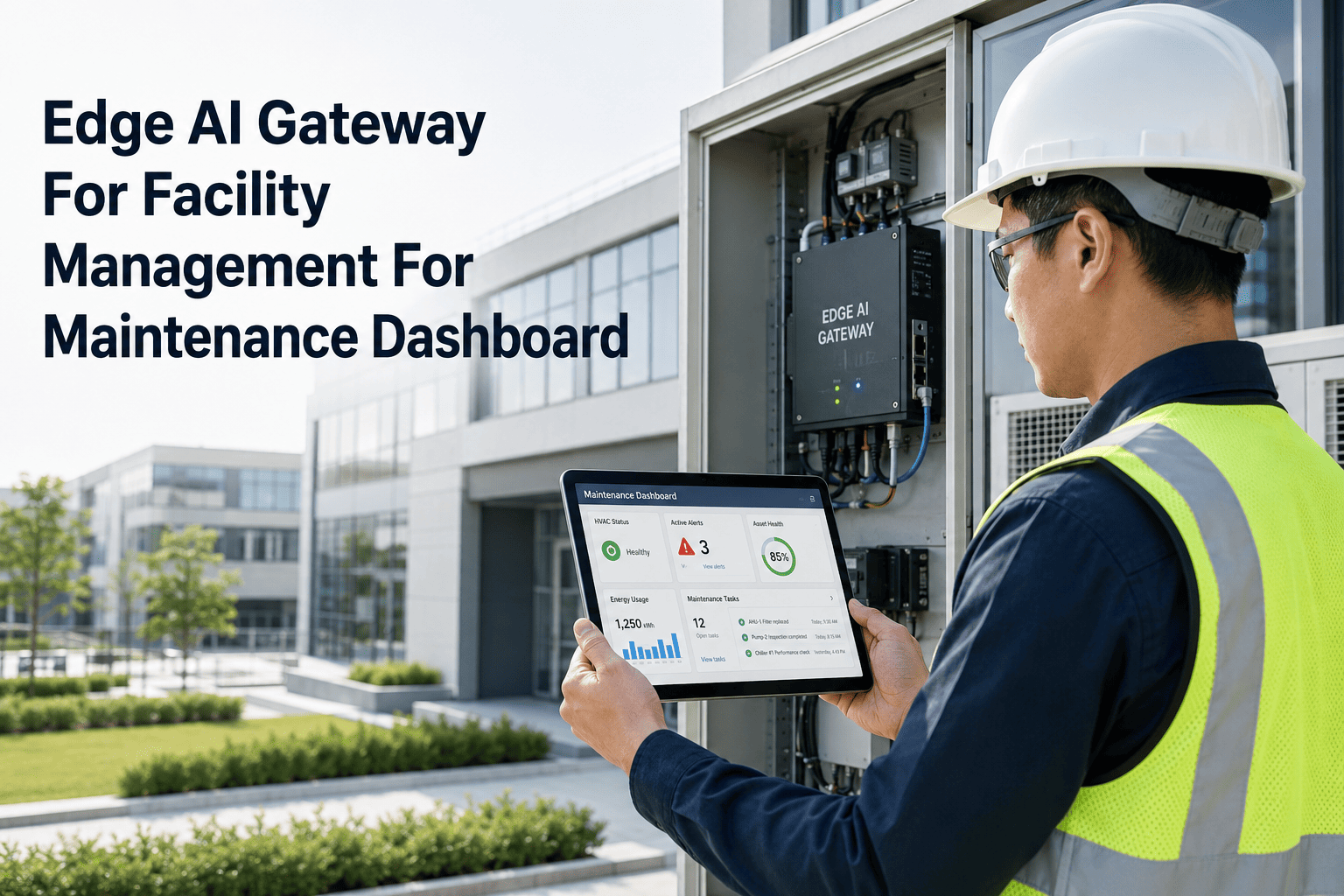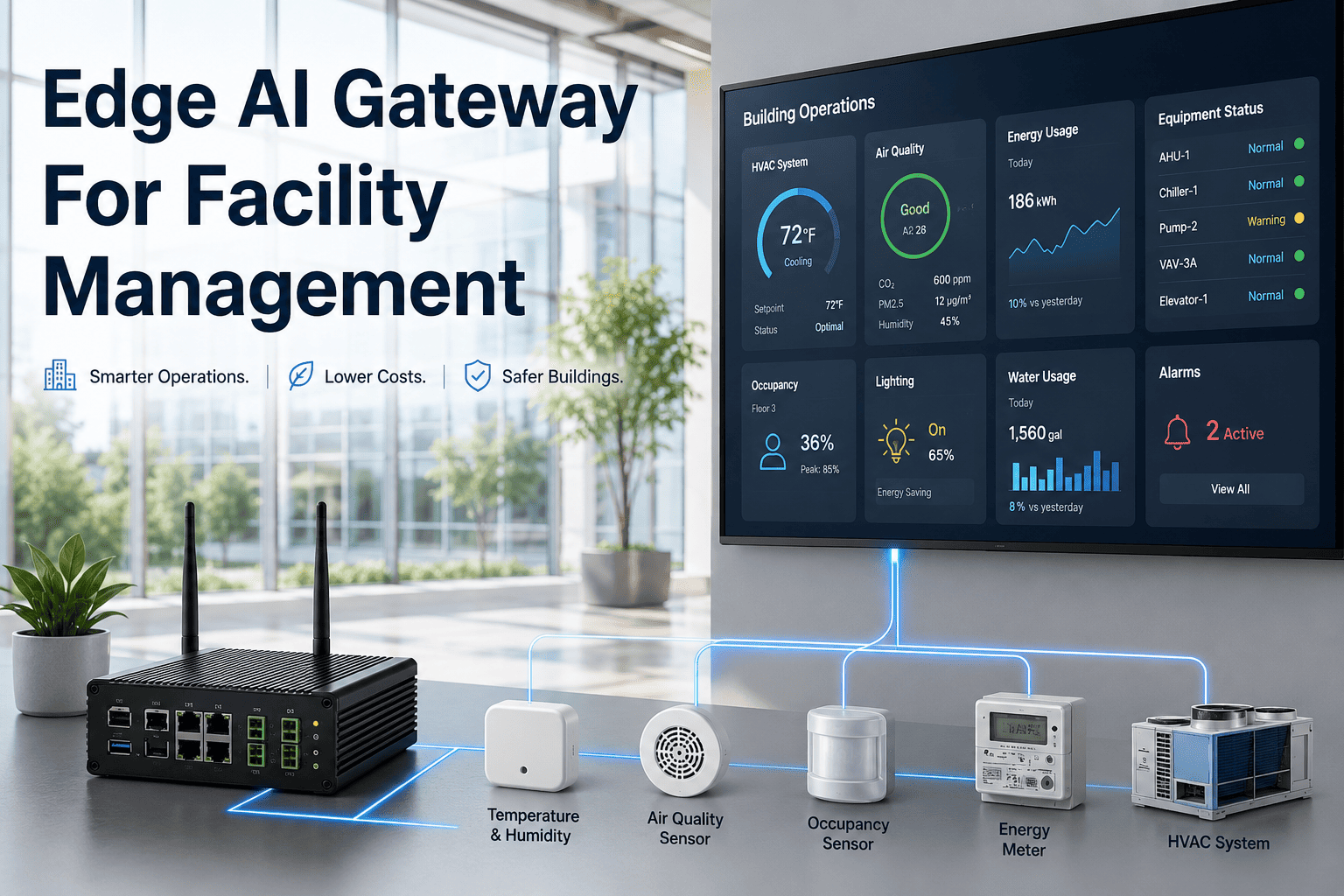
A vibration sensor on a rooftop chiller can produce thousands of data points an hour — almost none of which a facility team needs to see, until the one reading that means a bearing is failing. Sending every raw reading to the cloud is slow and expensive, and waiting for a person to notice the spike on a screen is slower still. An edge AI gateway sits between the sensor and the CMMS, processing data on-site and forwarding only the events that matter — a threshold breach, a fault pattern, a piece of inspection evidence — straight into a work order. This page covers how that gateway connects to OxMaint, or book a demo to see it against your own sensor or camera feeds.
Edge AI Gateway for Facility Management
Process sensor and camera data on-site, and send only the events that matter straight into a work order or inspection record.
From raw sensor data to a work order
Most of what a sensor or camera captures is noise. The gateway's job is filtering that down to the handful of moments a facility team actually needs to act on.
What gets processed where
Different inputs need different handling at the edge, but the pattern is the same — raw data stays local, and only the result travels.
| Input type | Processed at the edge | Sent to CMMS when | Example |
|---|---|---|---|
| Vibration sensor | Continuous frequency analysis | Threshold or fault pattern detected | Bearing wear flagged on a chiller unit |
| Thermal camera | Frame-level anomaly detection | Hotspot exceeds set delta | Breaker panel hotspot flagged |
| Inspection camera | Visual checklist comparison | Item fails the visual check | Missing guard rail flagged |
See it run against your own sensors
Bring the equipment data you already capture and we'll show you what the gateway would flag in the first week.
What the gateway changes day to day
What changes once processing moves to the edge
Raw data streams to the cloud continuously, a person or a separate analytics tool reviews it after the fact, and a fault is usually caught only once it's already affecting performance.
The gateway analyzes data as it's generated, forwards only the events that matter, and a work order exists before anyone has manually reviewed a single reading.
"The biggest misconception about facility IoT is that more data automatically means better decisions. In practice, raw sensor streams overwhelm a team faster than they help it — nobody has time to watch a vibration chart all day. What an edge gateway actually buys you is restraint: the system decides what's worth a human's attention, and everything else stays out of the way until it matters. That's what separates a sensor that gets ignored within a month from one that's still catching faults a year later."
Turn raw sensor data into work orders, not noise
Walk through how the gateway connects to your sensors, cameras, and OxMaint on a live demo.
Frequently asked questions
Let the gateway watch the feed, not your team
Connect existing sensors and cameras to OxMaint and turn the events that matter into work orders automatically.