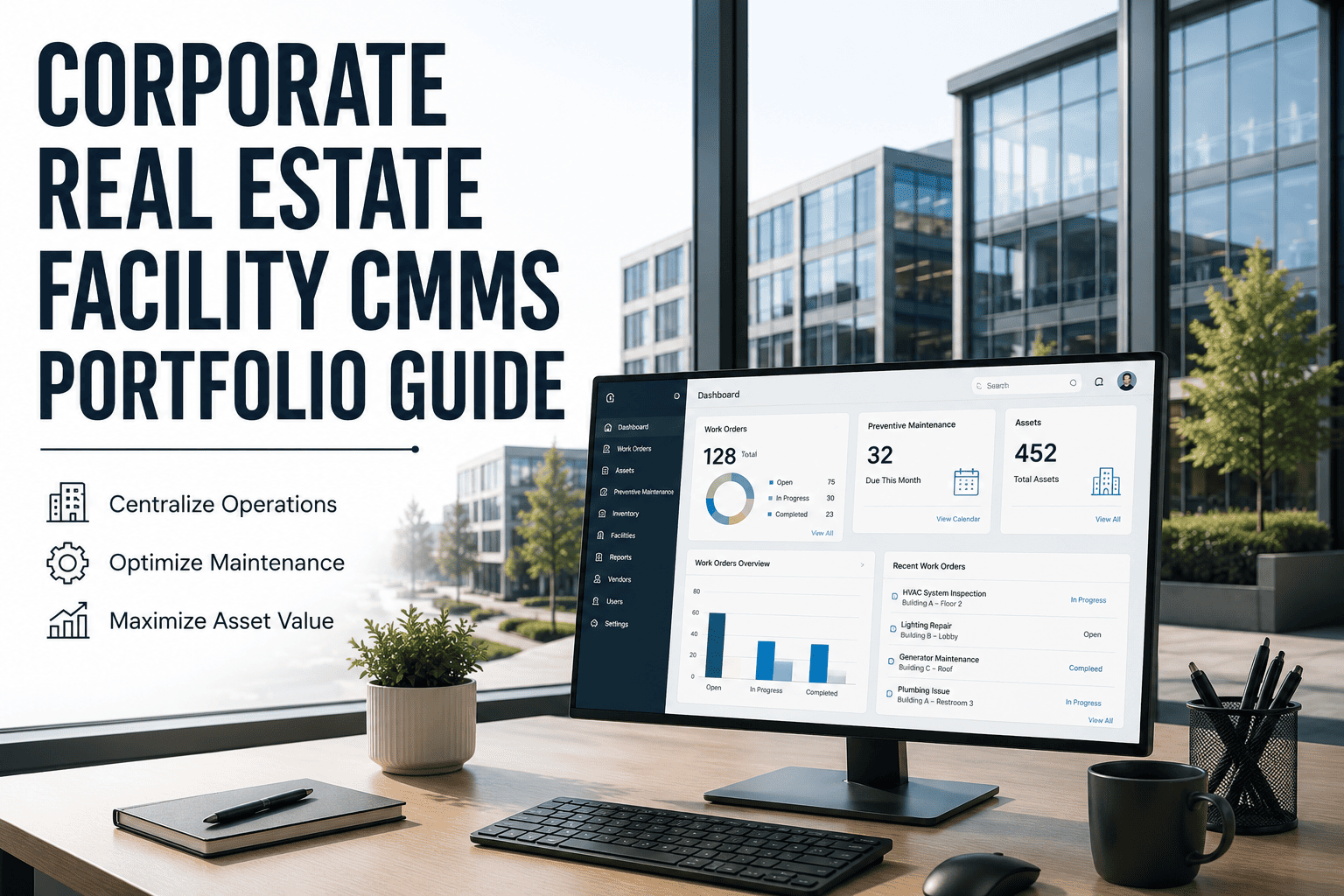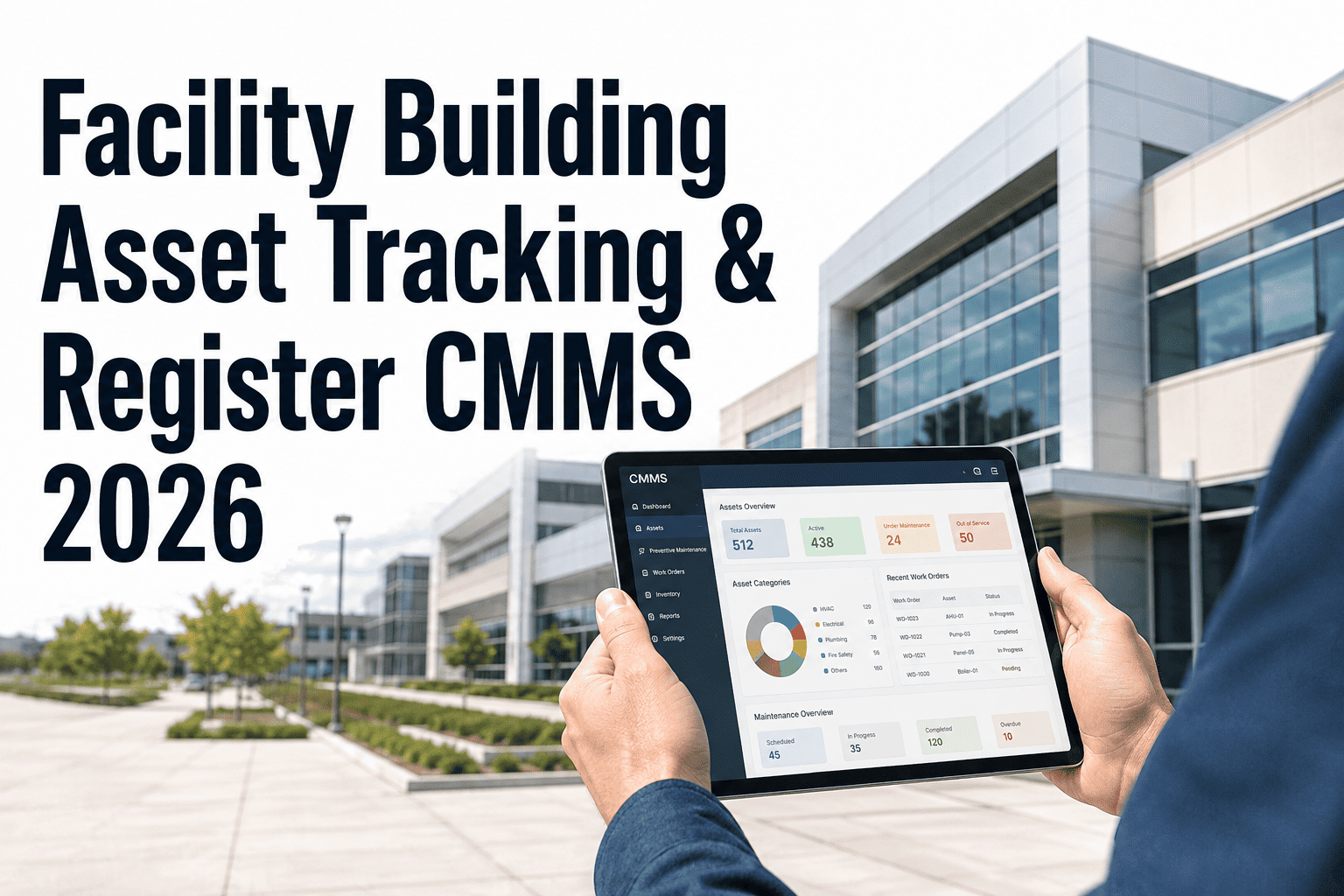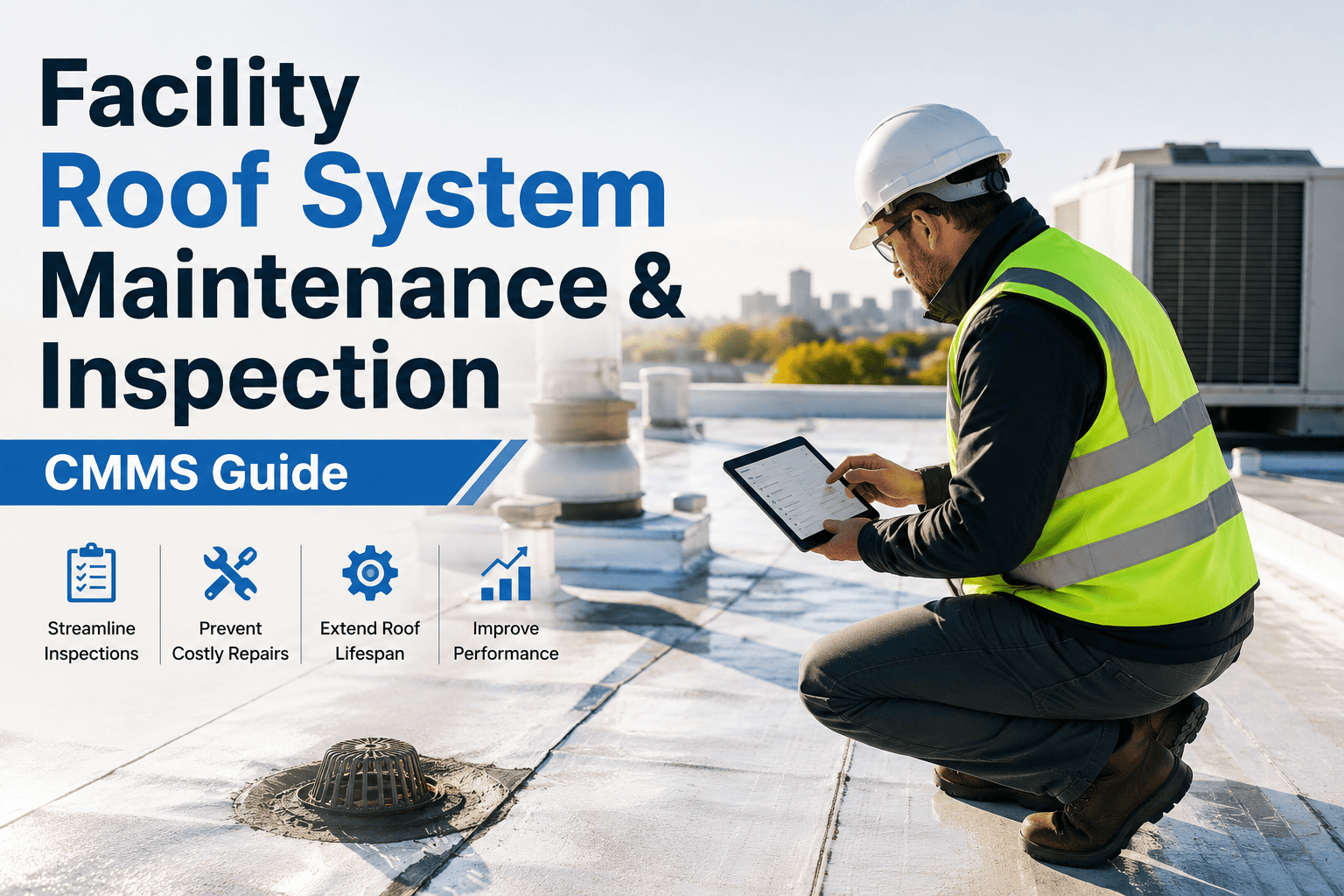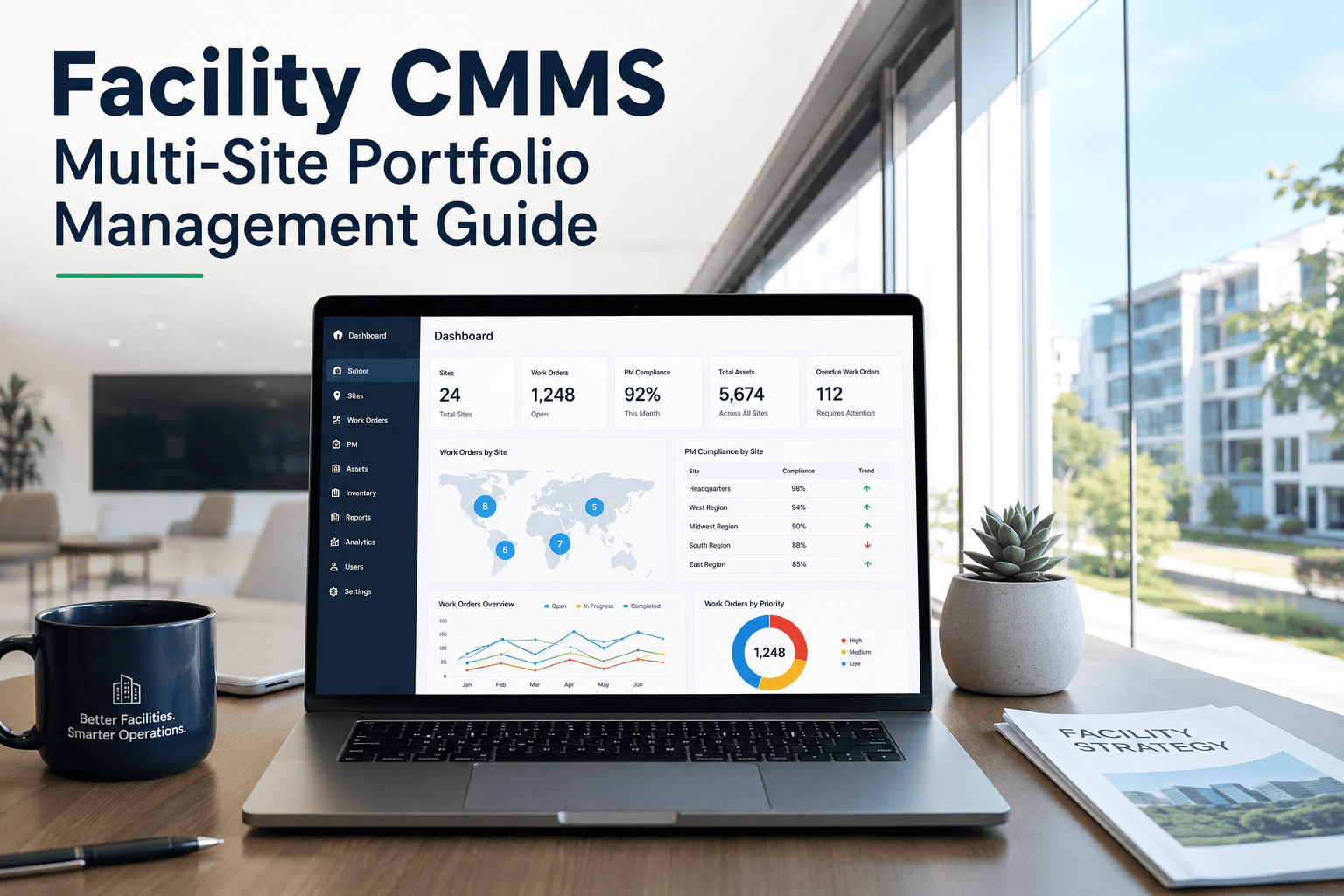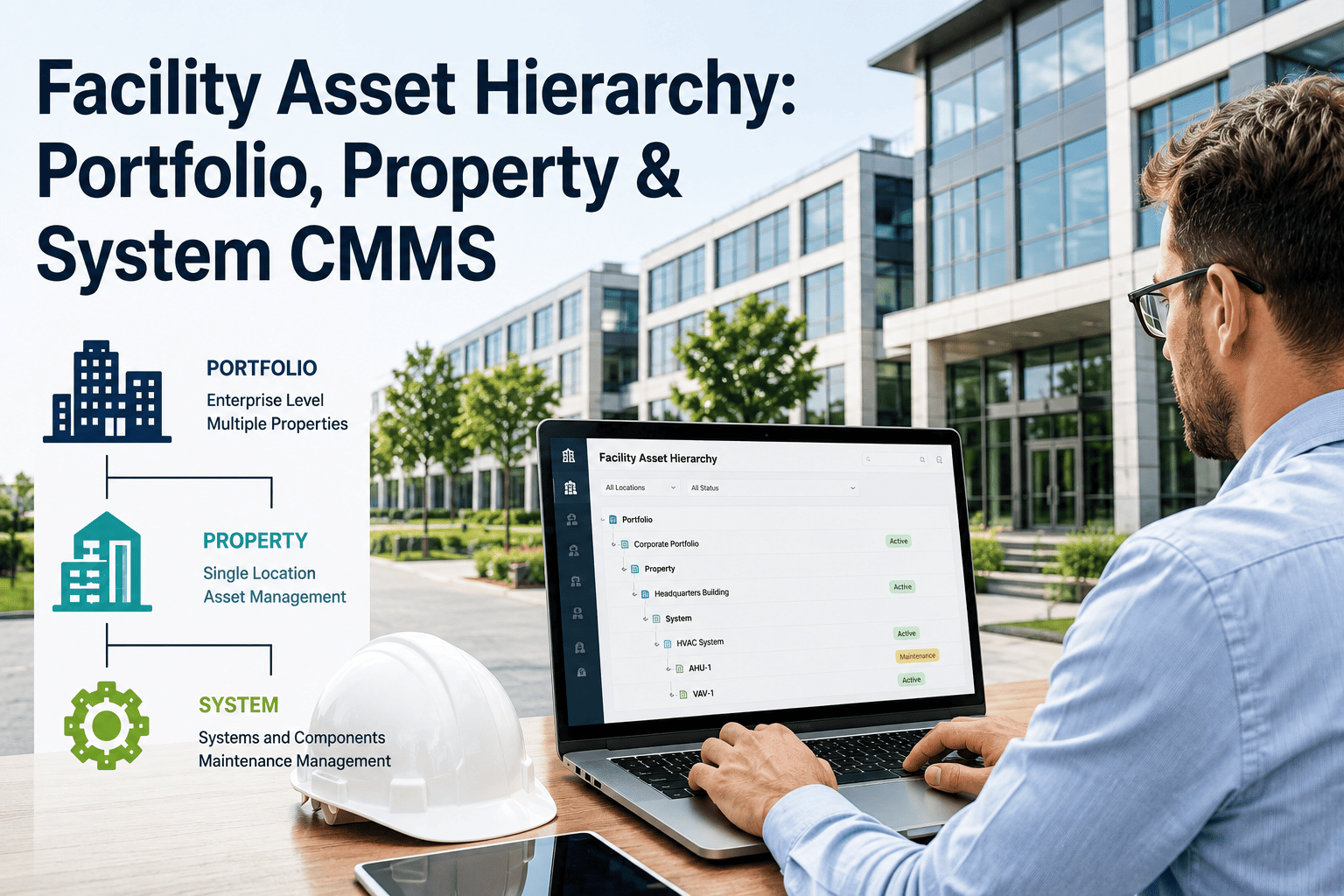
A facility asset hierarchy is the single backbone of every modern CMMS — the way you organize portfolio, property, system, asset and component levels determines whether technicians find equipment in seconds or scroll through thousands of orphan records. Plants running a clean five-tier structure report 28-42% faster work-order turnaround and dramatically cleaner cross-site KPI rollups, because every meter reading, failure code and cost line can be traced upward to the property and downward to the component. If your CMMS still treats assets as a flat list, you are losing audit traceability and benchmarking power every quarter. Build it correctly once — map the portfolio-to-component tree, enforce naming conventions, and validate against ISO 55000 — then Start Free Trial to operationalize it across every site.
Is your CMMS hierarchy flat, broken, or invisible across sites?
Most maintenance teams inherit a CMMS where 12,000 assets sit in one folder with no system, property or portfolio rollup — making cross-site KPI comparison impossible and audit trails untraceable. A disciplined five-tier hierarchy (Portfolio → Property → System → Asset → Component) fixes that in one sprint.
Portfolio to component: the structural blueprint
ISO 55000-aligned asset management demands that every physical item rolls up cleanly through five tiers. Each level answers a different question, and skipping any one of them is what creates orphan assets and unreliable KPIs.
The top container — every plant, campus, warehouse and office grouped under one corporate entity. Enables capital allocation, insurance valuation and a single source of truth for the CFO.
A physical site: address, square footage, utility meters, weather zone. Property is where facility-level KPIs — cost per square foot, energy intensity, compliance posture — are calculated.
HVAC, fire suppression, compressed air, electrical distribution, roofing. Systems let you benchmark like-for-like performance across properties and prioritize capital reinvestment.
The individually tagged, PM-scheduled unit: AHU-07, Pump P-2304, Compressor C-11. Each asset carries its own criticality, failure history, meter and parts list.
Bearings, seals, belts, contactors, filter cartridges — the items swapped during a rebuild. Component-level tracking unlocks RCA precision and predictive-maintenance triggers.
What a flat CMMS actually costs you
A 180-asset plant spending roughly $42,000 per year on maintenance typically loses 18-25% of that budget to hierarchy waste — duplicated PMs, untraceable parts, and KPI reports nobody trusts. Here is where the money leaks.
Same pump scheduled twice under two asset IDs — typical when there is no enforced naming convention.
Average time technicians spend searching for the correct asset record in a flat-list CMMS.
Parts and labor untraceable to a system or property — a figure auditors flag every single cycle.
Without system-level rollups, you cannot compare HVAC downtime across 4 facilities — only guess.
Scenario — A regional logistics operator with 6 distribution centers ran 11,400 assets in a flat CMMS folder per site. After restructuring into Portfolio → Property → System → Asset → Component, PM duplication dropped from 31% to under 4%, work-order search time fell from 14 minutes to 90 seconds, and the reliability team produced its first trustworthy fleet-level MTBF report in the company's history — all inside one 6-week sprint.
The six-week hierarchy redesign sprint
Rebuilding a facility asset hierarchy is not a year-long ERP project. Follow this proven cadence — each week has a single deliverable, a single owner and a hard gate.
Export every asset record. Count duplicates, orphans and missing system tags. Benchmark against ISO 55000 Clause 4.2 — you cannot fix what you have not measured.
Property-System-Asset-Sequence (e.g. PLT01-HVAC-AHU-007). Publish a one-page standard; every ID must be guessable by a technician on the floor.
Assign each asset to a system (HVAC, electrical, plumbing, fire). Score criticality A-D based on safety, production impact and redundancy. This drives PM frequency.
Merge duplicate IDs, re-link work orders, retire ghost assets. Run a 10% spot-check audit before opening the new tree to live work.
With system-level rollups now live, configure MTBF, MTTR, PM compliance and cost-per-asset by property and by system. This is the payoff week.
Lock the hierarchy so new assets require system + property assignment. Appoint a hierarchy steward. Review naming exceptions monthly — drift returns fast if unchecked.
Before and after: what changes when you go structured
The hierarchy redesign is not cosmetic. It changes the questions your CMMS can answer — and the speed at which it answers them.
| Capability | Flat-list CMMS | Five-tier hierarchy |
|---|---|---|
| Asset lookup time | 8-14 minutes per work order | Under 90 seconds |
| Cross-site KPI comparison | Manual spreadsheet exports, error-prone | One-click rollup by system or property |
| PM duplication rate | 25-35% of PMs scheduled twice | Below 4% with enforced unique IDs |
| Audit traceability (ISO 55000) | Cannot trace cost to system level | Full component-to-portfolio trail |
| Capital reinvestment planning | Gut-feel, last-year-plus-5% | System-level degradation curves |
| Onboarding new technician | 2-3 weeks to learn asset locations | 3-4 days; hierarchy is self-explanatory |
Four rules that keep the hierarchy clean forever
A hierarchy that drifts back to chaos within six months is worse than no hierarchy at all. These four governance rules — enforced inside the CMMS — are what separates a one-time cleanup from a permanent structural asset.
No asset exists in two systems. If an AHU serves two zones, tag it once and reference both zones in metadata. Duplicate IDs are the #1 cause of orphan work orders.
An asset cannot be created without a parent system. This single CMMS rule eliminates 80% of hierarchy drift and forces every new record to be benchmarkable from day one.
Only track components where RCA or predictive maintenance genuinely needs part-level history — bearings on critical pumps, contactors on switchgear. Over-componentizing creates noise.
Decommissioned assets are archived, not deleted. New systems require reliability-team sign-off. A 30-minute quarterly review prevents the slow rot that flattens most CMMS structures.
Ready to rebuild your facility hierarchy in six weeks?
Oxmaint imports your flat CMMS, enforces the five-tier structure and delivers your first cross-site KPI dashboard before your next audit cycle.
Facility asset hierarchy — your questions answered
A property is a physical site — a building or campus with an address, utility meters and a geographic footprint. A system is a functional group inside that property, such as HVAC, electrical distribution or fire suppression. One property contains many systems; one system contains many assets. This separation is what allows you to compare HVAC performance across six different warehouses without conflating it with roofing or plumbing data.
For 90% of facilities, five tiers — Portfolio, Property, System, Asset, Component — are sufficient and ISO 55000-aligned. Smaller single-site operations can collapse Portfolio and Property into one. Adding a sixth tier (sub-component) is justified only for highly regulated environments like pharma or aerospace where bearing-level traceability is audited. To map your exact structure, Book a Demo and we will review your current tree live.
Yes — provided the migration is done in the right order. Export all assets and work orders first, define the naming convention, then re-link each work order to the new asset ID using a cross-reference table. Oxmaint's import tool automates this re-linking and runs a 10% spot-check audit before the new tree goes live. No historical work order, PM or meter reading should be lost in the process.
Three controls do most of the work. First, the CMMS must block asset creation unless a parent system is selected — no exceptions. Second, appoint a hierarchy steward who reviews new-asset requests weekly. Third, run a quarterly audit that flags any asset without a complete system-property chain. Drift returns within months if these controls are missing; with them, the structure stays clean for years.
The headline KPIs are cross-site MTBF and MTTR by system (e.g. compare HVAC downtime at Site A vs Site B), PM compliance rolled up to property level, cost per asset by system, and capital reinvestment prioritization based on system-level degradation curves. None of these are calculable in a flat-list CMMS — they require the system and property tiers to aggregate data correctly. Start Free Trial to see your first dashboard within 48 hours of migration.
Stop guessing. Start benchmarking across every facility.
A clean five-tier asset hierarchy is the difference between a CMMS you trust and one you tolerate. Oxmaint gets you there in six weeks — not six quarters.
Free 14-day trial · No credit card