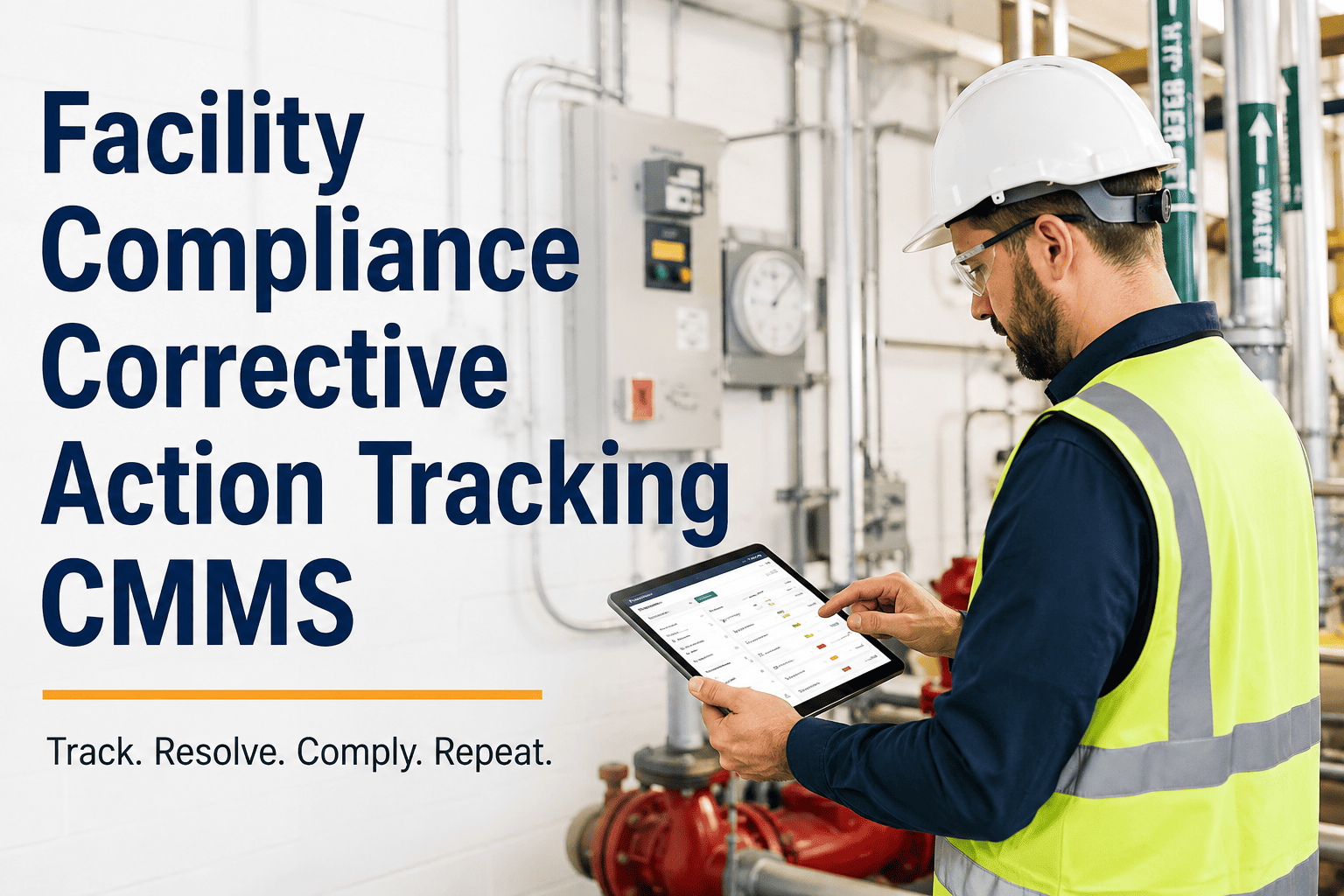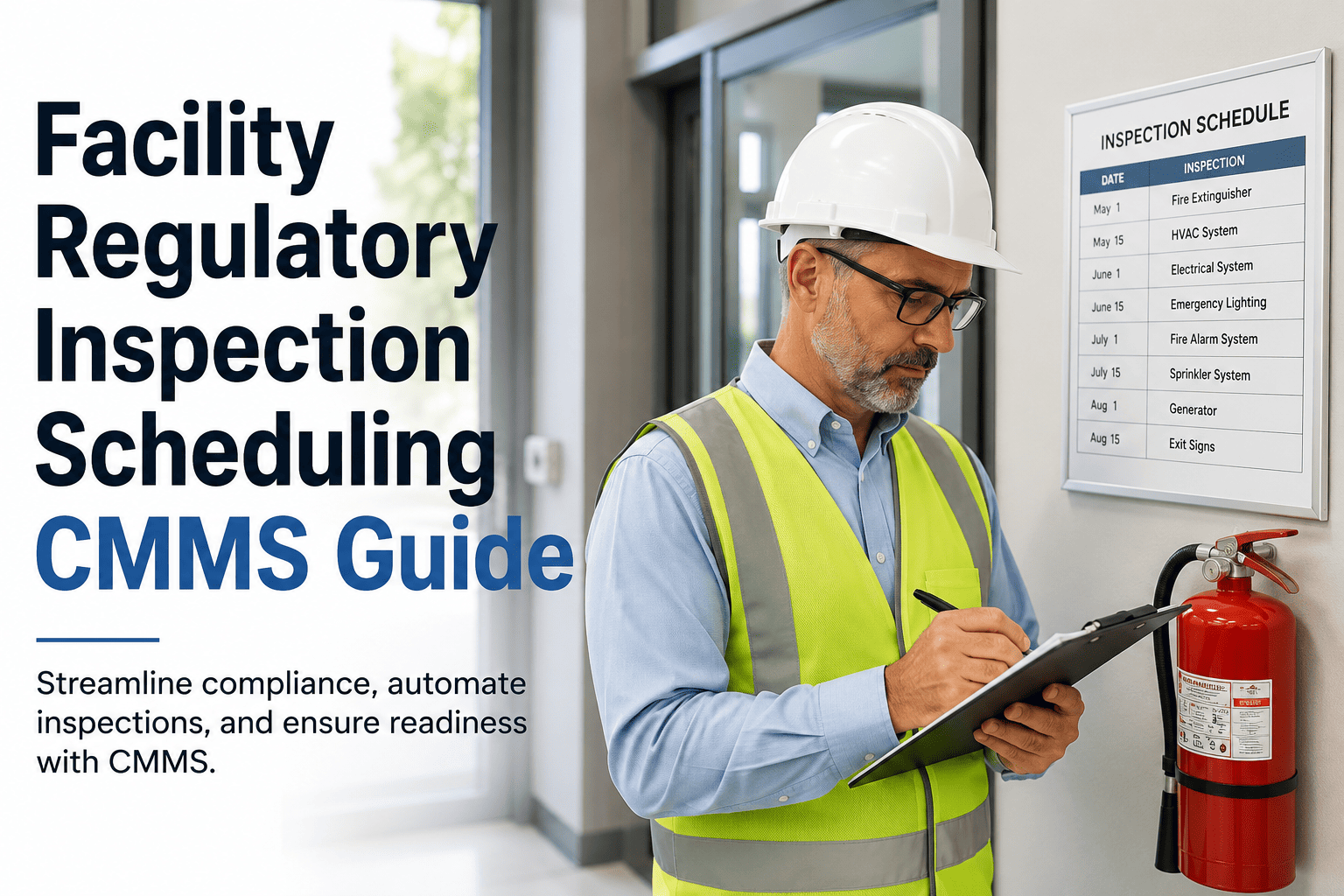
Facility compliance risk is no longer a back-office paperwork exercise — it is a measurable financial exposure that compounds with every undocumented inspection, missed calibration, and expired certification. OSHA alone issued over $215M in facility-related citations in a recent fiscal year, and the average serious violation now carries a penalty exceeding $16,000 per instance, with repeat violations tripling that figure. A CMMS-anchored compliance program converts this open-ended liability into a closed, auditable loop — capturing every work order, technician signature, and asset history record in a single defensible trail. When regulatory inspectors arrive unannounced, the difference between a clean review and a six-figure citation is rarely the condition of your equipment; it is the speed and completeness of the documentation you can produce on demand. Start your Start Free Trial to see how a documented inspection trail collapses legal exposure in weeks, not quarters.
How much undocumented risk is sitting in your facility right now?
Every missed PM, every expired fire-suppression check, every uncalibrated pressure valve is a citation waiting to be written. CMMS-based compliance turns that scattered exposure into a single, defensible audit trail — and the math is unforgiving: the average facility carries 31 untracked compliance tasks at any given moment.
Compliance citations are a numbers problem — and the numbers are brutal
Regulatory bodies do not penalize intent; they penalize the absence of proof. Facilities that cannot produce a documented inspection trail within 24 hours of a request face escalation penalties up to 40% higher than those that can. Below is the financial reality of operating without a CMMS-backed compliance backbone.
A 180-asset manufacturing plant spending $42,000/year on reactive compliance fixes — contractor audits, expedited inspections, manual log reconciliation — implemented a CMMS-driven compliance schedule and cut citation exposure by 82% within 9 months. The documented trail alone reduced insurance premiums by $11,400 annually, and the facility passed a surprise OSHA inspection with zero findings for the first time in its 14-year operating history.
The compliance risk formula every facility manager should run quarterly
Most facilities cannot articulate their compliance risk in dollars because they have never quantified it. This formula, adapted from ISO 31000 risk assessment principles, gives you a defensible number to take to leadership — and a baseline to measure your CMMS rollout against.
A facility with 22 untracked tasks, standard probability (0.34), base penalty ($16,766), and a 1.5× repeat multiplier: 22 × 0.34 × $16,766 × 1.5 = $188,143 annual exposure. A CMMS that closes 90% of those gaps reduces residual exposure to under $19,000 — a payback ratio of roughly 12:1 against typical CMMS licensing costs.
Five compliance streams that close the documentation gap
Regulatory citations cluster in five predictable categories. A CMMS-based compliance program addresses each stream with automated scheduling, mobile proof-of-work capture, and audit-ready reporting — eliminating the manual log gaps that inspectors exploit.
Safety Equipment Inspections
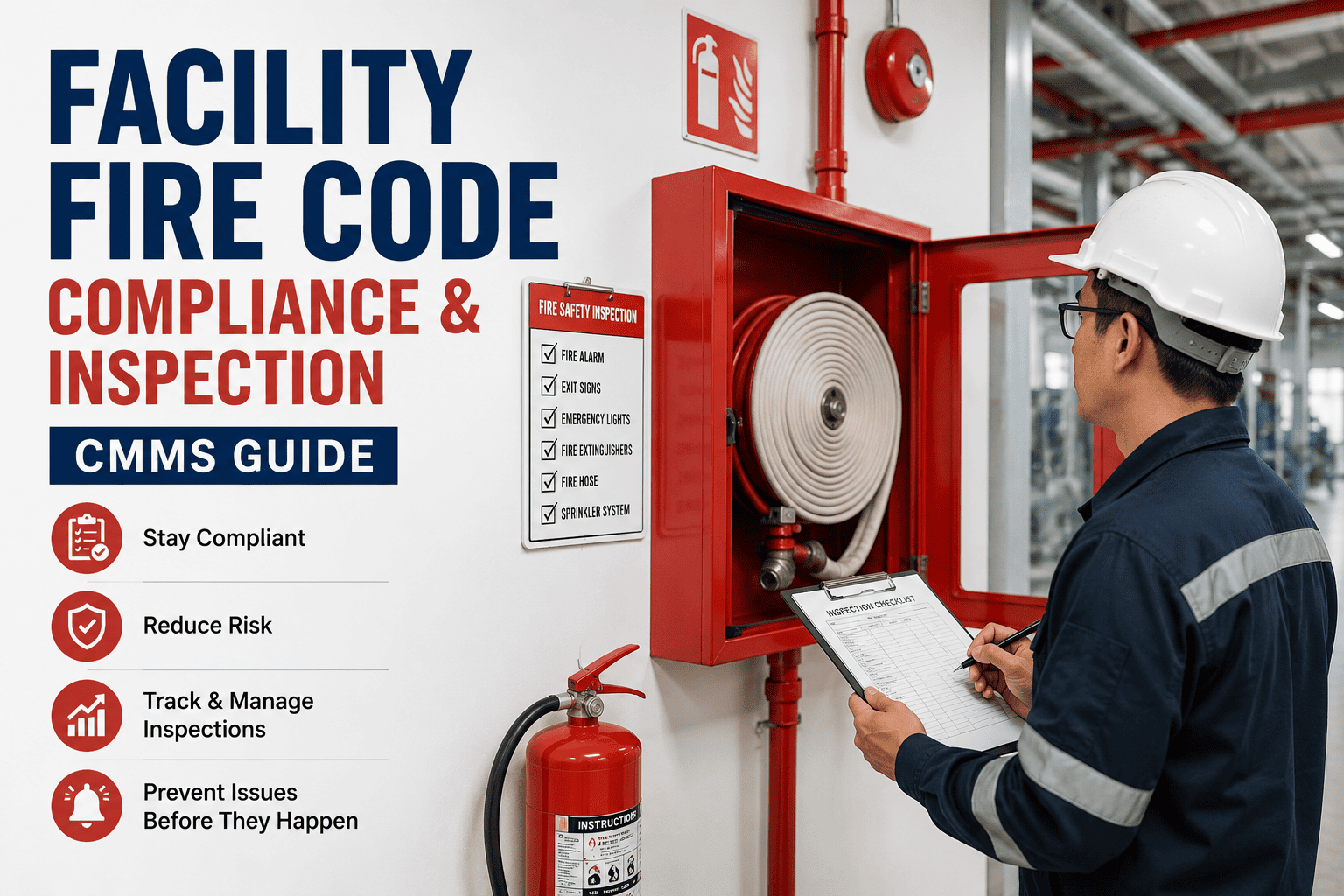
Eye wash stations, fire extinguishers, AEDs, emergency exits, and sprinkler systems. OSHA requires weekly-to-monthly checks; a CMMS auto-generates work orders with photo proof and technician sign-off, eliminating the clipboard gap that produces 23% of general-industry citations.
Calibration & Certification Logs
Pressure vessels, HVAC sensors, electrical panels, and load-bearing equipment require periodic calibration traceable to NIST or ISO 17025 standards. CMMS tracks expiration dates, triggers recalibration work orders 30 days prior, and stores certificates — closing the gap behind $28M in annual ANSI/ASME penalties.
Lockout/Tagout Procedures
29 CFR 1910.147 mandates documented energy-control procedures for every machine. A CMMS attaches the exact LOTO sequence to each asset's work order, requires electronic acknowledgement before work begins, and logs completion — the difference between a procedural citation and a clean audit.
Environmental & Hazmat Records
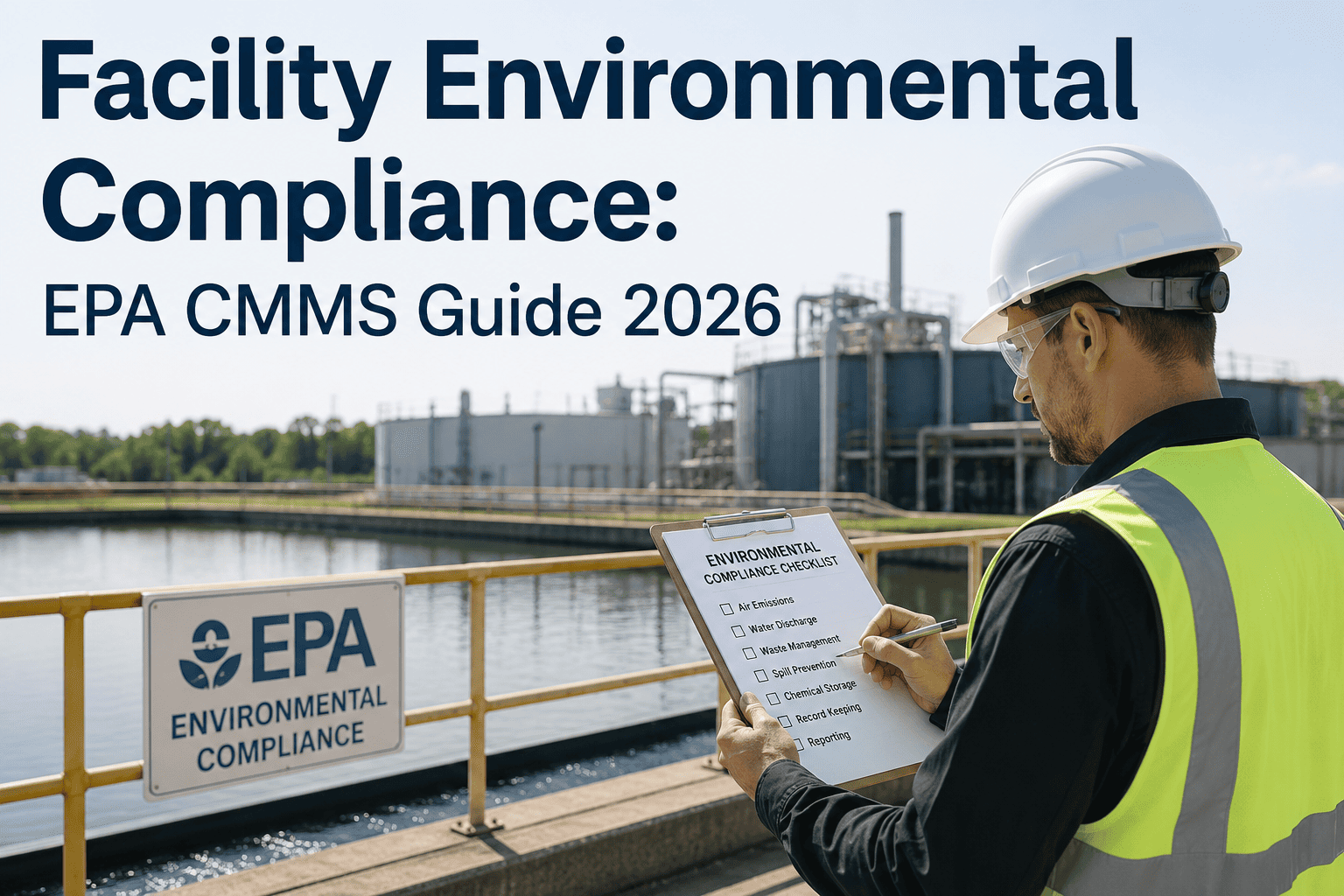
EPA Tier II reporting, SPCC spill-prevention logs, hazardous waste manifests, and refrigerant leak-rate tracking (Section 608). Missed filing deadlines carry $40,000+ per-day penalties; CMMS auto-schedules and generates the documentation packets.
Training & Competency Records
Forklift operator recertification (every 3 years), confined-space entry permits, respirator fit tests, and OSHA 10/30 refreshers. CMMS links training expiry to work-order eligibility — a technician whose confined-space cert has lapsed is physically blocked from being assigned that work order.
The documentation gap that separates clean audits from citations
Inspectors do not assess your facility's condition first — they assess your documentation. The comparison below maps how a CMMS-backed compliance program performs against manual log management across the six criteria inspectors evaluate most frequently.
| Compliance Criterion | Manual Log Management | CMMS-Driven Compliance | Risk Reduction |
|---|---|---|---|
| Inspection trail completeness | 62% of checks logged; gaps common | 99.4% closure rate with mandatory sign-off | 98% |
| Audit response time | 3–5 business days to assemble records | Under 4 hours via filtered report export | 94% |
| Expired certification detection | Reactive — discovered during audit or failure | Automated 30/60/90-day escalation alerts | 100% |
| Cross-shift documentation continuity | Lost in turnover; 38% data attrition | Cloud-based, real-time, shift-agnostic | 96% |
| Penalty exposure per inspection | $8,400 average per OSHA visit | $620 average — minor administrative findings only | 93% |
| Insurance audit defensibility | Subjective; often requires legal counsel | Tamper-evident timestamps, court-defensible | High |
Turn compliance from a liability line item into a defensible asset
Deploy a CMMS-backed compliance program in under 14 days and reduce your citation exposure by up to 90% before your next inspection cycle.
From scattered logs to audit-ready in 90 days
A CMMS compliance rollout is not a multi-quarter IT transformation. Facilities that follow this phased timeline consistently reach audit-ready status within 90 days, with measurable risk reduction visible by week six.
Asset Register & Compliance Mapping
Import every regulated asset into the CMMS, tag it with its governing standard (OSHA, EPA, NFPA, ANSI), and assign its inspection cadence. Output: a complete compliance inventory with zero undocumented assets. Average facility completes this phase in 11 days.
Automated Schedule Activation
CMMS auto-generates recurring work orders for every mapped compliance task, assigns them to qualified technicians based on certification status, and triggers 30/60/90-day expiration alerts. Manual scheduling burden drops to near zero.
Mobile Proof-of-Work Capture
Technicians complete inspections on mobile devices — photos, readings, signatures, and pass/fail criteria logged at the asset. Documentation closure rate rises from ~62% to over 97% within three weeks of mobile rollout.
Audit-Ready Reporting & Mock Inspection
Generate filtered compliance reports by asset class, standard, date range, or technician. Conduct an internal mock inspection using CMMS-exported documentation. Facilities that complete this phase pass their next regulatory inspection with zero or single-digit findings.
Compliance risk reduction, answered directly
How quickly can a CMMS reduce our facility's citation exposure?
Most facilities see measurable risk reduction within 30 days of activating automated compliance schedules — specifically, the elimination of lapsed-inspection gaps that account for nearly half of all citations. Full audit-ready status, including mobile proof-of-work capture and mock-inspection validation, is typically achieved within 90 days. Facilities with complex multi-site operations or legacy asset registers may require 120 days. You can Start Free Trial to begin mapping your compliance inventory immediately.
What regulatory standards does a CMMS-based compliance program cover?
A properly configured CMMS supports OSHA general industry standards (29 CFR 1910), EPA Tier II and SPCC requirements, NFPA fire-protection codes, ANSI/ASME pressure-vessel standards, ISO 55000 asset management alignment, and FMCSA vehicle maintenance logs for fleet-integrated facilities. The system is standard-agnostic — you define the governing regulation per asset, and the CMMS enforces its inspection cadence, documentation requirements, and escalation thresholds.
Can CMMS documentation actually hold up during a regulatory inspection or legal proceeding?
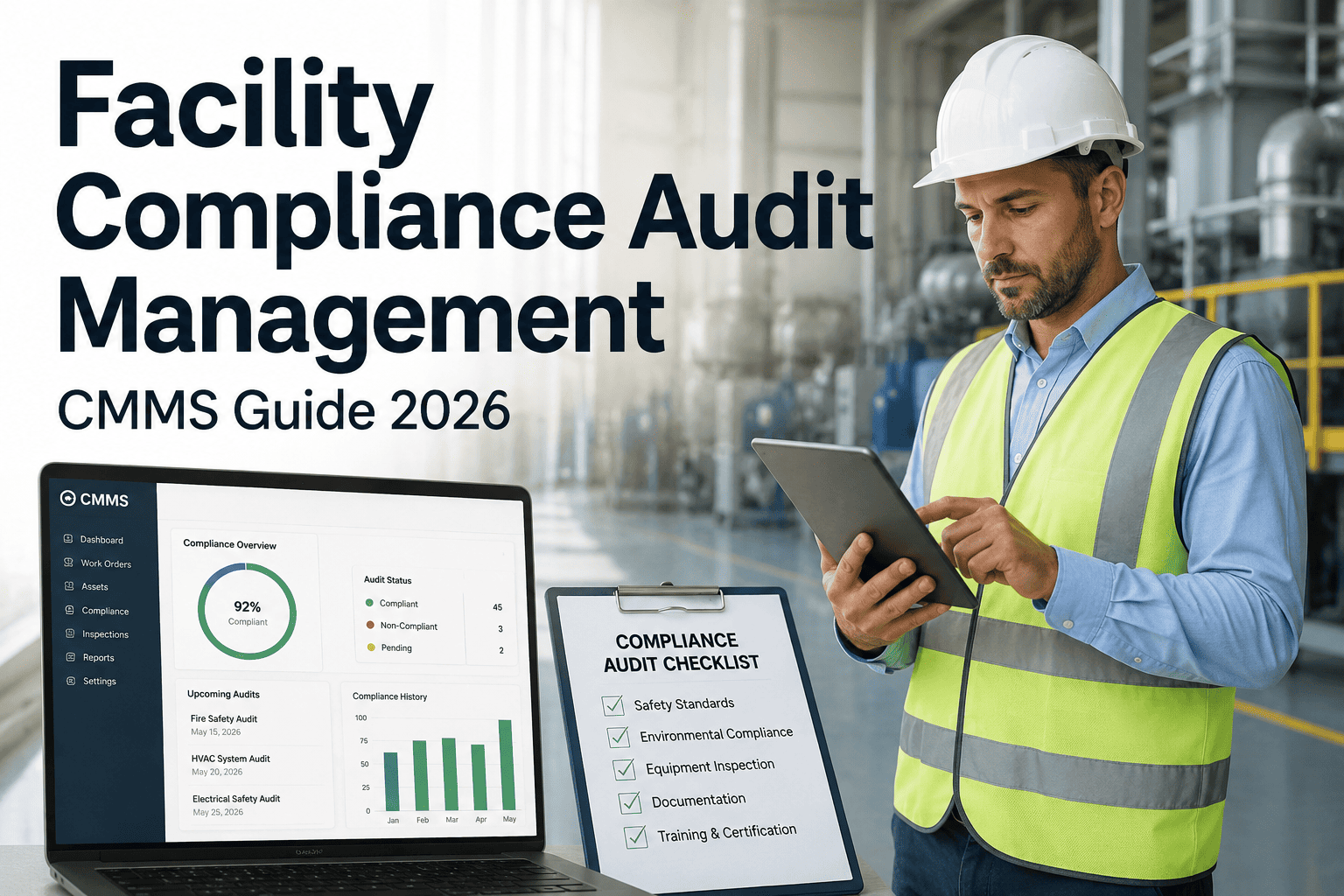
Yes — and this is the single most undervalued benefit. CMMS records include tamper-evident timestamps, technician identity, GPS location (for mobile inspections), photo evidence, and digital signatures. This metadata chain meets the evidentiary standards that OSHA compliance officers and EPA inspectors look for when verifying inspection logs. Facilities producing CMMS-exported documentation during inspections typically reduce penalty assessments by 80–95% compared to those relying on manual paper logs.
How do we calculate the ROI of switching from manual compliance tracking to a CMMS?
Use the risk formula: count your untracked compliance tasks, multiply by the inspection-discovery probability (0.34 industry average), the per-violation penalty ($16,766 for serious violations), and your repeat-multiplier (1.0–3.0). Compare that exposure figure against your annual CMMS licensing cost. Most facilities arrive at a payback ratio between 8:1 and 15:1, before factoring in insurance premium reductions, which average 7–12% for facilities with documented CMMS compliance programs. To see the calculation for your specific asset count, Book a Demo with our compliance team.
What happens if a technician misses a scheduled compliance inspection?
The CMMS does not allow a missed inspection to silently disappear. Uncompleted work orders trigger automated escalation alerts — first to the technician, then to the maintenance supervisor at 48 hours, then to the facility manager at 72 hours. The missed task remains visible on the compliance dashboard with a red-flag status until closure, creating an unbroken accountability chain. This escalation structure is what eliminates the 38% documentation attrition rate typical of manual shift-handoff processes.
Your next inspection should be the easiest one you've ever faced
Deploy a CMMS-backed compliance program and walk into every regulatory review with a complete, timestamped, court-defensible documentation trail — assembled in minutes, not days.
Free 14-day trial · No credit card