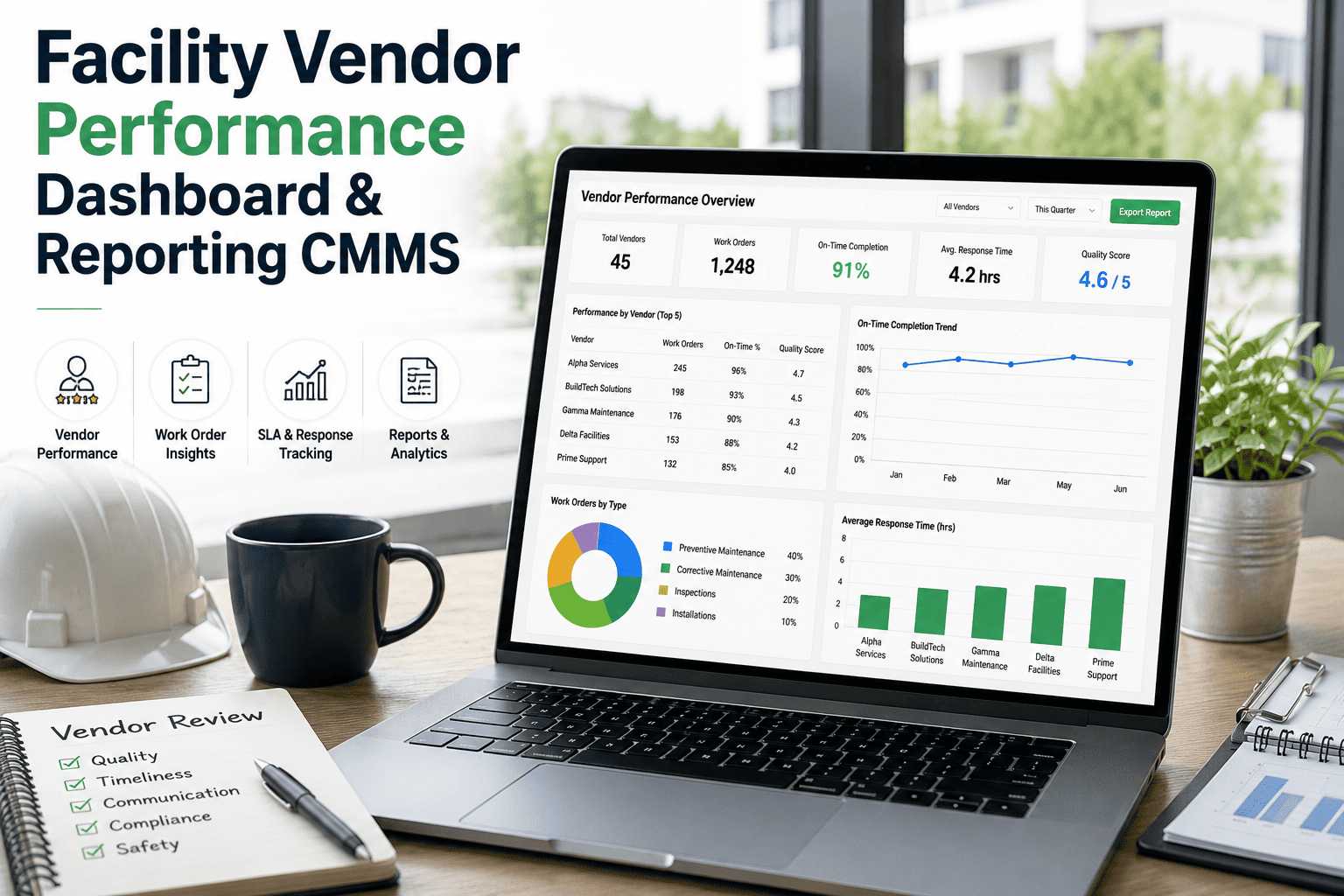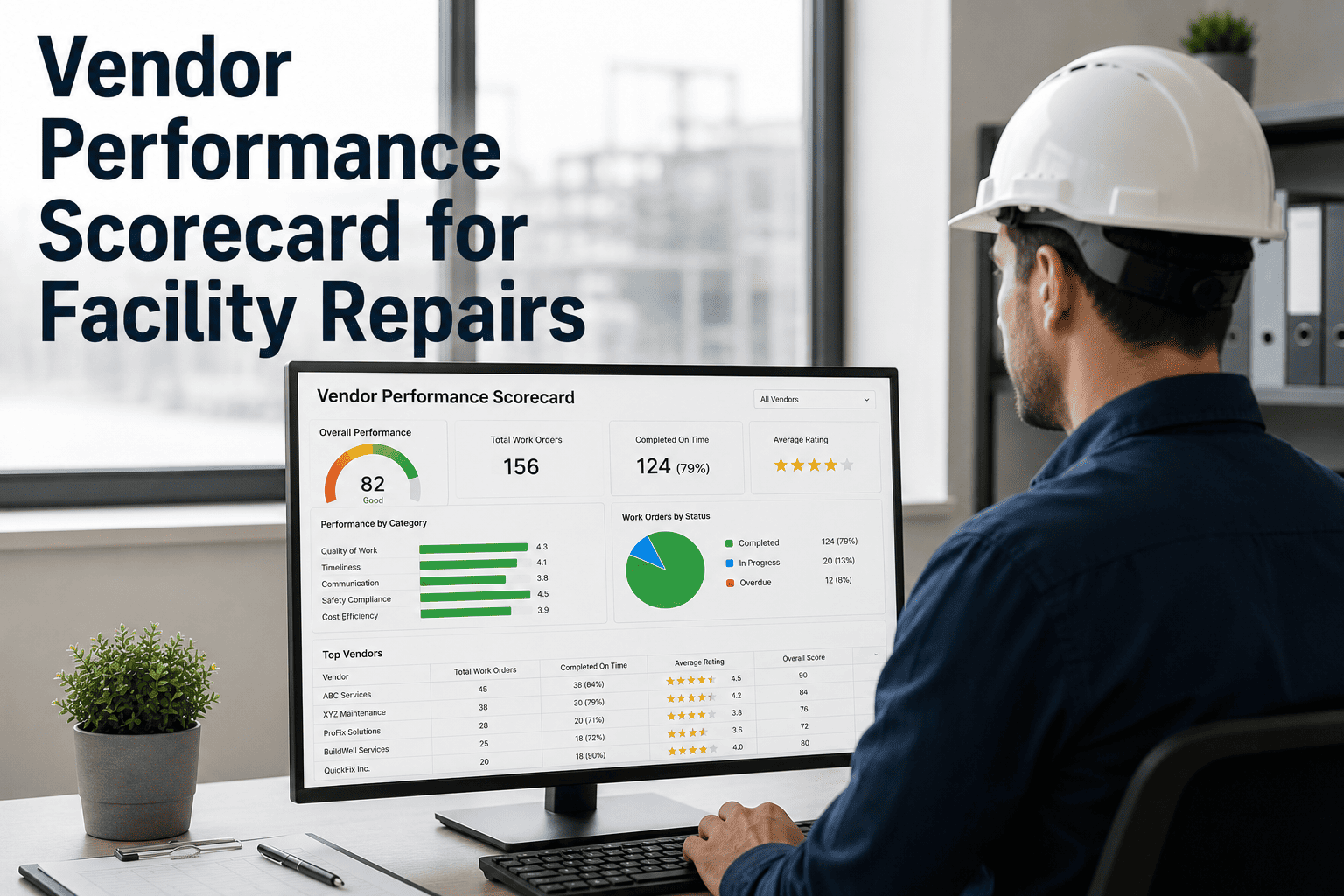
When in-house hiring cannot keep pace, contractors become the fastest way to cover a technician gap. They are also the fastest way to lose track of who worked on which asset, under what conditions, and to what standard. Facility contractor management is the discipline that keeps outsourced labor accountable to your quality, safety, and cost expectations. This guide walks through a five-stage model: scope, vetting, onboarding, service level agreements, and ongoing monitoring. Each stage explains what to require and what to record. If you want a single place to route contractor jobs and keep records, maintenance management software is a practical foundation.
Facility Contractor Management: Fill Gaps Without Losing Control
Contractors close labor gaps quickly, but quality drifts when nobody owns the relationship. Use a structured vetting, onboarding, SLA, and monitoring loop to protect uptime without adding headcount.
What contractors solve and what they put at risk
Outsourcing is a sound response to a labor shortage when it is managed deliberately. It becomes a liability when it is used as a stopgap with no owner.
Warning signs your contractor program is drifting
Drift is gradual, which is why it is easy to miss. If several of these sound familiar, the program needs structure before it needs a new vendor.
Stage 1: decide what to outsource before choosing who
Vendor selection is easier when the work is categorized first. Criticality, skill scarcity, and frequency point to different contracting models.
| Work category | Typical examples | Risk if it fails | Suggested model |
|---|---|---|---|
| Life-safety systems | Fire alarm, sprinklers, emergency lighting | Regulatory exposure and occupant harm | Licensed specialist under a documented inspection contract |
| Regulated equipment | Elevators, boilers, backflow devices | Statutory penalties and downtime | Certified vendor, with certificates stored per asset |
| Specialist maintenance | Chillers, controls, generators | High repair cost and long outages | Performance-based service agreement |
| Routine PM overflow | Filter changes, belt checks, general rounds | Gradual reliability decline | Task-based contract with checklists |
| After-hours response | Emergency call-outs | Extended outages | Retainer with response-time commitments |
| Low-risk services | Grounds, minor repairs, cleaning | Appearance and minor complaints | Standard vendor terms with periodic audit |
Keep these in-house when you can
Retain ownership of asset data, priority setting, and acceptance of completed work. Contractors can perform tasks, but the site should decide what matters and verify the result.
Stage 2: vet with a weighted scorecard
A price-first comparison hides the differences that cost money later. Score every bidder on the same criteria and weight them to match your risk.
Illustrative weights. Adjust them to the criticality of the work and your contract requirements.Evidence to request from every bidder
- Current trade licenses and technician certifications for the systems in scope.
- Certificates of insurance that match your contract limits and name your organization where required.
- Safety performance data such as incident rates, plus a written safety program.
- Three references from similar facilities, with a specific question about response and rework.
- A staffing plan showing who will attend, their backup, and after-hours coverage.
- A sample service report so you can judge documentation quality before award.
Red flags during vetting
- Unwillingness to share safety or insurance documents before award.
- Vague answers about who will actually perform the work.
- Pricing far below other bids with no explanation of scope differences.
- No process for reporting findings, only invoices.
Stage 3: onboard the contractor like a new team member
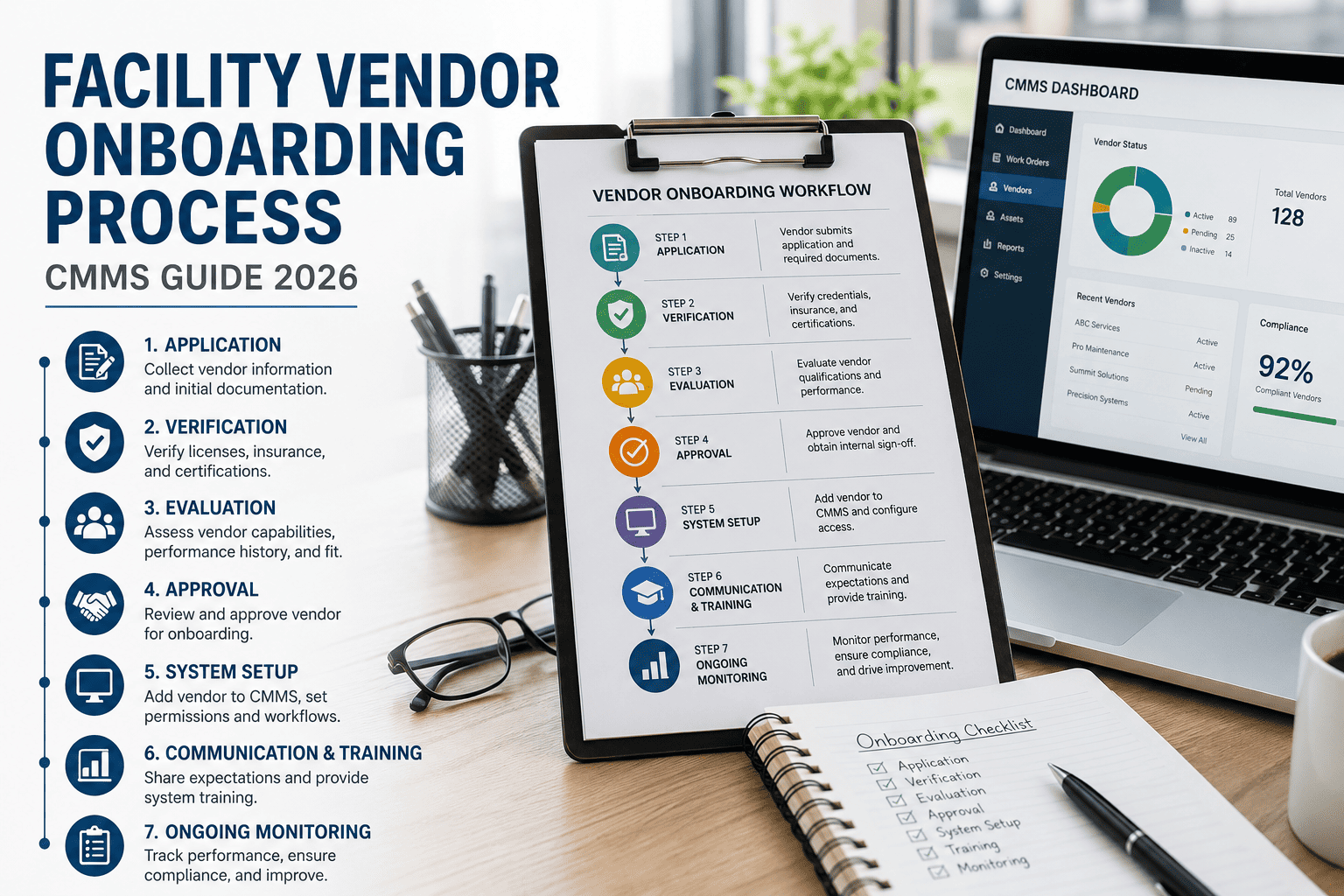
Most contractor quality problems begin in the first weeks. A short, consistent onboarding sequence sets expectations before habits form.
The onboarding record
Keep licenses, insurance, orientation sign-offs, and asset walk-downs in one record for each vendor. Auditors, insurers, and your own team will ask for it.
Give contractors one process to follow
Route contractor jobs through the same work order, asset, and inspection records your team uses, so every visit leaves evidence behind.
Stage 4: write SLAs that can actually be measured
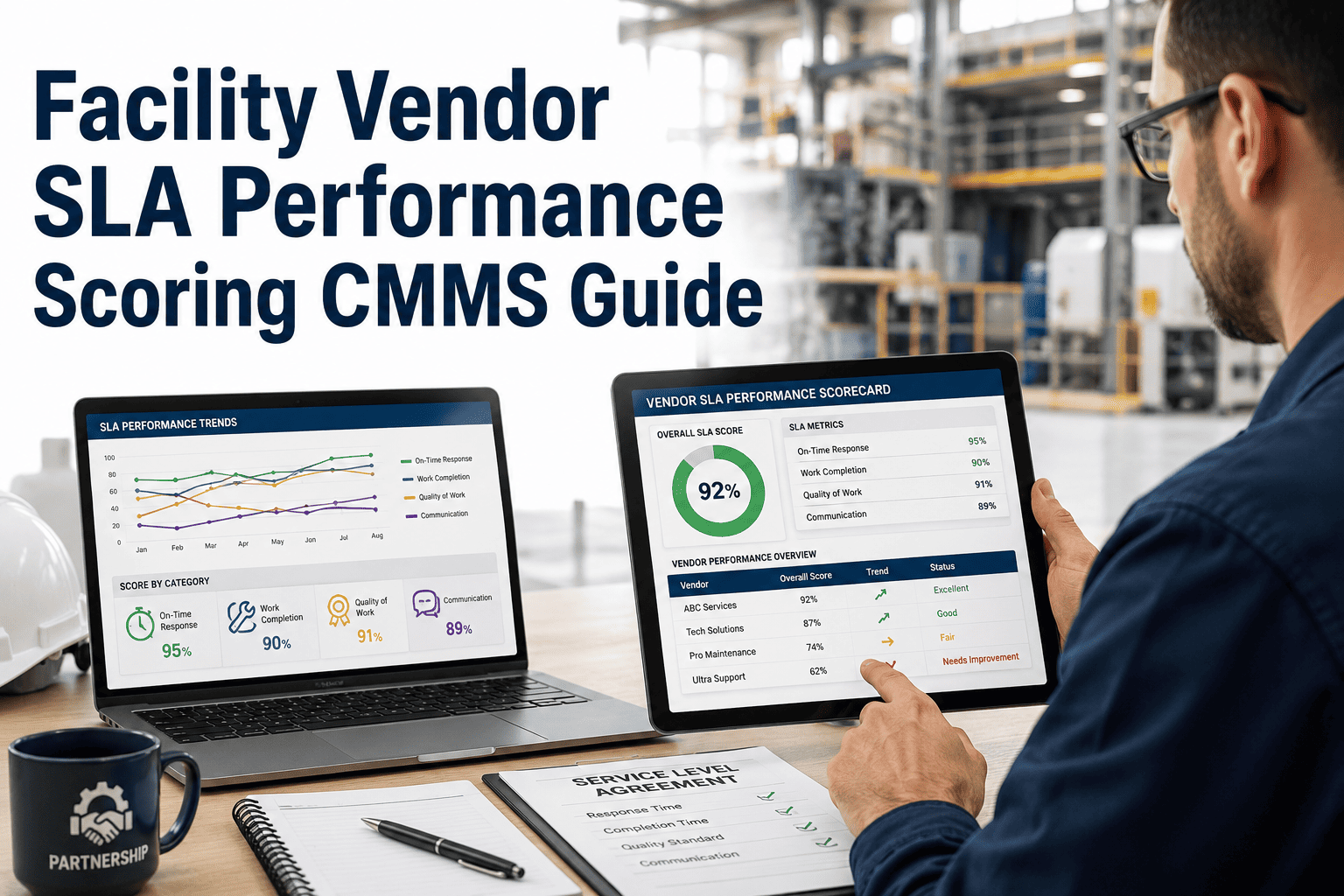
A service level agreement is only useful if both sides can measure it from records. Define priorities first, then attach response, resolution, and reporting expectations.
| Priority | Definition | Illustrative response target | Evidence required |
|---|---|---|---|
| P1 Emergency | Safety risk or critical system failure | Immediate acknowledgment and rapid on-site attendance | Time-stamped call log and completion report |
| P2 Urgent | Major comfort or process impact | Same-day attendance | Work order with findings and photos |
| P3 Routine | Fault with limited impact | Scheduled within agreed days | Closed work order and parts used |
| P4 Planned | Preventive tasks and inspections | Completed within the PM window | Checklist results per asset |
Clauses that protect the site
Stage 5: monitor performance with a small set of measures
Oversight fails when it is either absent or overwhelming. Track a few indicators from work order data and audit a sample of the work directly.
Three checks that catch most problems
- Reconcile every invoice against closed work orders before payment.
- Audit a small random sample of completed jobs each month by inspecting the asset.
- Hold a quarterly review that compares results with the SLA and records agreed actions.
A closeout standard for every contractor visit
Reliable oversight depends on reliable records. Ask for the same evidence at the end of every job, regardless of who performs it.
The escalation ladder when performance slips
Define the path in the contract so a missed target leads to a predictable response instead of an argument.
Common failure modes and the control that prevents each
Most contractor problems trace back to a missing control rather than a bad vendor. Match each failure to a specific safeguard.
| Failure mode | Typical root cause | Control to put in place |
|---|---|---|
| Missed PMs | Contractor schedule not linked to site calendar | Generate PM work orders from your own schedule and track completion by window |
| Repeat breakdowns | Symptoms fixed without root cause | Require findings and cause codes at closeout, then review repeat calls monthly |
| Disputed invoices | No agreed job record | Pay only against closed work orders with time and parts recorded |
| Safety incidents | Inconsistent orientation or permit practice | Standard onboarding, permit checks, and refresher briefings |
| Vendor lock-in | Asset knowledge held only by the contractor | Keep asset records, manuals, and history in your own system |
Ad hoc contractors versus managed contractors
Compliance and liability you cannot outsource
Hiring a contractor does not transfer every obligation. In the United States, workplace safety guidance can apply to more than one employer on a shared site, so coordination matters.
- Verify licensing and insurance before each contract renewal, not only at award.
- Coordinate lockout, permit, and hot-work procedures between your staff and the contractor.
- Store inspection and test results in a form that can be retrieved by asset and date.
- Confirm that regulated inspections meet local schedules and that certificates are current.
- Review who is responsible for hazards found during a contractor visit and how they are reported.
How Oxmaint supports the record
Work orders, asset records, inspections, and compliance documents can sit in one system. Reporting then shows contractor activity, backlog, and completion trends without manual compilation.
Look at total cost, not only the hourly rate
A low hourly rate can hide costs that surface later. Compare vendors on the full cost of getting the work done correctly.
- Travel time, minimum call-out charges, and after-hours premiums.
- Return visits caused by missing parts or incomplete diagnosis.
- Internal time spent chasing reports, checking invoices, and escorting staff.
- Equipment damage or shortened asset life from poor workmanship.
- Audit and compliance effort when records are incomplete.
Use data to negotiate
When work orders show response times, repeat calls, and spend by vendor and asset, renewal talks are based on evidence. That leverage is difficult to build from memory and email threads.
Designing a hybrid team that holds up
The strongest programs treat contractors as an extension of the team, with a clear split of responsibility.
| Responsibility | In-house team | Contractor |
|---|---|---|
| Priorities and scheduling | Owns the plan and backlog | Follows the agreed schedule and reports variances |
| Asset data | Owns records and naming | Updates findings against each asset |
| Specialist tasks | Coordinates access and permits | Performs licensed or specialist work |
| Quality acceptance | Verifies completed work | Corrects deficiencies at its own cost when warranted |
| Improvement | Runs quarterly reviews | Brings recommendations and trend insights |
Questions to settle at every quarterly review
- Which SLA measures were missed, and what evidence shows the cause?
- Which assets generated repeat calls, and has the underlying fault been addressed?
- Are licenses, insurance, and technician certifications still current?
- Does the scope still match the assets and the risks on site?
- What should move in-house, and what should move to a specialist?
- Which actions were agreed last quarter, and were they completed?
Frequently asked questions
Use contractors for capacity, keep control of quality
Bring vendors into one maintenance workflow and let your own records prove performance. Start with Oxmaint or review your contractor process with our team.