Fire Pump Inspection Guide & Report Template

By shreen on January 30, 2026

fire-pump-inspection-guide-&-report-template

Fire pump systems are the backbone of building fire protection—yet many facility managers only discover problems when it's too late. Regular inspections transform fire pump maintenance from reactive crisis management into predictable, compliance-driven operations. Whether managing a commercial building, industrial facility, or healthcare campus, understanding fire pump inspection requirements protects lives, property, and your organization from regulatory penalties. Schedule a consultation to discuss how digital inspection management can streamline your fire pump compliance program.

Why Fire Pump Inspections Matter

Fire pumps provide the critical water pressure that sprinkler systems and standpipes need during emergencies. When electrical grid pressure isn't sufficient, these pumps ensure water flows at the required volume and pressure to suppress fires effectively. A pump that fails during an emergency can mean the difference between a contained incident and catastrophic loss.

The Cost of Fire Pump Failures
$1.2M
Average property loss increase when fire protection systems fail during emergencies
78%
Of fire pump failures could be prevented with proper weekly and monthly inspections
43%
Insurance claim denials related to inadequate fire protection system maintenance documentation
$50K+
Potential fines for NFPA 25 non-compliance in many jurisdictions
Ready to digitize your fire pump inspection program? Join facility managers using Oxmaint to automate compliance tracking and never miss an inspection deadline.
Sign Up Free

NFPA 25 Fire Pump Inspection Schedule

NFPA 25 (Standard for the Inspection, Testing, and Maintenance of Water-Based Fire Protection Systems) establishes the minimum requirements for fire pump inspections. Understanding these frequencies helps you build a compliant maintenance program that protects your facility year-round.

Inspection Frequency Requirements From weekly checks to annual flow tests
W
Weekly Inspections
Visual inspection of pump house conditions, pump system components, and electrical systems. Diesel pumps require a 30-minute no-flow (churn) test weekly. Electric pumps serving high-rise buildings or remote water sources also require weekly testing.

M
Monthly Inspections
No-flow test for electric motor-driven pumps not covered by weekly requirements. Run pump for minimum 10 minutes observing suction and discharge pressures, unusual sounds, vibration, and packing gland leakage.

A
Annual Inspections
Comprehensive flow test measuring pump performance at churn, rated flow, and 150% of rated flow. Verify pump meets original design specifications. Check shaft alignment, bearing condition, and controller operation. Sign up for Oxmaint to schedule and track annual tests across multiple facilities.

5Y
Five-Year Testing
Full performance test required after any major alteration or repair. Internal pump inspection may be warranted based on flow test results showing degradation from original specifications.

Weekly Fire Pump Inspection Checklist

Weekly inspections form the foundation of fire pump reliability. These visual checks and operational tests catch developing problems before they become emergency failures. Most facilities can perform weekly inspections with trained in-house personnel.

Weekly Inspection Points

Pump Room Conditions
Verify temperature above 40F (4C), adequate lighting, ventilation louvers operational, no excessive water on floor, and coupling guard in place. Check for any signs of leaks or unusual conditions.

Valves and Piping
Confirm suction and discharge valves fully open. Inspect all piping for leaks. Check that all valve position indicators show correct status. Verify fire department connection caps are in place.

Pressure Gauges
Record suction pressure reading to confirm within acceptable range for water supply. Check discharge pressure gauge condition. Verify gauge readings make sense compared to historical data.

Controller Status
Verify controller selector switch in AUTO position. Check pilot lights indicate normal status. Confirm no alarm conditions are active. Review any fault codes or error messages.

Diesel Engine Checks
For diesel pumps: Check fuel tank level (minimum 2/3 full), verify engine oil level, inspect coolant level, confirm battery charger operation, and test starting batteries.

Electric Motor Checks
For electric pumps: Verify power supply present, check for proper phase voltage, inspect electrical connections for signs of overheating, confirm motor starter contacts are clean.
Simplify weekly inspections with digital checklists. Book a demo to see how Oxmaint mobile app guides technicians through every inspection point.
Book a Demo

Fire Pump Inspection Report Template

Proper documentation protects your organization and demonstrates compliance to inspectors, insurance companies, and authorities having jurisdiction. Your inspection reports should capture all required data points while remaining practical for field technicians to complete.

Essential Report Documentation
Section Required Information Why It Matters
Property Identification Building name, address, pump location, pump ID/serial number Ensures traceability and links inspection to specific equipment for audit purposes
Inspection Details Date, time, inspector name, credentials/certification number Validates inspection performed by qualified personnel per NFPA 25 requirements
Pump Specifications Manufacturer, model, rated capacity (GPM), rated pressure (PSI), driver type Baseline data for comparing current performance against design specifications
Test Readings Suction pressure, discharge pressure, RPM, amperage (electric), running time Quantitative data to identify performance degradation trends over time
Visual Observations Condition of components, unusual sounds/vibration, leaks, packing drip rate Qualitative assessment catches issues not revealed by pressure readings alone
Deficiencies Found Specific issues identified, severity assessment, recommended corrective actions Creates accountability and documents due diligence for insurance/legal purposes
Corrective Actions Work performed, parts replaced, follow-up required, completion dates Demonstrates responsive maintenance program and closes compliance loop
NFPA 25 requires retention of inspection records for at least one year or the period specified by the authority having jurisdiction.

Electric vs. Diesel Fire Pump Inspections

Understanding the differences between electric and diesel fire pump requirements helps you build inspection programs tailored to your specific equipment. Each pump type has unique maintenance needs and failure modes.

Pump Type Inspection Differences
Electric Fire Pumps
  • Monthly no-flow test (10 minutes minimum)
  • Weekly testing required for high-rise/remote supply
  • Check phase voltage and motor amperage
  • Inspect starter contacts and electrical connections
  • Verify transfer switch operation (if equipped)
Reliable Lower maintenance but depends on grid power
Diesel Fire Pumps
  • Weekly 30-minute no-flow test required
  • Check fuel level, oil, coolant, batteries weekly
  • Inspect exhaust system and cooling water lines
  • Test battery charger and starting batteries
  • Monitor engine block heater operation
Independent Works during power outages but needs more maintenance
Streamline Fire Pump Compliance with Oxmaint
Managing fire pump inspections across multiple facilities demands consistent processes and complete documentation. Oxmaint centralizes your inspection scheduling, digital checklists, and compliance reporting—ensuring every pump gets tested on time with audit-ready records.

Common Fire Pump Problems and Solutions

Understanding typical failure modes helps inspectors identify developing problems during routine checks. Early detection of these issues prevents emergency failures and reduces repair costs.

Troubleshooting Common Issues
Problem Likely Causes Inspection Action
Pump fails to start Dead batteries (diesel), controller fault, power supply issue, pressure switch malfunction Check battery voltage, verify controller status, test automatic start function during weekly inspection
Low discharge pressure Impeller wear, clogged suction strainer, air leak in suction line, partially closed valve Compare current pressure to baseline, verify all valves fully open, schedule flow test if degradation noted
Excessive vibration Misalignment, bearing wear, impeller damage, cavitation, loose mounting bolts Note any unusual vibration during test runs, check coupling alignment annually, inspect foundation bolts
Overheating Blocked cooling lines, low oil level, bearing failure, continuous operation from system leak Check cooling water flow, verify oil levels, investigate cause of extended run times
Excessive packing leakage Worn packing, shaft sleeve damage, improper adjustment Packing should drip 10-60 drops/minute during operation—adjust or replace if outside this range
Controller alarms Low fuel, battery fault, phase loss, ground fault, failed sensor Document all alarm conditions, investigate root cause, ensure alarms clear before returning to service
Any deficiency affecting pump operation should be corrected immediately or the system placed under impairment procedures per NFPA 25.

Annual Flow Test Requirements

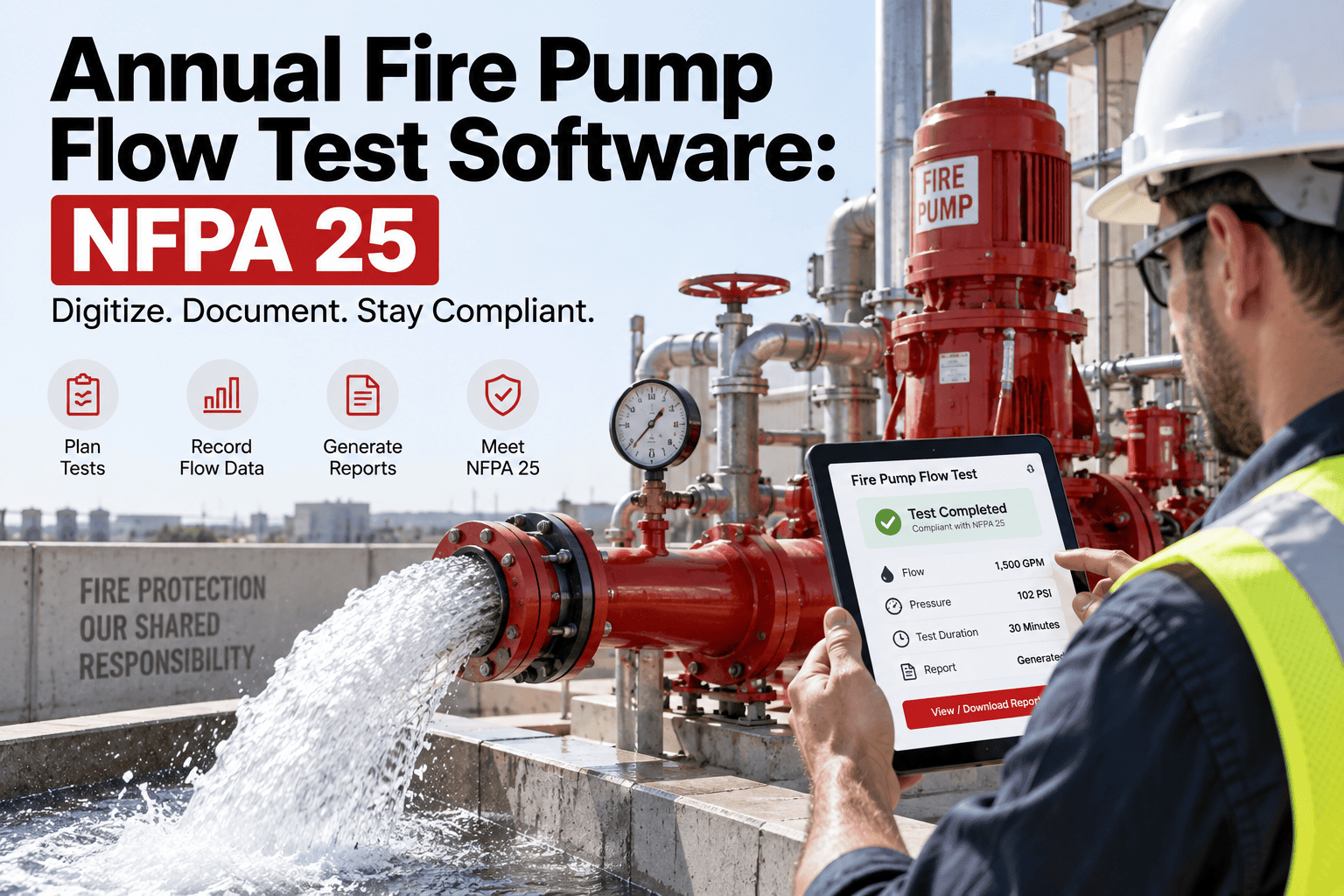
The annual flow test represents the most comprehensive assessment of fire pump performance. This test verifies the pump can deliver its rated capacity at rated pressure under actual flow conditions—not just churn (no-flow) conditions checked during weekly and monthly tests.

Annual Flow Test Data Points Must be recorded at churn, rated flow, and 150% rated flow
0%
Churn (No Flow) - Maximum pressure point
100%
Rated Flow - Design operating point
150%
Peak Demand - Emergency capacity verification
+/-
Compare results to previous years and original specs
Track flow test trends across years. Create your free Oxmaint account to store historical test data and automatically flag performance degradation.
Sign Up Free

Jockey Pump Inspection Requirements

Jockey pumps maintain system pressure to prevent nuisance starts of the main fire pump. While smaller and less complex, they require their own inspection attention to ensure the overall fire protection system operates correctly.

Jockey Pump Inspection Points

Pressure Settings
Verify start/stop pressure settings are correct. Jockey pump should start before main pump start pressure and stop at system design pressure. Incorrect settings cause excessive cycling or main pump nuisance starts.

Cycling Frequency
Monitor how often the jockey pump runs. Frequent cycling indicates system leaks or pressure switch issues. Main pump activation when jockey is running indicates potential system demand or failure.

Operational Testing
Weekly observation during main pump testing. Verify jockey pump stops when main pump activates. Confirm automatic restart after main pump stops and system pressure stabilizes.

Component Condition
Annual inspection of motor, pump, and controller similar to main pump requirements. Check for leaks, unusual sounds, and overheating. Verify pressure relief valve operation if installed.

Fire Pump Maintenance Best Practices

Beyond required inspections, proactive maintenance extends pump life and reduces emergency failures. These best practices help facility managers build comprehensive fire pump care programs.

Maintenance Program Components
Foundation
Documentation System
Maintain equipment files with specs and manuals Store all inspection and test records Track deficiencies through resolution
Preventive
Scheduled Maintenance
Lubricate bearings per manufacturer schedule Replace packing before excessive wear Clean strainers and check valves
Diesel-Specific
Engine Care
Change oil and filters on schedule Replace batteries every 2-3 years Test fuel quality annually
Professional
Expert Services
Annual flow test by certified technician Controller calibration and testing Internal pump inspection when indicated
Fire pump inspection isn't just regulatory compliance—it's risk management. The facilities with the best fire safety records treat their pumps like critical assets, not forgotten equipment in a back room. Weekly attention prevents the emergency repairs and system failures that end careers and close businesses.
— Fire Protection Engineering Consultant
Transform Your Fire Pump Inspection Program
Paper checklists get lost. Spreadsheets fall out of date. Oxmaint gives you digital inspection workflows, automatic scheduling reminders, and compliance dashboards that prove your program meets NFPA 25 requirements—all accessible from any device, anywhere your pumps are located.

Frequently Asked Questions

Who can perform fire pump inspections?
NFPA 25 requires inspections be performed by qualified personnel who have developed competence through training and experience. Weekly visual inspections can often be done by trained facility staff, while annual flow tests typically require certified fire protection technicians. Some states require specific certifications for annual testing. Schedule a consultation to discuss qualification requirements in your jurisdiction.
How long must fire pump inspection records be retained?
NFPA 25 requires records be retained for at least one year, but many authorities having jurisdiction and insurance companies require longer retention periods. Best practice is to maintain records for the life of the equipment plus several years. Digital record-keeping systems like Oxmaint make long-term storage and retrieval practical. Sign up for free to start building your digital compliance archive.
What happens if a fire pump fails inspection?
Deficiencies must be corrected or the system placed under impairment procedures. Critical deficiencies affecting pump operation require immediate attention. Document the deficiency, notify appropriate parties (building owner, fire department, insurance company as required), and track corrective action through completion. Never leave a failed pump in service without proper impairment procedures in place.
Can fire pump testing be extended beyond NFPA 25 requirements?
NFPA 25 allows testing intervals to be extended based on approved risk analysis, but this requires formal approval from the authority having jurisdiction. Most facilities find it easier to maintain standard testing schedules than to document and defend extended intervals. Your insurance company may also have requirements that differ from minimum code requirements.
How do I know if my fire pump needs repair vs. replacement?
Compare annual flow test results to original pump curves. Performance degradation of more than 5% from original specifications typically warrants investigation. Factors like repair cost vs. replacement cost, pump age, parts availability, and system requirements all affect the decision. Book a demo to see how Oxmaint helps you track performance trends that inform repair/replace decisions.

Share This Story, Choose Your Platform!