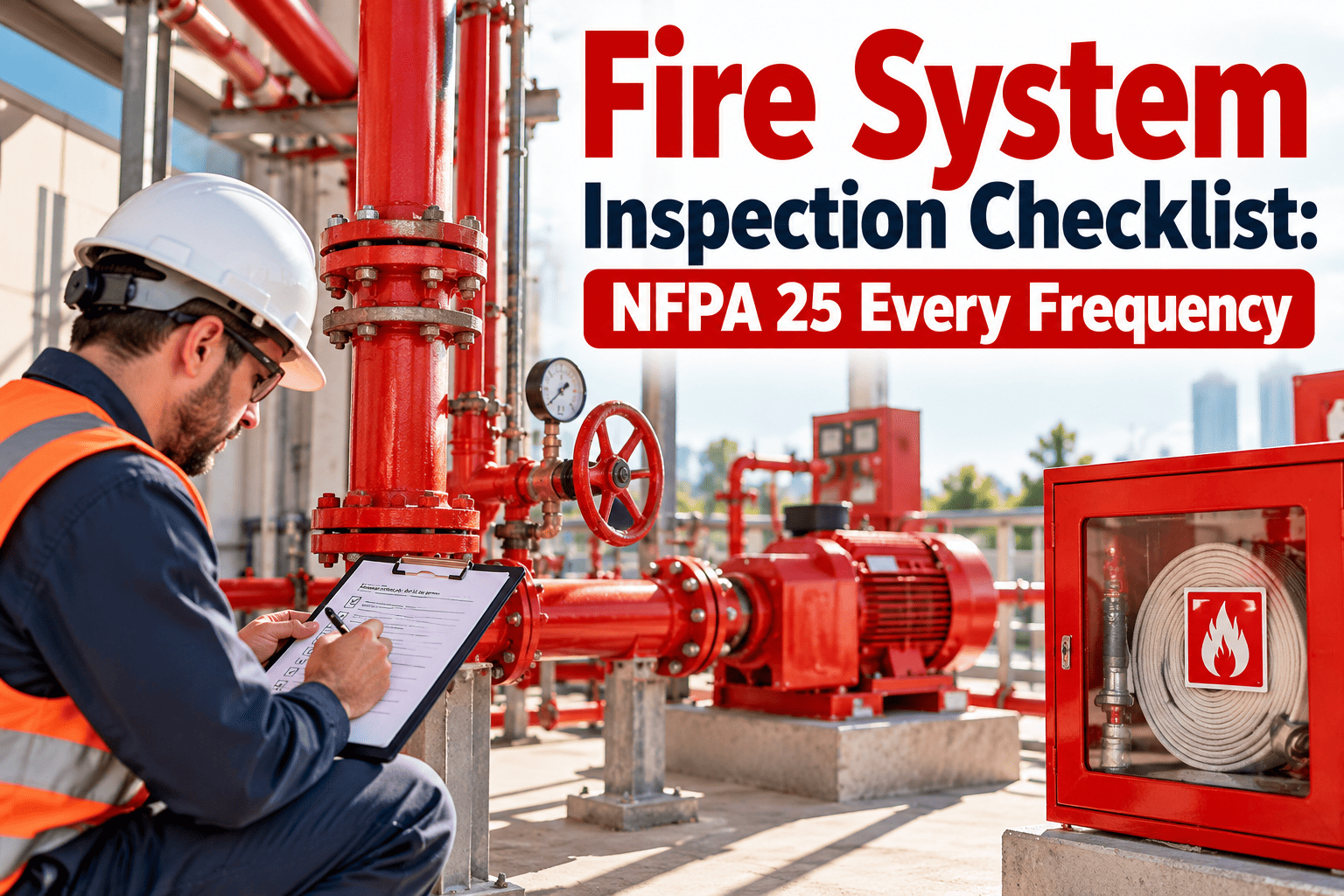
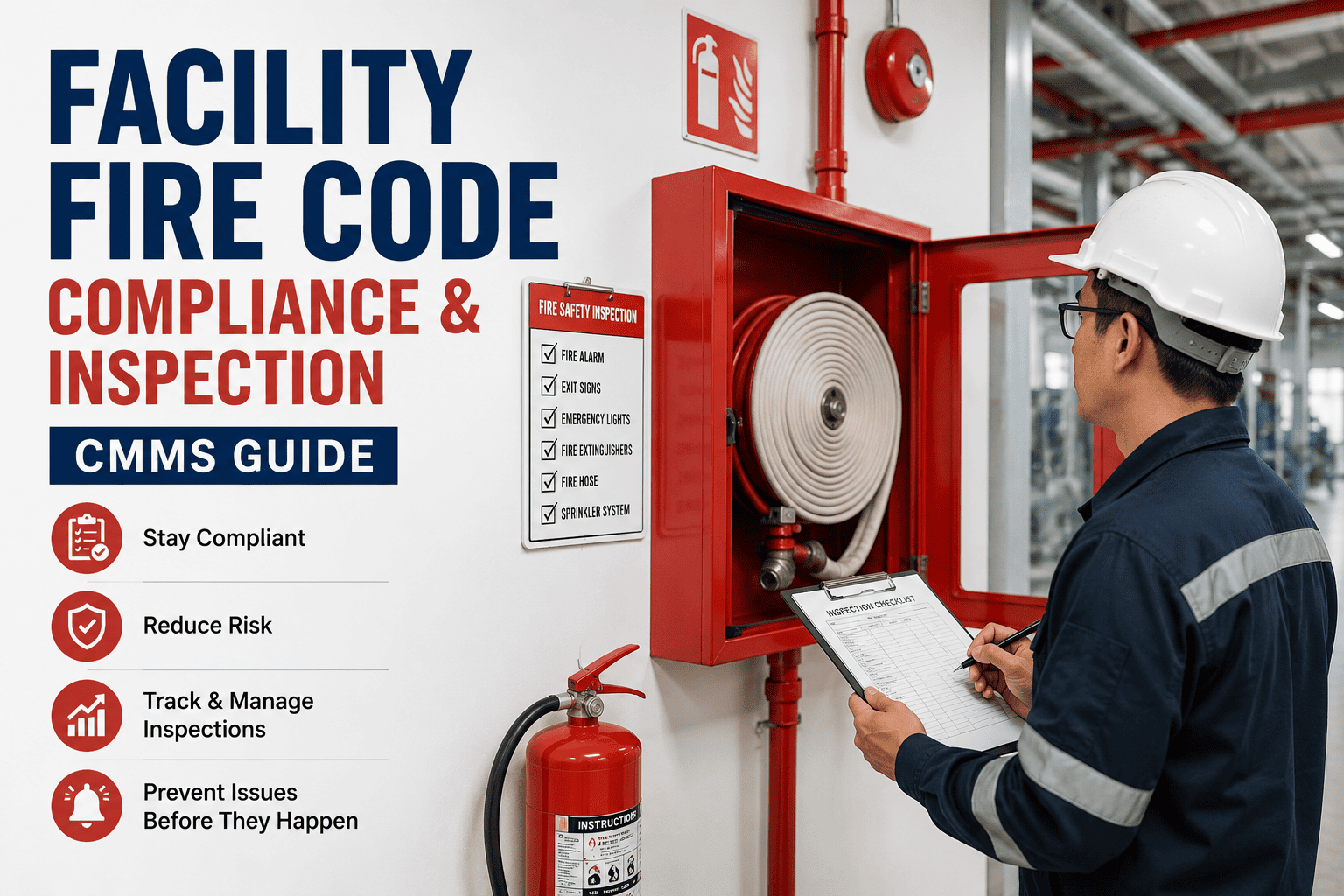
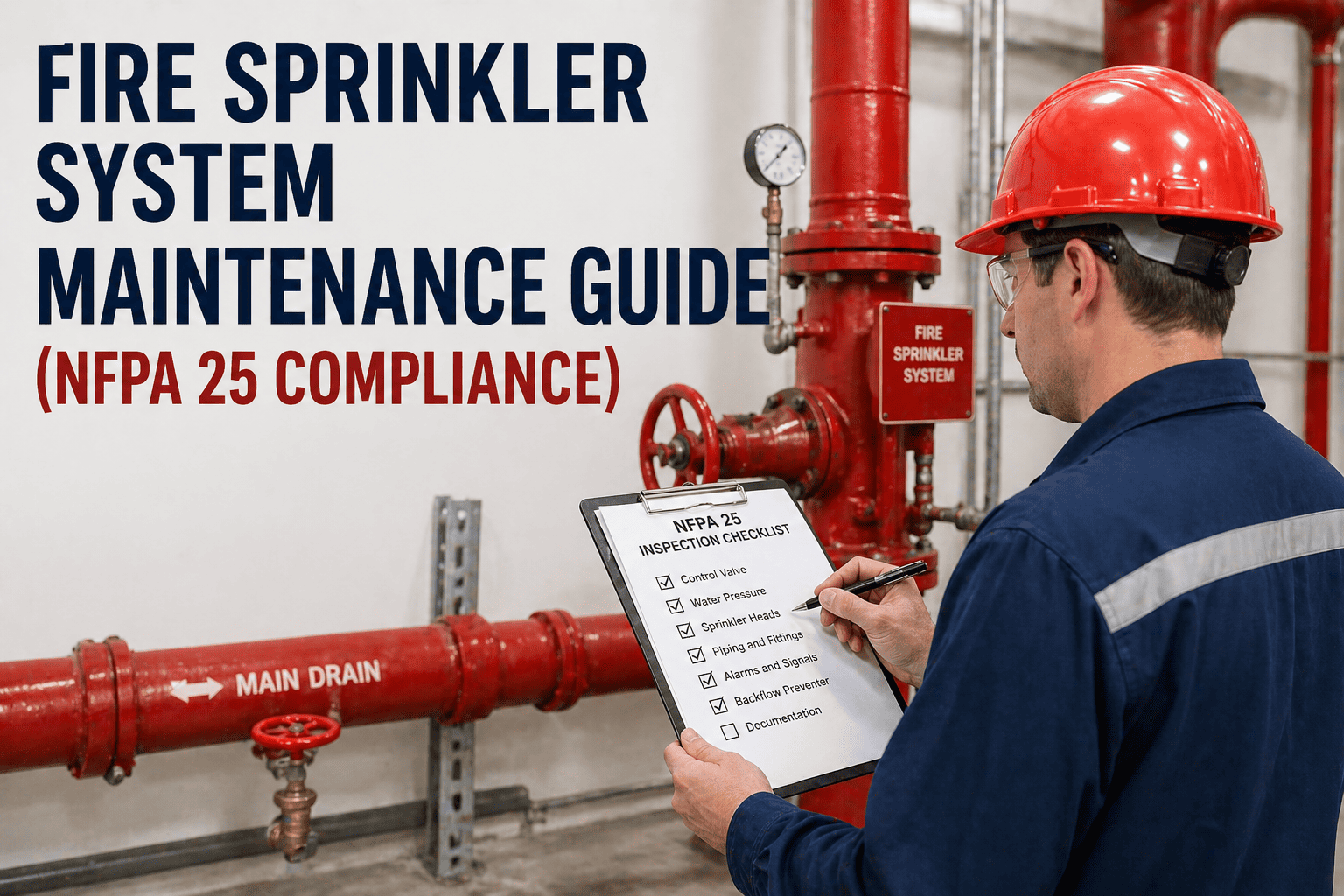
Fire sprinkler systems are designed to operate once — under the worst possible conditions, with zero tolerance for failure. NFPA 25, the Standard for the Inspection, Testing, and Maintenance of Water-Based Fire Protection Systems, establishes a mandatory schedule of inspections and tests that span quarterly gauge checks through 5-year internal pipe assessments. Facilities that track this schedule manually — across multiple systems, buildings, and AHJ jurisdictions — inevitably develop compliance gaps that range from missed quarterly alarms tests to overdue 5-year internal inspections that go undetected for years. OxMaint's compliance tracking platform manages every NFPA 25 interval simultaneously, generates NFPA-compliant inspection records at completion, and alerts before any deadline passes — for every sprinkler system in your portfolio.
NFPA 25 Inspection & Test Schedule by System Type
Wet-pipe, dry-pipe, pre-action, and deluge systems each carry different inspection requirements under NFPA 25. A facility with multiple system types must track different schedules for each — the table below is the authoritative reference for commercial building compliance teams.
| Inspection / Test Item | Wet-Pipe | Dry-Pipe | Pre-Action | NFPA 25 Section |
|---|---|---|---|---|
| Control valve position and supervisory signal | Quarterly | Quarterly | Quarterly | 5.2.1 |
| Alarm valve and waterflow devices | Quarterly | Quarterly | Quarterly | 5.3.2 |
| Gauges (system and supply) | Quarterly | Quarterly | Quarterly | 5.2.4 |
| Dry-pipe valve / quick-opening device | — | Semi-annual | Semi-annual | 7.3.1 |
| Main drain flow test | Annual | Annual | Annual | 13.2.5 |
| Dry-pipe valve full trip test | — | Annual | Annual | 7.3.2 |
| Antifreeze solution concentration check | Annual | — | — | 5.3.4 |
| Fire pump annual test (churn + flow) | Annual | Annual | Annual | 8.3.1 |
| Internal inspection — pipe and fittings | 5-year | 5-year | 5-year | 14.2 |
| Obstruction investigation | 5-year | 5-year | 5-year | 14.3 |
Impairment Management: The Most-Cited NFPA 25 Deficiency
An impairment occurs any time a sprinkler system — or any portion of it — is taken out of service. NFPA 25 Chapter 15 requires a formal impairment management process for every system disruption, regardless of planned duration. Inspectors cite impairment management failures more frequently than any other NFPA 25 provision — because most facilities treat system shutdowns as a maintenance task rather than a documented compliance event.
Never Miss a Sprinkler Inspection Deadline Again
OxMaint tracks every NFPA 25 interval for each system type — quarterly through 5-year — alerts your team before deadlines, and generates compliant inspection reports at work order closure. Book a demo to see the sprinkler inspection module.
What NFPA 25-Compliant Inspection Records Must Include
Expert Review
The two NFPA 25 provisions that facility teams most consistently fail are impairment management and 5-year internal inspections — and both failures have the same root cause: no system is tracking them. Monthly and annual inspections end up on someone's calendar because they are frequent enough to stay top of mind. A 5-year internal inspection, by contrast, can go unperformed for 7 or 8 years before an AHJ inspector catches it — by which time pipe corrosion, organic material accumulation, or manufacturing debris may have compromised system performance in ways invisible from the outside. A CMMS that tracks 5-year intervals with the same discipline as quarterly tests, generates an alert 90 days before the deadline, and stores the completed inspection report against the system record is the infrastructure that makes NFPA 25 compliance systematic rather than accidental.
Frequently Asked Questions
What triggers a requirement for sprinkler obstruction investigation under NFPA 25?
NFPA 25 Section 14.3 requires an obstruction investigation whenever any of the following conditions are found: discolored water or foreign materials during routine inspection, plugged or inoperable sprinklers, a broken pipe, an improper valve, or a previous obstruction condition. Additionally, any system that has not been investigated within 5 years is subject to mandatory investigation regardless of appearance. Obstruction investigations require flushing at test connections, opening inspection points to examine pipe interior, and documenting findings. OxMaint schedules 5-year obstruction investigations as a separate PM from the 5-year internal inspection, since they may be triggered earlier by observed conditions. Book a demo to see how OxMaint manages both.
How long must NFPA 25 inspection records be retained?
NFPA 25 Section 4.3.2 requires that the records of inspections, tests, and maintenance be retained for at least one year after the next inspection, test, or maintenance of that type. For annual inspections, this means two years of records are required at any given time. For 5-year inspections, two complete inspection cycles — 10 years of records — are required. Records must be made available to the AHJ on request and must be maintained at the protected premises or at a location accessible during normal business hours. OxMaint stores all inspection records permanently against each system's asset record, with export capability for AHJ submission. Learn more at oxmaint.ai.
What qualifications does an NFPA 25 inspector need in a commercial building?
NFPA 25 Section 4.1 requires that inspections, tests, and maintenance be performed by qualified personnel who are knowledgeable in the requirements of the standard and in the systems and components they are inspecting. In practice, AHJ requirements vary significantly by jurisdiction — some require NICET Level II Water-Based Systems Layout or Inspection/Testing/Maintenance certification, some require state fire protection contractor licensure, and others accept documented training and experience records. Before scheduling any third-party NFPA 25 inspection, verify the specific credential requirements with your local AHJ, since using an inspector without required credentials can invalidate the inspection record for compliance purposes.
What is a main drain flow test and why is it required annually?
The main drain flow test measures water pressure at the inspector's test connection before and during a full-flow discharge from the main drain valve. The purpose is to verify that water supply pressure and flow rate have not been reduced since the last test — a reduction indicates that a supply-side valve has been closed or that the municipal supply has been reduced. NFPA 25 Section 13.2.5 requires the test annually and after any system work that could affect the supply. The test takes approximately 15 minutes but requires coordination with the building to manage the water discharge — an important scheduling consideration for occupied commercial buildings where unexpected water flow triggers alarms.
NFPA 25 Has 4 Inspection Intervals. Your CMMS Should Track All 4.
OxMaint manages quarterly, semi-annual, annual, and 5-year sprinkler inspection schedules simultaneously — with pre-deadline alerts, mobile inspection checklists, and automatic record generation that satisfies NFPA 25, your AHJ, and your insurance carrier.