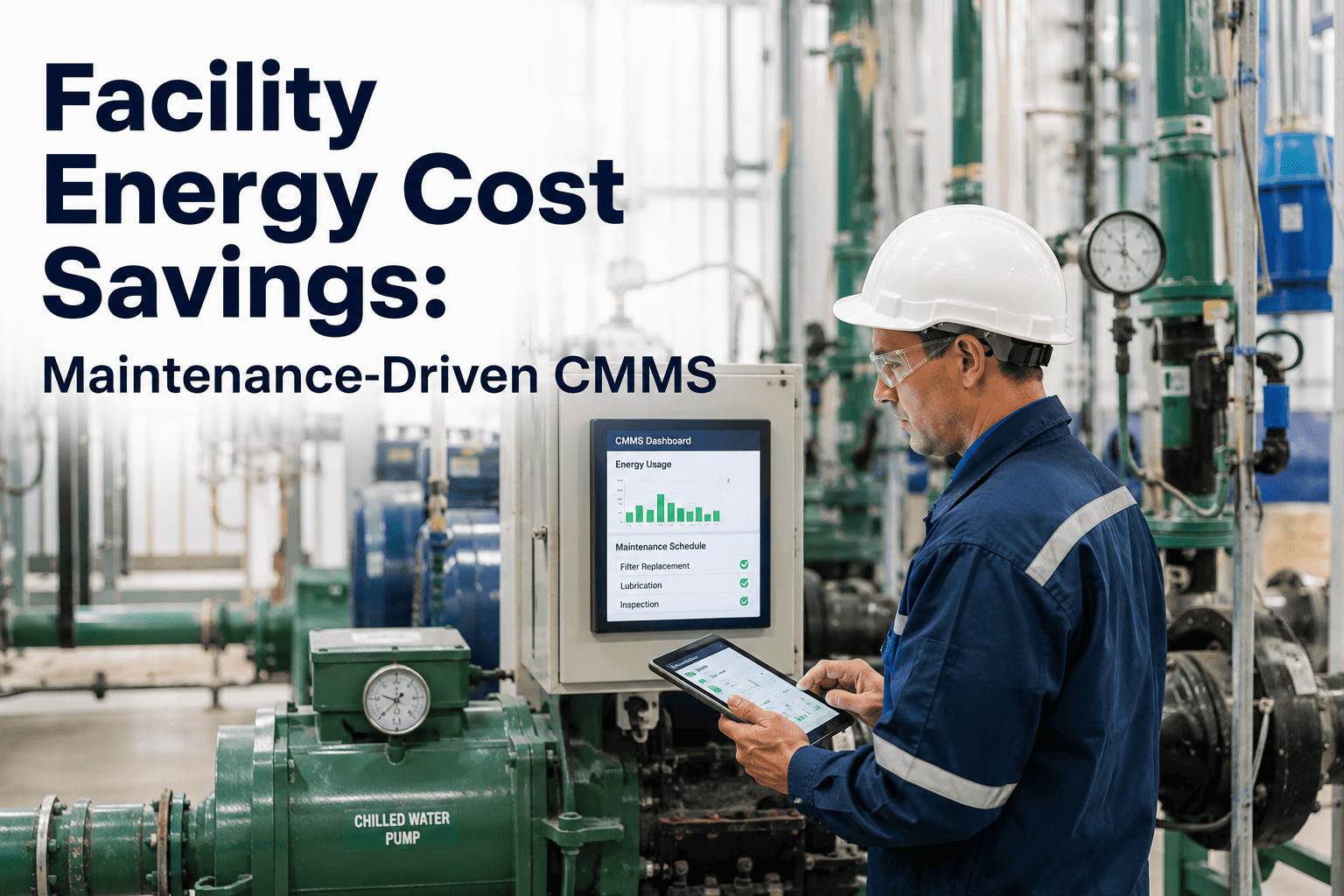
An energy performance contract lets a facility fund efficiency upgrades from the savings they produce. An energy services company designs and installs the measures, then guarantees a level of savings over a fixed term. If the building falls short, the contractor covers the difference. That structure is attractive when capital is tight, but the guarantee is only as strong as the baseline, the measurement plan, and the maintenance that keeps equipment running as designed. Here is how an EPC is structured, where the risks sit, and how a CMMS protects the savings after commissioning.
Measure, guarantee, share: how an EPC turns energy savings into funded upgrades
A practical overview for facility managers evaluating guaranteed savings contracts, with the negotiation points that matter most.
The EPC project lifecycle
Audit
Investment-grade audit identifies measures and estimates savings.Contract
Scope, baseline, guarantee, financing, and term are agreed.Install
Measures are installed and commissioned under a schedule.Verify
Measurement and verification compares actual use to the baseline.Operate
Ongoing maintenance preserves performance through the term.Guaranteed savings versus shared savings
| Feature | Guaranteed savings | Shared savings |
|---|---|---|
| Who carries performance risk | Contractor guarantees a defined savings level | Contractor and owner share actual results |
| Payments | Fixed schedule, shortfalls reconciled | Vary with measured savings |
| Budget certainty for owner | Higher | Lower |
| Financing | Often owner-arranged or third-party | Often contractor-arranged |
| Typical fit | Public and institutional owners | Owners wanting off-balance-sheet structures |
How savings are proven
Protect guaranteed savings with disciplined maintenance
Oxmaint helps teams schedule preventive maintenance, record work, and keep asset history for performance reviews.
Risks FM teams should negotiate before signing
Baseline definition
Which years, weather data, and occupancy were used? An inflated baseline makes savings look larger than they are.Baseline adjustments
Define how changes in hours, space use, and equipment loads adjust the baseline, and who approves them.Maintenance responsibility
Spell out who maintains new equipment. Contractors may void guarantees if required tasks are missed.Operating practices
Setpoints and schedules may be conditions of the guarantee. Document them and train operators.Term and exit rights
Understand early termination, buyout, and what happens to equipment and data at the end.Reporting and disputes
Require regular savings reports and a clear process to resolve disagreements about measured results.Where savings quietly leak
Common leakage
- Overridden controls left in manual mode
- Skipped filter and coil cleaning
- Sensors drifting out of calibration
- Schedules changed without review
- Repairs that bypass efficiency features
Maintenance controls
- Recurring preventive tasks for each installed measure
- Sensor calibration on a schedule
- Work orders referencing the EPC measure
- Setpoint and schedule audits
- Asset history available for savings disputes
What the facility team owns during the term
- Data: provide utility bills, occupancy, and operating hours accurately and on time.
- Change control: notify the contractor of changes that affect the baseline.
- Documentation: keep maintenance records to show required tasks were performed.
- Governance: hold regular reviews of measured versus guaranteed savings.
Energy performance contract questions
Does an EPC guarantee the project will pay for itself?
It guarantees a savings level, not a result beyond the contract. Terms and exclusions decide what the guarantee covers.
Who is responsible for maintenance?
It depends on the contract. Many place routine maintenance with the owner, so tracking it matters.
What happens if savings fall short?
In a guaranteed model, the contractor usually reimburses the shortfall, subject to baseline adjustments and exclusions.
How can a CMMS help?
It documents preventive tasks and repairs for each measure. You can book a demo to see it.
Is an EPC right for every building?
Not always. Small projects may not justify the audit and M&V cost. Track current performance in one maintenance system first.
Keep the savings you contracted for
Document preventive work, calibrations, and repairs so your EPC performs for the full term.