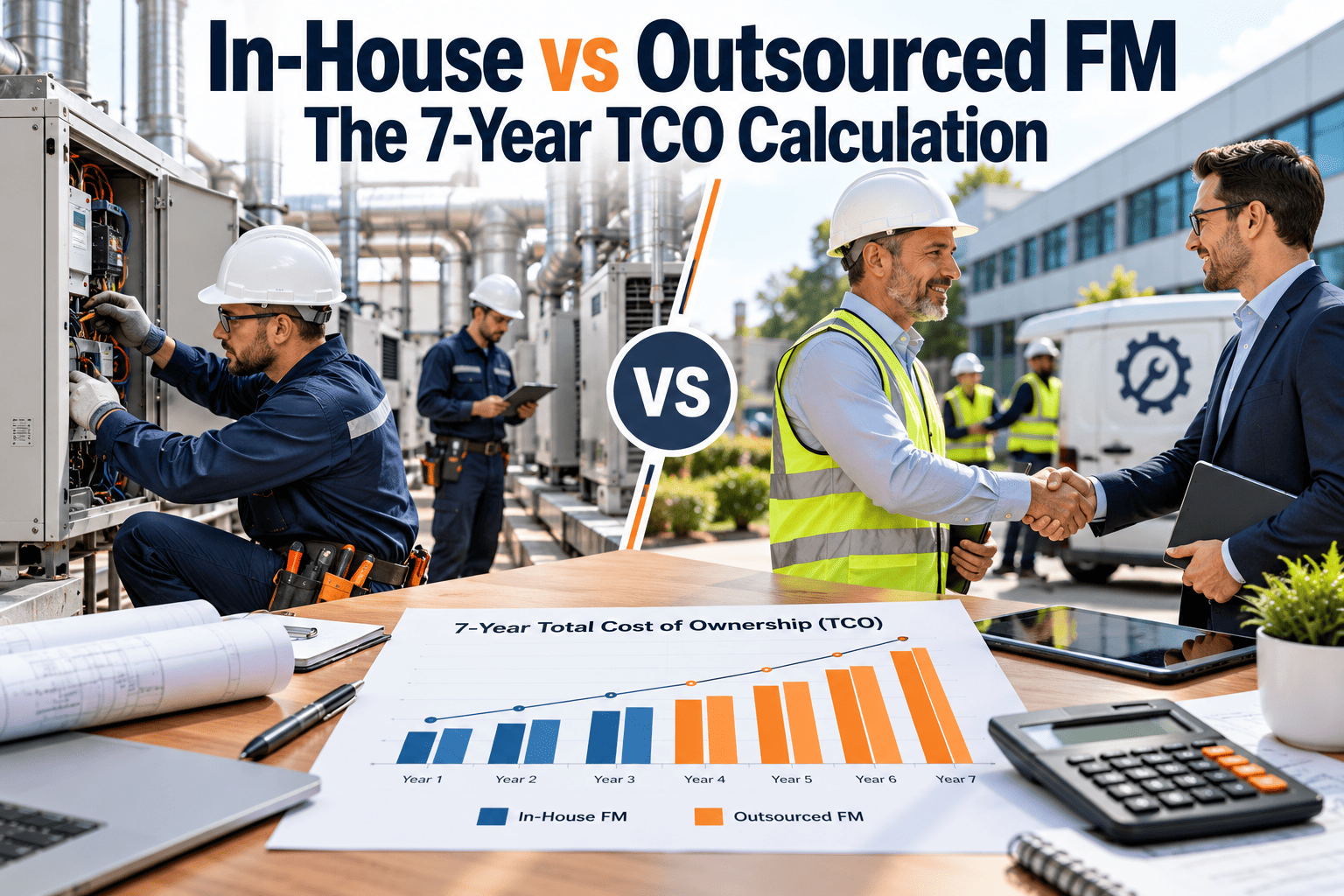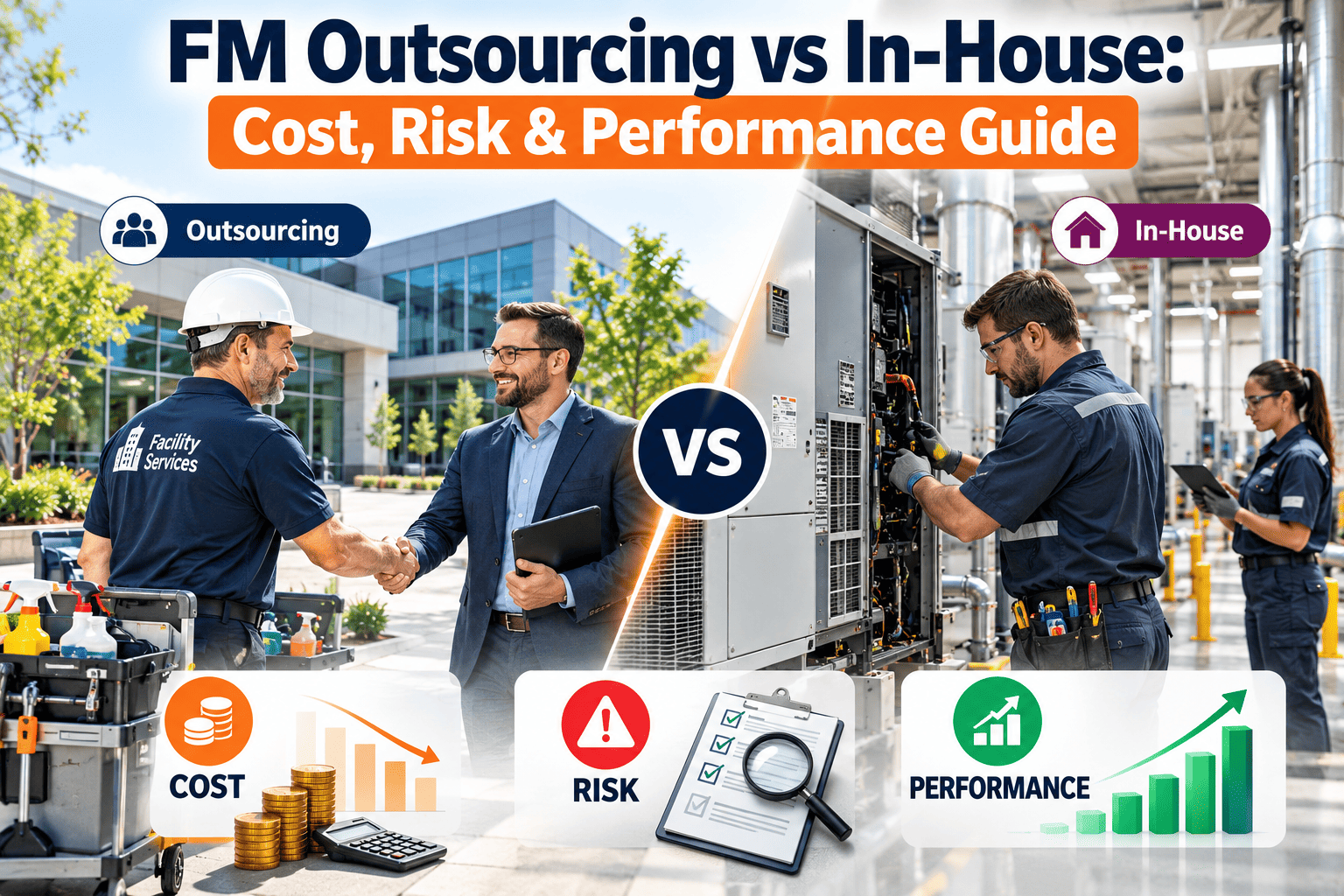
Outsourcing facility management can reduce direct headcount, but it does not remove responsibility. Vendor performance, contract scope, data ownership, and service quality still land on the facility owner. In-house teams keep control and site knowledge, but carry hiring, training, and coverage burdens. Neither model wins by default. This guide compares cost, risk, and performance, then offers a decision framework, and shows how a maintenance management platform keeps visibility intact under either model, a theme also seen in IFMA and JLL outsourcing research.
FM Outsourcing vs In-House: Cost, Risk and Performance Compared
Decide with evidence, not assumptions. Weigh true cost, vendor risk, and service performance, and see why many facilities end up with a hybrid model.
Side by side: the core trade-offs
Each model shifts cost and risk to a different place. The table shows where.
| Factor | In-house | Outsourced |
|---|---|---|
| Cost structure | Salaries, benefits, training, tools, management time | Contract fee, management fee, internal oversight |
| Cost predictability | Varies with overtime and turnover | Fixed fees, but change orders add cost |
| Site knowledge | Deep and retained | Depends on staff continuity |
| Specialist skills | Hard to hire and keep | Available through the provider |
| Control | Direct | Through contract and reporting |
| Scalability | Slow to adjust | Easier to flex |
| Data ownership | Owner holds records | Must be defined in the contract |
The true cost question
Compare full cost, not contract fee against salary. Both sides hide items.
Often missed in-house
- Recruitment and turnover cost
- Training and certification
- Tools, vehicles, and software
- Overtime and call-out premiums
- Management and supervision time
Often missed outsourced
- Retained client team that manages the vendor
- Out-of-scope work and change orders
- Transition and mobilization effort
- Exit and re-tender cost
- Reporting and audit time
Use your own work order and payroll history as the baseline before requesting any bid.
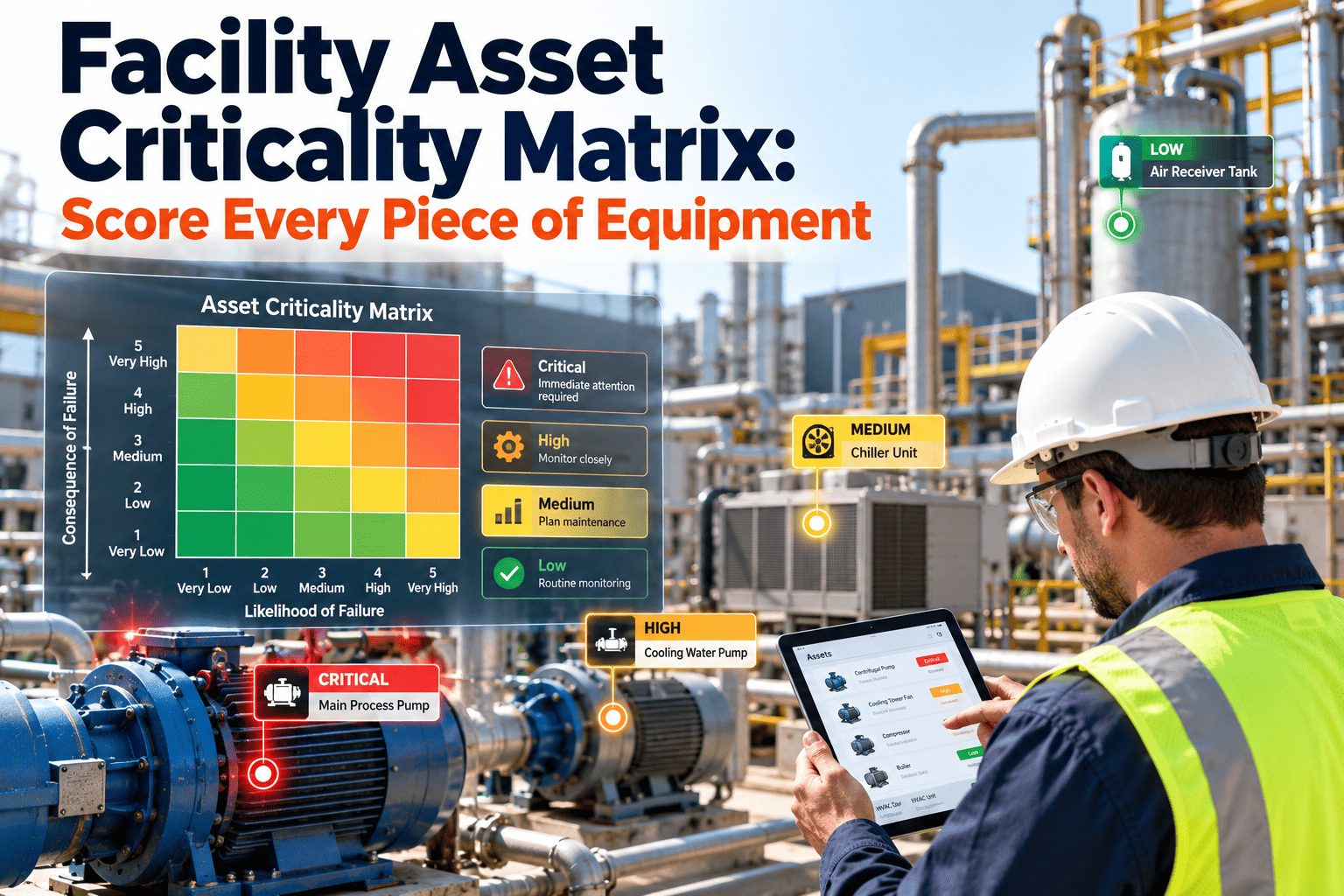
Risk register: what can go wrong
| Risk | Model most exposed | Mitigation |
|---|---|---|
| Vendor staff turnover | Outsourced | Continuity clauses and documented procedures |
| Scope gaps and disputes | Outsourced | Asset-level scope and clear exclusions |
| Loss of records | Outsourced | Owner-held system with contractual access |
| Skills shortage | In-house | Specialist contracts for niche plant |
| Single point of knowledge | In-house | Documented procedures and asset history |
| Compliance evidence gaps | Both | Digital records tied to each asset |
Keep control of your data, whoever does the work
Oxmaint gives owners one record of assets, work orders, and compliance evidence for in-house crews and vendors alike.
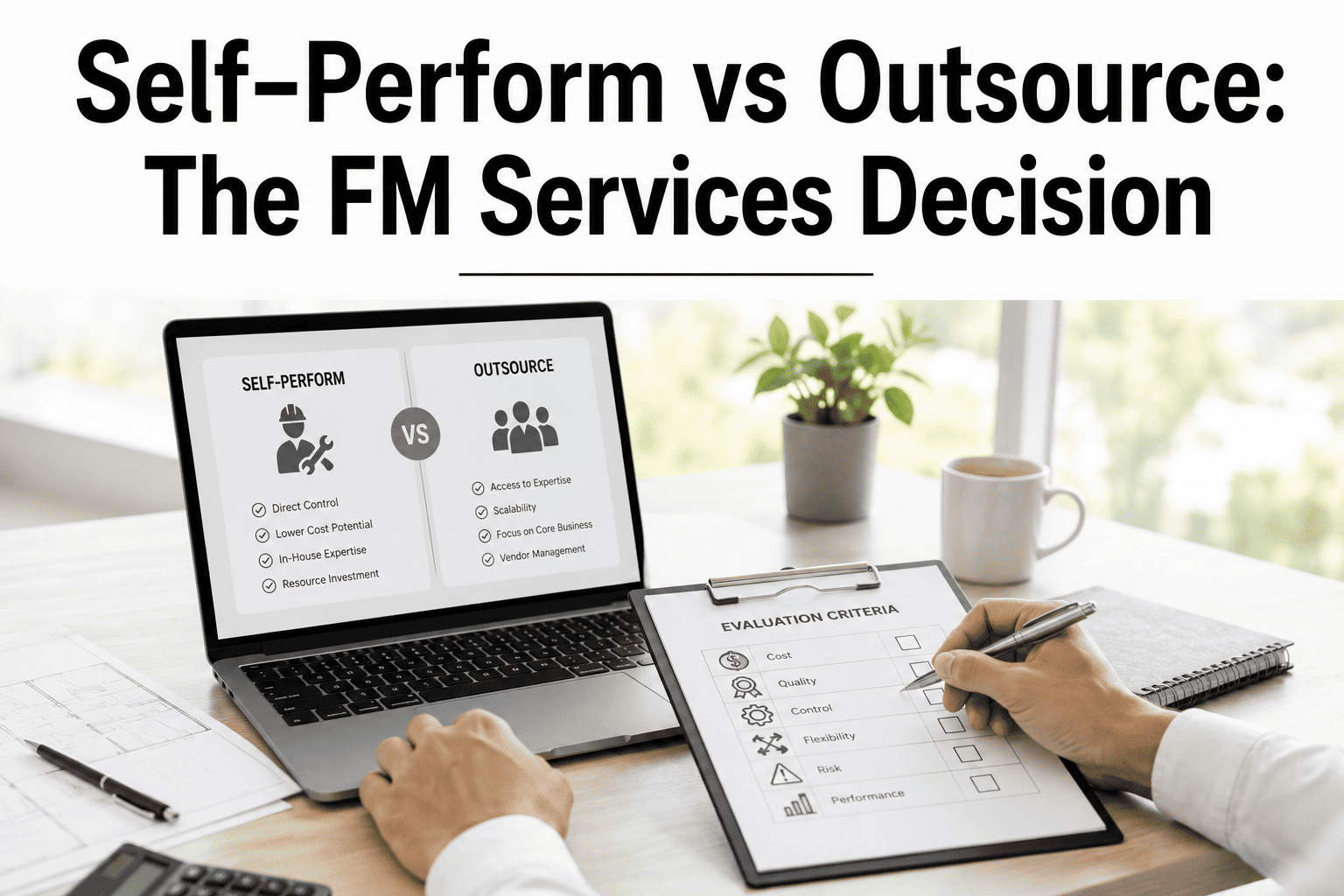
Decision scorecard
Score each factor from 1 to 5 for your site. Add weights if some matter more.
The hybrid models in between
Many organizations split services rather than choosing one side.
Performance: what to measure either way
Contract language should name measures, targets, and the data source for each.
- Response and resolution time by priority
- Planned maintenance completion rate
- Planned versus unplanned work share
- First-time fix rate and repeat failures
- Compliance task completion with evidence attached
- Cost per square meter and cost per asset class
- Occupant or tenant satisfaction
Contract terms worth negotiating
- Owner-held asset register and maintenance history
- Vendor use of the owner's work order system
- Service levels tied to measurable data
- Step-in rights and exit assistance
- Audit rights over cost pass-throughs
A transition path that limits disruption
Baseline
Document assets, current cost, and service levels before any tender.
Define scope
List services and assets in scope, with exclusions stated clearly.
Compare bids
Evaluate full cost, risk terms, and reporting, not price alone.
Pilot
Start with one site or service and review the results against agreed measures.
Govern
Hold monthly reviews using shared data from one system.
Where Oxmaint helps
- Asset management that stays with the owner
- Work orders assigned to in-house staff or vendors
- Preventive schedules and inspection records for compliance
- Dashboards and reports for service level review
- Inventory and cost tracking by asset and site
Frequently asked questions
Is outsourcing FM always cheaper?
No. Savings depend on scope, oversight cost, and change orders. Compare full cost on both sides.
Who should own maintenance records?
The facility owner. Start free to keep records in your own system.
When does in-house make more sense?
When site knowledge, quick response, and control matter more than flexibility.
What is a hybrid model?
A split where some services are outsourced and others stay internal. Book a demo to see how work is tracked across both.
How do I monitor vendor performance?
Use shared work order data and agreed measures, reviewed on a fixed monthly schedule.
Make the sourcing decision with full visibility
Track assets, work, and cost in one place, whichever model you choose.