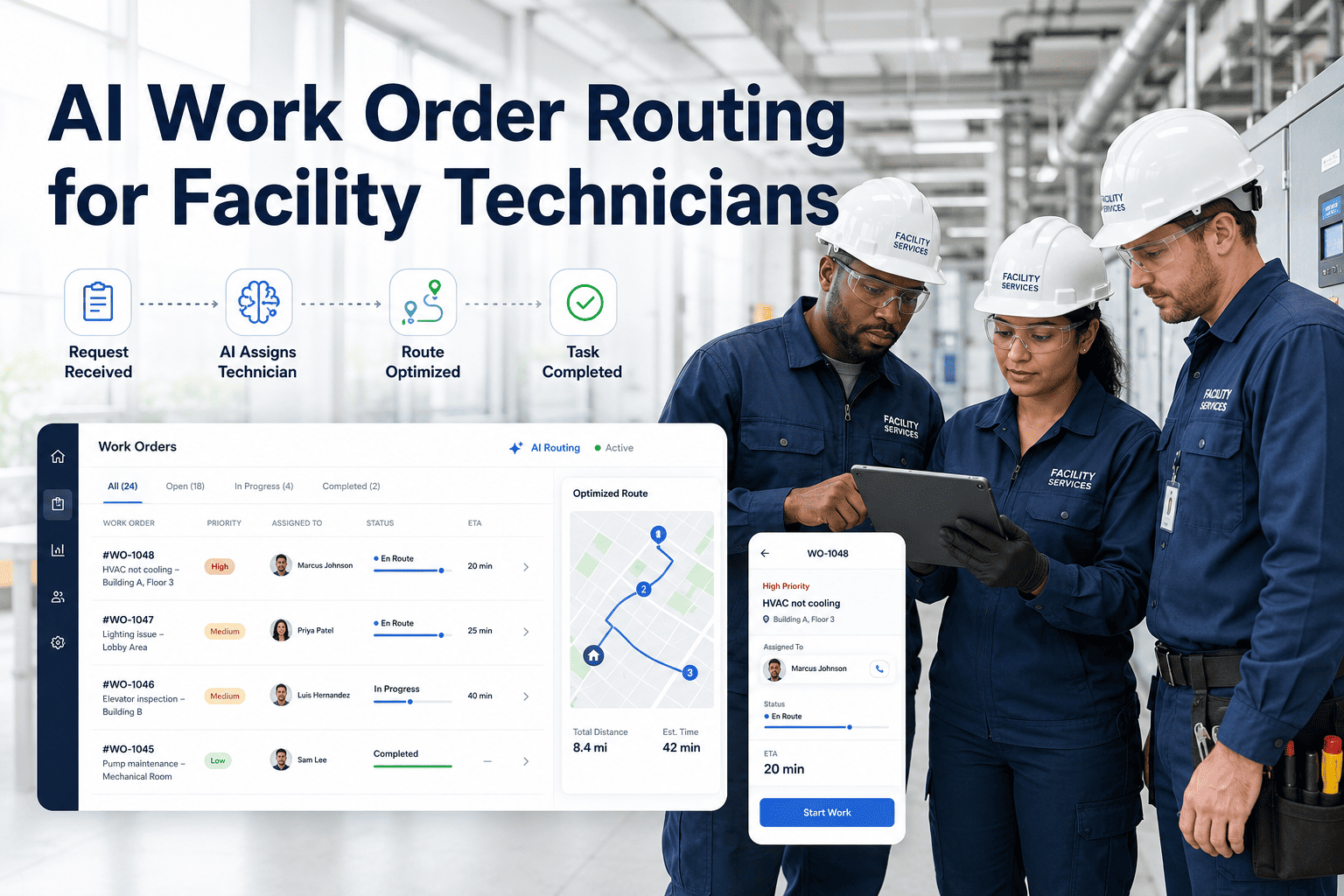
FM technician scheduling and multi-site dispatch is the single biggest lever a facilities management organization can pull to recover lost wrench time — studies consistently show technicians in multi-site portfolios spend only 25–35% of their day on actual maintenance, with the rest consumed by windshield time, poor job matching, and manual coordination. The teams that solve facility technician dispatch with automated routing, skill-based assignment, and real-time workload balancing routinely cut drive time by 20–30% and boost first-time-fix rates above 80%. This guide breaks down how modern FM dispatch optimization works, the metrics that matter, and how OxMaint's AI-powered CMMS turns a scattered multi-site schedule into a measurable productivity engine. Ready to see it on your portfolio? Start Free Trial or read on.
How much drive time is stealing from your billable wrench hours?
Across a 15-site portfolio, the average FM technician loses 90–120 minutes per day to uncoordinated travel and mismatched assignments. AI-driven facility technician routing and dispatch scheduling reclaims those hours — turning windshield time into wrench time.
Why FM technician scheduling breaks down across multiple sites
When a facilities team manages more than three or four buildings, the complexity of facility technician scheduling multi-site explodes — and spreadsheet-based dispatch becomes the bottleneck, not the solution.
The root cause is almost never the technicians — it's the scheduling system. A typical FM dispatcher juggling 12 sites, 8 technicians, and 4 skill tiers using whiteboards or spreadsheets cannot account for real-time traffic, SLA priorities, asset criticality, and parts availability simultaneously. The result: a chiller tech dispatched to an HVAC unit that needs a belt replacement, a senior electrician driving 45 minutes to a job a junior could handle, and emergency work orders stuck behind routine PMs. FM crew scheduling at this scale demands a purpose-built CMMS that optimizes all variables in parallel — not a human guessing on a grid.
Routing OptimizationHow to optimize facility technician routing for maximum wrench time
Effective FM technician routing isn't just "shortest distance" — it's a multi-variable optimization that balances travel time, SLA deadlines, skill requirements, and workload fairness across every technician in the field.
Geographic clustering and zone-based assignment
Group sites into logical zones and assign primary technicians to each zone. A 20-site portfolio across a metro area should map to 4–5 zones, reducing average drive time by 30–40% versus random assignment. OxMaint's dispatch engine auto-suggests zone boundaries based on site density and historical travel data.
Skill-tier matching to asset requirements
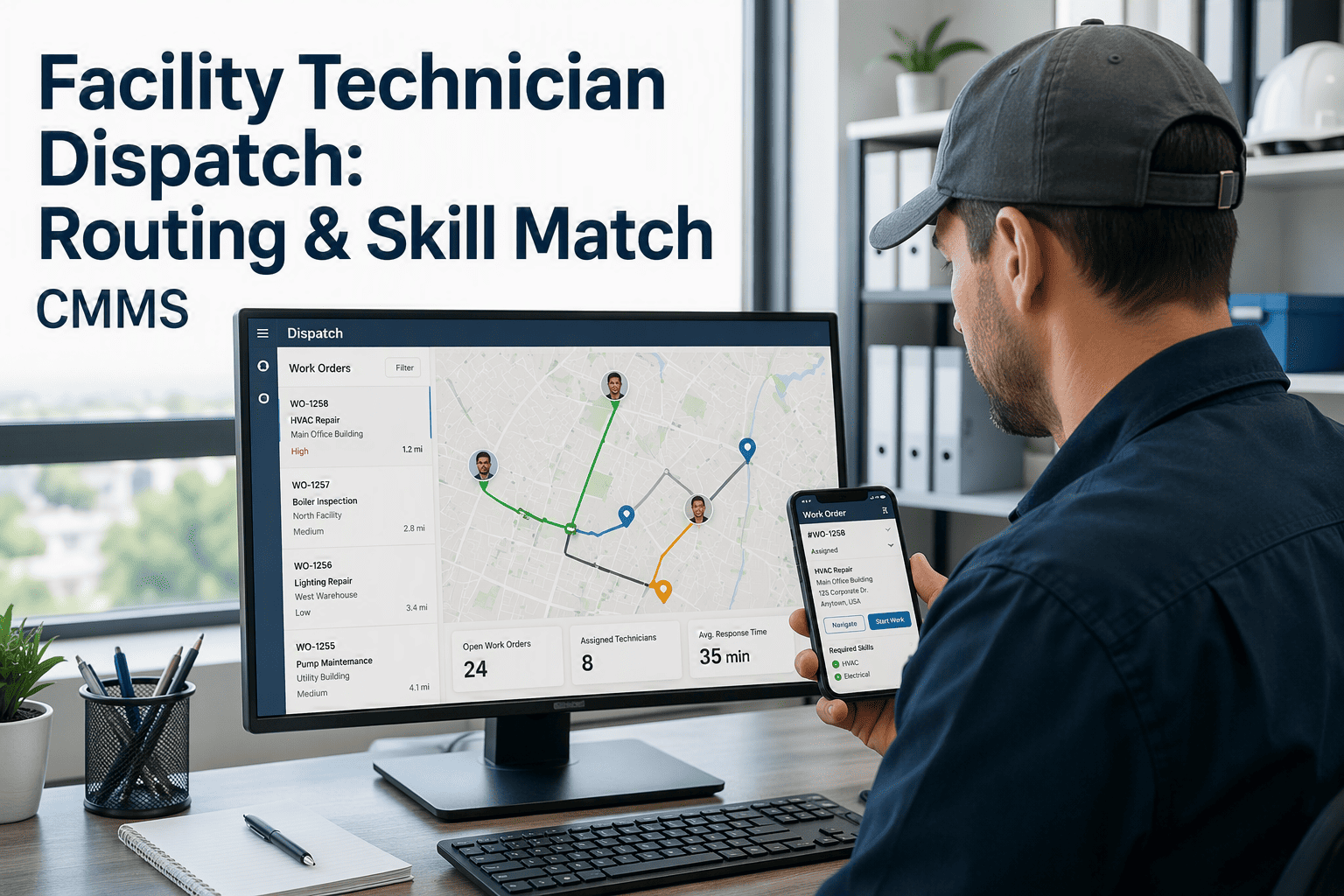
Every work order carries an asset-specific skill requirement. OxMaint matches it to technician certifications — HVAC Level 2, electrical, plumbing, universal EPA — so a senior tech isn't wasted on a filter change and a junior isn't sent to a chiller fault they can't diagnose. This alone lifts first-time-fix rates by 15–25%.
SLA-prioritized dynamic re-routing
When a priority-1 work order drops — a cooling failure in a data center, a life-safety elevator fault — the dispatch engine recalculates every technician's remaining route in real time. The closest qualified tech is redirected; lower-priority PMs are pushed to the next available window. No phone calls, no whiteboard erasing.
Workload balancing and fatigue caps
FM technician allocation must prevent burnout. OxMaint enforces daily job caps, drive-time ceilings, and consecutive-day limits per technician. The system flags when any team member exceeds 80% capacity and redistributes work before overtime or fatigue incidents occur.
Real-world FM dispatch optimization: a 15-site portfolio
Consider a facilities team managing 15 commercial buildings across a 40-mile metro area with 12 technicians and 3 skill tiers. Here's what happens when they move from spreadsheet dispatch to AI-driven FM scheduling dispatch.
| Metric | Before (Spreadsheet Dispatch) | After (OxMaint AI Dispatch) | Improvement |
|---|---|---|---|
| Average daily drive time per tech | 105 minutes | 62 minutes | -41% |
| Wrench time (% of shift) | 31% | 52% | +21 pts |
| First-time-fix rate | 64% | 83% | +19 pts |
| SLA compliance (P1 work orders) | 78% | 96% | +18 pts |
| Overtime hours per month | 186 hrs | 74 hrs | -60% |
The 15-site team above was spending roughly $310K annually on technician labor, of which nearly $130K was consumed by driving and admin overhead. After implementing OxMaint's facility routing dispatch, they recovered $180K in productive hours and reduced overtime by 60% — paying back the software investment in under 90 days. The dispatch manager reclaimed 12 hours per week previously spent on manual scheduling.
How OxMaint HelpsHow OxMaint solves FM multi-site dispatch and technician scheduling
OxMaint is an AI-powered CMMS and EAM platform built for maintenance and reliability teams that operate across multiple sites. Here's how its dispatch and scheduling capabilities directly solve the FM technician routing problem.
AI-powered route optimization
OxMaint's dispatch engine calculates the optimal daily route for every technician based on site locations, SLA priorities, real-time traffic, and skill requirements — cutting average drive time by 30–40% across multi-site portfolios.
Skill-based technician matching
Every asset in OxMaint carries a skill requirement; every technician carries a certification profile. The system auto-matches work orders to the right tier — eliminating misassigned jobs and lifting first-time-fix rates by 15–25%.
Drag-and-drop dispatch board
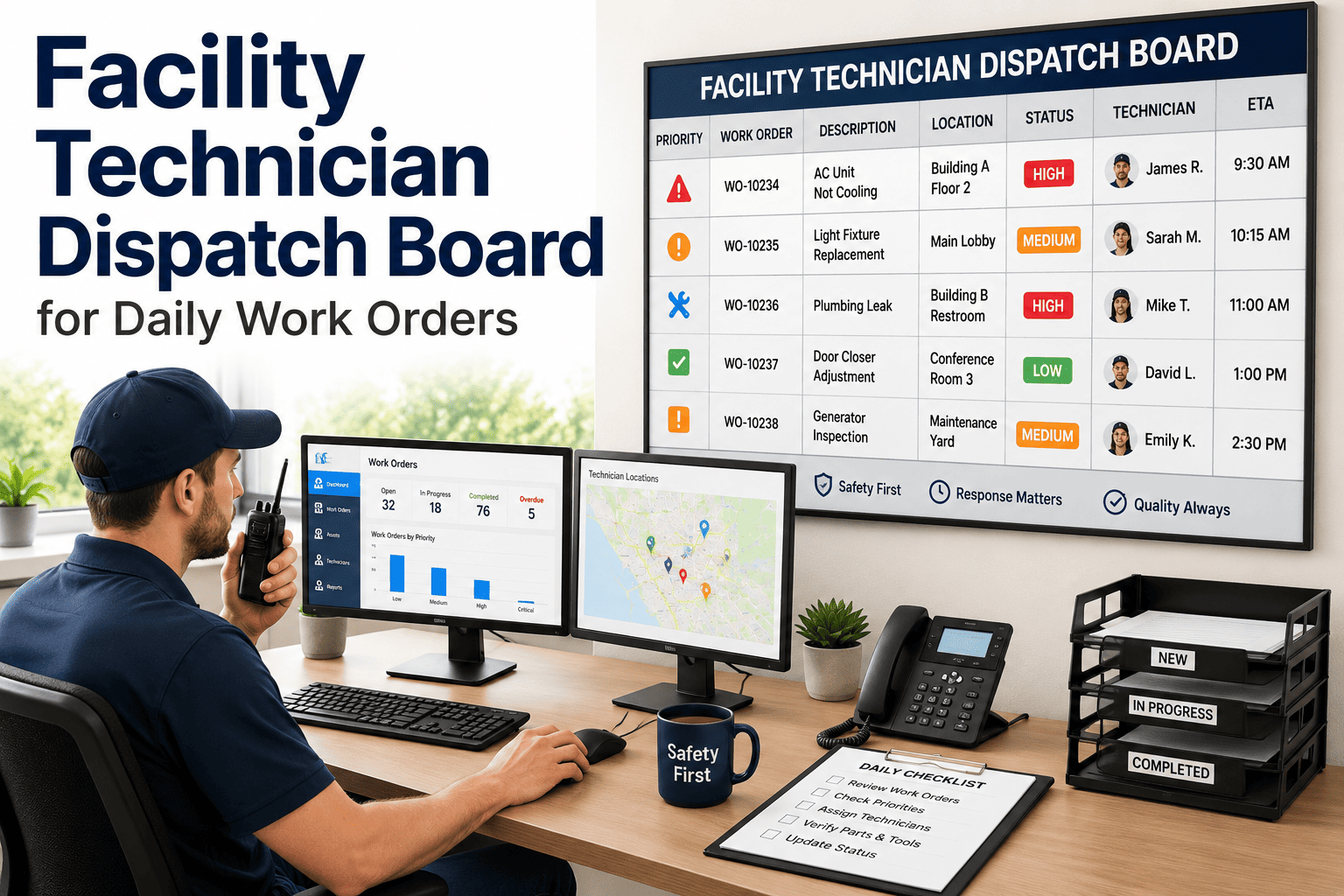
A visual, color-coded dispatch board shows every technician's capacity, location, and skill tier in real time. Drag a work order onto a tech and OxMaint validates the assignment, recalculates the route, and notifies the technician's mobile app instantly.
Real-time analytics and SLA tracking
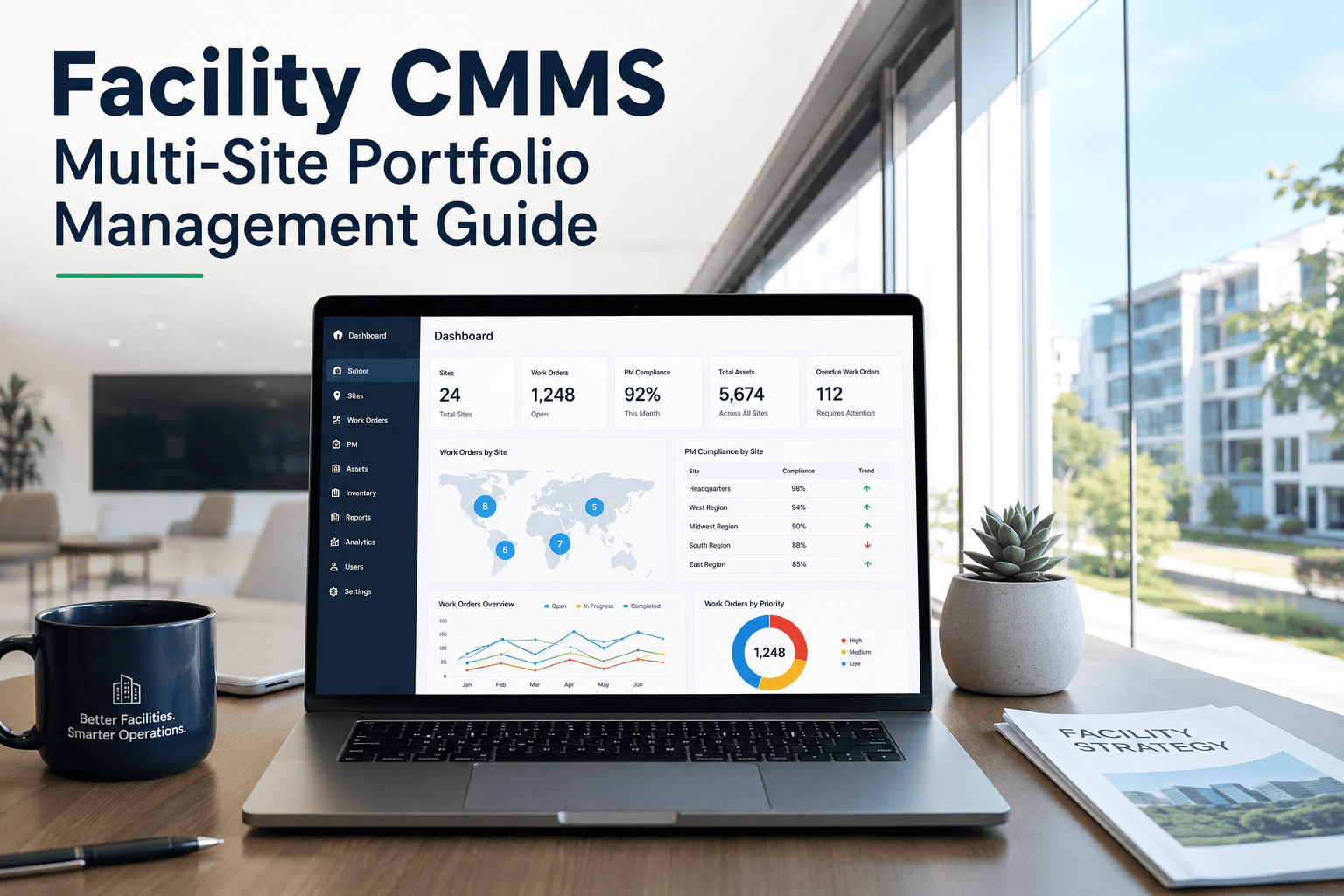
Live dashboards track drive time, wrench time, SLA compliance, and overtime by technician, site, and work-order type. Dispatchers spot bottlenecks before they become escalations, and facility managers get audit-ready reports on response times.
See OxMaint optimize your multi-site FM dispatch in 30 minutes
Book a personalized demo and we'll map your portfolio, simulate route optimization on your real site data, and show you exactly how much wrench time you'll recover.
FM technician scheduling and multi-site dispatch: your questions answered
What is FM technician scheduling and why does it matter for multi-site operations?
FM technician scheduling is the process of assigning maintenance work orders to the right technicians at the right time across a portfolio of buildings. In multi-site operations, it matters because uncoordinated dispatch causes technicians to spend 40–50% of their day driving between sites instead of performing maintenance. Optimized scheduling with a CMMS like OxMaint can recover 20–30% of that lost time, directly improving SLA compliance and reducing overtime costs. Start Free Trial to see your potential savings.
How does facility technician routing differ from single-site dispatch?
Single-site dispatch only considers priority and skill — the technician is already on-site. Multi-site facility technician routing must additionally optimize travel time, sequence site visits to minimize backtracking, account for traffic patterns, and balance workloads across geographically dispersed teams. It's a significantly more complex optimization that requires automated routing algorithms rather than manual assignment.
What features should I look for in FM dispatch scheduling software?
Look for AI-powered route optimization, skill-based technician matching, a visual drag-and-drop dispatch board, real-time mobile app notifications, SLA-priority tracking, workload balancing caps, and analytics that measure wrench time and drive time separately. OxMaint includes all of these — Book a Demo to see the dispatch board in action on a sample portfolio.
How much can FM dispatch optimization reduce travel time and costs?
Teams that implement AI-driven FM dispatch optimization typically reduce average daily drive time per technician by 30–40%, cut overtime by 50–60%, and improve first-time-fix rates by 15–25 percentage points. For a 10-technician team, that translates to $50K–$80K in recovered labor value annually, with software payback in under 90 days.
How long does it take to implement OxMaint for multi-site FM dispatch?
Most multi-site FM teams are live on OxMaint within 2–4 weeks. The onboarding includes site and asset import, technician skill-profile setup, dispatch-zone configuration, and mobile app rollout. OxMaint's team handles data migration from spreadsheets or legacy CMMS, and the drag-and-drop dispatch board is usable on day one of go-live.
Stop losing billable hours to uncoordinated dispatch
Join the FM teams recovering 20–30% of their wrench time with OxMaint's AI-powered technician scheduling and multi-site dispatch. See it on your portfolio — book a 30-minute demo today.
Free 14-day trial · No credit card