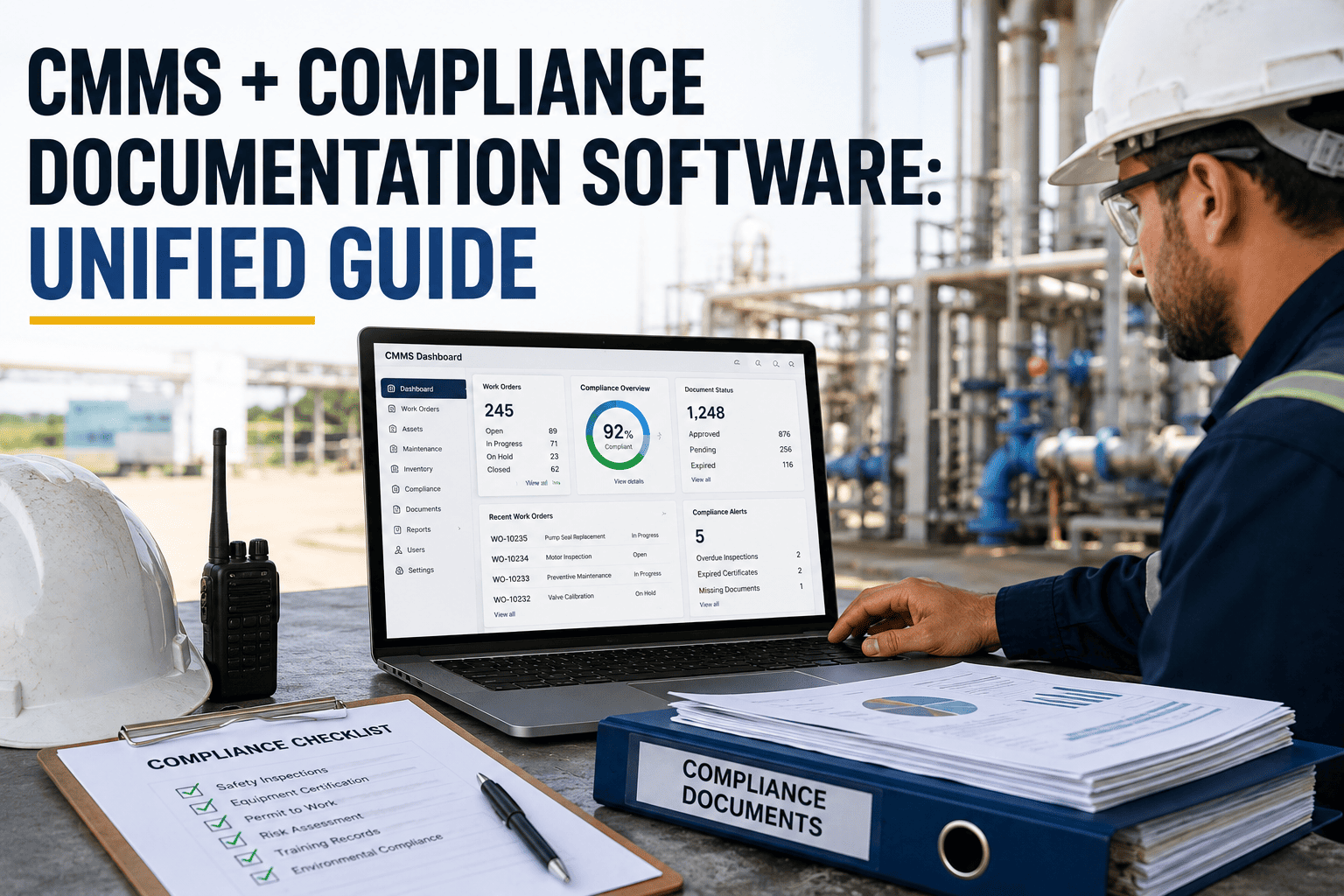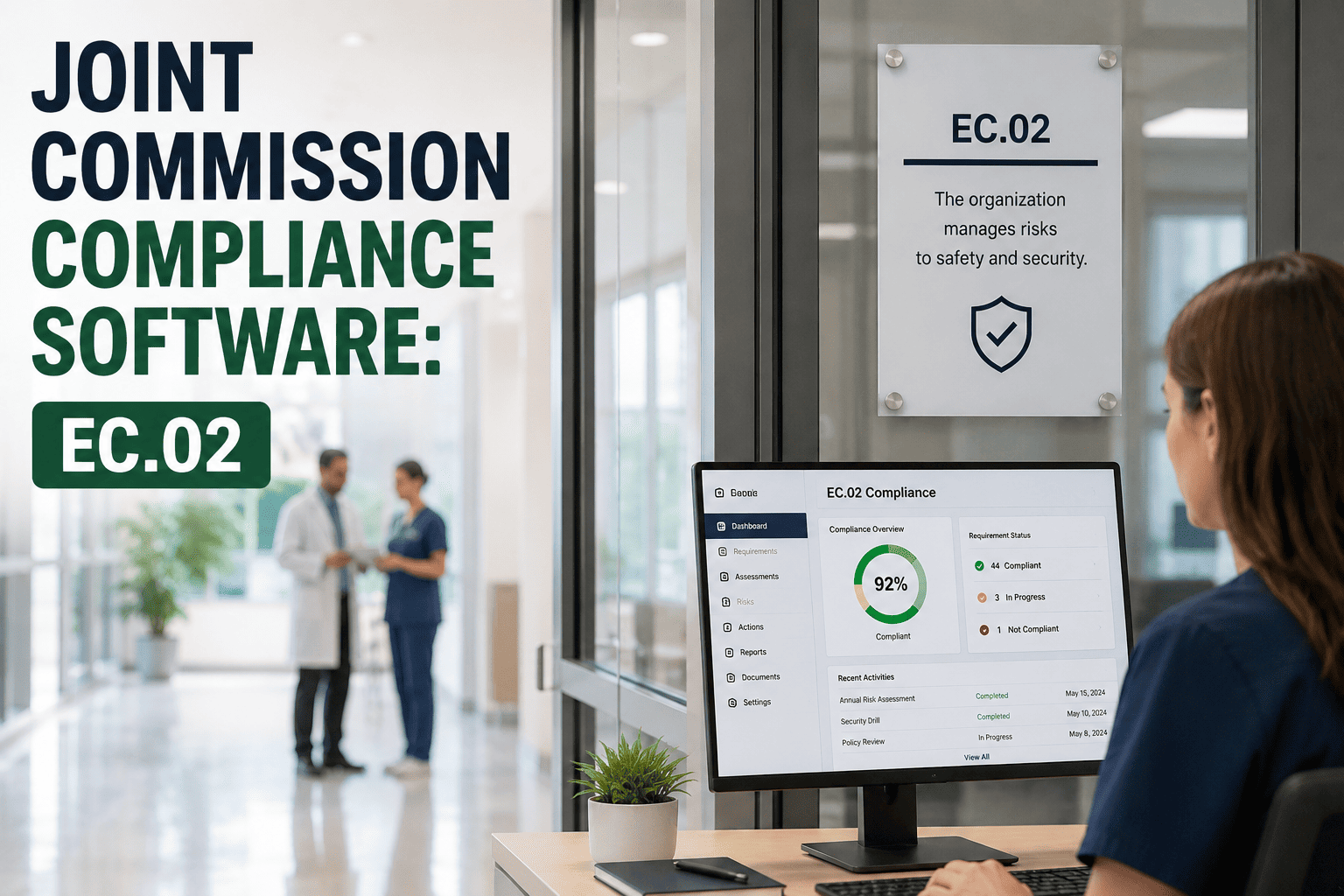
A Joint Commission survey rarely fails a hospital because equipment wasn't maintained — it fails because the maintenance happened and nobody can produce evidence of it fast enough when a surveyor asks. Environment of Care standards, commonly referenced by their EC.02 numbering, are consistently among the most frequently cited findings in Joint Commission surveys, and the pattern behind those citations is almost always the same: a real gap in documentation, not a real gap in the work. This guide breaks down which EC.02 standards get cited most often, what actually happens after a citation lands, and how facility and compliance teams are closing that documentation gap using software like OxMaint instead of a filing cabinet.
Joint Commission Compliance Software: Closing the EC.02 Documentation Gap
Which Environment of Care standards get cited most, what a Requirement for Improvement actually means for your accreditation, and how CMMS software builds the evidence trail surveyors expect on day one.
Where Hospitals Actually Get Cited
Not every EC.02 standard carries equal survey risk. A small handful of categories account for the overwhelming majority of citations, and they follow a consistent pattern year after year — missing risk assessments, gaps in preventive maintenance records, and physical environment issues that a routine round would have caught.
Note: As part of the Joint Commission's Accreditation 360 restructuring effective January 1, 2026, the Environment of Care and Life Safety chapters were consolidated into a single "Physical Environment" chapter for hospitals and critical access hospitals, with a reduced set of elements of performance. EC.02 numbering is still widely referenced and this guide uses it for clarity.
Map Every Work Order to the Standard It Satisfies
OxMaint links preventive maintenance, inspections, and corrective actions directly to EC.02 standards, so your compliance evidence builds itself instead of getting assembled the week before a survey.
What Happens After a Citation Lands
A finding during survey does not end the process — it starts a clock. Understanding the path from citation to resolution is what separates a manageable follow-up from an escalated accreditation risk.
The Records Surveyors Actually Ask to See
Surveyors expect an organized, living program — not a binder pulled together the week of survey. These are the documentation categories that come up in nearly every EC.02 review.
Paper-Based EC Programs vs a Connected CMMS
Most EC deficiencies are not caused by neglect — they're caused by evidence that exists but can't be produced fast enough, or wasn't linked to the standard it was supposed to satisfy in the first place.
| Survey Readiness Factor | Paper / Spreadsheet Program | OxMaint CMMS |
|---|---|---|
| PM record creation | Manual entry, often after the fact | Auto-generated at task completion, timestamped |
| Standard-to-record mapping | Manually cross-referenced during survey prep | Every work order linked to its EC.02 standard |
| Certification expiry tracking | Discovered when it's already overdue | Alerts at 60, 30, and 7 days before expiry |
| Corrective action follow-through | Tracked separately, easy to lose | Auto-generated work order with full audit trail |
| Survey-day report generation | Days of compiling records under pressure | Ready-to-present export in minutes |
| Year-round visibility | Only assembled right before survey | Live PM completion and deficiency dashboard |
Enter Your Next Survey Window With Nothing to Explain
OxMaint keeps your EC.02 evidence current every day, not just the week before a survey — so the visit becomes a verification, not a scramble.
Frequently Asked Questions
Your EC.02 Evidence Shouldn't Live in a Binder Nobody Can Find
Every preventive maintenance task, inspection, and corrective action your team completes should count as survey evidence the moment it's done. OxMaint makes that automatic — live in days, not a pre-survey scramble.