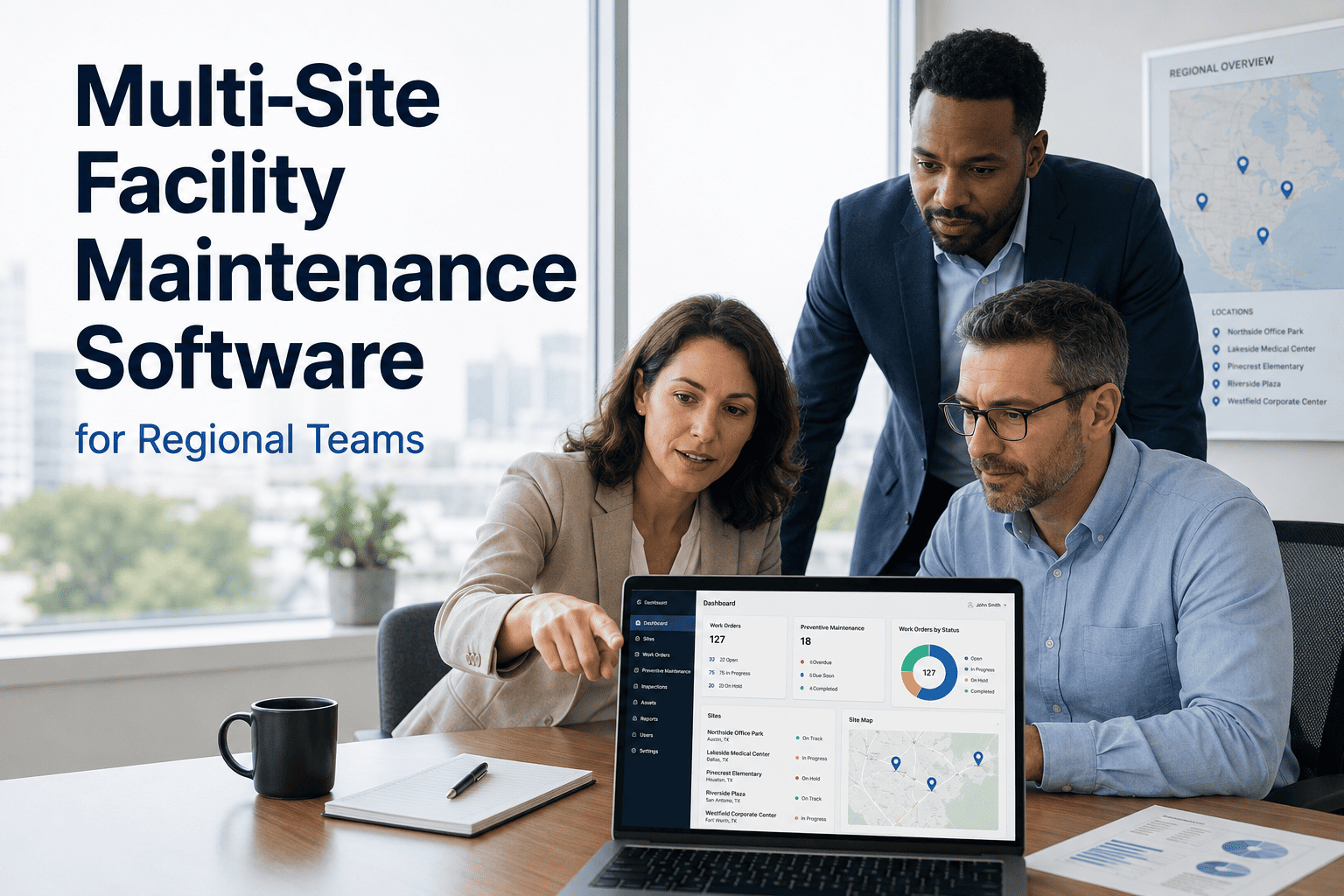
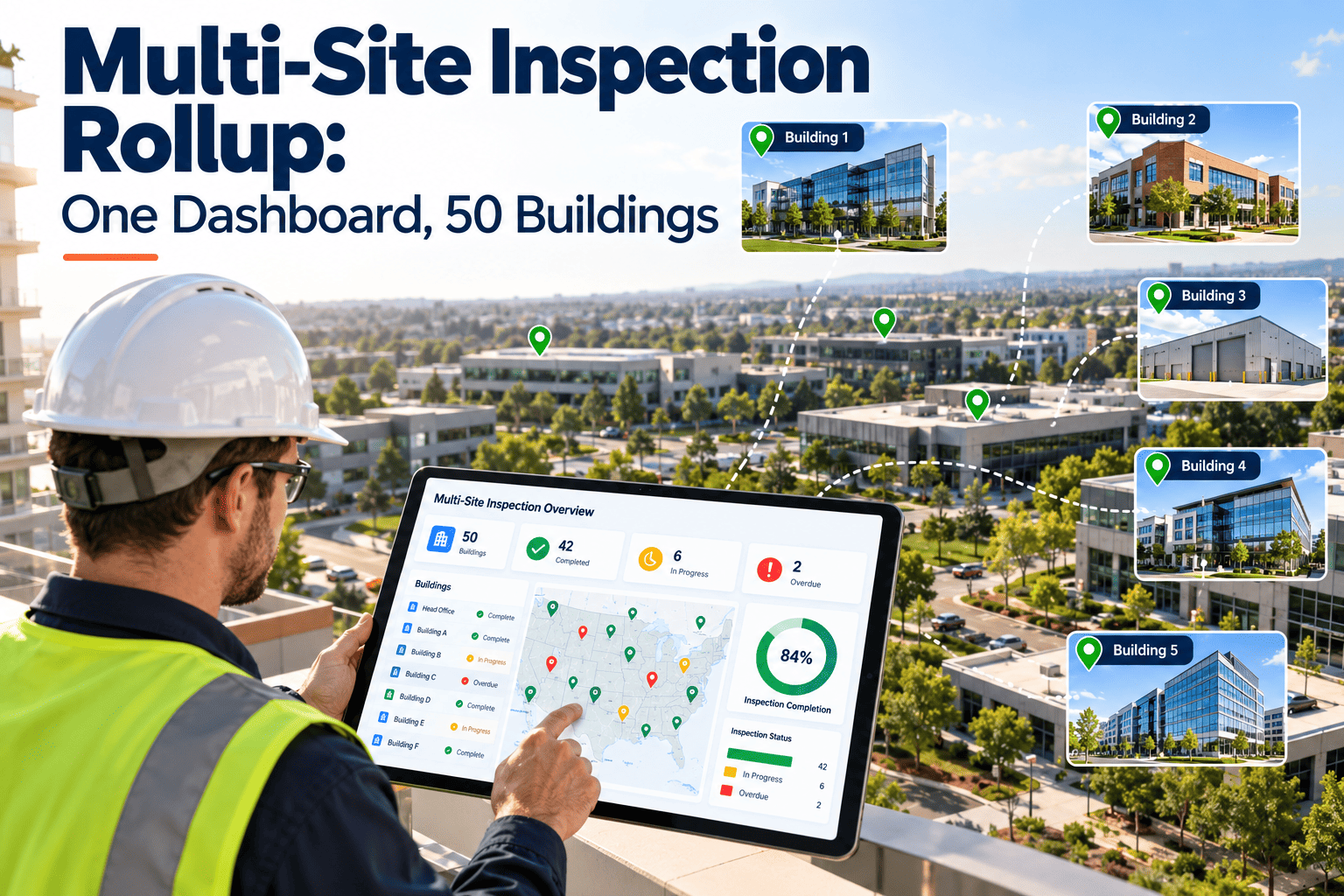
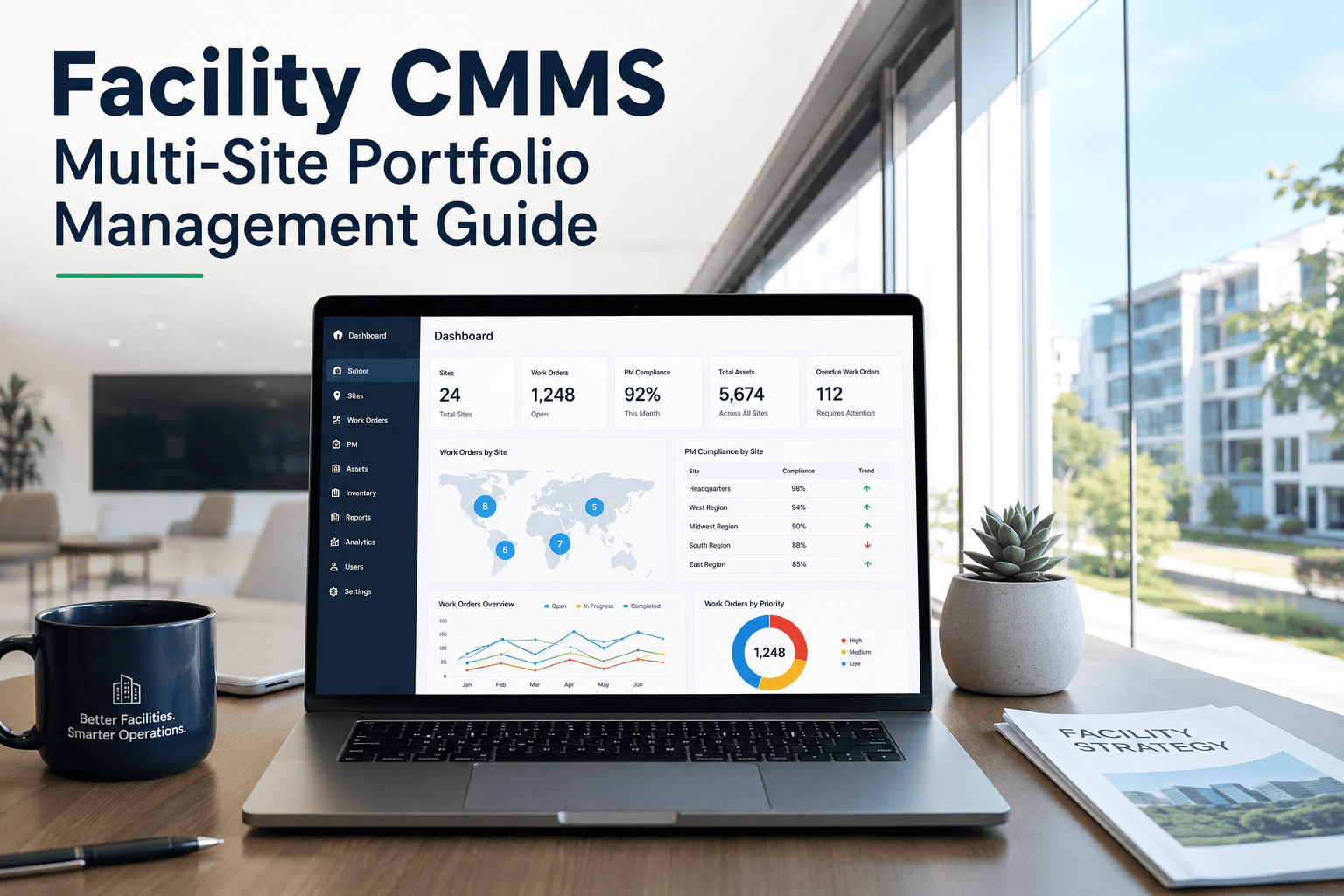
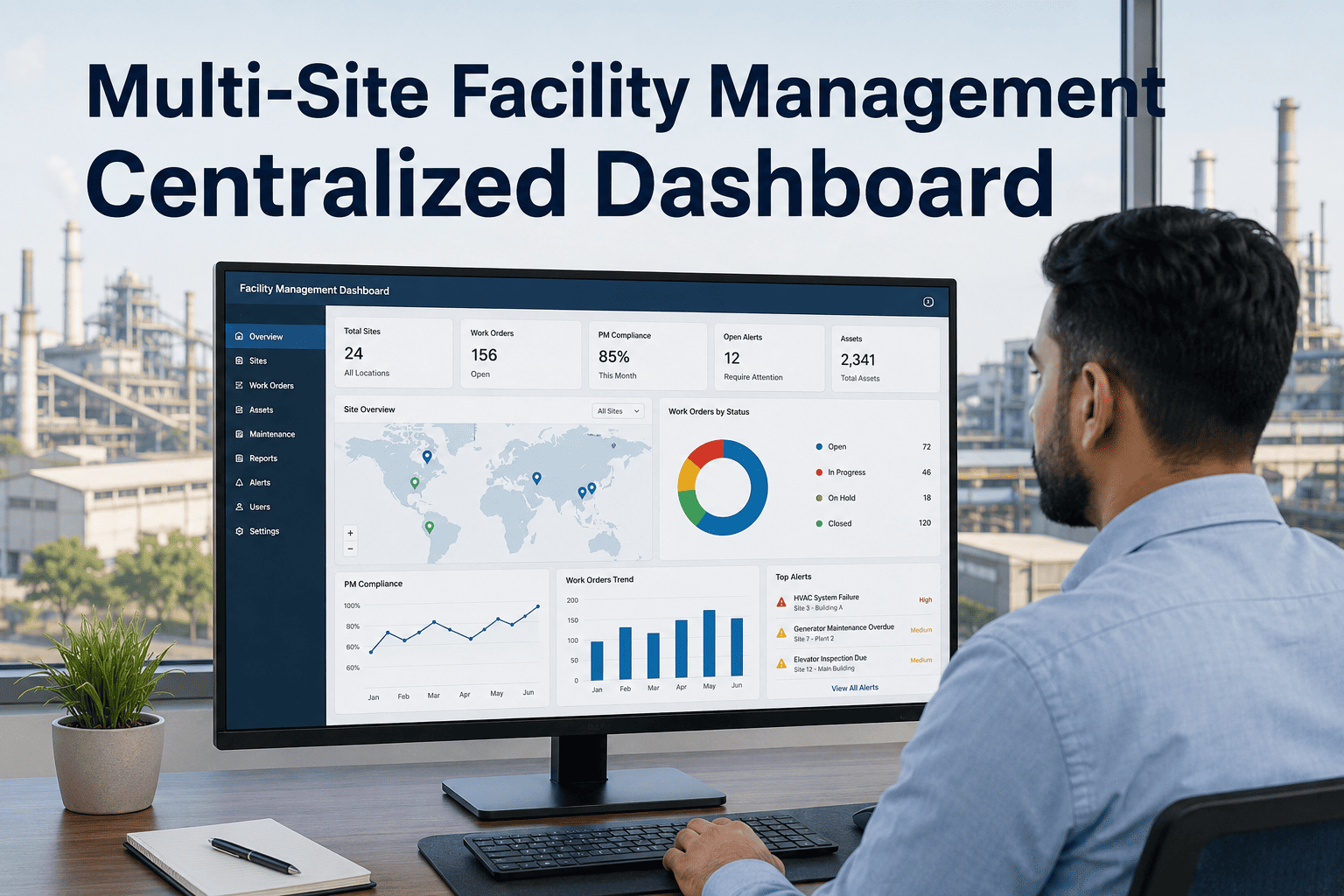
A regional VP overseeing 15 facilities asks a simple question: which site has the highest maintenance cost per square foot this quarter? Without a centralised CMMS, answering that question takes two weeks — each site manager exports their own data in their own format, a coordinator normalises the numbers, and by the time the answer arrives it is stale and no one fully trusts it. Work orders are increasing 55.7% year-over-year across the industry while workforce shortages are affecting 53% of facility management positions. The combination creates a compounding problem: more maintenance demand, fewer people to manage it, and — without a centralised platform — no visibility into where the demand is concentrated, which sites are performing, and where technician capacity should be redeployed. OxMaint Multi-Site Management gives every stakeholder in a regional facility portfolio — the VP, the regional manager, the site FM, and the field technician — a role-appropriate view of the same live data, from the same platform, with no manual report assembly. Book a demo to see the multi-site dashboard for your portfolio — or start free and onboard your first site today.
Critical Landing Page · Multi-Site Operations · Enterprise CMMS · Portfolio Management
Multi-Site Facility Maintenance Software for Regional Teams
Standardise work orders, inspections, PMs, assets, and reporting across every location — while giving each level of your organisation exactly the visibility they need, in real time, without manual data assembly.
$5.38M
Annual saving on a 1M sq ft portfolio from centralising maintenance in OxMaint
21 days
Average time to full portfolio configuration — all sites, assets, PM schedules live
88%
Of facilities with enterprise CMMS report significant cost savings (Accruent 2025)
One Platform. Four Role Views. Every Stakeholder Sees What They Need.
OxMaint Multi-Site Management uses role-based access to give each level of your organisation the right scope of data — without exposing operational detail to those who need the portfolio view, or overwhelming field technicians with cross-site reporting they do not need.
VP / Director of Facilities
Scope: All sites · Full portfolio
Portfolio-level KPI dashboard — PM compliance %, reactive work ratio, cost per sq ft across all sites
Site-vs-site benchmarking — identify underperforming locations before the next board report
Capital replacement forecast — 5-year spend projection across all assets, all sites
Compliance status — which sites have open regulatory gaps, overdue inspections, or pending certifications
Regional Manager
Scope: Assigned region — 3–8 sites
Regional PM completion rate and open WO backlog across all assigned sites
SLA performance by site — response and resolution times vs targets
Technician utilisation across the region — where capacity is available for redeployment
Escalated P1 and P2 work orders from any site in their region — immediate visibility
Site Facilities Manager
Scope: Single building or campus
Full work order queue for their site — assigned, open, overdue, completed
PM schedule calendar — upcoming PMs by week and month
Asset register and condition scores for their building
Site compliance report — inspection certificates, upcoming audits, outstanding items
Field Technician
Scope: Assigned work orders · Mobile
Today's assigned work orders — prioritised and sequenced by location
Asset history via QR scan — full record before touching the equipment
Checklist completion with mandatory photo evidence — on-device, offline-capable
Parts request and completion sign-off — all from mobile, no office visit required
The Multi-Site Problems OxMaint Solves
Without OxMaint
Each site names assets differently — "AHU-1", "Air Handler Unit A", "HVAC 1 Office" — all referring to the same asset class. Cross-site reports are incomparable.
→
With OxMaint
Asset taxonomy defined once at portfolio level and deployed to all sites. Every AHU in the portfolio is named and classified identically — cross-site benchmarking becomes automatic.
Without OxMaint
Site 3 defines "P1" as "requires response within 4 hours." Site 7 defines "P1" as "any WO I think is urgent." Portfolio response time data is meaningless.
→
With OxMaint
Priority definitions, SLA targets, and escalation rules set centrally — applied identically at every site. Regional managers compare response times knowing they are measuring the same thing.
Without OxMaint
HVAC quarterly PM template created 15 different ways by 15 site FMs — with 15 different quality levels, 15 different checklist lengths, and 15 different documentation standards.
→
With OxMaint
Best-practice PM template created once at corporate level, deployed to all 15 sites in one action. Updates to the template propagate to all sites automatically.
Without OxMaint
Regional VP asked for "PM compliance across all sites." Answer requires each site manager to export data, regional coordinator to normalise it, analyst to compile it — 2 weeks minimum.
→
With OxMaint
VP opens OxMaint portfolio dashboard. PM compliance by site, updated in real time, displayed in under 5 seconds. No request needed. No wait. No manual assembly.
Your Facilities Are Already Generating Maintenance Data. OxMaint Makes It Portfolio Intelligence.
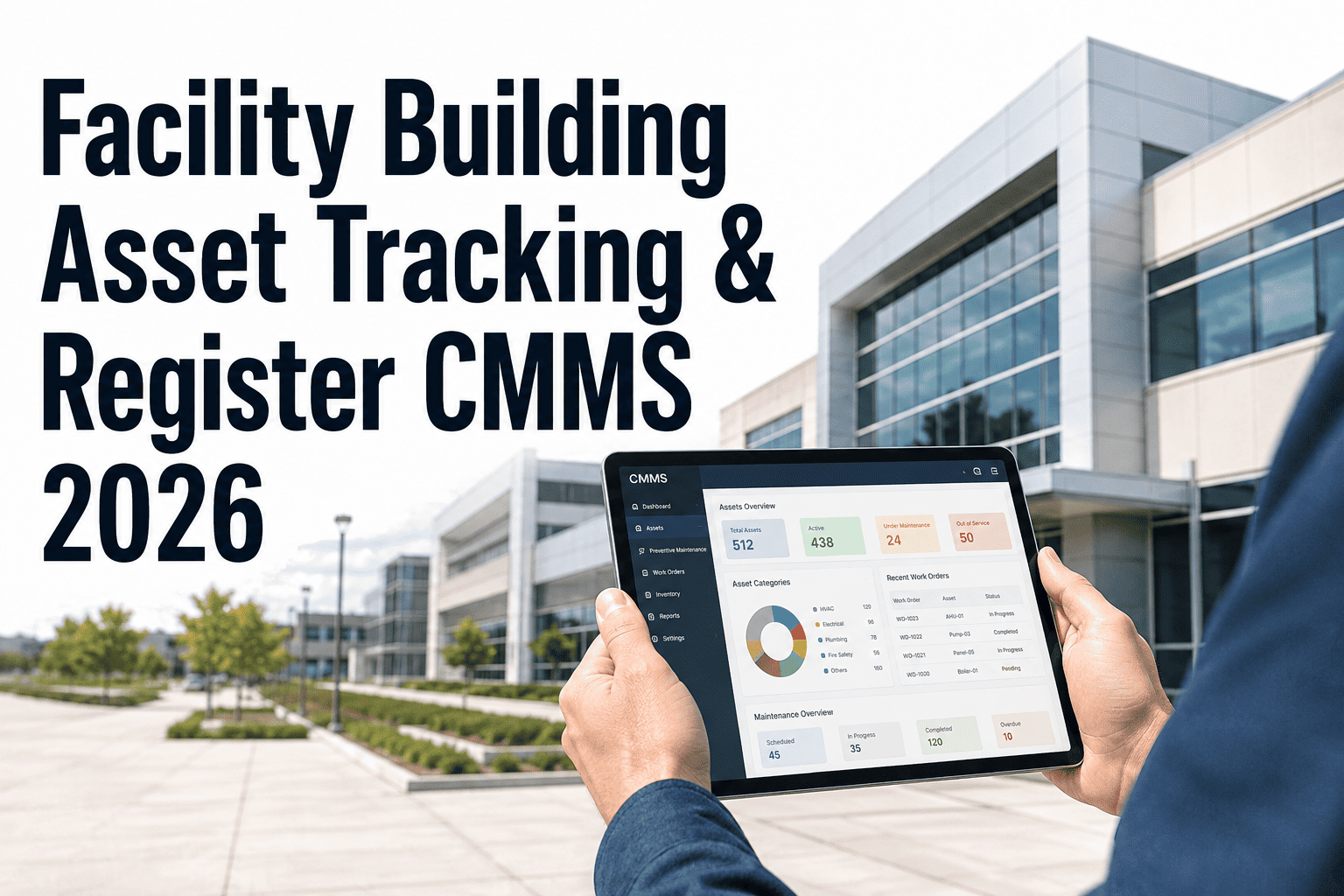
OxMaint Multi-Site Management centralises work orders, PM schedules, asset records, inspection history, and compliance documentation from every site into one platform — with role-based dashboards that give each stakeholder the visibility they need, in real time, without manual data assembly.
Portfolio-Level KPIs That OxMaint Tracks Across All Sites
| KPI |
What It Measures |
Portfolio Target |
Red Flag |
OxMaint Dashboard |
| PM Compliance Rate |
% of scheduled PMs completed within the window, by site |
>90% all sites |
Any site below 75% — investigate immediately |
Live bar chart per site · Weekly trend · Drill down to individual overdue PMs |
| Reactive Work Ratio |
% of total WOs that are unplanned emergency or corrective |
<20% portfolio-wide |
Any site above 40% — PM programme is failing |
Trend line per site · Flag when ratio rising 2 consecutive months |
| Cost per Square Foot |
Total maintenance spend normalised by floor area per site |
Portfolio benchmark ±15% |
Sites 30%+ above portfolio average — cost driver investigation |
Quarterly comparison across all sites · Flag outliers automatically |
| Mean Time to Respond (MTTR) |
Average time from P1 WO creation to first technician response |
P1 <4 hrs · P2 <24 hrs |
Any site consistently missing SLA target — escalate to regional manager |
SLA status per site · Escalation alert when threshold missed 3 times in 30 days |
| Open WO Age Profile |
Age distribution of open work orders — days since creation |
No P1/P2 WO open >7 days |
Any P1/P2 WO open >48 hrs without update — auto-escalation to VP dashboard |
Portfolio WO age heat map · Escalation trigger configured per priority level |
| Inspection Compliance |
% of scheduled inspections completed on time across all sites |
>95% all compliance inspections |
Any mandatory inspection overdue — compliance risk flag |
Inspection calendar by site · Regulatory compliance status per jurisdiction |
Expert Review
"The fundamental reason multi-site facility management fails without a centralised CMMS is not that individual site teams are doing bad work. It is that the data those teams generate is incomparable. When Site 12 classifies every work order as urgent and Site 31 barely touches the system, the 'average response time across all sites' that the regional VP asks for is not a real number — it is a statistical artefact of inconsistent inputs. The value of a multi-site CMMS is not primarily the software features. It is the governance layer the software enforces: shared asset taxonomies that make every AHU in the portfolio the same data object, shared priority definitions that make P1 at every site mean the same thing, shared PM templates that make HVAC quarterly maintenance produce comparable outputs everywhere. Once that governance layer is in place, the cross-site benchmarking that was previously impossible becomes trivial — because the data is actually comparable. That shift — from incomparable site-specific data to a real portfolio intelligence layer — is what moves the regional conversation from 'why did we miss our target at Site 7?' to 'what is Site 7 doing differently that we should replicate everywhere?' Those are very different conversations, and only one of them is available to organisations with a centralised multi-site CMMS."
Sandra Okafor, CFM, RPA
Certified Facility Manager · Real Property Administrator · 19 years multi-site facility operations · Former VP Facilities, 400+ location portfolio · Specialist in enterprise CMMS implementation, multi-site data governance, and portfolio-level maintenance analytics
Frequently Asked Questions
How quickly can a regional team onboard all sites into OxMaint?
Most multi-site portfolios complete full OxMaint configuration — all sites, assets, PM schedules, SLA rules, and compliance tracking live — within 21 days using OxMaint's site template library. The recommended approach is a pilot-first deployment: onboard the first site in 5–7 days, validate that the taxonomy, PM templates, and SLA rules work for your portfolio, then replicate the configured site to all remaining locations. This replication process is the core multi-site advantage: the work done to configure Site 1 does not need to be repeated for Sites 2–15. For very large portfolios (50+ sites), a phased regional rollout — deploying one region at a time over 60–90 days — typically produces better adoption outcomes than simultaneous deployment across all locations.
Book a demo to see the OxMaint multi-site onboarding workflow for your portfolio size.
Can different sites have different compliance requirements while sharing a single platform?
Yes — each site in OxMaint is configured with its local jurisdiction and regulatory requirements independently. US sites may follow NFPA codes; UK sites follow BS standards; Australian sites follow AS/NZS standards — each generates the appropriate compliance schedule and documentation format for its jurisdiction. At the portfolio level, OxMaint rolls up compliance status from all jurisdictions into a single view that shows whether each site is compliant within its own regulatory framework, without requiring the portfolio-level view to understand the specifics of each local code. This is particularly important for international portfolios or US portfolios spanning multiple states with different elevator, fire safety, or electrical inspection requirements.
Start free to configure your first site's compliance requirements.
How does OxMaint handle technician dispatch across multiple sites?
OxMaint supports three technician assignment models simultaneously: site-based assignment — technicians assigned to a specific site see only that site's work orders; regional pool assignment — technicians available across multiple sites within a region, with the regional manager assigning work orders based on location and availability; and specialist assignment — specific technicians (elevator service, HVAC specialists) assigned to work order types across all sites, regardless of location. The regional manager's dashboard shows technician utilisation across the region — identifying where capacity is available for cross-site redeployment and where demand peaks require contractor support. OxMaint mobile works offline for technicians in buildings with poor connectivity — completed work orders sync automatically when connectivity is restored.
What cross-site reporting does OxMaint generate without manual data assembly?
OxMaint generates the following cross-site reports automatically, without any manual data compilation: portfolio PM compliance report — PM completion rate by site, by asset class, and by compliance category, for any date range; SLA performance report — response and resolution time by site, by priority level, and by work order type; cost per square foot comparison — total maintenance spend normalised by floor area, site by site, with portfolio average and outlier flagging; reactive vs planned work ratio — portfolio-wide and per-site trend over 3, 6, or 12 months; capital replacement forecast — projected replacement spend per site per year, consolidated into a portfolio 5-year plan; and inspection compliance status — all scheduled inspections by site, with certificates attached and overdue items flagged. All reports are exportable for board, investor, or regulatory reporting.
MULTI-SITE MANAGEMENT · ENTERPRISE CMMS · OXMAINT
Stop Managing Sites. Start Managing a Portfolio.
OxMaint Multi-Site Management gives your VP a portfolio dashboard, your regional managers a region view, your site FMs a building view, and your technicians a mobile work queue — all from the same platform, with the same live data, and no manual report assembly at any level of the organisation.