Occupant comfort management is the operational discipline that separates facilities running on reactive complaint tickets from those delivering consistent thermal and acoustic comfort building-wide. When facility comfort complaints pile up without a structured resolution workflow, trust erodes, repeat calls multiply, and HVAC issues stay buried until they become costly emergency repairs. This guide maps how modern FM teams transform comfort complaint FM from a source of chronic frustration into a systematic, data-driven process. Discover how OxMaint's AI-powered CMMS streamlines complaint intake, root-cause diagnosis, and resolution tracking — then Start Free Trial to experience it on your assets today.
Too hot, too cold, too loud — the complaints never stop.
Facility comfort complaints consume up to 40% of FM staff time. Without a structured resolution workflow, repeat calls multiply and trust erodes. OxMaint turns comfort complaint FM into a systematic, data-driven discipline — so your team resolves issues faster and prevents the next call.
Why traditional facility comfort complaint workflows fail
Most FM teams log occupant complaint management tickets via email, phone, or disconnected spreadsheets. The result: lost context, duplicated effort, and a mean-time-to-resolution that stretches 3-5 days for simple thermal comfort facility management issues — longer for acoustic comfort FM problems requiring specialized diagnostics.
Reactive Ticket Logging
Phone calls and emails create fragmented records. Maintenance dispatchers lack real-time visibility into active building comfort complaints, leading to duplicated work orders and missed SLAs.
No Root-Cause Tracking
When comfort complaint FM issues are "resolved" without diagnosing underlying causes, the same zone generates repeat calls. HVAC valve failures, duct leaks, and sensor drift go undetected for months.
Zero Analytics Loop
Without data on complaint frequency by zone, asset, or season, facility thermal comfort patterns stay invisible. FM leaders cannot justify HVAC upgrades or predict the next wave of occupant satisfaction comfort complaints.
How to manage thermal comfort complaints FM systematically
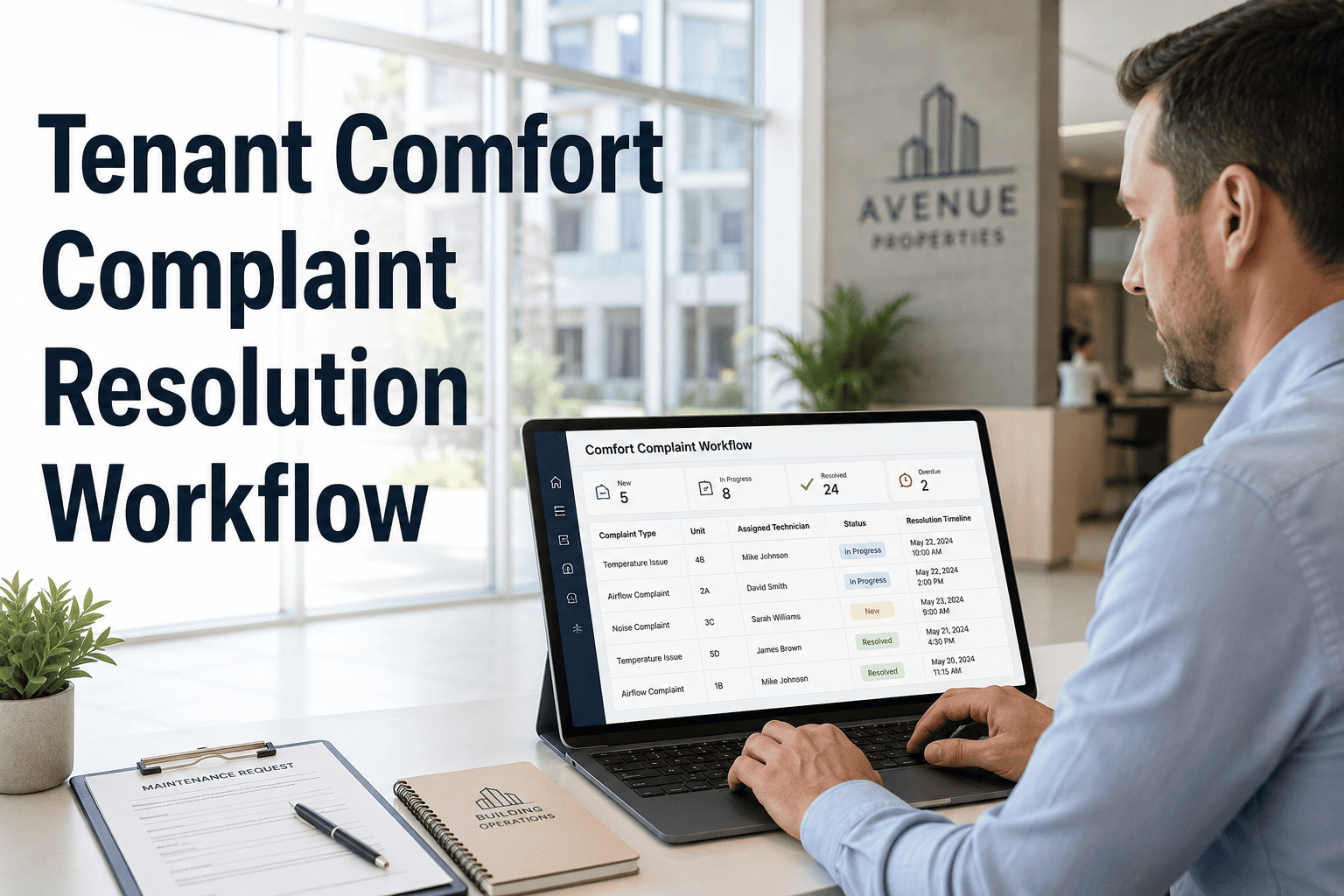
A structured comfort management facility workflow moves from complaint intake to closure in five repeatable stages. Teams using OxMaint's CMMS cut average resolution time by 50-60% and reduce repeat complaints by 35% within the first quarter.
Structured Complaint Intake
Capture every building occupant comfort complaint via mobile portal, email-to-ticket, or QR code at the zone. Auto-tag by type (thermal, acoustic, air quality), priority, and location — no more phone-tag.
Automated Dispatch & Triage
OxMaint routes thermal comfort complaints to the right technician based on skill, proximity, and workload. SLA timers start immediately — escalations trigger automatically if response targets slip.
Root-Cause Diagnosis
Technicians log findings via mobile checklist: sensor readings, valve positions, airflow measurements, noise levels. OxMaint attaches this data to the asset history for pattern analysis.
Resolution & Verification
Work order closure requires comfort verification — temperature delta, dB readings, or occupant confirmation. No ticket closes without proof the comfort complaint FM issue is genuinely resolved.
Preventive Loop Closure
Recurring thermal acoustic comfort building complaints auto-generate preventive maintenance tasks. OxMaint's predictive analytics flag failing assets before the next comfort complaint is ever filed.
What unmanaged building comfort complaints really cost your facility
Occupant complaint management isn't just about satisfaction scores — it directly impacts operational budgets, asset lifespan, and lease renewal rates. A 500,000 sq ft office building averaging 12 comfort complaints per week loses an estimated $48,000 annually in wasted technician hours, emergency HVAC repairs, and tenant churn.
OxMaint capabilities that eliminate occupant comfort complaints
OxMaint's AI-powered CMMS and EAM platform transforms occupant comfort FM from reactive ticket-chasing into a predictive, data-driven discipline. Here's how four core capabilities map directly to comfort complaint resolution.
Smart Complaint Intake Portal
QR-code and mobile portal intake auto-categorizes facility comfort complaints by zone, type, and urgency. Cuts ticket logging time by 70% and eliminates dispatch ambiguity.
SLA-Driven Work Order Routing
Automated dispatch assigns thermal comfort complaints to the nearest qualified technician with real-time workload visibility. SLA breach alerts prevent comfort issues from escalating.
Asset-Linked Diagnostic History
Every comfort complaint FM ticket attaches to the specific HVAC or acoustic asset. Technicians see full repair history, sensor trends, and past interventions before arriving on-site.
Predictive Comfort Analytics
AI pattern detection identifies zones trending toward thermal acoustic comfort building failures before complaints spike. Auto-generates preventive work orders on anomaly detection.
A 12-floor office complex eliminates repeat thermal complaints in 90 days
Consider a 280,000 sq ft commercial facility managing 1,200 assets and averaging 14 thermal comfort complaints weekly. Their FM team used email-based ticketing — no asset linkage, no SLA tracking, no analytics. Here's what changed when they deployed OxMaint.
- 14 complaints/week — 6 were repeat calls for the same zones
- Average resolution: 4.5 days per thermal comfort facility management ticket
- $52K/yr wasted on redundant dispatches and emergency HVAC callouts
- Zero visibility into seasonal comfort complaint FM patterns
- Complaint volume dropped to 5/week — repeat calls eliminated by 80%
- Average resolution: 1.2 days — SLA compliance hit 94%
- $31K saved in Q1 alone on dispatch efficiency and preventive interventions
- OxMaint analytics flagged 3 failing VAV boxes before occupant impact
"Within one quarter, OxMaint turned our comfort complaint chaos into a closed-loop system. We stopped chasing the same temperature complaints and started preventing them."
— Facilities Director, 280K sq ft Commercial PortfolioSee OxMaint resolve your comfort complaints — book a 30-min demo
Stop logging comfort tickets into a void. Discover how AI-powered complaint intake, SLA routing, and predictive analytics cut resolution time by 50% and prevent repeat calls.
Occupant comfort complaint management — answered
What is occupant comfort management in facility operations?
Occupant comfort management is the systematic process FM teams use to intake, diagnose, resolve, and prevent thermal, acoustic, and air-quality complaints across a building. Unlike ad-hoc ticketing, it links every comfort complaint to specific assets, tracks resolution SLAs, and uses analytics to identify recurring patterns — turning reactive firefighting into a preventive operational discipline.
How does a CMMS improve thermal comfort complaint resolution?
A CMMS like OxMaint automates complaint intake via mobile portals, routes tickets to qualified technicians by skill and proximity, and enforces SLA timers. It attaches diagnostic data and repair history to each HVAC asset, so technicians arrive prepared. Teams using OxMaint cut mean-time-to-resolution by 50-60% and reduce repeat comfort complaints by 35% within the first quarter.
How do you track and measure occupant satisfaction comfort in buildings?
Track complaint volume per zone, mean-time-to-resolution, repeat-complaint rate, and SLA compliance percentage. OxMaint's analytics dashboard surfaces these KPIs in real time, alongside asset-level data like temperature sensor trends and HVAC runtime hours. You can Start Free Trial to see your building's comfort baseline within 24 hours of deployment.
What are the most common causes of facility thermal comfort complaints?
The top causes are HVAC sensor drift, VAV box malfunctions, stuck zone valves, duct leakage, and inadequate insulation in perimeter zones. Acoustic comfort FM complaints typically stem from failing mechanical equipment, undersized sound attenuation, or vibration transfer. OxMaint's asset-linked diagnostic history helps technicians identify these root causes on the first visit instead of treating symptoms.
Can OxMaint prevent comfort complaints before occupants report them?
Yes. OxMaint's predictive analytics engine monitors HVAC asset sensor data, runtime patterns, and maintenance history to detect anomalies that precede comfort failures. When a VAV box begins trending outside its normal performance envelope, OxMaint auto-generates a preventive work order — resolving the issue before any occupant notices a temperature change. Teams report a 30-50% reduction in unplanned comfort breakdowns after implementation.
Transform comfort complaints into a resolved operational discipline
Join FM teams cutting resolution times by 50%, eliminating repeat calls, and preventing comfort failures with OxMaint's AI-powered CMMS. Deploy in days — not months.
Free 14-day trial · No credit card