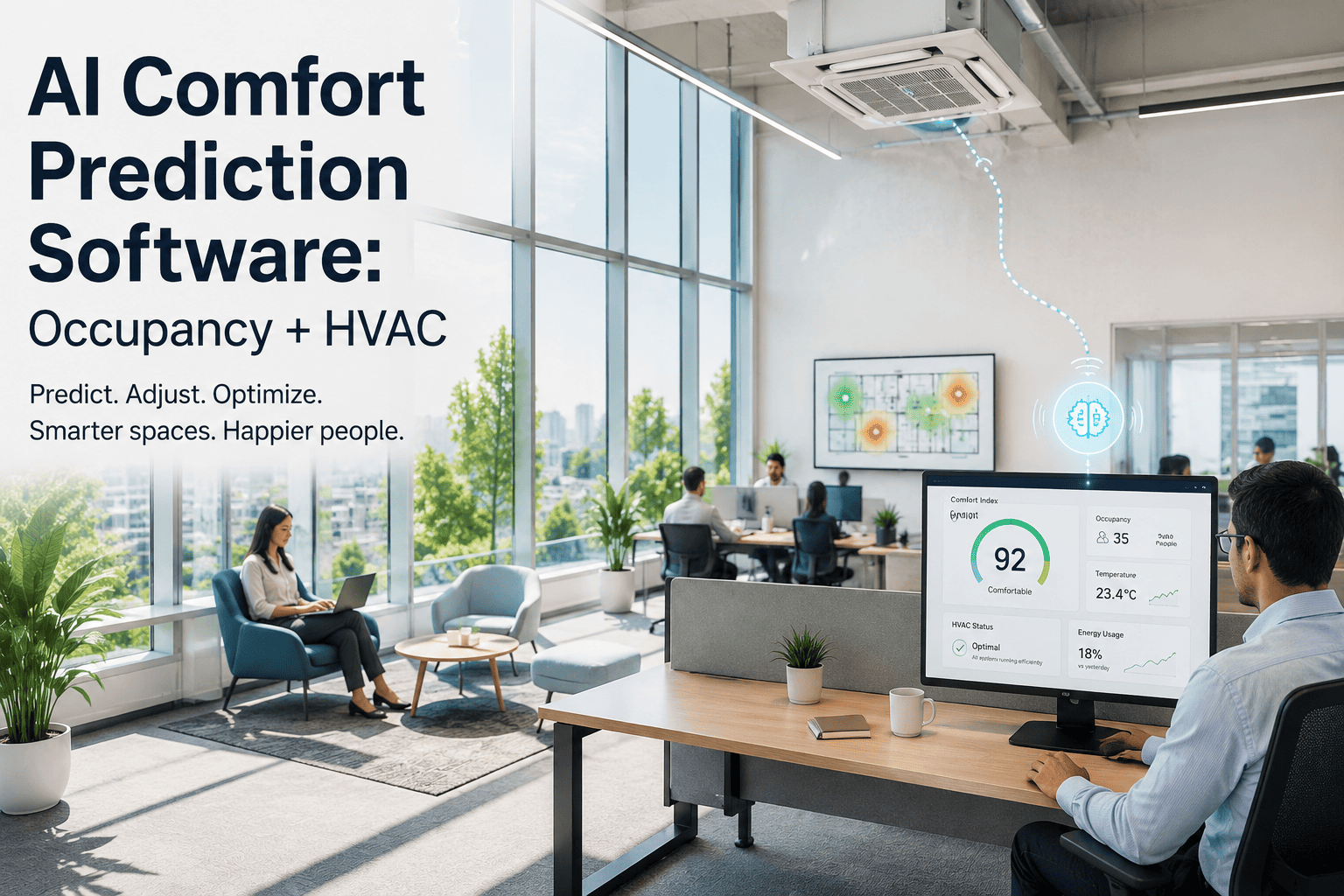
By the time someone submits a "too hot" or "too cold" ticket, the discomfort has usually been building for twenty to thirty minutes — long enough for a handful of people to notice before facilities does. AI comfort prediction software closes that gap by reading occupancy patterns and HVAC telemetry together, catching the drift toward discomfort before it turns into a complaint, a lost afternoon of productivity, or a scramble to override a setpoint manually. Instead of comfort management being a queue of reactive tickets, it becomes a continuous prediction loop that adjusts before anyone notices anything was wrong. This guide covers what signals the prediction actually runs on, how reactive and predictive comfort management compare in practice, and how a CMMS platform like OxMaint turns a predicted comfort issue into a work order automatically instead of leaving it stuck in a dashboard.
AI Comfort Prediction Software: Occupancy + HVAC Working Together
Occupancy sensors and HVAC telemetry, read as one signal, can flag a comfort problem before the first complaint ticket lands. Here's how the prediction works and what it takes to turn it into automatic action.
Why Reactive HVAC Management Always Runs Behind Comfort
Most buildings run HVAC on a fixed schedule with a comfort complaint as the only feedback loop — someone gets uncomfortable, someone submits a ticket, someone eventually adjusts a setpoint. By design, this approach can only ever react after the fact, and it treats every zone the same regardless of how many people are actually in it or how the outdoor conditions are shifting that day. A conference room with a scheduled meeting starting in fifteen minutes and a currently empty office both get the same setpoint logic under a fixed schedule. AI comfort prediction changes the input: instead of waiting for a person to notice discomfort, the system reads the same signals a facilities engineer would if they were watching every zone in real time, and it never gets distracted or goes to lunch.
The Signals AI Comfort Prediction Actually Uses
The accuracy of the prediction comes entirely from the quality and combination of inputs — no single sensor tells the whole story on its own.
Reactive vs. Predictive Comfort Management
Turn Predicted Discomfort Into an Automatic Work Order
OxMaint connects occupancy and HVAC sensor data to your CMMS so a predicted comfort issue routes straight to a work order — no dashboard alert waiting for someone to notice it.
From Prediction to Resolution: Where the CMMS Comes In
A prediction model on its own only tells a facility team that a problem is coming — it doesn't fix anything. The step that actually prevents the complaint is what happens in the next sixty seconds: does the setpoint adjust automatically, or does a technician get a work order routed to the right zone with the right context before the drift finishes? A CMMS connected to the same sensor feed as the prediction model closes that last step, distinguishing a simple demand-driven adjustment from a genuine equipment fault and dispatching the right response to each. Over time, the same connected record also shows which zones drift chronically, turning a stream of individual predictions into a maintenance priority list for the units actually causing the pattern.
Frequently Asked Questions
Stop Managing Comfort One Complaint at a Time
OxMaint combines occupancy, HVAC, and weather data into a single prediction and routes every flagged zone straight into a work order — before anyone submits a ticket. Free to start, no hardware overhaul required.