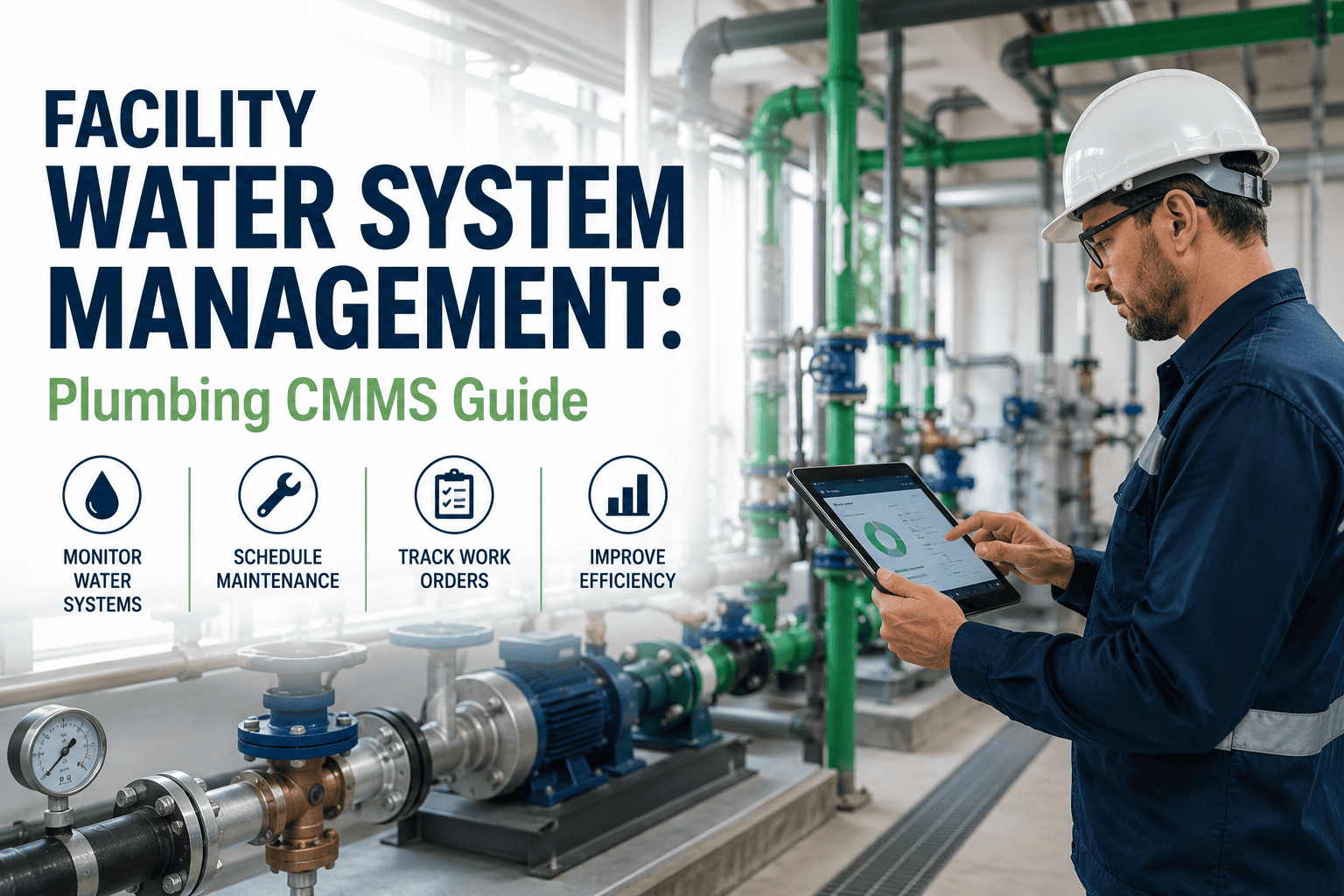
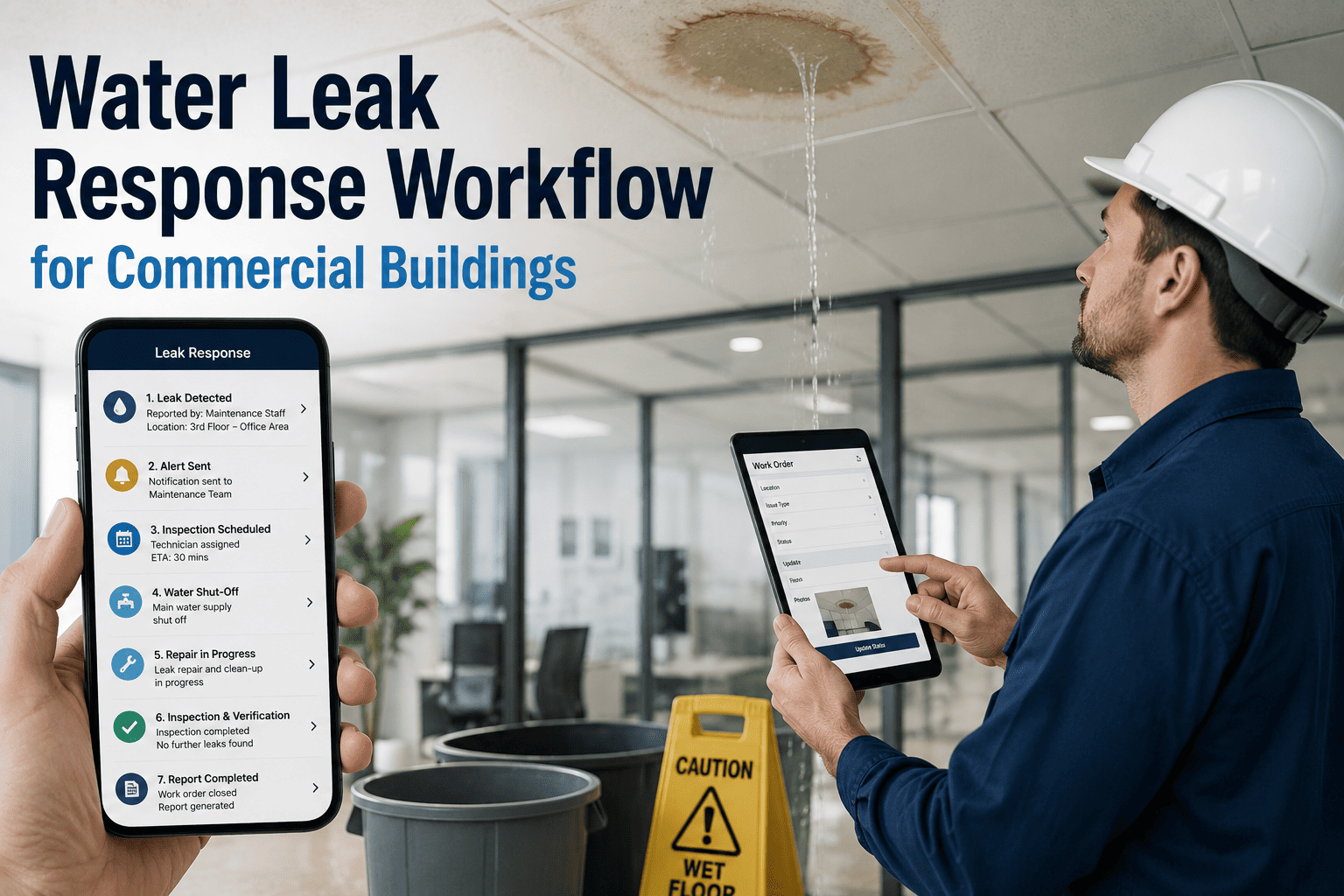
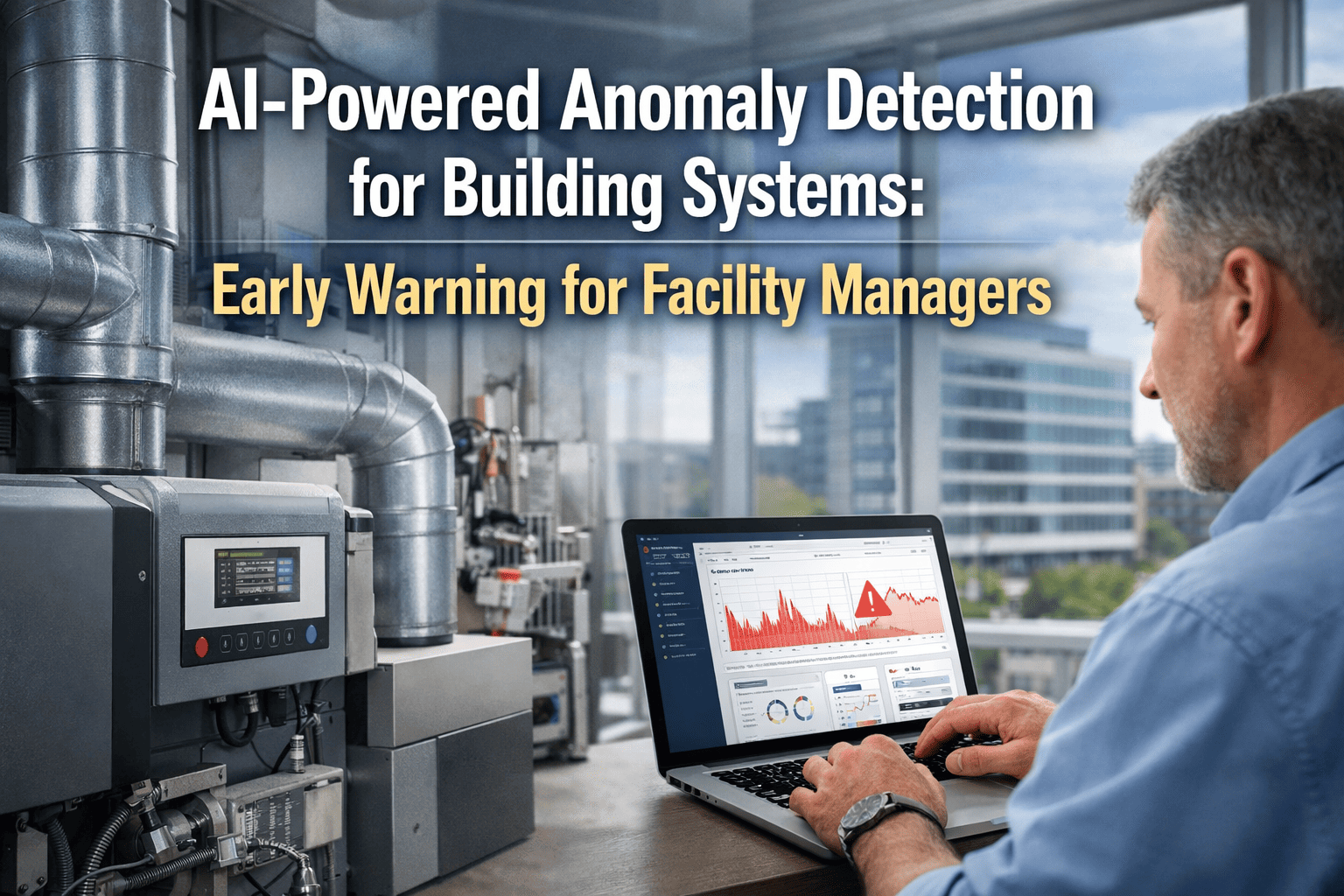
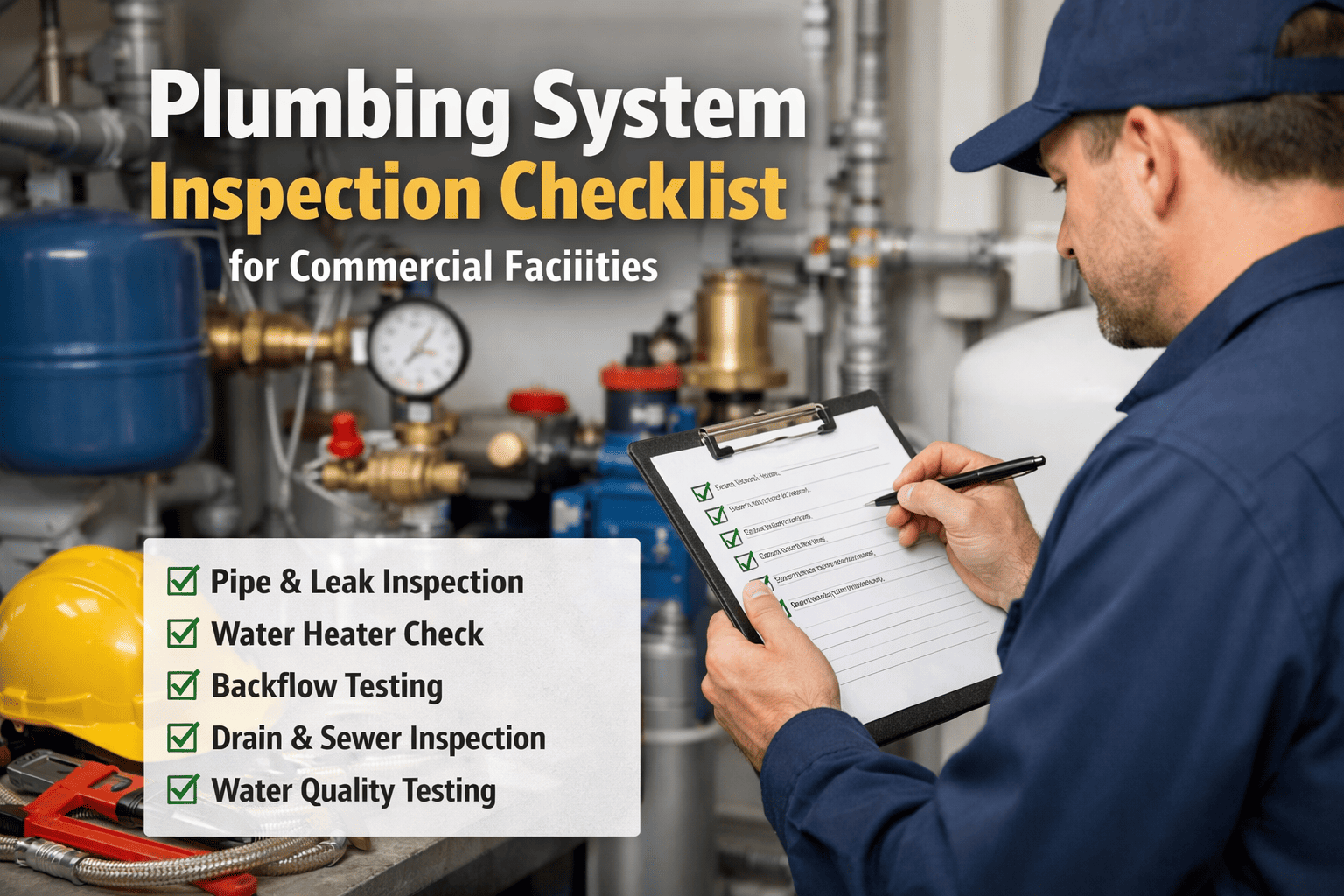
A single undetected pipe leak in a commercial building wastes an average of 10,000 gallons of water per month. A failed backflow preventer exposes occupants to contaminated drinking water and facility managers to regulatory citations that cost far more than any inspection programme. Yet across commercial facilities in 2025, plumbing and water systems remain the most reactive maintenance category in the building — managed by phone calls and emergency contractors rather than scheduled inspection cycles and digital work orders. The global plumbing and water management systems market reached $150 billion in 2025 and is growing at 7% annually, driven by aging infrastructure, stricter compliance requirements, and rapid IoT adoption in facility operations. The facilities that win are those converting reactive plumbing response into structured preventive maintenance — with CMMS data behind every decision. Book a demo to see how Oxmaint manages your full commercial plumbing maintenance programme.
Stop Reacting to Plumbing Failures. Start Preventing Them With Scheduled, Data-Backed Maintenance.
Oxmaint gives facility managers digital inspection checklists, PM scheduling tied to asset records, and full audit trails for every plumbing system in your portfolio — accessible from any mobile device, on any shift.
$150B
Global plumbing and water management market in 2025, growing at 7% CAGR through 2033
10,000
Gallons wasted monthly per undetected commercial building leak — often invisible without sensor monitoring
62%
Of facilities experience unplanned downtime from water system failures due to incomplete maintenance records
4.8x
Higher cost of emergency plumbing repair vs. scheduled preventive maintenance intervention
The 5 Systems
The 5 Commercial Plumbing Systems Every Facility Manager Must Maintain
Commercial plumbing is not a single asset — it is five distinct systems, each with its own failure modes, compliance requirements, and inspection cycles. Managing them as one category is how critical items get missed.
01
Potable Water Supply
Mains, pressure regulators, supply valves, and distribution piping. Failure here affects every occupant immediately. Key maintenance: pressure testing, valve exercise schedules, water quality sampling, and pipe condition records linked to installation dates.
Compliance: EPA Lead and Copper Rule, OSHA 29 CFR 1910.141
02
Backflow Prevention Devices
Reduced pressure zone assemblies, double check valves, and pressure vacuum breakers. Backflow failure allows contaminated water to enter the potable supply. Annual certified testing is legally required in most jurisdictions — missing a test date triggers immediate compliance citations.
Compliance: ASSE 1013/1015, local authority annual test mandate
03
Commercial Water Heaters
Storage and instantaneous water heaters, heat pumps, and solar thermal systems. Legionella growth is the primary failure risk in systems where water temperature drops below 60°C (140°F). Anode rod inspection, temperature monitoring, and sediment flushing are critical PM tasks with defined intervals.
Compliance: ASHRAE 188 Legionella risk management, L8 (UK)
04
Drainage and Waste Systems
Sanitary drains, grease interceptors, floor drains, and vent stacks. Grease trap overflow is a compliance event that shuts commercial kitchens. Floor drain inspections prevent sewer gas intrusion. CCTV inspection every 3–5 years reveals blockage risk in aging infrastructure before failure occurs.
Compliance: Local pretreatment ordinances, grease interceptor schedules
05
Stormwater and Irrigation Systems
Roof drains, catch basins, irrigation controllers, and grey water recycling systems. Blocked roof drains cause structural water damage. Irrigation over-runs inflate utility costs by 15–40%. Smart irrigation controllers reduce water consumption in commercial landscaping by 20–30% according to EPA WaterSense data.
Compliance: EPA NPDES stormwater permits, local irrigation ordinances
06
Fire Suppression Water Supply
Sprinkler mains, fire hydrant connections, fire pump systems, and dedicated isolation valves. Separate from domestic water but shares building infrastructure. NFPA 25 mandates annual inspection, 5-year obstruction investigation, and 25-year internal pipe inspection for all wet sprinkler systems.
Compliance: NFPA 25 standard for fire suppression inspection
PM Schedule Framework
Commercial Plumbing Preventive Maintenance Schedule — What to Inspect and When
Facilities that follow structured PM schedules reduce emergency plumbing repairs by up to 40% within 12 months. Use this framework as the basis for your CMMS work order scheduling.
The Reactive Cost
What Reactive Plumbing Management Actually Costs Commercial Facilities
$18,000
Average Cost Per Hour — Unplanned Downtime
A burst pipe or sewage backup during business hours does not just cost repair fees — it shuts operations, displaces occupants, and triggers insurance claims that inflate premiums for 3–5 years.
1 Trillion
Gallons Wasted Annually (US Leaks)
Residential and commercial water leaks waste nearly 1 trillion gallons across the US each year. In commercial facilities, undetected drips from fixtures and supply lines represent 6–10% of total water bills that simply disappear.
3.4x
More Compliance Citations Without Records
Facilities without documented inspection and corrective action trails receive 3.4x more OSHA and environmental citations. Backflow test certificates that cannot be produced on demand trigger immediate corrective action orders.
57%
Of Service Providers Report Workforce Gaps
57% of plumbing service providers report skilled workforce shortages causing project delays. Facilities on reactive management compete for emergency contractor availability. PM-driven facilities schedule work in advance — guaranteed coverage at standard rates.
Before vs. After
Reactive Plumbing Management vs. CMMS-Driven Preventive Maintenance
Plumbing Function
Reactive Approach
Oxmaint Preventive Programme
Backflow Testing
Remembered annually or prompted by compliance notice — test certificates stored in binders, frequently lost
Auto-scheduled work orders 60 days before test due date — certificates attached digitally to asset record
Leak Detection
Discovered at failure — pipe burst, ceiling stain, flooding event — remediation cost 4.8x higher
Monthly visual inspection work orders per zone — IoT sensor alerts integrated from sub-meter data
Water Heater Maintenance
Replaced after failure — no temperature logs, no anode rod history, Legionella risk unmanaged
Monthly temperature log + annual service work order — Legionella risk programme documented per ASHRAE 188
Grease Trap Management
Pumped on complaint or overflow — FOG violations and kitchen shutdowns triggered by missed schedules
Usage-based PM triggers — pump frequency set by actual FOG volume data, not calendar estimates
Drain and Pipe Condition
Inspected when blocked — root intrusion and corrosion progress invisibly until failure or sewage backup
CCTV inspection scheduled every 3–5 years per system — condition scores recorded per pipe section
Compliance Documentation
4–8 hours to locate records for audit — certificates in multiple locations, gaps in inspection history
All inspection records retrievable in under 60 seconds — timestamped, person-attributed, full asset history
Water Consumption Tracking
Monthly utility bill only — no sub-meter data, no consumption trend by system or zone
Sub-meter readings logged per work order — consumption trends per building zone visible in dashboard
CapEx Forecasting
Water heater and pipe replacement decisions based on age estimates — no condition data to justify timing
Asset condition scores and maintenance history feed 5–10 year capital replacement forecasting model
How Oxmaint Solves It
How Oxmaint Manages Your Commercial Plumbing Maintenance Programme
Oxmaint connects every plumbing asset in your facility to a scheduled maintenance programme — with digital inspection checklists, mobile-first work orders, compliance documentation, and CapEx forecasting built into a single platform.
Asset Registry
Every Plumbing Asset Tracked With Condition History
Build a complete plumbing asset register — backflow devices, water heaters, grease traps, pressure regulators, isolation valves, and pipe sections. Each asset carries installation date, condition score, last inspection result, and linked maintenance history. No more guessing when the last test occurred.
PM Scheduling
Inspection Work Orders Auto-Generated by Schedule
Set PM frequencies per asset class — monthly for water heater temperature logs, annual for backflow certification, quarterly for grease traps. Oxmaint generates work orders automatically, assigns to qualified technicians, and tracks completion against schedule. PM compliance rate visible in real time.
Digital Checklists
Structured Inspection Forms for Every Plumbing System
Purpose-built digital inspection checklists for backflow testing, water heater service, grease trap inspection, drain condition, and pressure testing — completed on mobile in the field. Required fields enforce complete data capture. Photo documentation attached to every inspection record automatically.
Compliance Tracking
Backflow Certificates and Test Records Stored Against Each Asset
Every inspection certificate, test result, and compliance record is stored digitally against the specific asset it relates to. Backflow test certificates, Legionella temperature logs, NFPA 25 inspection records — all retrievable in under 60 seconds for regulator or insurance audit. No binder hunting required.
Water Monitoring
Sub-Meter Data and Consumption Trend Tracking
Log water meter readings as part of monthly inspection work orders. Track consumption trends per building zone, per system, and per utility period. Anomaly spikes in consumption data flag potential leak locations before they appear as visible damage. IoT sensor integration adds real-time alerting layer.
CapEx Planning
Asset Condition Data Feeds 5–10 Year Capital Replacement Forecasts
When a water heater's condition score declines through repeated maintenance findings, Oxmaint flags it in the capital planning dashboard with replacement cost, remaining useful life estimate, and repair vs. replace analysis. Finance sees capital requirements backed by asset data — not manager instinct.
Programme Results
What Facilities Achieve With a Structured Plumbing PM Programme
40%
Reduction in Emergency Plumbing Events
Facilities following structured PM inspection schedules reduce unplanned plumbing failures by up to 40% within 12 months — converting 4.8x-cost emergency repairs into planned maintenance events at standard rate.
20–30%
Water Consumption Reduction
Facilities implementing smart water monitoring and sub-meter tracking identify waste sources that reduce overall consumption by 20–30% — directly reducing utility costs without infrastructure investment.
60 sec
Compliance Record Retrieval Time
Backflow certificates, Legionella logs, NFPA 25 records, and grease trap service documents retrievable in under 60 seconds from Oxmaint's audit dashboard — vs. 4–8 hours from paper binders during unannounced inspections.
30%
Operating Cost Reduction
Oxmaint facility customers optimize maintenance spending by up to 30% through preventive scheduling, smarter contractor dispatch, and elimination of emergency call-out premiums on plumbing systems across their portfolio.
Facility Manager Checklist
Commercial Plumbing Maintenance Checklist — 8 Must-Track Items
These eight items are the most commonly deferred, most compliance-critical, and most costly when they fail. Track all eight in Oxmaint from day one.
01
Backflow Preventer Annual Certification
Certified tester required. Certificate filed against asset record. Due date tracked 60 days in advance. Failure to test is a direct compliance citation in all US states, UK water regulations, and Australian AS/NZS 2845.
02
Water Heater Temperature Legionella Log
Monthly temperature check at storage tank and furthest outlet. Log must show sustained temperatures above 60°C (140°F) storage and 50°C (122°F) distribution. Required by ASHRAE 188 and UK L8 HSE code of practice.
03
Grease Interceptor Service Record
Every pump-out documented with FOG level at service, contractor name, and disposal manifest. Local pretreatment ordinances require service records retained for minimum 3 years and produced on demand during inspection.
04
Isolation Valve Annual Exercise
Every shutoff valve operated full open to full close annually. Valves that have not been exercised for years seize at the worst possible moment — during a pipe burst when emergency isolation is critical. Location log updated per asset record.
05
Water Pressure Regulator Reading
Semi-annual pressure measurement at regulator test port. Downstream pressure above 80 PSI accelerates fixture wear. Below 40 PSI signals supply problem or clogged strainer. Reading trend over 24 months predicts diaphragm replacement timing.
06
Sub-Meter Consumption Review
Monthly meter reading per zone compared to prior period. Consumption increase of more than 10% against same period triggers leak investigation before water damage appears. EPA WaterSense recognizes facilities achieving 20%+ reduction through structured sub-metering.
07
Drain and Roof Drain Quarterly Clear
Blocked roof drains cause structural water ingress. Blocked floor drains allow sewer gas entry. Quarterly debris clearance and flow test takes under 20 minutes per drain — preventing events that cost thousands in structural remediation and air quality remediation.
08
Fire Suppression System Annual Inspection
NFPA 25 annual water flow test, pump performance check, and sprinkler head visual. 5-year obstruction investigation. 25-year internal pipe inspection. All records retained against system asset record — insurance and AHJ produce on demand without delay.
Frequently Asked Questions
Commercial Plumbing Maintenance — What Facility Managers Ask First
How often must commercial backflow preventers be tested, and what happens if testing is missed?
In the vast majority of US jurisdictions, UK Water Regulations, and Australian AS/NZS 2845 compliance requirements, backflow prevention devices must be tested annually by a certified tester. The test certificate must be filed with the local water authority and retained on-site. Missing an annual test date triggers a compliance notice requiring immediate corrective action — and in some jurisdictions, service disconnection orders for commercial properties that remain non-compliant after the notice period. The most common failure mode is not the device itself but the paperwork gap: facilities that completed testing but cannot locate the certificate when the water authority inspects. Oxmaint stores every backflow test certificate digitally against the specific asset it relates to, with auto-generated PM work orders 60 days before the next test is due.
Sign up free to set up your backflow testing schedule on day one.
Book a demo to see how Oxmaint tracks compliance certificates across multiple buildings in your portfolio.
What is Legionella risk management in commercial water systems, and what maintenance does ASHRAE 188 require?
Legionella bacteria grow in water systems where temperatures fall between 20–45°C (68–113°F) — a range that includes domestic hot water systems in commercial buildings where thermostat settings are reduced for energy saving without maintaining distribution temperature. ASHRAE Standard 188 requires commercial facilities to maintain a written Water Management Plan identifying all water system components that could harbour Legionella, with assigned inspection and monitoring frequencies for each. The core maintenance requirements include monthly temperature monitoring at water heaters and sentinel outlets (furthest and nearest to each unit), annual anode rod inspection in storage heaters, flushing of infrequently used outlets every 7 days, and documentation of all findings against a building-specific risk assessment. UK facilities follow HSE's L8 Code of Practice and HSG274 technical guidance, which have equivalent requirements. Oxmaint's digital water heater inspection checklists enforce all ASHRAE 188 monitoring tasks and log temperature readings against the specific asset — creating a continuous Legionella risk management record.
Book a demo to see the Legionella monitoring workflow.
Sign up free to start logging water heater temperatures from day one.
How can a CMMS help facility managers reduce water consumption in commercial buildings?
A CMMS contributes to water consumption reduction through three mechanisms. First, structured leak detection work orders — monthly inspection rounds that specifically check fixtures, supply connections, and meter readings by zone — identify consumption anomalies before they appear as structural damage or inflated utility bills. A 10% increase in sub-meter reading against the prior period triggers a leak investigation work order automatically. Second, PM scheduling for water-efficient fixture maintenance — aerator cleaning, flushometer calibration, and sensor faucet service — maintains the consumption performance that these fixtures were specified to deliver. Fixtures that are never serviced lose their efficiency gains within 2–3 years of installation. Third, CMMS data on consumption trends per building zone enables informed decisions about irrigation controller scheduling, greywater recycling feasibility, and fixture upgrade prioritisation. Smart irrigation controllers with IoT integration can reduce commercial landscaping water use by 20–30% compared to fixed-timer systems, according to EPA WaterSense data.
Sign up free and start tracking water consumption per asset from your first month.
Book a demo to see sub-meter integration in the Oxmaint platform.
What are the most common commercial plumbing compliance failures found during facility audits?
The four compliance failures that appear most consistently across commercial facility audits are: (1) Missing or expired backflow preventer test certificates — either the test was never done or the certificate was completed but filed in a location no one can access during an unannounced inspection. (2) Incomplete Legionella temperature logs — monthly monitoring was planned but individual readings were skipped, leaving gaps in the continuous record that ASHRAE 188 and L8 compliance requires. (3) Grease interceptor service gaps — pump-out records that show periods of 6 or more months between services, and disposal manifests that do not match the frequency required by the local pretreatment ordinance. (4) No fire suppression system inspection records — NFPA 25 annual inspections completed but the paperwork trail is fragmented across multiple contractor report formats with no centralised retention. All four failures share a common root cause: records exist on paper in disconnected locations rather than in a searchable digital system linked to specific assets. Oxmaint resolves all four by storing every inspection record against the asset it relates to, with timestamped completion, named technician, and attached documentation.
Book a demo to see how audit-ready documentation works in practice.
Sign up free to start building a compliant inspection record from day one.
How does Oxmaint support commercial plumbing maintenance across multiple buildings in a portfolio?
Oxmaint is built as a multi-site platform with a portfolio-level asset hierarchy — Portfolio, Property, System, Asset, and Component — that allows facility managers to manage plumbing systems across all buildings from a single dashboard while viewing site-specific detail on demand. Each property maintains its own asset register, PM schedule, inspection records, and compliance documentation. Corporate operations see PM compliance rates, open corrective actions, and upcoming backflow test due dates across the entire portfolio simultaneously — without waiting for individual site reports to compile. The portfolio dashboard flags which properties have upcoming compliance deadlines, which have open corrective actions aging beyond target, and which have consumption anomalies requiring investigation. For multi-building portfolios where plumbing compliance spans multiple local authority jurisdictions, Oxmaint's compliance record export function generates a site-specific documentation package per property in the format required for each authority.
Sign up free and connect your first two properties within days.
Book a demo to see multi-building plumbing portfolio management live.
Your Commercial Plumbing Systems Are Either on a Schedule or They Are a Risk. Oxmaint Puts Them on a Schedule.
Digital inspection checklists, auto-generated PM work orders, compliance certificate storage, sub-meter consumption tracking, and 5–10 year CapEx forecasting — all built into one platform, accessible from any device, deployable without an IT project. Start with your highest-risk plumbing assets and expand from there.