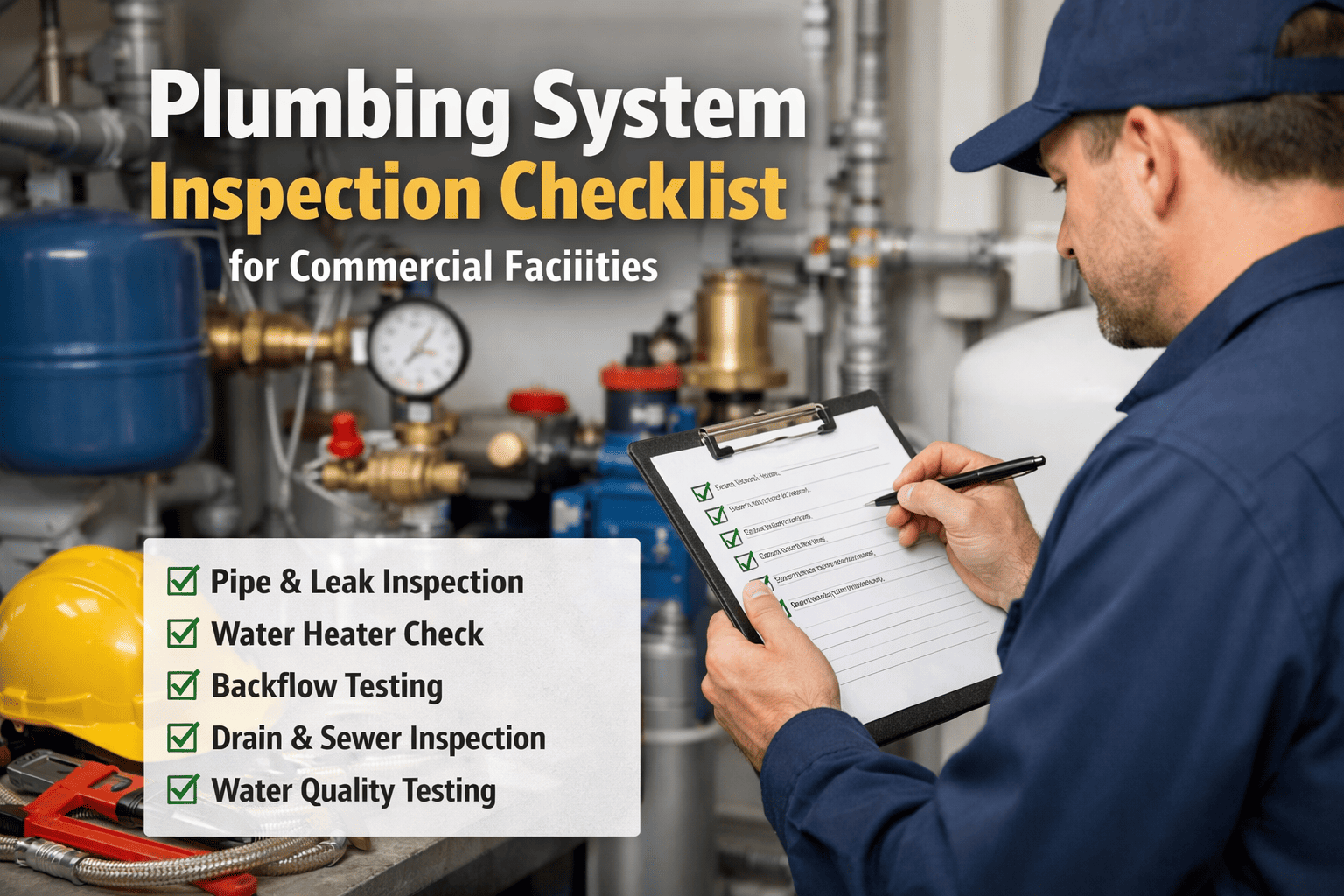
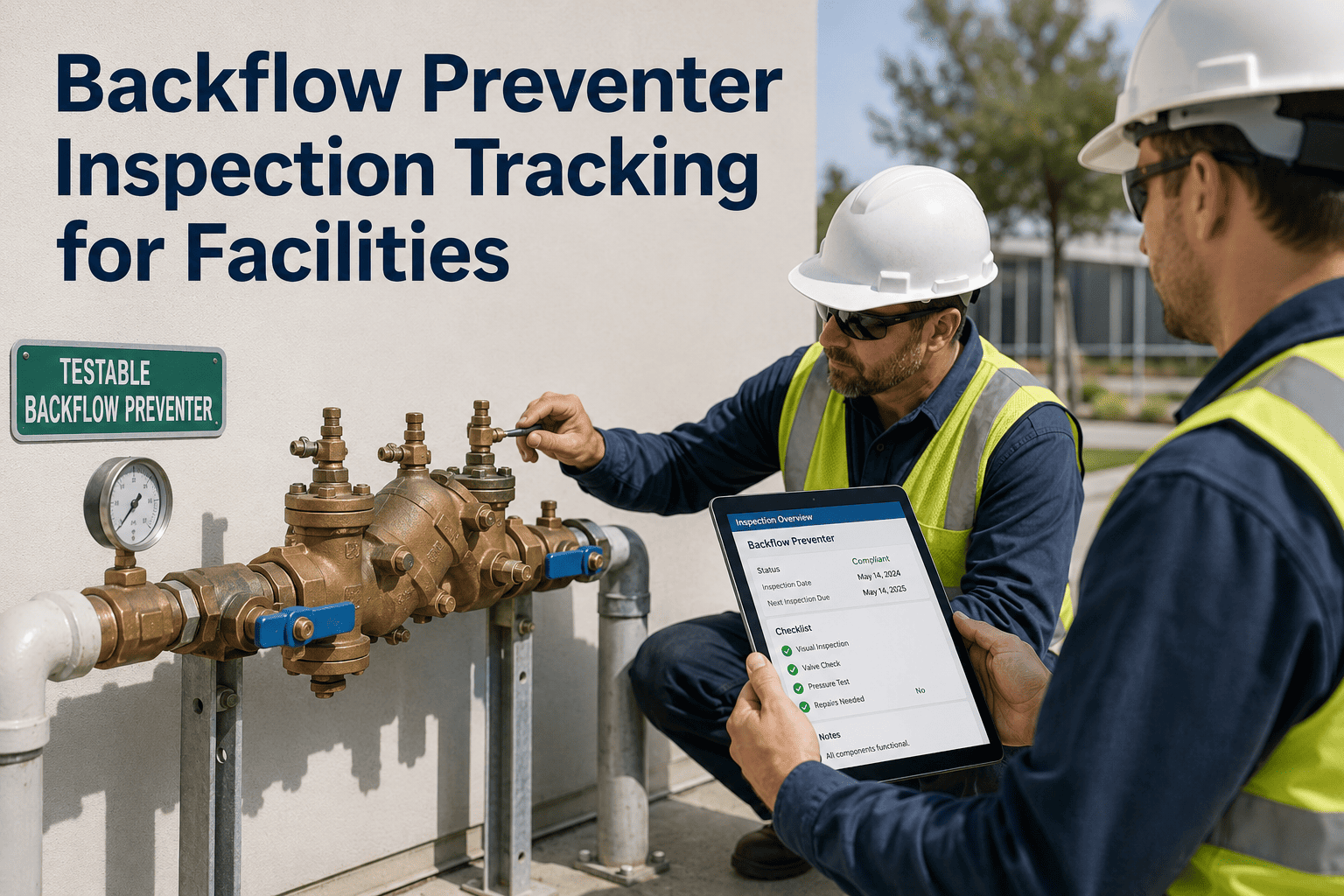
Plumbing System Inspection Checklist for Commercial Facilities
By Lewis Abbott on April 8, 2026
Undetected plumbing leaks waste an average of 10,000 gallons of water per commercial facility each year — enough to fill an Olympic swimming pool every eight months. Beyond utility costs, a single slab leak or backflow failure can shut down restrooms, damage inventory, and trigger health code violations. Oxmaint’s preventive maintenance platform digitizes this plumbing checklist, schedules recurring inspections, and auto‑generates repair work orders — or book a 30‑min demo to see how our CMMS keeps your facility leak‑free and compliant.
Commercial Plumbing · Preventive Maintenance
Plumbing System Inspection Checklist for Commercial Facilities
Pipes, fixtures, water heaters, backflow prevention, drain systems, and water quality testing — a complete inspection framework for facility managers and maintenance teams.
10k
Gallons of water wasted annually by undetected leaks
40%
Water savings from proactive leak detection programs
$6k–$15k
Average cost of a commercial slab leak repair
Turn this checklist into scheduled, auditable work orders. Oxmaint automates plumbing inspections, tracks findings, and triggers corrective actions — all from one dashboard.
Source: IAPMO 2025 Commercial Facility Study (n=1,200 buildings)
Estimated Cost Impact of Deferred Plumbing PM
Minor faucet leak (1 drip/sec)$1,800/year in water/sewer
Water heater failure (50 gal)$2,500–$4,500 replacement
Slab leak repair$6,000–$15,000
Backflow citation + testing$1,000–$5,000 fine + test
Sewer backup (cleanup)$10,000–$50,000
Preventive inspection reduces these risks by 70–85%
Schedule Plumbing Inspections Automatically
Oxmaint generates recurring work orders for every plumbing zone — monthly fixture checks, quarterly backflow tests, annual water heater flush — all with mobile checklists and photo evidence.
“Commercial plumbing failures are rarely sudden — they build quietly through ignored drips, rising water bills, and skipped backflow tests. The facilities that avoid catastrophic slab leaks and sewer backups are the ones that treat plumbing PM like fire safety: scheduled, documented, and acted upon. A digital checklist with automatic work order creation for every failed test point changes the game from ‘we’ll get to it’ to ‘we fixed it yesterday.’”
Caroline Masters, PE, LEED AP
Licensed Professional Engineer · 18 years commercial MEP systems · Plumbing design and facility water management specialist
Frequently Asked Questions
How often should a commercial building’s plumbing system be fully inspected?
A full plumbing system inspection should be performed annually, covering supply piping, water heaters, backflow preventers, drain lines, and water quality. Monthly visual checks of accessible pipes, fixtures, and drains catch developing issues early. Quarterly checks of backflow devices and water quality parameters maintain compliance and efficiency. Oxmaint’s scheduling engine lets you set different frequencies per asset type.
What is the most common code violation found during commercial plumbing inspections?
The most frequent violation is lack of backflow prevention certification — nearly 35% of commercial facilities either have no test record or an expired test. Other common violations include missing drain trap primers (causing sewer gas entry), incorrect water heater T&P discharge piping, and uninsulated hot water lines. Annual internal inspections using a checklist like this one catch 90% of these issues before a code official does. Book a demo to see how Oxmaint tracks backflow test due dates and notifies your team.
How can I detect a hidden slab leak before it causes structural damage?
Watch for five signs: unexplained increase in water bill (15%+), hot spots on the floor, sound of running water when all fixtures are off, low water pressure, and cracks in flooring or walls. Use a water meter test — shut off all water, monitor meter for movement over 15 minutes. If meter moves, schedule leak detection. A digital CMMS like Oxmaint can track water consumption trends month‑over‑month and alert you when usage deviates beyond normal variance.
What is the required frequency for backflow preventer testing?
Most jurisdictions require annual testing of all backflow prevention assemblies by a certified tester. Some local codes (California, Texas, Florida) require semi‑annual testing for high‑hazard facilities (hospitals, laboratories, food processing). Keep test records for a minimum of 5 years. Oxmaint stores unlimited test history and sends automatic reminders 30, 14, and 7 days before each due date. Start a free trial to configure backflow compliance tracking.
Stop Plumbing Leaks Before They Stop Your Business
Oxmaint turns this plumbing inspection checklist into scheduled work orders, real‑time findings logs, and automatic corrective actions — so every leak is documented and every repair is verified. Reduce water waste, avoid costly slab failures, and stay inspection‑ready.