Every year, facilities across industries face preventable incidents that stem from one critical gap: inadequate safety clearance management. According to OSHA's 2024 data, employers reported over 1.3 million workplace injuries, with lockout/tagout violations ranking among the top cited standards. The reality is stark: facilities operating without proper clearance protocols expose workers to hazardous conditions, face substantial regulatory penalties and risk operational disruptions that can cost thousands daily. Modern safety clearance management through CMMS technology transforms this challenge into a competitive advantage, ensuring every high-risk task is properly authorized, documented, and monitored.
What is Safety Clearance Management?
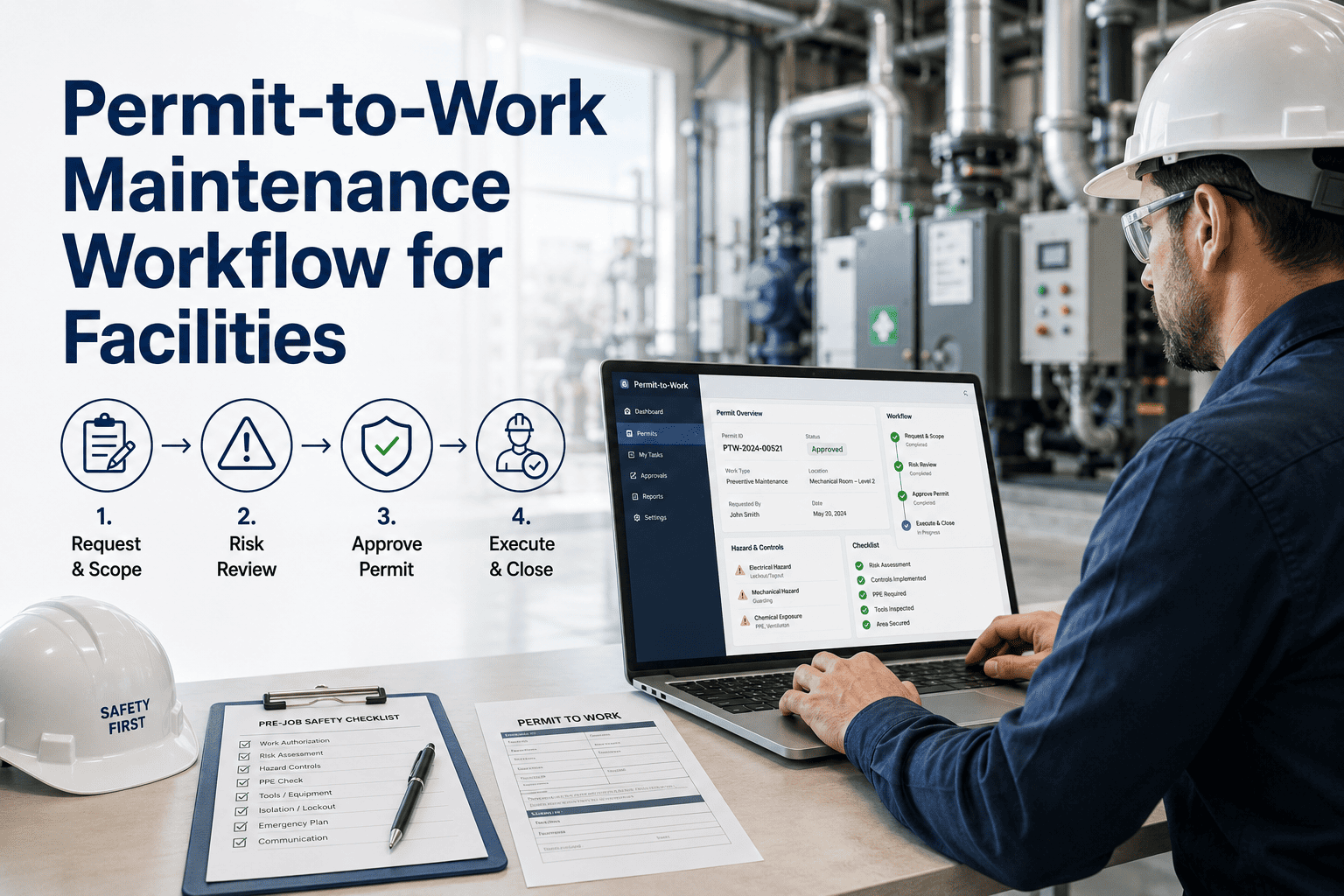
Safety clearance management encompasses the systematic processes, protocols, and documentation required to authorize, monitor, and control hazardous work activities within facilities. At its core, it ensures that before any high-risk task begins, all necessary permissions, safety checks, and protective measures are firmly in place. This includes permit-to-work systems, lockout/tagout procedures, confined space entry protocols, hot work authorizations, and electrical safety clearances.
The fundamental objective is coordination and communication. Every person involved in a task must understand potential hazards, know the safety measures being implemented, and have proper authorization to proceed. When executed correctly, safety clearance management creates a protective framework that significantly reduces incident rates while maintaining operational efficiency.
The Hidden Cost of Paper-Based Safety Clearances
Traditional paper-based permit systems create significant operational inefficiencies that many facilities accept as unavoidable. The reality is these manual processes consume resources, introduce compliance risks, and fail to provide the real-time visibility necessary for effective safety management.
Handwriting permits, transcribing information, verifying completeness, obtaining signatures
Locating supervisors, waiting for sign-offs, coordinating between departments, handling delays
Organizing permit archives, searching for historical records, preparing audit documentation
Ready to Eliminate 75% of Your Permit Processing Time?
Oxmaint replaces manual forms, approval chasing, and paper filing with automated digital workflows — so your team spends less time on paperwork and more time on actual safety.
How CMMS Transforms Safety Clearance Management
A Computerized Maintenance Management System brings structure, automation, and visibility to safety clearance processes that paper-based systems simply cannot match. By digitizing the entire permit lifecycle from request to close-out, CMMS platforms ensure every step is documented, every approval is tracked, and every safety measure is verified before work begins.
| Capability | Paper-Based Systems | Digital CMMS Platform | Impact |
|---|---|---|---|
| Permit Issuance Time | 45-90 minutes | 5-10 minutes | 85% faster |
| Approval Routing | Manual, often delayed | Automated notifications | Real-time |
| Active Permit Visibility | Clipboard at location | Centralized dashboard | 360 view |
| Conflict Detection | Manual coordination | Automated alerts | Zero overlap |
| Audit Preparation | Days of document gathering | One-click export | 95% faster |
Core Components of Digital Safety Clearance
Effective digital safety clearance management integrates several key components that work together to create a comprehensive safety framework. Understanding these elements helps facilities identify gaps in their current processes and prioritize implementation efforts.
Permit Template Library
Approval Workflows
Real-Time Monitoring
Compliance Documentation
Experience Streamlined Safety Clearance
See how Oxmaint digitizes your entire permit-to-work process with automated workflows, real-time visibility, and instant conflict detection — reducing permit issuance from 90 minutes to under 10.
The Safety Clearance Workflow
Digital safety clearance management follows a structured workflow that ensures consistency, accountability, and compliance at every stage. This systematic approach eliminates the variability that makes paper-based systems unreliable and difficult to audit.
Task details submitted with hazard identification and required clearance type
System prompts hazard review and control measure selection based on task type
Permit routed to qualified approvers with automatic conflict checking
Active monitoring with time-bound permits and safety checklist verification
Work completion verified, area cleared, permit officially closed with documentation
Complete record archived with all approvals, timestamps, and attachments
Key Performance Indicators for Safety Clearance
Measuring the effectiveness of your safety clearance system requires tracking specific metrics that indicate both compliance levels and operational efficiency. Oxmaint provides real-time dashboards with automated alerting to ensure continuous improvement.
ROI Analysis: Mid-Size Manufacturing Facility
This cost-benefit model demonstrates the financial impact of implementing digital safety clearance management for a 200-employee manufacturing facility processing approximately 2,500 permits annually across hot work, LOTO, confined space, and electrical work categories.
Implementation Roadmap
Successful transition from paper-based to digital safety clearance management requires phased implementation. This 10-week roadmap balances quick wins with sustainable long-term adoption through pilot programs and systematic rollout.
Assessment and Planning
System Configuration and Pilot
Full Deployment
Optimization and Sustainability
Ready to Modernize Your Safety Clearance Process?
Join facilities across manufacturing, energy, and chemicals that have eliminated paper permits and achieved 100% compliance visibility with Oxmaint's digital permit-to-work platform.
Industry Applications
Safety clearance management requirements vary by industry, but the fundamental need for controlled authorization of hazardous work remains universal. Digital CMMS platforms adapt to these varying needs while maintaining consistent compliance standards.
"After implementing digital permit-to-work through Oxmaint, we reduced our average permit processing time from 75 minutes to under 10 minutes. But the real value came during our OSHA inspection. We pulled three years of confined space entry records in seconds. The inspector said it was the most organized safety documentation he had seen in twenty years of audits. That single moment justified our entire investment."
The Bottom Line
Safety clearance management is not merely a regulatory requirement but a fundamental operational discipline that protects workers, prevents costly incidents, and demonstrates organizational commitment to workplace safety. Facilities operating with paper-based systems face escalating compliance risks as regulatory scrutiny increases and documentation requirements expand. Digital CMMS platforms like Oxmaint transform safety clearance from an administrative burden into a strategic advantage, providing the visibility, automation, and audit-readiness that modern facilities require. The technology exists today, the implementation path is proven, and the ROI is compelling. The only remaining question is whether your facility will modernize before the next audit or incident forces the issue.
Transform Your Safety Clearance Management
Get started with Oxmaint and experience automated permit workflows, real-time visibility, and audit-ready documentation — everything your facility needs to achieve zero unauthorized work starts and full regulatory compliance.
Frequently Asked Questions
What types of safety clearances can be managed through CMMS?
A comprehensive CMMS like Oxmaint can manage all standard permit types including hot work permits, lockout/tagout procedures, confined space entry, electrical work permits, working at heights authorizations, excavation permits, and general safe work permits. The system allows custom permit templates to accommodate facility-specific requirements and regulatory variations.
How does digital safety clearance management improve OSHA compliance?
Digital systems create automatic audit trails with timestamps, digital signatures, and complete documentation for every permit. This eliminates missing records, ensures consistent application of safety procedures, and provides instant access to historical data during inspections. The automation also prevents work from starting without proper authorization, addressing one of the most common compliance failures.
Can Oxmaint detect conflicts between simultaneous permits?
Yes. The system maps active permits by location and automatically alerts when conflicting work activities are scheduled in the same area. This prevents dangerous situations such as hot work occurring near confined space entry operations or electrical work happening while LOTO procedures are not fully implemented on interconnected systems.
How long does implementation typically take for a mid-size facility?
Most facilities achieve full deployment within 8-10 weeks following our structured implementation roadmap. This includes assessment, configuration, pilot testing, training, and optimization phases. The actual timeline depends on the complexity of existing processes and the number of permit types being digitized.
What ROI can we expect from implementing digital safety clearance management?
Typical facilities see 70-85% reduction in permit processing time, 90% reduction in administrative overhead, and elimination of compliance gaps. For a mid-size manufacturing facility, annual savings typically range from $150,000-$250,000 when accounting for labor reduction, avoided penalties, and incident prevention. Most implementations achieve payback within 3 months.