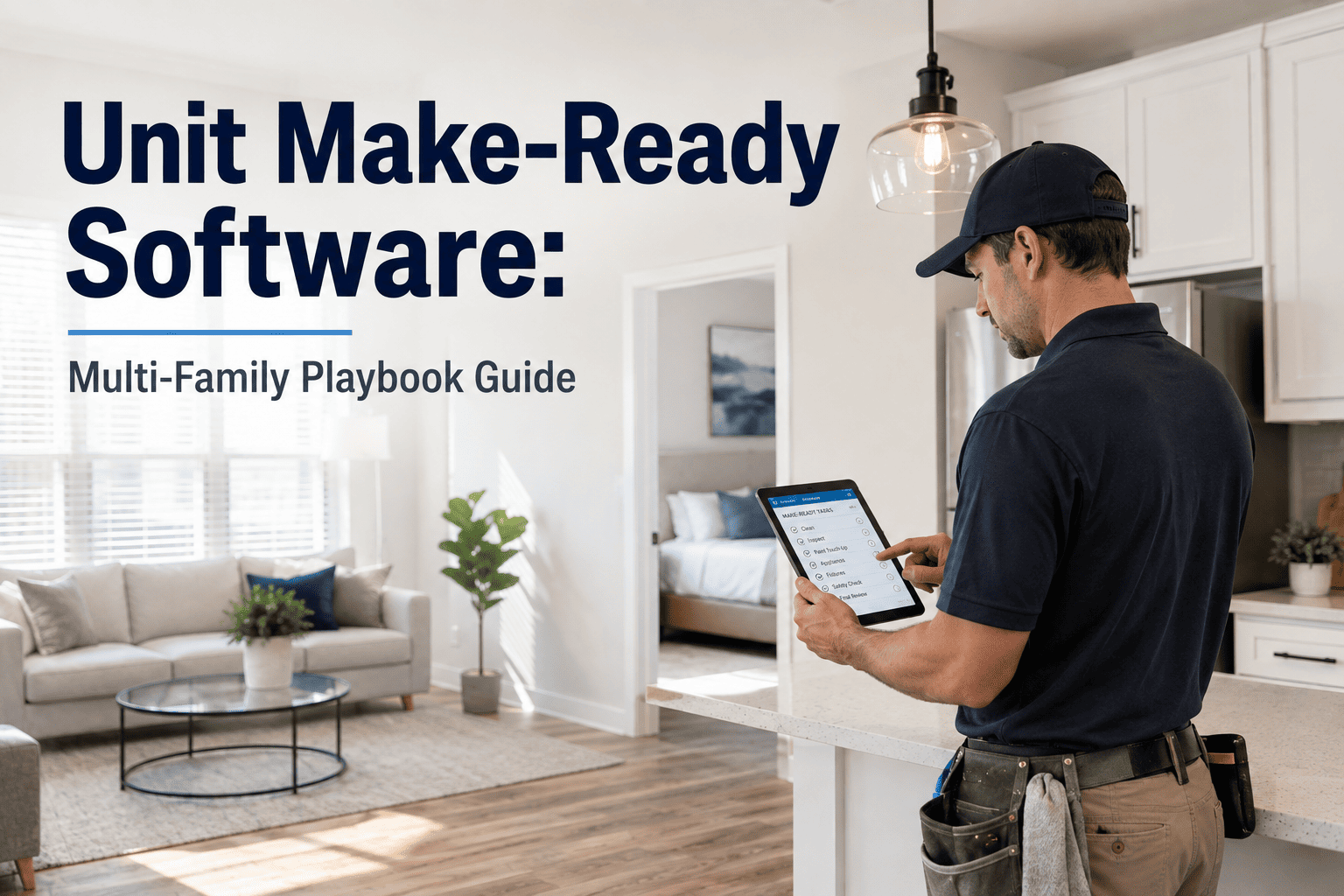
Every day a unit sits vacant between move-out and move-in is a day of lost rent, and the gap between a five-day turn and a fourteen-day turn usually has nothing to do with the condition of the unit — it has to do with whether the make-ready process follows a standardized playbook or gets reinvented by whichever maintenance tech picks up the work order first. Multi-family operators managing hundreds of units across a portfolio cannot rely on tribal knowledge to hit turnaround targets; they need a repeatable sequence of inspection, cleaning, repairs, and final walkthrough that runs the same way in every unit, at every property. Read on for the playbook structure and see how OxMaint's make-ready workflow keeps every turn on schedule.
The Standardized Make-Ready Playbook Beats the Off-the-Cuff Turn Every Time
A vacant unit generates zero revenue until it is leased, and a make-ready process without a fixed sequence, fixed owner per task, and a fixed target date will always run longer than the same unit turned against a documented playbook. This guide lays out the five-phase make-ready sequence and the software structure that keeps every unit inside its turnaround target.
The Five-Phase Make-Ready Sequence
A make-ready runs faster when every phase has a fixed owner, a fixed duration target, and a clear handoff to the next phase rather than five tasks competing for the same technician's attention on the same day. The sequence below reflects the order that minimizes rework — cleaning before painting wastes paint on dust, and painting before flooring risks damage to new carpet or vinyl.
Move-Out Inspection & Punch List
Walk the unit within 24 hours of move-out, photograph every deficiency, and generate a punch list that assigns each item to cleaning, maintenance, or capital repair before any work begins.
Repairs & Maintenance Work Orders
Address plumbing, electrical, appliance, and drywall repairs identified on the punch list before any cosmetic work starts, so paint and flooring are not redone after a repair.
Paint & Surface Prep
Patch, prime, and paint walls and ceilings once repairs are confirmed complete, keeping a standard color and sheen on file so touch-ups match the original coat.
Flooring & Deep Clean
Install or clean flooring after paint has fully cured, then run the full deep clean of kitchen, bathrooms, and fixtures as the second-to-last phase before final review.
Final Walkthrough & Ready-to-Lease
A supervisor completes a final walkthrough against the original punch list, confirms every item is closed, and marks the unit ready-to-lease so leasing staff can schedule showings immediately.
Where Turnaround Timelines Actually Break Down
The Inspection Missed an Item
A punch list built from a rushed walkthrough misses a broken blind or a leaking faucet, which surfaces during the final walkthrough and adds an unplanned day back into the schedule.
Vendors and Internal Techs Compete for the Same Day
Painting and flooring contractors scheduled for the same day create a bottleneck, since flooring cannot be installed until paint has cured, pushing the whole turn later.
Parts Ordered After the Repair Was Discovered
A replacement part for an appliance or fixture identified during inspection is ordered only after the repair phase starts, adding the supplier's full lead time to the turnaround.
No Single Owner for the Whole Turn
When responsibility for a unit passes between multiple technicians with no supervisor tracking overall progress, no one notices the turn has slipped until leasing asks why the unit is still not listed.
Cost of a Vacant Day, by Turnaround Length
| Turnaround Length | Vacant Days Beyond Target | Estimated Lost Rent (at $45/day) |
|---|---|---|
| 5-day standard turn | 0 days | $0 — turn hits target |
| 8-day turn | 3 days | $135 per unit |
| 11-day turn | 6 days | $270 per unit |
| 14-day turn | 9 days | $405 per unit |
| Portfolio of 200 units, 20% running 14 days | 40 units affected | $16,200 in a single turnover cycle |
OxMaint standardizes the five-phase make-ready sequence into recurring work orders with fixed owners and target dates, so a turn never slips without someone seeing it in time to fix it.
The properties that consistently hit a five-day turn are not the ones with more maintenance staff. They are the ones where the punch list is built the same way every time, the paint and flooring vendors are never scheduled on top of each other, and one supervisor can see every unit's phase without walking the building. I have watched a portfolio cut its average turnaround from twelve days to six in a single quarter, and the change was not headcount — it was replacing a whiteboard with a system that would not let a phase start before the prior one was actually closed out.
Frequently Asked Questions
Can OxMaint assign each make-ready phase to a different technician automatically?
Yes, each phase in the sequence can be assigned to a specific role or technician, with the next phase's work order releasing only once the prior phase is marked complete. Start a free trial to configure phase ownership for your team.
How does OxMaint prevent vendor scheduling conflicts during a turn?
The scheduling view shows every phase across every unit in progress, so a supervisor can see a paint and flooring conflict before it happens rather than after a wasted trip.
Does the platform track turnaround time against a target per unit?
Every unit's make-ready has a target completion date set at move-out, and the dashboard flags any unit tracking behind that target in real time.
Can maintenance staff order parts as soon as an inspection identifies a repair?
The move-out inspection work order links directly to parts requisition, so a replacement part can be ordered the same day it is identified rather than after the repair phase begins. Book a demo to see the inspection-to-parts workflow.
Is the make-ready playbook adjustable per property or unit type?
Yes, the five-phase sequence is a starting template — durations and task lists can be adjusted per property or per unit type while keeping the same phase-gate structure.
Five Days, Not Fourteen. That Is the Difference a Standardized Playbook Makes.
OxMaint turns your make-ready process into a repeatable, phase-gated workflow with fixed owners, target dates, and a live view of every unit in turnover across the portfolio.