A regional trucking company in Texas watched a competitor recover from a major breakdown in under four minutes — remote diagnostics pinpointed the fault, a technician was dispatched with the exact part before the driver finished calling dispatch, and the truck was back on the highway before a tow truck could have arrived. That competitor was running a 5G-connected fleet platform. The trucking company was running 4G with a 600ms latency gap that made real-time AI processing practically impossible. 5G connectivity is not a future upgrade for fleet operations — it is the infrastructure layer that makes real-time AI diagnostics, live video streaming from vehicles, sub-second fault alerts, and remote technician support financially viable and operationally reliable. Sign in to OxMaint to connect your fleet to a 5G-ready AI maintenance platform, or book a demo to see how OxMaint processes real-time vehicle data over 5G for instant fault alerts, AI camera inspection, remote diagnostics, and predictive maintenance across every vehicle in your fleet.
5G Fleet Management · Real-Time AI Processing · Connected Vehicle Platform · OxMaint
Sub-Second Fault Alerts. Live Vehicle Camera Streams. Remote AI Diagnostics. 5G Makes Every Vehicle a Real-Time Data Source and Every Fault a Solvable Problem Before It Becomes a Breakdown.
OxMaint's 5G-connected fleet platform processes real-time sensor data, OBD telemetry, and AI camera feeds from every vehicle with ultra-low latency — delivering instant maintenance alerts, remote diagnostic capability, and predictive intelligence that 4G networks cannot support at scale.
<10ms
5G round-trip latency for vehicle-to-platform data — vs. 600ms on 4G, enabling real-time AI processing that 4G cannot support
10 Gbps
peak 5G data throughput — sufficient to stream HD video from every camera on a vehicle simultaneously while transmitting full sensor telemetry
68%
reduction in vehicle downtime at fleets using 5G-enabled real-time AI diagnostics vs. fleets relying on scheduled inspection and 4G telematics
<10ms
5G latency below 10 milliseconds is not a spec sheet number — it is the difference between real-time AI processing and delayed alerting that misses the intervention window. A brake system anomaly detected at 600ms 4G latency may have already caused ABS activation before the alert fires. At 5G latency, the AI detects the developing anomaly in the sensor trend before it becomes an active fault — and generates the OxMaint work order while the vehicle is still operating normally. This is the core value of 5G for fleet maintenance: the AI has enough data, fast enough, to act predictively rather than reactively.
Four 5G-Enabled Fleet Management Capabilities OxMaint Delivers
RT — Real-Time AI Diagnostics
Sub-Second Fault Detection and AI Work Order Generation
At 4G latency, vehicle telemetry data arrives at the platform in batches — with 600ms gaps that make truly real-time AI processing impractical for fast-changing parameters like brake system pressure, engine knock, or transmission temperature spikes. 5G connectivity delivers the continuous, sub-10ms data stream that OxMaint's AI engine needs to detect developing faults in their earliest stages — generating work orders before OBD-II fault codes fire, before warning lights illuminate, and before drivers notice any symptom. The difference between a 4G alert and a 5G predictive intervention can be the difference between a $200 sensor replacement and a $12,000 engine repair.
Sign in to OxMaint to activate 5G real-time AI diagnostics for your fleet.
Key 5G Diagnostic Parameters Enabled
Engine knock detection — continuous vibration analysis at 5G sampling rates
Brake system pressure — real-time hydraulic trend monitoring per axle
Transmission temperature — spike detection before thermal damage threshold
Fuel system pressure — injector degradation detection from continuous telemetry
Tyre pressure and temperature — TPMS data at 5G update frequency per wheel
4G Limitations That 5G Resolves
Batch telemetry — 4G sends data in intervals; 5G streams continuously
Alert lag — fault fires after damage begins; 5G AI detects the trend before
Processing gap — AI needs continuous data to predict; 4G gaps break the model
CAM — AI Camera Vision
Live Vehicle Camera Streaming and AI Visual Inspection
4G bandwidth is insufficient to stream HD video from multiple vehicle cameras simultaneously while maintaining full telemetry data transmission. 5G's 10 Gbps peak throughput makes it possible to stream all exterior and interior camera feeds from a vehicle simultaneously — with AI processing the video in real time to detect tyre damage, load shifting, driver fatigue, cargo seal integrity, and roadway hazard responses. OxMaint's AI camera vision integration processes 5G video streams to generate visual inspection work orders automatically — attaching the video evidence to the work order at creation so the technician knows exactly what to inspect before reaching the vehicle.
Book a demo to see AI camera vision over 5G in OxMaint fleet management.
Key AI Camera Capabilities at 5G
Tyre sidewall damage detection — AI identifies cuts and bulges from exterior cameras
Exhaust anomaly detection — plume colour and density analysis from rear cameras
Load shift detection — cargo movement identified from trailer interior cameras
Driver fatigue indicators — eye closure and head position analysis from cab cameras
4G Camera Limitations That 5G Resolves
Compressed low-res streams — 4G cannot maintain full HD from multiple cameras simultaneously
Buffering during processing — AI analysis interrupted by bandwidth saturation
Delayed visual evidence — video reaches platform minutes after the event on 4G
RDX — Remote Diagnostics
5G-Enabled Remote Technician Diagnostic Sessions
When a vehicle breaks down at a remote location, the traditional response is to dispatch a mobile technician who may arrive 90 minutes later without knowing exactly what they will find. 5G enables a different response model: the remote technician connects to the vehicle's OBD interface via 5G, accesses live sensor data, controls diagnostic sequences remotely, and — in many cases — identifies and resolves the issue without any physical presence required. For the fraction of breakdowns that do require on-site response, the remote 5G diagnostic session means the technician arrives with the correct part, the correct tool, and the correct repair procedure already confirmed — reducing average breakdown resolution time from 4.2 hours to under 90 minutes.
Sign in to OxMaint to configure remote diagnostic capability for your 5G-connected fleet.
Remote Diagnostic Capabilities at 5G
Live OBD-II data access — real-time sensor readings during remote session
Actuator control — remote activation of diagnostic sequences and tests
Live fault code reading and clearing — remotely confirmed repair verification
Video collaboration — technician and driver see the same live camera view during diagnosis
4G Remote Diagnostic Failures That 5G Resolves
Session dropouts — 4G instability during remote OBD sessions interrupts diagnostic sequences
Data lag — sensor readings arrive 600ms delayed, making real-time diagnosis unreliable
Video quality too low for visual diagnosis — 4G bandwidth insufficient for diagnostic quality stream
DTW — Digital Twin
5G-Fed AI Digital Twin — Vehicle Health Modelling at Real-Time Resolution
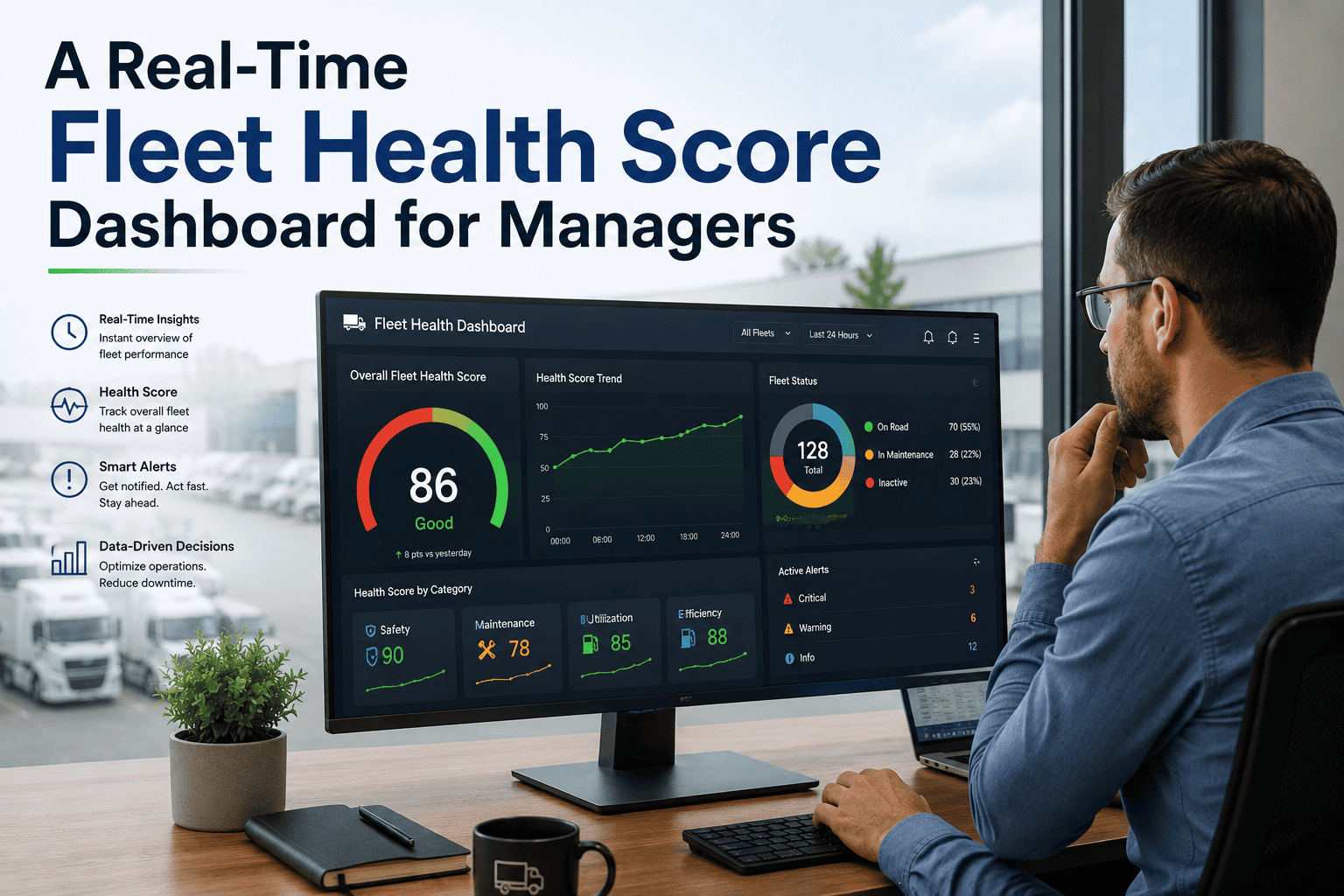
AI digital twin models for fleet vehicles are only as accurate as the data that feeds them. A digital twin updated every few minutes on 4G telemetry batches produces a maintenance prediction that is accurate to the hour at best. A digital twin updated continuously on 5G streaming data produces a model that is accurate to the second — detecting component degradation trends that are invisible in batched data and generating predictive work orders with a precision that can specify not just which component will fail, but within what operating distance or time window. OxMaint's 5G digital twin integration enables the fleet-level health dashboard that shows every vehicle's condition in real time, with predictive replacement windows for every major component on every vehicle.
Book a demo to see the 5G-fed digital twin fleet health dashboard in OxMaint.
Digital Twin Parameters Enabled by 5G
Component wear modelling — continuous stress data updates degradation curve in real time
Route-adjusted predictions — terrain and load data refines replacement windows per route
Fleet-wide pattern detection — AI identifies failure modes emerging across vehicle population
Manufacturer service bulletin matching — 5G update delivery for newly issued service bulletins
4G Digital Twin Limitations That 5G Resolves
Hourly model updates — component degradation between 4G sync windows is not captured
Population pattern lag — fleet-wide patterns take days to emerge in batched data
Coarse prediction windows — 4G data granularity limits prediction accuracy to ±weeks
OxMaint · 5G Connected Fleet Platform · Real-Time AI
5G Turns Every Vehicle Into a Real-Time Data Source. OxMaint Turns That Data Into Maintenance Intelligence That Prevents Breakdowns Before They Happen.
Real-time AI diagnostics. Live camera vision. Remote breakdown resolution. Digital twin precision at 5G speed. One platform that makes it all work together.
Three 5G Technology Enablers That Change Fleet Maintenance Economics
How 5G Network Capabilities Unlock Fleet AI That 4G Cannot Support
Capability · Ultra-Low Latency
Sub-10ms Round-Trip for AI Processing
5G's latency below 10ms enables the continuous feedback loop between vehicle sensors and AI models that makes true predictive maintenance possible. OxMaint AI receives, processes, and responds to sensor data faster than any mechanical fault can propagate from early-stage anomaly to detectable symptom — acting before the fault, not after.
Outcome: Predictive alerts fire before OBD fault codes — weeks earlier intervention window
Capability · Massive Bandwidth
10 Gbps for Full Sensor + Video Data Streams
5G's bandwidth supports simultaneous transmission of full-resolution video from all vehicle cameras plus complete sensor telemetry from every connected system — with no compression trade-offs or bandwidth throttling. OxMaint receives the complete data picture from every vehicle, enabling AI analysis that sees what cameras see and what sensors measure at the same instant.
Outcome: AI camera vision over 5G detects visual faults that sensors alone cannot classify
Capability · Network Slicing
Dedicated Bandwidth for Safety-Critical Alerts
5G network slicing allows fleet operators to reserve a dedicated bandwidth channel for safety-critical maintenance alerts — guaranteeing that brake system warnings, steering anomalies, and tyre failure indicators are transmitted with priority over entertainment or general telematics data. OxMaint integrates with 5G network slice management to ensure the highest-priority alerts always reach the platform first.
Outcome: Safety-critical alerts guaranteed delivery under any network load condition
5G Fleet Management Risk Register — Where Connectivity Gaps Cost the Most
Critical Risk
Brake System Anomaly Detection
Brake pressure anomalies develop in milliseconds. 4G batch telemetry misses sub-second events that 5G streaming captures — the difference between a preventive brake service and a failure on the highway.
Critical Risk
Engine Thermal Event Early Detection
Coolant system failures that lead to engine destruction often show a 4–8 minute temperature trend before the warning light fires. 5G continuous streaming gives OxMaint AI the data to catch that trend — 4G batch intervals miss it entirely.
Critical Risk
Remote Breakdown Without Diagnostic Capability
A breakdown at a rural location with only 4G coverage means a 90+ minute technician dispatch without diagnosis. 5G remote diagnostic sessions let OxMaint technicians resolve or precisely diagnose the fault before anyone leaves the depot — often resolving the breakdown remotely.
Elevated Risk
Cargo Security and Load Monitoring
High-value cargo theft and load shifting require real-time camera monitoring that 4G cannot reliably sustain. 5G enables continuous HD streaming from trailer cameras with AI alerting on any cargo anomaly detected during transit.
Elevated Risk
Driver Safety Monitoring at Scale
Driver fatigue and distraction monitoring requires AI analysis of continuous cab camera video — a bandwidth demand that 4G cannot support across a full fleet simultaneously. 5G makes fleet-wide driver monitoring viable and cost-effective.
Elevated Risk
Fleet-Wide Software and Map Updates
Over-the-air software updates, map data, and AI model refreshes require significant bandwidth to deploy fleet-wide without depot downtime. 5G delivers OTA updates to vehicles in transit — eliminating the depot bandwidth bottleneck that delays 4G-era update deployments by days.
5G vs. 4G Fleet Connectivity — OxMaint Performance Comparison by Use Case
Documented Outcomes — Fleets Using OxMaint on 5G-Connected Infrastructure
68%
reduction in vehicle downtime at fleets using 5G real-time AI diagnostics vs. 4G telematics and scheduled inspection programmes
90 min
average breakdown resolution time on 5G-enabled remote diagnostics — vs. 4.2 hours average for traditional dispatch-and-diagnose response
$4,100
average repair cost avoided per 5G predictive maintenance intervention — catching component degradation before failure multiplies across fleet size
60×
faster data delivery than 4G — the latency advantage that makes real-time AI fleet diagnostics possible at scale
2026
year 5G coverage reaches 85% of US interstate corridors — the fleet deployment threshold for national-scale 5G telematics
4–8 min
early warning window for engine thermal events — only detectable from continuous 5G data streams, invisible to 4G batch telemetry
$4,100
average avoided repair cost per 5G predictive intervention — the ROI case for 5G fleet connectivity investment
Your fleet generates thousands of data points per vehicle per minute. On 4G, most of them never reach your AI platform in time to matter. On 5G, every one of them does.
OxMaint is built to process 5G data streams at the speed they arrive — turning real-time vehicle telemetry into maintenance intelligence that prevents breakdowns, not reports them.
We piloted 5G telematics with OxMaint on 40 vehicles for six months. The AI caught a developing transmission issue on three trucks from continuous pressure data trends — none of those trucks had thrown a fault code. We replaced the solenoids at $800 each. Had we waited for the OBD code, we were looking at full transmission rebuilds. The 5G pilot paid for itself in month two.
— VP of Fleet Operations, National Carrier · Texas · 480-vehicle fleet · OxMaint 5G pilot 2024
Frequently Asked Questions — 5G Connected Fleet Management with OxMaint
Does OxMaint work on both 4G and 5G networks — or is 5G required?
OxMaint operates on both 4G and 5G networks. 4G provides standard telematics and scheduled alerting. 5G unlocks real-time AI diagnostics, multi-camera streaming, and remote diagnostic sessions. Fleets can deploy OxMaint on 4G today and gain 5G capabilities as network coverage expands — no platform change required.
Sign in to OxMaint to configure your connectivity settings.
How does OxMaint handle vehicles in areas with no 5G coverage?
OxMaint automatically falls back to 4G or 3G where 5G is unavailable — with offline data buffering on the vehicle device. When 5G coverage is restored, buffered data syncs and AI analysis catches up. Real-time features like remote diagnostics resume automatically when the vehicle re-enters 5G coverage.
What hardware is needed on the vehicle to support 5G OxMaint connectivity?
OxMaint 5G connectivity requires a 5G-capable telematics gateway installed on the vehicle — compatible with most major telematics hardware providers including Geotab, Samsara, and Cradlepoint. Existing 4G hardware can be upgraded to 5G modules for most current telematics installations without full hardware replacement.
Book a demo to review hardware compatibility for your current telematics setup.
How does OxMaint AI use 5G data to generate predictive maintenance alerts before faults occur?
OxMaint's AI models monitor continuous 5G telemetry streams for trend deviations in component-specific parameters — brake pressure patterns, engine vibration signatures, transmission temperature curves — and generate predictive alerts when trends indicate developing failure, often days or weeks before OBD fault codes fire or symptoms become detectable by drivers.
Can OxMaint remote diagnostics over 5G actually resolve breakdowns without dispatching a technician?
In approximately 30% of breakdown cases, OxMaint remote 5G diagnostic sessions resolve the issue without on-site response — typically through remote fault code clearing, remote ECU parameter adjustment, or driver-guided simple repairs confirmed by remote technician video. For the remaining 70%, the remote session precisely identifies the fault and required parts before the technician departs — reducing average on-site resolution time from 4.2 hours to under 90 minutes.
5G Is Here. Your Fleet's AI Platform Should Be Ready to Use It.
Real-time diagnostics. Live camera AI. Remote breakdown resolution. OxMaint is built for 5G-speed fleet data — so every vehicle in your fleet becomes a predictive maintenance asset, not a breakdown waiting to happen.