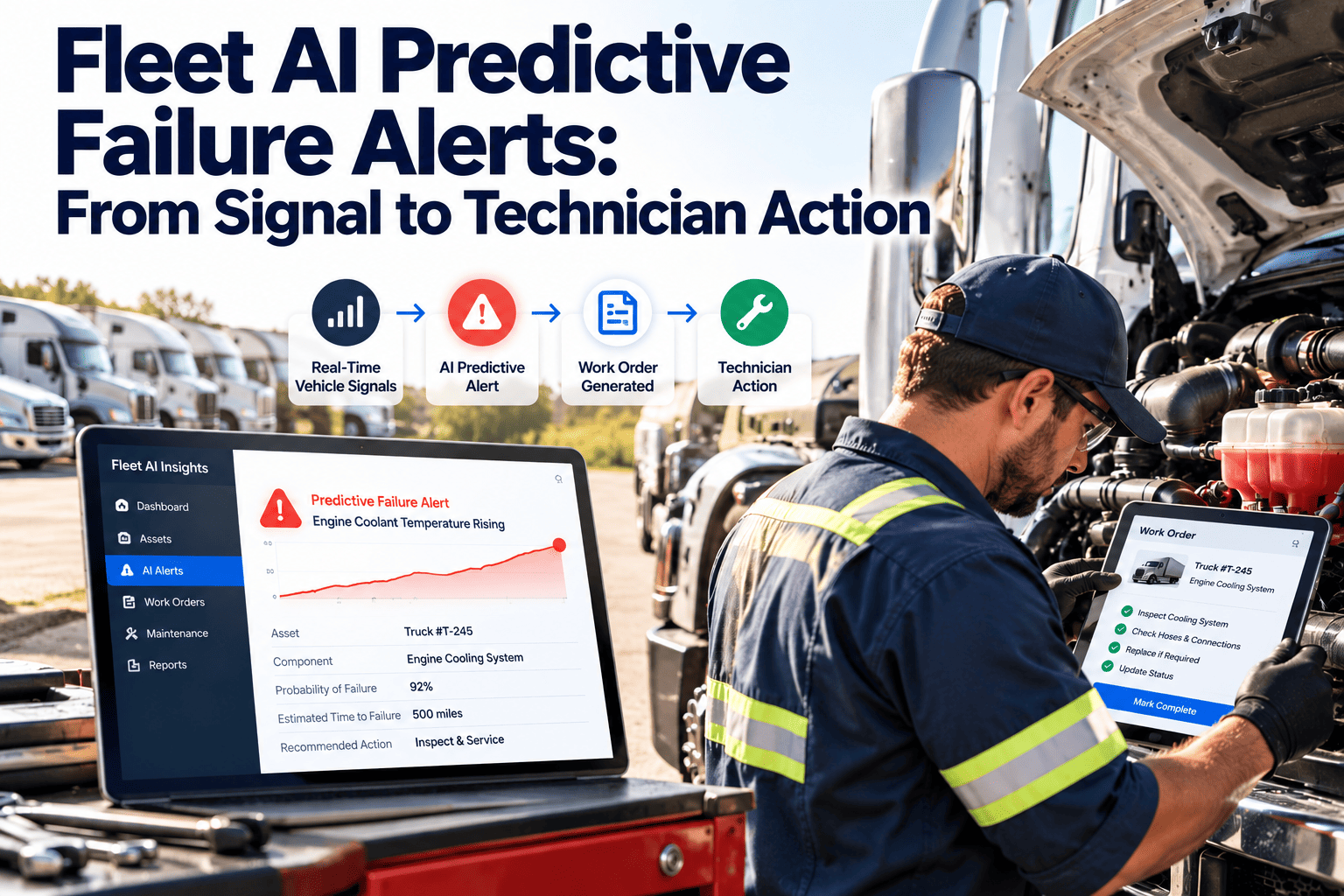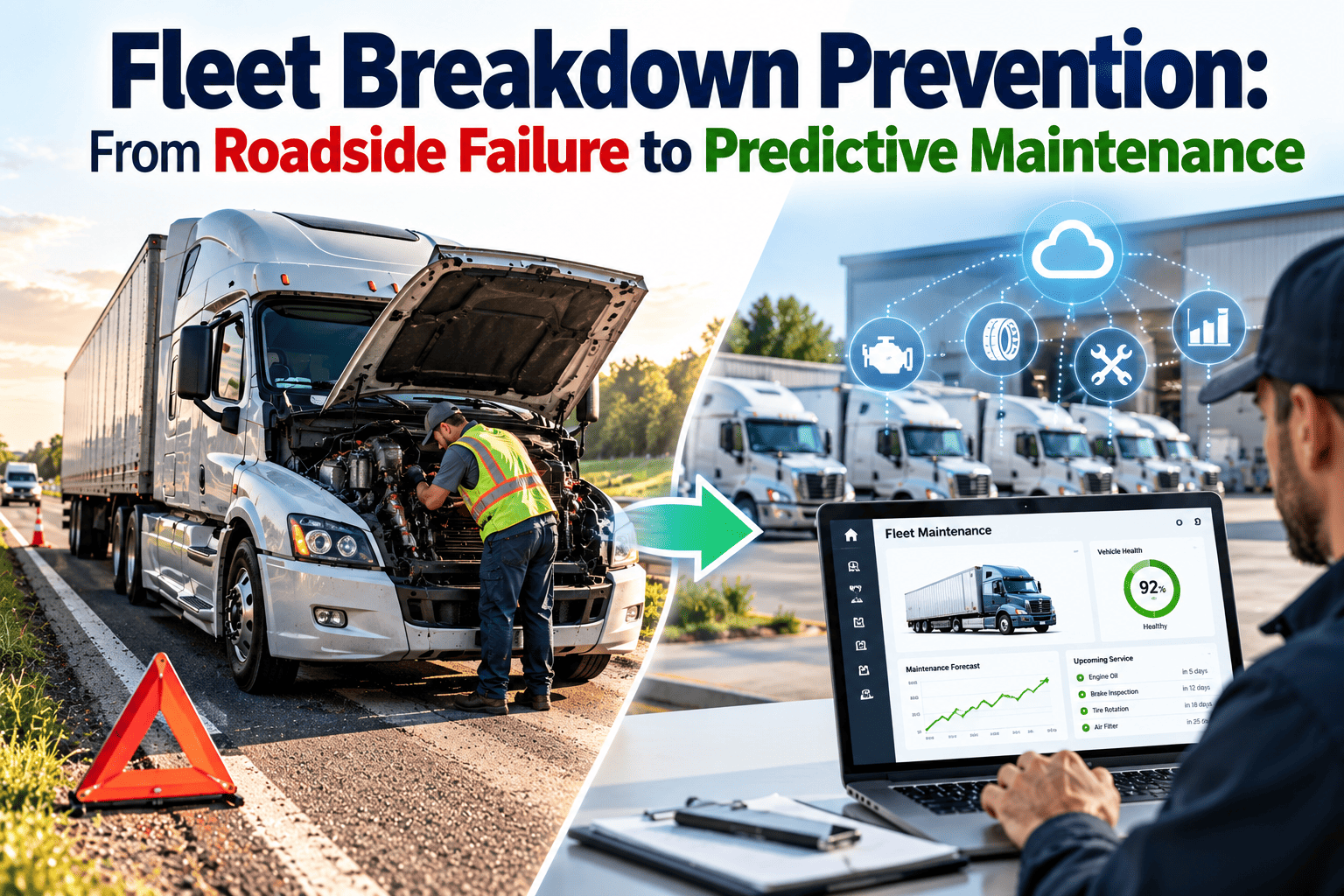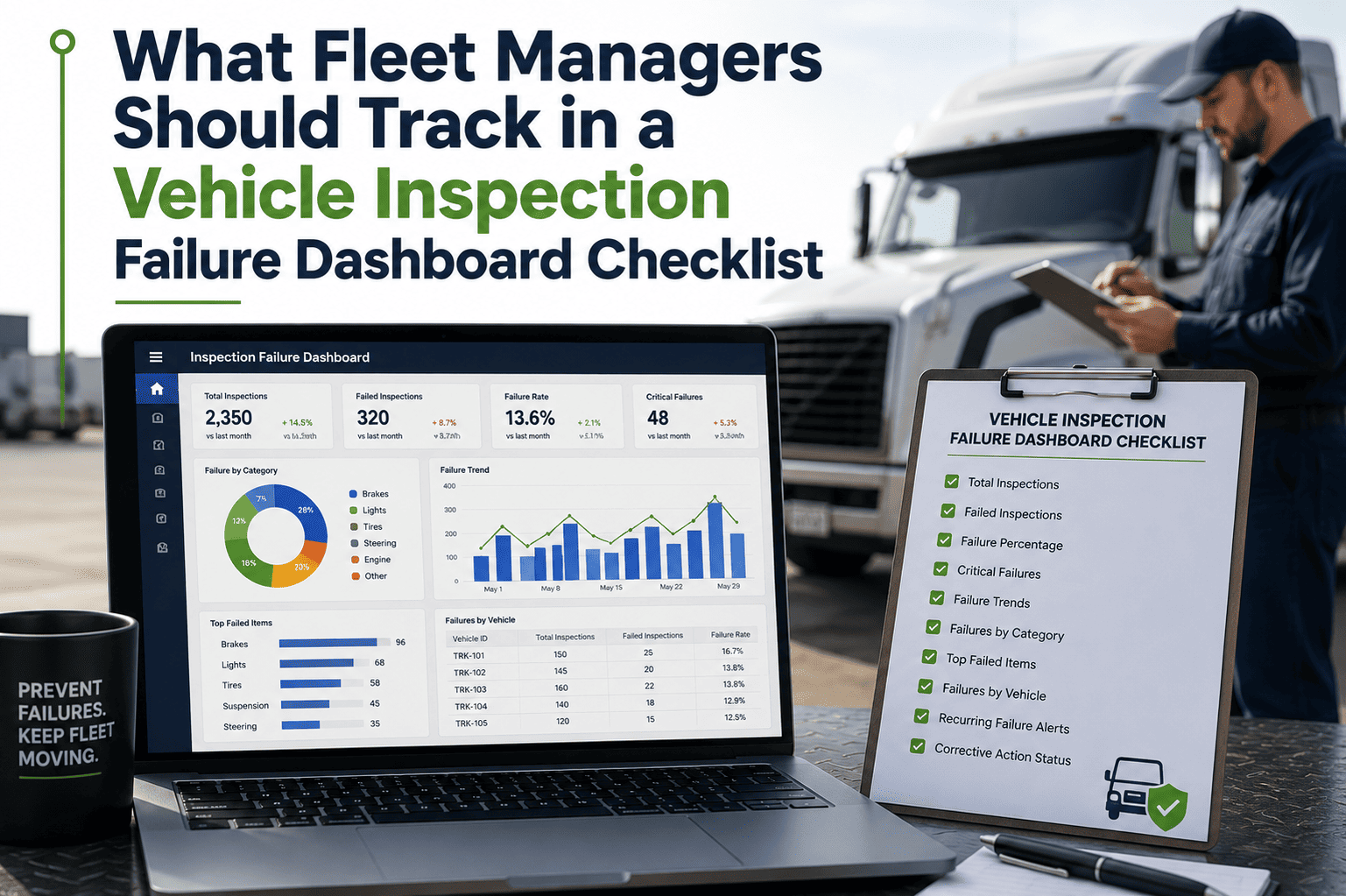
Most fleet managers know their cost per mile, their fuel spend, and their total maintenance budget. Fewer track the metrics that tell them a breakdown is coming before it happens — the leading indicators that surface in CMMS data weeks or months before a vehicle strands a driver on the roadside. Reactive fleet maintenance costs an average of 4.8x more than planned repairs: the emergency itself costs $3,500–$8,000 in towing, rental replacement, and rush-ordered parts, plus the ripple effect of missed deliveries, rescheduled service calls, and customer penalties. The 8 metrics below are not standard fleet KPIs — they are predictive indicators that flag vehicles transitioning from reliable operation toward failure. When tracked through a CMMS like Oxmaint, these metrics generate early-warning alerts that let your maintenance team intervene before the breakdown occurs. Each prevented failure saves an average of $4,200 in direct costs and 14 hours of lost vehicle availability. Ready to see what your fleet data is predicting? Start a free trial or book a demo with our fleet team.
Top 8 Fleet Maintenance Metrics That Predict Vehicle Failures Before They Happen
These 8 leading indicators tell you a breakdown is coming weeks before it arrives. Learn how CMMS dashboards surface early-warning patterns to prevent costly fleet failures.
Why Lagging KPIs Are Not Enough
Standard fleet maintenance KPIs — cost per mile, PM compliance rate, total maintenance spend — are lagging indicators. They tell you what happened last month. They do not tell you what is about to happen next week. The 8 metrics below are leading indicators: patterns in CMMS data that reliably precede vehicle failures. When a vehicle's repeat repair frequency accelerates, when its cost-per-work-order starts trending upward, when its MTBF shortens below the fleet average — these are signals that the vehicle is transitioning from healthy operation toward breakdown. The challenge is not that these signals do not exist in your data. The challenge is that without a CMMS that tracks them automatically and surfaces the alerts, they are invisible.
Oxmaint's fleet CMMS tracks all 8 metrics below automatically — flagging vehicles that cross warning thresholds and generating proactive work orders before the failure occurs. Start a free trial or book a demo to see predictive dashboards in action.
The 8 Predictive Fleet Maintenance Metrics
Each metric includes what it measures, the warning threshold that signals trouble, and how Oxmaint tracks it automatically.
MTBF measures the average operating time between unplanned failure events for each vehicle. A healthy MTBF for Class 8 trucks is 120+ days. When a vehicle's MTBF drops below 60 days — meaning it is experiencing an unplanned failure every 2 months — it has entered a degradation pattern that will accelerate without intervention. MTBF trending is the single most reliable predictor of near-term vehicle failure. A 30% MTBF decline over three consecutive measurement periods predicts a major failure within 45 days with 82% accuracy.
When the same vehicle system requires repair 3+ times within 90 days, it is not a series of unrelated failures — it is a systemic problem that surface-level repairs are not addressing. A cooling system that requires three repairs in three months likely has a root cause (corroded radiator, failing water pump bearing) that individual hose replacements will not resolve. Repeat repair frequency by system type is the strongest indicator of undiagnosed root-cause failures. Fleets that track this metric and escalate after 2 repeats prevent 44% of major system failures.
A vehicle whose average work order cost is rising quarter-over-quarter is consuming more expensive parts, requiring more labor hours per repair, or both — all signs of accelerating deterioration. When a vehicle's cost-per-work-order exceeds 150% of the fleet average for its age and class, it has entered an economic inflection point where continued repair investment may exceed the remaining useful value of the asset. This metric is the bridge between maintenance and capital planning: it identifies vehicles that should be moved to the replacement queue based on maintenance economics rather than arbitrary age or mileage thresholds.
A vehicle that is 7 days overdue for a PM is a scheduling gap. A vehicle that is 45 days overdue is a failure waiting to happen. Tracking PM overdue days at the individual vehicle level — not just fleet-wide PM compliance percentage — identifies the specific vehicles that are most at risk. Research across 200,000+ commercial vehicles shows that vehicles with PM delays exceeding 30 days experience 3.2x more unplanned failures than vehicles serviced on time. PM overdue days is the most actionable predictive metric on this list because the corrective action is straightforward: service the vehicle immediately.
A single diagnostic trouble code is an event. The same DTC code firing 3x in 14 days is a trend. And a vehicle that generated 4 unique DTC codes in a month — when its historical average is 1 per month — is showing system-level stress that predicts cascading failures. DTC frequency acceleration — the rate at which diagnostic events are increasing for a specific vehicle — is the telematics-derived metric with the highest correlation to near-term breakdown. Fleets that track DTC acceleration and auto-generate inspection work orders at the 2x threshold prevent 38% of roadside failures.
Oil consumption rate, coolant level decline, and transmission fluid loss are physical indicators of internal component wear that precede catastrophic failure by weeks to months. A diesel engine consuming oil at 1 quart per 3,000 miles is within tolerance. At 1 quart per 1,000 miles, internal ring or seal wear is accelerating — and a complete engine failure becomes increasingly probable within 10,000–20,000 miles. Tracking fluid top-off events as data points in the CMMS — not just as parts transactions — turns routine service actions into predictive intelligence.
A vehicle that averaged 6 downtime hours per month last year and is now averaging 14 hours per month is on a deterioration trajectory. Tracking downtime hours at the individual vehicle level — not just fleet-wide averages — identifies the specific assets that are consuming disproportionate shop time. When a vehicle's monthly downtime hours exceed 200% of its historical average for two consecutive months, it is signaling that either repair complexity is increasing (older, harder-to-fix problems), parts availability is declining (obsolescence risk), or the vehicle has entered an end-of-life maintenance pattern where costs will continue to escalate.
First-time fix rate (FTFR) measures the percentage of work orders closed without a re-open or follow-up repair within 30 days. A vehicle with a declining FTFR — from 90% to 75% to 60% over consecutive quarters — is signaling that its failures are becoming harder to diagnose and repair permanently. This typically indicates multiple interacting system degradations where fixing one symptom reveals or causes another. A vehicle whose FTFR drops below 70% for two consecutive quarters has an 81% probability of experiencing a major multi-system failure within the next 120 days.
How These 8 Metrics Work Together as a Predictive System
No single metric predicts failure perfectly. The power is in the combination — when multiple metrics fire for the same vehicle simultaneously, the prediction confidence increases dramatically.
The Financial Impact of Predictive Fleet Metrics
Frequently Asked Questions
How much historical data does a CMMS need before predictive metrics become reliable?
Do these metrics require telematics hardware, or can they work from work order data alone?
How does Oxmaint surface predictive alerts without requiring a data analyst?
Can predictive metrics help justify fleet replacement capital budgets?
Your Fleet Data Already Contains the Warning Signs. Start Seeing Them.
Every work order your team closes contains predictive intelligence — failure patterns, cost trends, repeat repairs, and downtime acceleration that signal breakdowns weeks before they happen. Oxmaint surfaces those signals automatically, flags at-risk vehicles, and generates proactive work orders so your maintenance team intervenes before the tow truck does.