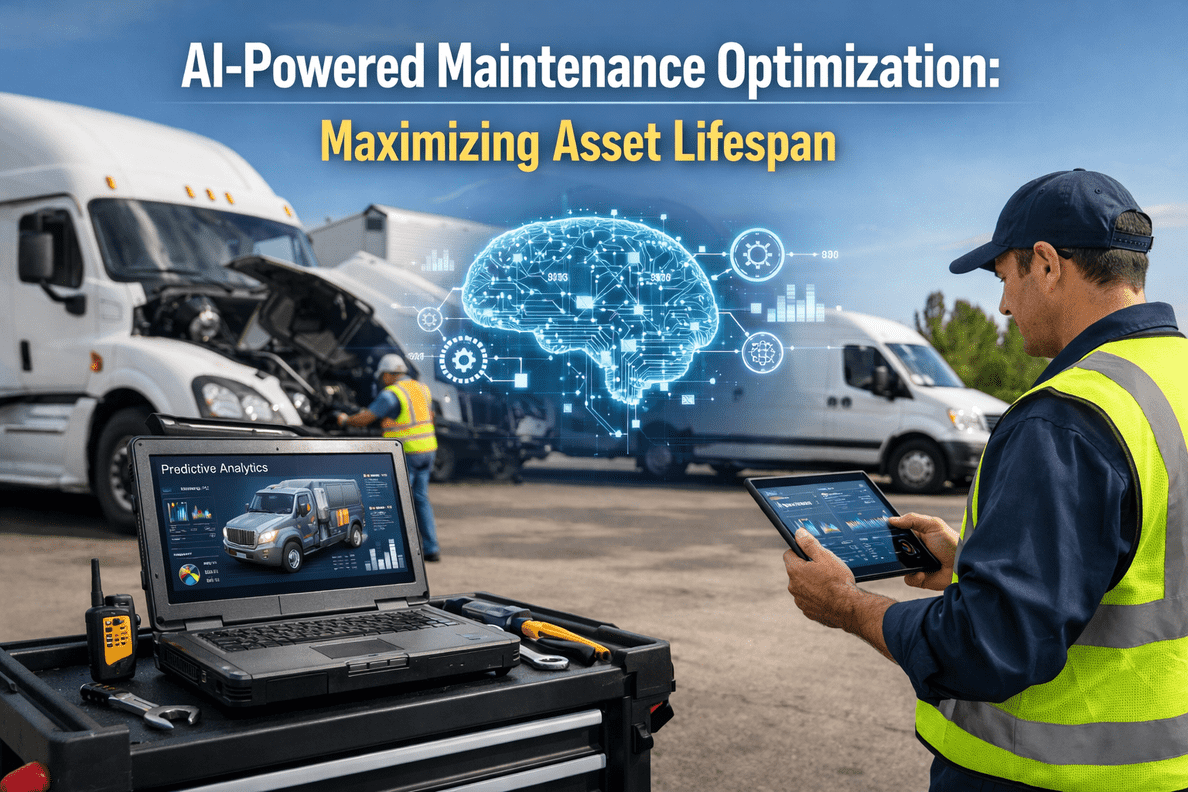
Fleet maintenance is no longer a guessing game. In 2026, AI-powered maintenance optimization has shifted from a competitive advantage to an operational necessity. With the global predictive maintenance market projected to reach $98 billion by 2033, and AI now detecting vehicle failures up to 3 weeks in advance with 94% accuracy, fleet managers still running on fixed schedules and breakdown response are leaving massive value on the table. The shift is happening now — 53.3% of fleets are already researching or piloting AI capabilities, while the 32% fully deployed are cutting unplanned downtime by up to 45% and reducing maintenance costs by 20–40%. This guide breaks down exactly how AI maintenance optimization works, what it delivers, and how to implement it across your fleet. If you want to see it in action, start your free OxMaint trial or book a live demo today.
Stop Reacting. Start Predicting.
OxMaint's AI maintenance platform connects to your existing telematics, predicts failures weeks ahead, and automates work orders — deployed in days, not months.
What Is AI-Powered Maintenance Optimization?
AI-powered maintenance optimization uses machine learning, IoT sensor data, and predictive analytics to move fleet maintenance from time-based schedules and reactive repair to condition-based, failure-predicting intelligence. The system continuously monitors asset health across hundreds of parameters — engine diagnostics, oil quality, brake wear, tire pressure, battery voltage, transmission temperature — and calculates remaining useful life for every component in real time. When a threshold is crossed, the system automatically generates a work order, schedules the intervention during planned downtime, and ensures parts are staged before the technician arrives. This is not a futuristic concept. It is the operational standard for top-performing fleets in 2026.
The Real Cost of Getting Maintenance Wrong
Before understanding what AI delivers, you need to see what current maintenance gaps are actually costing fleet operators. The 2026 Fleet Benchmark Report — covering 1.2 million vehicles and $7 billion in service spend — reveals a painful reality across the industry.
How AI Maintenance Optimization Works
Modern AI maintenance platforms operate as a continuous intelligence layer across your entire fleet. Here is exactly how the system works from sensor to action.
Key AI Maintenance Capabilities Fleet Managers Need in 2026
Reactive vs. Preventive vs. AI Predictive: The Full Comparison
Not all maintenance strategies deliver the same outcomes. Here is how the three models compare across the metrics that matter most to fleet operators.
| Metric | Reactive | Preventive | AI Predictive |
|---|---|---|---|
| Failure Detection | After breakdown | At scheduled interval | 20–45 days in advance |
| Cost per Repair Event | 4.8x planned cost | Planned cost | 20–40% below preventive |
| Vehicle Uptime | Unpredictable | Moderate | Up to 45% improvement |
| Parts Waste | High — emergency procurement | 38% replaced prematurely | Minimal — replace on condition |
| Work Order Speed | Reactive, unplanned | Manual scheduling required | Automated, instant generation |
| CapEx Visibility | None | Limited | 5–10 year rolling forecast |
| Fuel Efficiency | Degraded between failures | Partially maintained | 8–15% fuel savings sustained |
| Compliance Risk | High — reactive documentation | Moderate | Automated audit-ready records |
Real-World Results: What AI Maintenance Delivers
How OxMaint Delivers AI Maintenance Optimization
OxMaint is built as a maintenance-first AI platform for fleet and asset-intensive operations. Every capability is designed around the real workflows of maintenance managers, fleet coordinators, and operations directors who manage complex asset portfolios under cost pressure.
Frequently Asked Questions
What is AI-powered maintenance optimization and how does it differ from preventive maintenance?
AI-powered maintenance optimization uses machine learning and real-time sensor data to predict when a component will fail — before it actually does. Traditional preventive maintenance works on fixed calendar or mileage intervals regardless of actual asset condition. AI maintenance intervenes based on real condition data, eliminating both premature replacements (up to 38% of preventively replaced parts still have useful life) and surprise failures. The result is lower cost, higher uptime, and zero wasted maintenance budget. Ready to make the switch? Sign up for OxMaint free or book a demo to see how it works on your fleet.
How quickly can we see results after deploying AI maintenance software?
Well-designed AI maintenance pilots show measurable results within 6–12 weeks of deployment. OxMaint connects to your existing telematics and begins generating predictive alerts within days of setup — no IT project or hardware changes required. Most fleets see their first prevented failure within the first month. Full ROI — typically 200–500% annually — is usually realized within 3–6 months. Book a demo to see a deployment timeline specific to your fleet size and current telematics setup.
Does AI maintenance software work with our existing telematics hardware?
Yes. OxMaint is built hardware-agnostic — it connects to telematics data from any provider without requiring you to replace your existing GPS trackers or OBD-II devices. If your vehicles already have telematics installed, OxMaint can ingest that data immediately to power predictive maintenance alerts. Over 90% of vehicles manufactured in 2026 ship with embedded telematics, meaning most modern fleets can activate AI maintenance intelligence without purchasing any additional hardware. Sign up free and connect your existing telematics in minutes.
How does AI maintenance optimization handle mixed fleets with EVs and ICE vehicles?
OxMaint manages ICE, hybrid, and EV assets in a single unified dashboard with powertrain-specific health models. EV fleet maintenance involves entirely different failure modes — battery cell degradation, thermal management health, charging infrastructure reliability, and regenerative braking wear — all of which OxMaint tracks separately from diesel diagnostics. As EV adoption accelerates (crossing 20% global market share in 2025), having a platform that handles both fleet types without switching systems is critical. Book a demo to see the multi-powertrain dashboard in action.
Start Predicting Failures Before They Happen
OxMaint connects to your existing telematics, deploys AI maintenance models, automates work orders, and delivers fleet-wide condition intelligence — all in a single platform. Free to start. Results in weeks.



.png)