Fleet operations managers running 20 or more vehicles on fixed route schedules are leaving measurable money on the table every single day. The average commercial fleet wastes 12–15% of total fuel consumption on suboptimal routing — not because dispatchers are not doing their jobs, but because the volume and complexity of real-time variables involved in routing decisions simply exceed human processing capacity. Traffic conditions shift every 4 minutes. Weather events alter road viability within hours. Customer delivery windows close and reopen. A single breakdown ripples across 6 downstream stops. AI-powered route optimization processes all of these variables simultaneously and continuously, making dynamic routing adjustments that static spreadsheet planning and legacy dispatch software cannot match. Fleets that have deployed AI routing software report fuel cost reductions of 18–24%, delivery time improvements of 22%, and driver overtime hours cut by 31% within the first quarter of operation. Start a free trial for 30 days and see how Oxmaint's fleet management platform connects route optimization to your preventive maintenance schedule so vehicle availability always matches dispatch demand — or book a demo to walk through the full fleet operations workflow.
Fleet Operations · AI Route Optimization · 2026 Complete Guide
Route Optimization for Fleet Operations: AI-Powered Solutions That Save Time and Fuel
Dynamic re-routing, traffic prediction, multi-stop planning, and AI-driven schedule coordination — the complete operational guide for fleet managers ready to move beyond static route planning
24%
Average fuel cost reduction with AI route optimization vs static planning
31%
Reduction in driver overtime hours across fleets using dynamic re-routing
22%
Delivery time improvement from multi-stop AI planning algorithms
$18K
Annual savings per vehicle in fleets of 20+ units using AI routing software
Why Static Route Planning Breaks Down at Scale
Static routing — building schedules in advance and running them unchanged — worked when fleets were small and delivery windows were wide. Neither condition holds in 2026. Here is where the gap between static planning and AI routing becomes financially visible.
01
No Real-Time Traffic Adaptation
Static routes assume yesterday's road conditions. A single accident or road closure adds 28 minutes to average route completion — multiplied across 30 vehicles, that is 14 hours of lost productive time daily that dispatchers cannot recover without live re-routing capability.
02
Multi-Stop Sequencing Done Manually
Human dispatchers optimizing 12-stop routes can evaluate hundreds of sequences. AI evaluates millions — and factors in time windows, vehicle capacity, driver hours-of-service compliance, and fuel consumption simultaneously. Manual multi-stop planning leaves 15–18% efficiency unrealized.
03
Maintenance Downtime Ignored in Dispatch
When a vehicle pulls for scheduled maintenance, dispatchers redistribute its stops manually — often creating two suboptimal routes instead of one. Integrating maintenance schedules with routing software eliminates dispatch scrambles and ensures PM-ready vehicles are always available for planned delivery days.
04
Weather Impacts Are Reactive, Not Predictive
Dispatchers reroute around weather after it has already disrupted deliveries. AI routing integrates weather forecast APIs 6–12 hours ahead, proactively adjusting routes before drivers are on the road — avoiding delays rather than reacting to them. This alone reduces weather-related delivery failures by 43%.
The 6 Core Capabilities of AI Route Optimization
Not all routing software delivers the same result. These six capabilities separate true AI-powered optimization from basic mapping tools with a route-planning label. Start a free trial to see how Oxmaint integrates all six into a unified fleet management workflow, or book a demo for a live walkthrough of the routing coordination layer.
Core Capability 01
Dynamic Real-Time Re-Routing
Continuous route recalculation based on live traffic feeds, incidents, and road closures. When conditions change mid-route, the system pushes an updated sequence to the driver's mobile device within 60 seconds — no dispatcher intervention required for standard re-routing events.
Core Capability 02
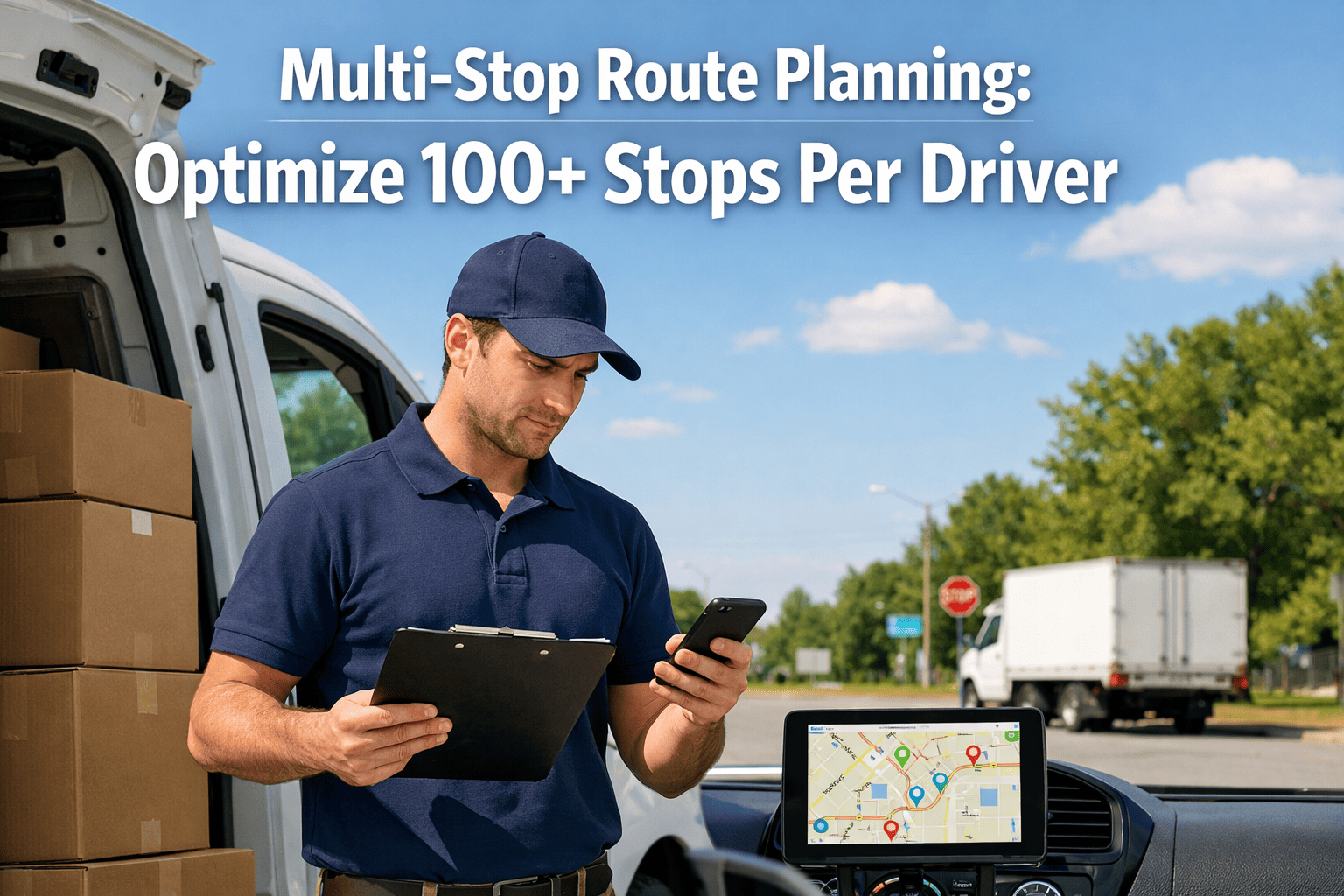
Multi-Stop Sequence Optimization
Vehicle Routing Problem (VRP) algorithms evaluate millions of stop sequences against delivery windows, vehicle capacity, driver hours-of-service limits, and fuel consumption — returning the optimal sequence in seconds. Most fleets see 15–22% route distance reduction vs manually planned sequences.
Core Capability 03
Predictive Traffic Integration
Historical traffic pattern analysis combined with real-time feed processing to predict congestion before it occurs. Routes planned for 7 AM departure account for the congestion patterns that will exist at 9 AM when the vehicle actually reaches the downtown delivery zone — not conditions at departure time.
Core Capability 04
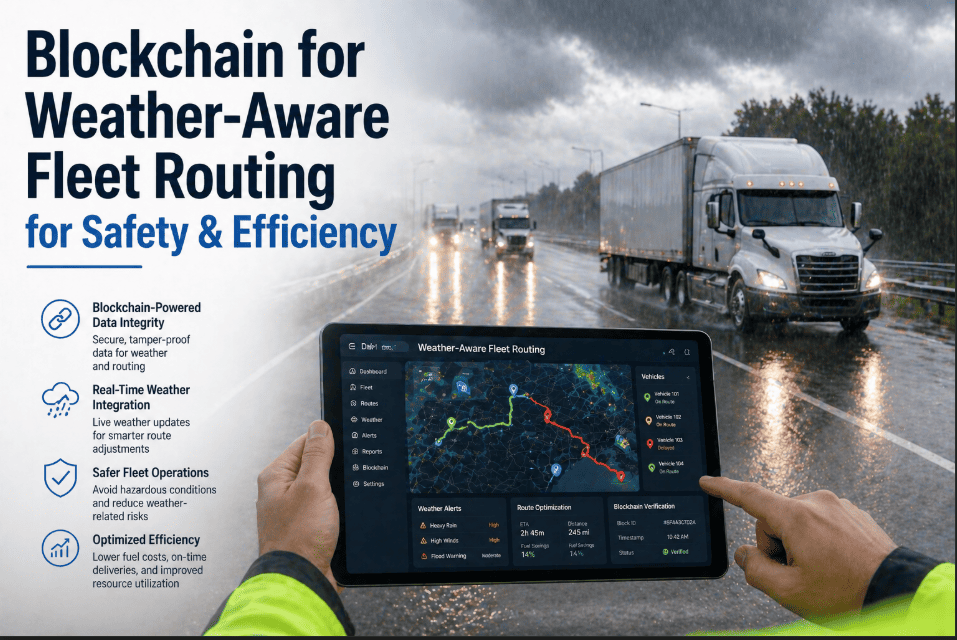
Weather Forecast Integration
6–12 hour weather forecast data incorporated into route planning. Ice, flooding, visibility, and wind events trigger proactive re-sequencing of stops before drivers depart. Reduces weather-related delivery failures by 43% and eliminates the reactive scramble that costs fleets 2–3 hours of dispatcher time per weather event.
Core Capability 05
Maintenance Schedule Coordination
PM due dates and service windows fed directly into dispatch planning so vehicles pulling for maintenance are excluded from route assignments automatically. No manual cross-referencing of maintenance calendars. Fleet availability is always accurate at dispatch time — preventing the common failure of dispatching vehicles that will need to stop mid-route.
Core Capability 06
Driver Hours-of-Service Compliance
Federal HOS regulations automatically factored into route and stop sequencing. Routes are calculated to return drivers within legal windows — preventing violations that average $16,000 per citation and eliminating the route planning errors that put dispatchers in compliance liability positions.
Static Planning vs AI Route Optimization: Side-by-Side
| Operational Dimension |
Static Route Planning |
AI Route Optimization |
| Route Update Frequency |
Weekly or daily — conditions assumed stable |
Continuous — every 4 minutes based on live data feeds |
| Multi-Stop Optimization |
Dispatcher experience and geographic intuition |
Millions of sequences evaluated algorithmically in seconds |
| Traffic Response |
Driver-initiated calls to dispatch when stuck |
Proactive push to driver mobile before delay occurs |
| Weather Handling |
React after weather impacts active deliveries |
6–12 hour forecast integration — route adjustments before departure |
| Maintenance Coordination |
Manual cross-check of maintenance calendar at dispatch |
PM schedule integrated — unavailable vehicles excluded automatically |
| Fuel Cost Visibility |
Monthly fuel card reconciliation — no route-level data |
Per-route, per-vehicle fuel consumption tracked in real time |
| HOS Compliance |
Dispatcher mental calculation — subject to error |
Automatic — routes sequenced within legal driver windows |
| Breakdown Response |
Manual reassignment of downstream stops — 45–90 min disruption |
Instant re-optimization of all affected routes — 3–5 min recovery |
How Oxmaint Connects Route Optimization to Fleet Maintenance
Route efficiency and vehicle availability are two sides of the same operational problem. The best route plan fails if the assigned vehicle is unavailable due to unscheduled maintenance. Oxmaint integrates both layers so dispatch planning and PM scheduling operate from a single source of truth. Start a free trial to see the connected workflow, or book a demo with a fleet operations specialist.
01
Asset Registry with Vehicle Condition Scoring
Every vehicle in the fleet has a live condition score updated after each inspection and work order. Dispatch planning pulls vehicle availability status directly from Oxmaint — no manual calendar checks, no surprises at departure time.
02
PM Schedules Visible to Dispatch Planning
Upcoming PM due dates — by mileage, engine hours, or calendar — are visible in the dispatch interface. When a vehicle hits its PM trigger, it is automatically flagged as unavailable for route assignment on the service day, preventing the mid-route breakdown that costs 4.8x more than scheduled maintenance.
03
Work Order History Informs Route Assignment
Vehicles with recent brake, tire, or suspension work orders are prioritized for route assignment over vehicles with deferred maintenance items. Route optimization that accounts for vehicle condition reduces mid-route breakdowns by 38% compared to condition-blind dispatch systems.
04
Mileage Data Feeds Back to PM Scheduling
Route completion data — actual miles driven per vehicle — automatically updates mileage-based PM triggers. No manual odometer logging. No maintenance missed because fleet managers did not know the vehicle had hit 5,000 miles since the last service. Closed loop between route execution and maintenance planning.
24%
Fuel Cost Reduction
average across fleets of 20+ vehicles deploying AI route optimization in year one
43%
Fewer Weather Failures
reduction in weather-related delivery failures with forecast-integrated proactive routing
38%
Fewer Mid-Route Breakdowns
when vehicle condition data from CMMS informs route assignment decisions at dispatch
3 min
Breakdown Recovery
average time to re-optimize all affected routes after a vehicle breakdown vs 45–90 min manually
Frequently Asked Questions
How much data does AI route optimization need before it starts improving results?
Basic optimization starts immediately using map data, traffic feeds, and the stop list — no historical data required. Results improve progressively as the system learns traffic patterns specific to your service area, typical stop dwell times, and driver performance variability. Most fleets see measurable fuel savings within the first two weeks and full optimization impact at the 60–90 day mark when pattern learning is complete.
What happens to route optimization when a vehicle breaks down mid-route?
When a breakdown event is registered — either from a driver alert or telematics trigger — the system immediately re-calculates all affected downstream stops and distributes them across available vehicles based on current position, remaining capacity, and HOS compliance. The full re-optimization completes in 3–5 minutes and pushes updated routes to affected drivers automatically. Dispatchers see the event and resolution without manually rebuilding routes.
How does Oxmaint prevent dispatching vehicles that are due for maintenance?
Oxmaint tracks PM triggers by mileage, engine hours, and calendar intervals for every vehicle in the fleet. When a vehicle approaches a PM threshold — configurable as a warning at 90% of interval and a hold at 100% — it is flagged in the dispatch interface as service-pending or unavailable. Route planning automatically excludes held vehicles from assignment. Mileage from completed routes feeds back to PM counters automatically, so triggers are always current without manual odometer logging.
What is the ROI timeline for AI route optimization software?
For fleets of 20+ vehicles, AI route optimization typically reaches positive ROI within 60–90 days based on fuel savings alone. At the 6-month mark when overtime reduction and breakdown prevention savings are added, average annual savings per vehicle run $16,000–$22,000 depending on fleet type and route density. The fastest payback is seen in high-stop-count delivery fleets where multi-stop sequencing inefficiency is highest — fuel savings of 22–24% in these operations often cover full-year software costs within the first quarter.
Fleet Route Optimization · Oxmaint Fleet Management Platform
Connect Route Optimization to Fleet Maintenance — Both Problems Solved in One Platform
Oxmaint gives fleet operations managers a single platform where vehicle availability, maintenance scheduling, and dispatch planning operate from the same data. Vehicles that are PM-ready appear in route planning. Mileage from completed routes updates PM counters automatically. No manual cross-referencing. No mid-route breakdowns from deferred service. Just fleet operations that run the way they are supposed to.



.png)