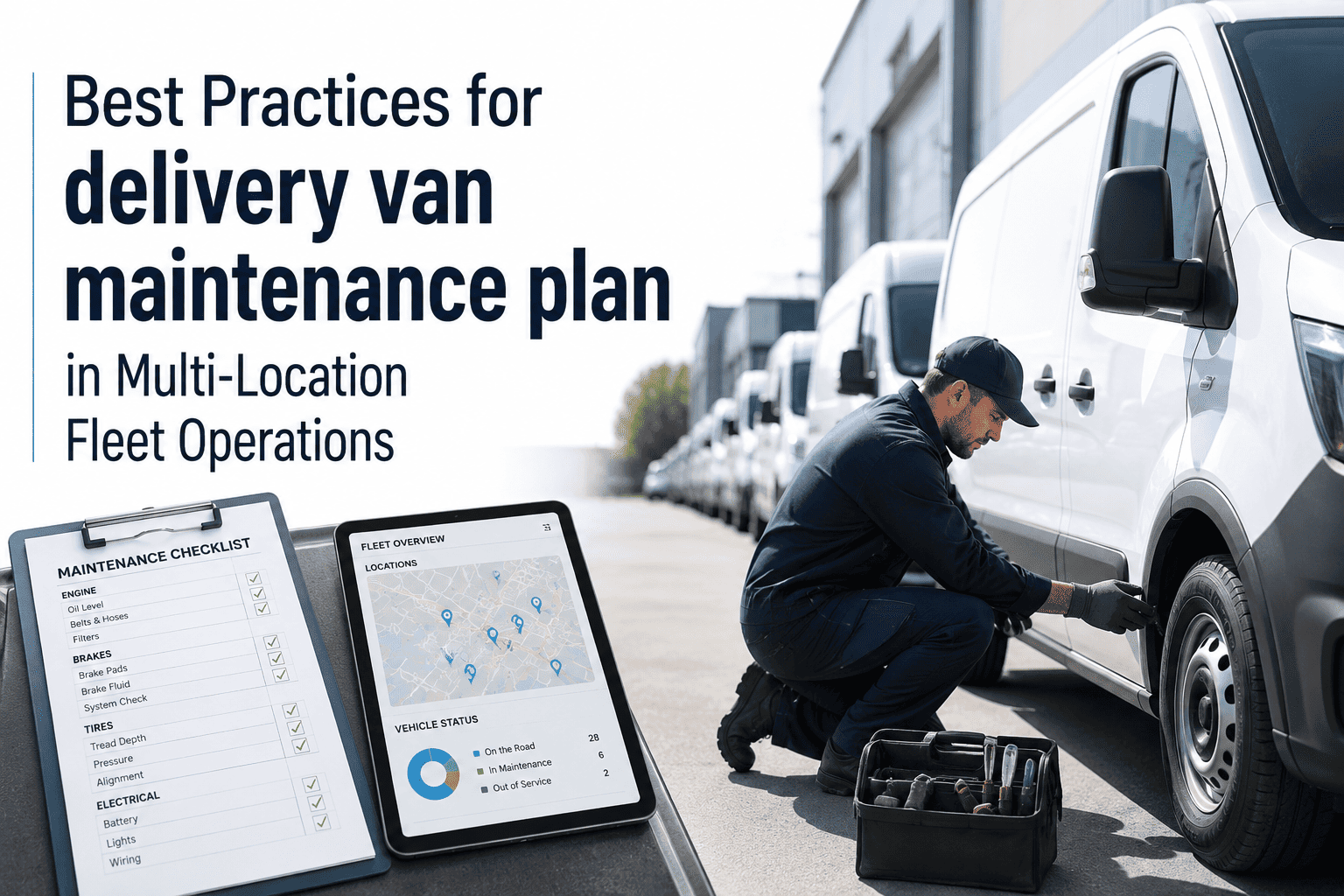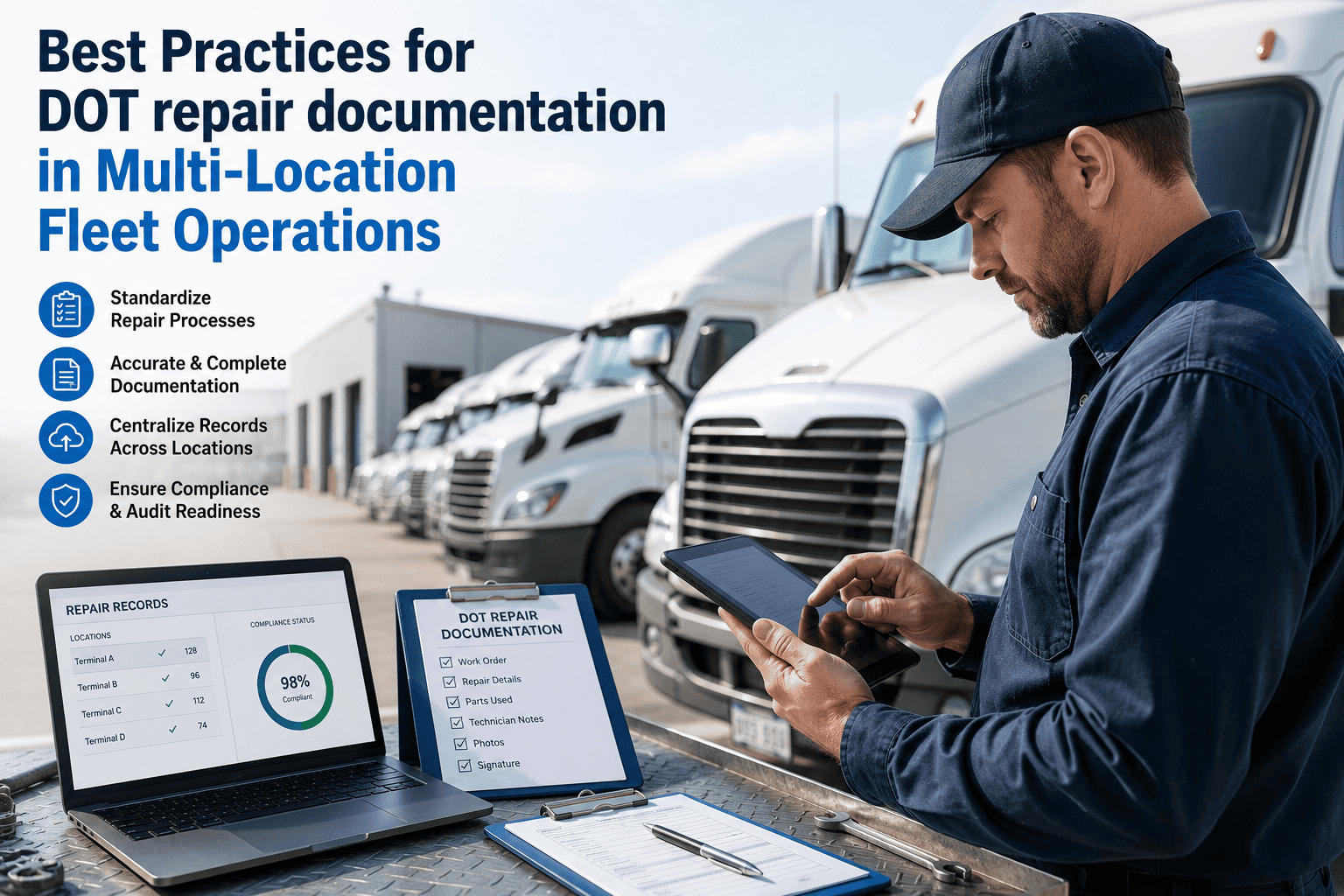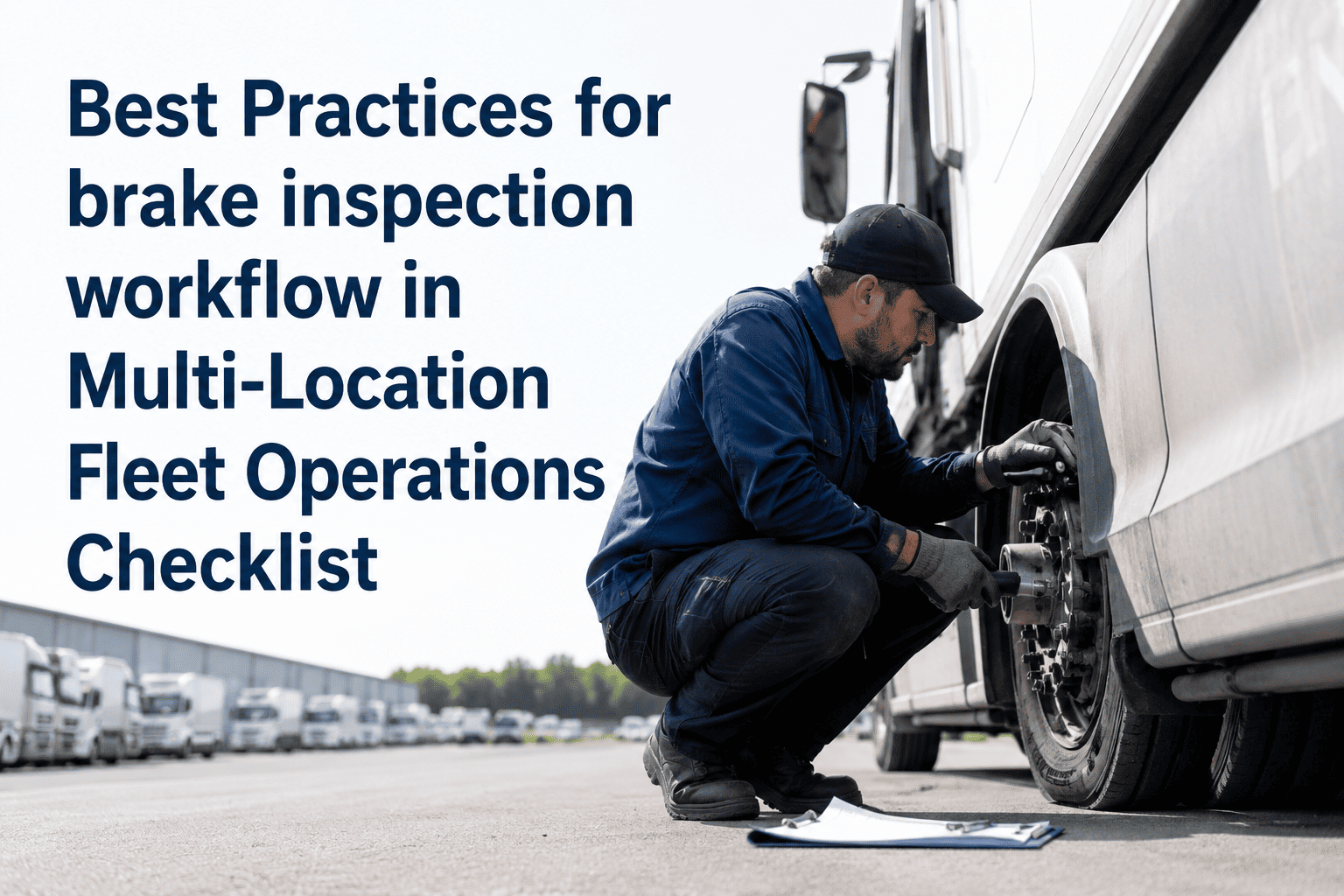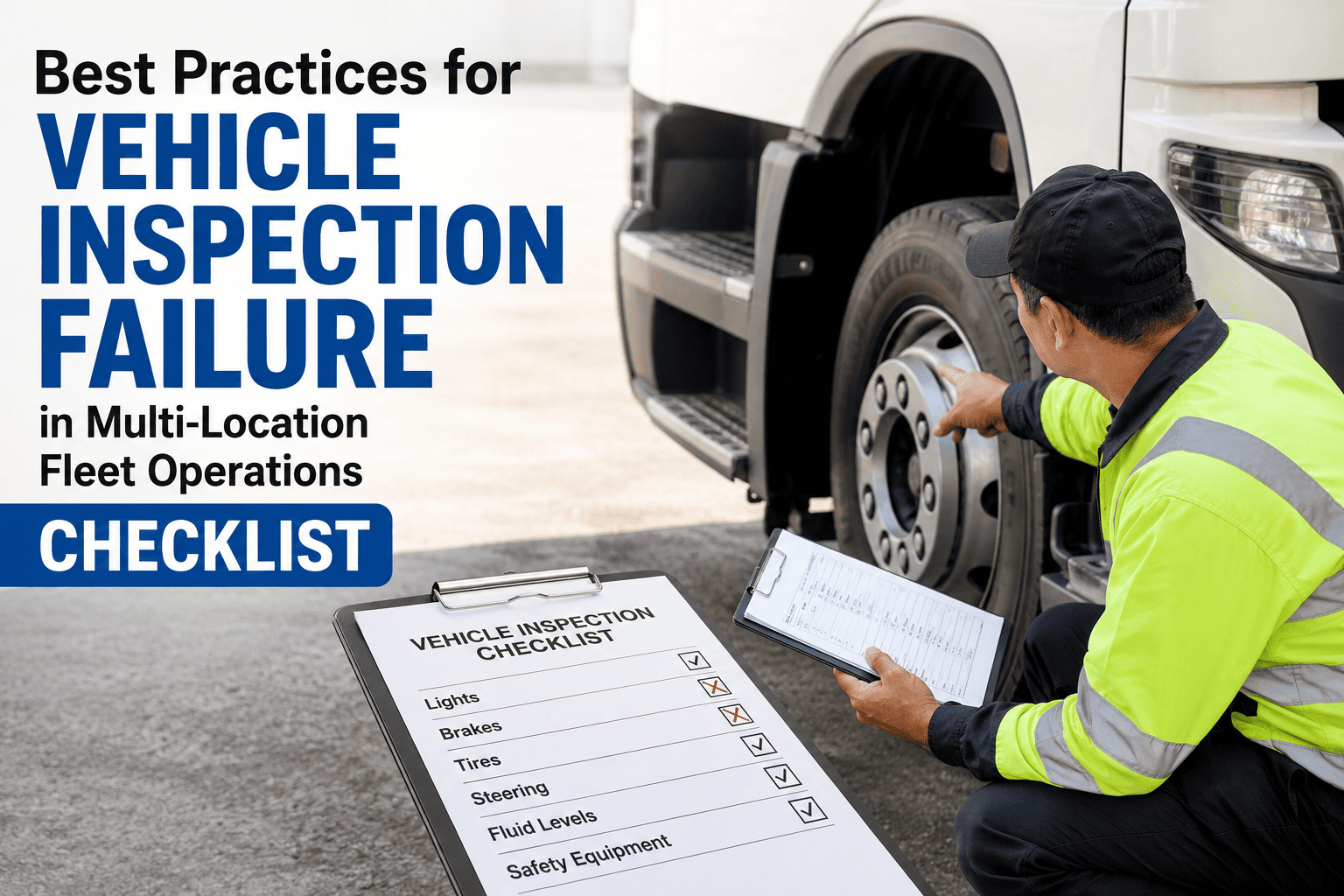
When a fleet is spread across depots, the vehicle inspection failure problem stops being about effort and becomes about consistency. The same brake defect gets logged three different ways at three sites, PM schedules drift, and leadership relies on weekly phone calls instead of live data. One 217-vehicle fleet across four depots found recurring defects stayed hidden simply because every location categorized them differently. This guide lays out the best practices that make inspection failures visible, comparable, and resolvable across every site. Sign Up Free to standardize your whole fleet.
One Standard. Every Depot. Total Visibility.
OxMaint gives headquarters a live view of inspection failures across every location while local teams keep execution authority — one master checklist, one severity language, and one dashboard that finally lets you compare depots and catch fleet-wide defect patterns.
Why Inspection Failures Fragment Across Locations
Decentralization does not announce itself in one budget line — its cost hides across many. When each depot manages inspections independently, maintenance drifts, documentation diverges, and a compliance audit turns into a forensic exercise. The failure is rarely a bad checklist at any one site; it is the absence of a shared standard connecting them. Book a Demo to see the unified view.
Maintenance drift
The same vehicle class gets different PM intervals depending on which terminal it parks at. Some depots service religiously; others wait for breakdowns.
Incompatible records
Every site evolves its own shorthand and severity language, so management cannot compare data across locations or spot recurring defects.
Hidden shared assets
Without cross-site visibility, one depot rents equipment that sits idle at another — paying twice for assets the company already owns.
Shared compliance risk
Missing records at one terminal create company-wide liability. A single branch's violations drag down the CSA score for the entire fleet.
Best Practice 1 — Split Ownership: Standards vs. Execution
The foundational best practice is defining who owns what. Multi-location programs fail when nobody owns the standard and every depot quietly writes its own. The fix is a clear division: headquarters owns the standard, depots own the execution, and a separate line verifies both. This is what lets local teams keep authority without letting quality diverge.
- The single master checklist and controlled variations by asset class
- Severity definitions — one Critical / Moderate / Minor language fleet-wide
- PM intervals and inspection frequency standards
- The consolidated dashboard and audit reporting
- Executing every inspection on the standard template
- Hitting scheduling coverage targets locally
- Opening and closing work orders for their assets
- First-line resolution of routine defects
- Escalation paths for missed or failed inspections
- Auditing that findings became verified repairs
- Cross-depot trend review and outlier flags
- Holding each site to the shared KPI set
Give HQ the View and Depots the Controls
OxMaint enforces one master inspection standard across all sites while each depot manages its own work orders — with role-based access, per-location dashboards, and one-click consolidated compliance reports spanning every depot in the fleet.
Best Practice Checklist — The Four Standardization Pillars
A multi-location program succeeds when standards, schedules, and data workflows run uniformly while still allowing controlled flexibility. Work through these pillars in order — each one closes a specific way inspection failures fragment across sites.
One master checklist deployed to every site
Same items, same sequence, same language for each vehicle class across all depots. A vehicle inspected at one location must be evaluated identically at another. Allow controlled variations only for genuine asset-class or duty-cycle differences — never for local habit.
A single three-tier severity system with visual examples
Define Critical, Moderate, and Minor with clear written criteria and reference photos, so a defect is rated the same regardless of who inspects it. This eliminates the subjective judgment that made the same brake fault get logged three different ways.
Mandatory fields and required photo documentation
Make driver signature, vehicle ID, and defect photos non-optional at every site. Consistent mandatory fields are what make records comparable across depots and turn an audit from a forensic exercise into a one-click export.
Continuous scheduling coverage and exception tracking
Programs fail more often from inconsistent scheduling than weak standards. Make coverage targets and missed-inspection exceptions visible and measurable at every site, with escalation when a depot falls behind its window.
Findings that convert to verified repairs without manual gaps
Inspection value is only realized when a failure becomes an action. Data must flow from finding to work order to repair certification automatically — a manual handoff at any site is where a defect gets lost.
One shared KPI set every location is measured by
Hold every depot to the same DVIR completion, PM compliance, defect-to-repair, and cost-per-mile targets. A shared scoreboard turns high-performing sites into a benchmark and surfaces the outliers that need support.
Best Practice 2 — Roll Out in Phases, Not All at Once
Standardization does not happen overnight. The proven approach is a phased rollout — one depot fully onboarded before the next begins — starting with an audit that becomes your baseline for measuring improvement. The 217-vehicle example above followed exactly this pattern over roughly ten weeks. Sign Up Free to begin phase one.
Audit and baseline
Document every system, process, and tool at each location. Map current workflows, find the data silos, and identify which depots are high-performing and where the biggest inconsistencies live. Capture current PM compliance and completion rates — this is the number you will improve against.
Define the fleet-wide standard
Lock the master checklist, severity tiers, mandatory fields, PM intervals, and the shared KPI set every location will be measured by. Assign standards ownership to HQ and execution ownership to depots before any tool is deployed.
Onboard depots one at a time
Migrate each site to the single digital platform and confirm it is fully live before starting the next. Sequential onboarding keeps support focused and lets each depot build confidence with the guided mobile workflow before you scale.
Verify, compare, and tune
With every depot on one standard, review the consolidated dashboard, compare sites against the shared KPIs, and address outliers. Recurring defect patterns that were once buried in incompatible reports now surface fleet-wide for targeted prevention.
We ran five depots and each had quietly built its own inspection dialect. The same defect meant something different at every site, so leadership flew blind and audits took days. Once every location moved to one checklist and one severity scale, our fleet-wide PM compliance climbed thirty points and I could finally see every open failure across all sites on a single screen.
— Director of Fleet Operations, regional services company, 5 depots
Frequently Asked Questions
The questions multi-site fleet leaders ask most about standardizing inspection failure management across depots.
The core framework stays identical fleet-wide so a vehicle is evaluated the same anywhere. Controlled variations are fine for real asset-class or duty-cycle differences — but never for local preference. Sign Up Free to deploy one master template.
Split ownership: HQ owns the standard and reporting, depots own execution and their own work orders. Local teams keep control of daily operations while leadership gets comparable data across every site.
Compliance rolls up to a single DOT number, so missing records or violations at one branch drag down the company-wide CSA score. Consistent documentation everywhere is the only protection.
No. Onboard one depot at a time and confirm it is fully live before the next. Sequential rollout keeps support focused and lets each site build confidence, typically across about ten weeks for several depots.
Yes. OxMaint consolidates inspection failures, PM compliance, and work orders across every location, with per-site drill-down and one-click fleet-wide compliance reports. Book a Demo to see the multi-depot view.
Standardize Inspection Failures Across Every Location
OxMaint unifies multi-location fleet inspections on one master checklist, one severity language, and one dashboard — so failures are logged identically at every depot, findings convert to verified repairs without gaps, and headquarters can compare sites, catch fleet-wide patterns, and pass audits with a single export.