Delivery vans live a hard life: stop-and-go driving, frequent door cycles, short trips that never let the engine fully warm up, and tight turnaround windows that make it easy to skip a service check. When a delivery fleet operates across multiple locations, those small maintenance gaps multiply because no single yard manager sees the full pattern across the network. Start a free trial to standardize your delivery van maintenance plan across every location, or book a demo to see how it works.
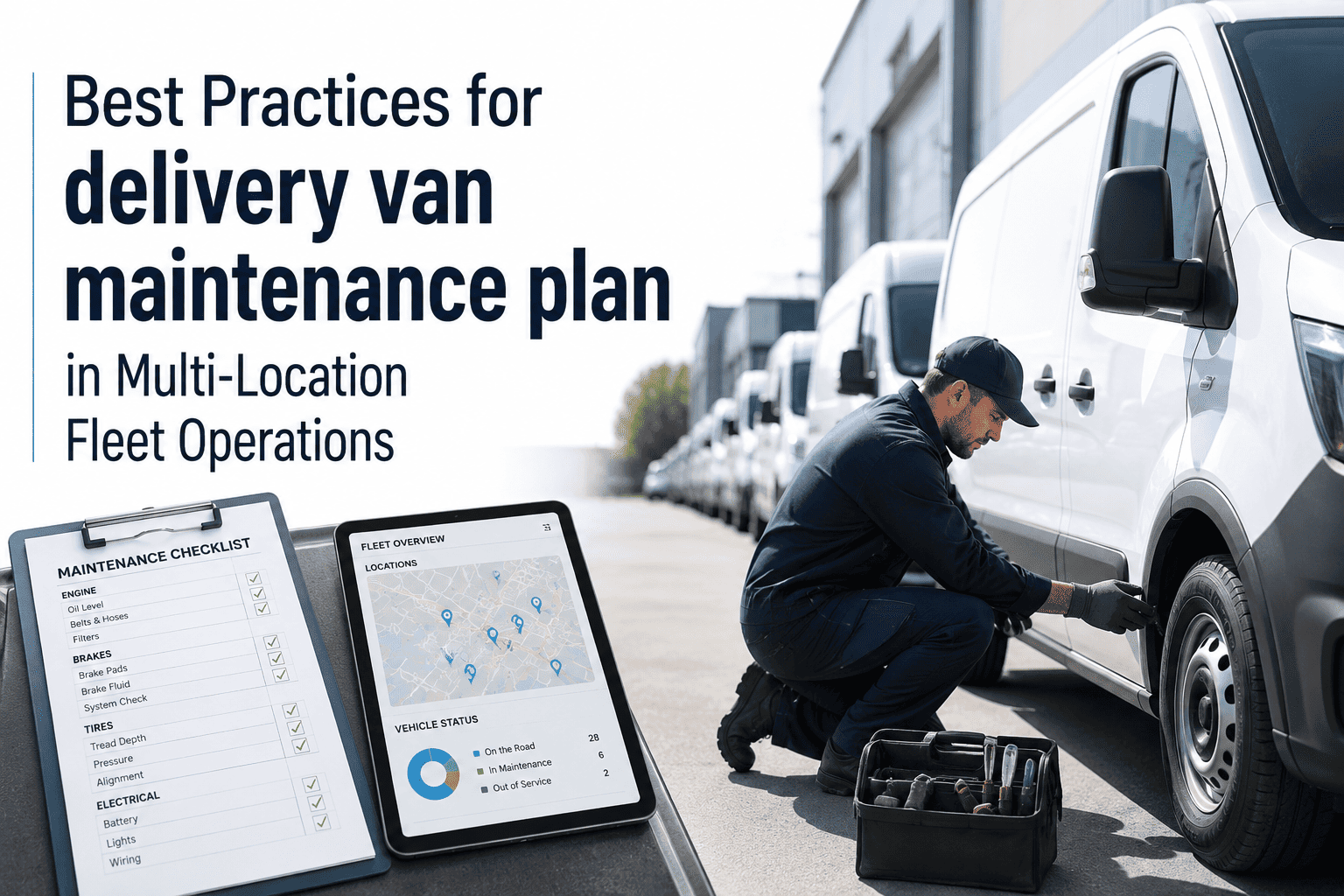
Best Practices for Delivery Van Maintenance Plans in Multi-Location Fleet Operations
Last-mile delivery vans wear differently than long-haul trucks. A maintenance plan built around their actual duty cycle, applied consistently across every location, keeps vans on the road during peak delivery windows.
A van that runs forty stops a day in a dense urban zone is not the same maintenance case as a van running highway miles between two warehouses, yet most fleets apply one generic PM template to both.
How Delivery Van Duty Cycles Differ From Long-Haul
Brakes, tires, and starter components wear faster with dozens of daily stops than with steady highway mileage.
Engines rarely reach full operating temperature on short delivery hops, accelerating oil contamination and condensation buildup.
Sliding and rear doors opened dozens of times per shift wear hinges and seals far faster than typical passenger vehicle use.
Vans left running during multi-stop deliveries accumulate idle hours that add engine wear without adding mileage, which standard PM schedules can miss entirely.
These patterns are predictable enough to plan around, but only if the maintenance plan accounts for duty cycle rather than treating every van the same way a passenger vehicle would be scheduled.
One Maintenance Standard, Every Location
Oxmaint applies the same duty-cycle-based PM schedule to every van regardless of which yard it operates from, so maintenance quality does not depend on which location happens to be managing it.
Six Best Practices for a Multi-Location Delivery Van Plan
Short trips mean low mileage but high engine run time, so basing PM purely on miles understates real wear.
Use one PM checklist template for every location so a van serviced at any yard gets the same inspection depth.
High-cycle doors should get a dedicated inspection line item, not get lumped into a general visual check.
Dense urban routes with frequent stops wear brakes faster than suburban routes, so inspection intervals should reflect the route, not a flat schedule.
When every location logs parts and vendor invoices in one system, the fleet can spot which parts brands hold up best under delivery duty.
A central dashboard lets the maintenance lead compare uptime and PM compliance across every yard at once, not location by location.
Vans that idle heavily during multi-stop routes need PM intervals adjusted for total run time, since idling adds engine wear without adding distance traveled.
Each yard should have a defined spare van plan so a vehicle pulled for maintenance does not create a coverage gap during peak delivery hours.
A plan that covers all eight of these areas turns delivery van maintenance from a reactive, location-by-location guessing game into a predictable operating cost that scales cleanly as the network grows.
PM Interval Reference for Delivery Vans
| Component | Standard Passenger Interval | Recommended Delivery Van Interval |
|---|---|---|
| Oil change | 5,000 miles | 3,000 miles or 90 days |
| Brake inspection | 12,000 miles | 6,000 miles |
| Door hinge and seal check | Not typically scheduled | Monthly |
| Tire rotation | 6,000 miles | 4,000 miles |
| Battery load test | Annual | Quarterly |
| Suspension and bushing check | 15,000 miles | 8,000 miles |
These intervals are a starting benchmark. The right interval for any specific van depends on its actual route density and stop count, which is why duty-cycle-based scheduling outperforms a flat mileage rule over time.
Frequently Asked Questions
Why do delivery vans need shorter oil change intervals?
How do we standardize maintenance across yards that use different vendors?
Can route type really change brake wear that much?
How do we get visibility across all our delivery locations at once?
How should idle time factor into a delivery van PM schedule?
Build a Delivery Van Maintenance Plan That Works at Every Location
Standardize PM schedules, checklists, and visibility across your entire delivery network.