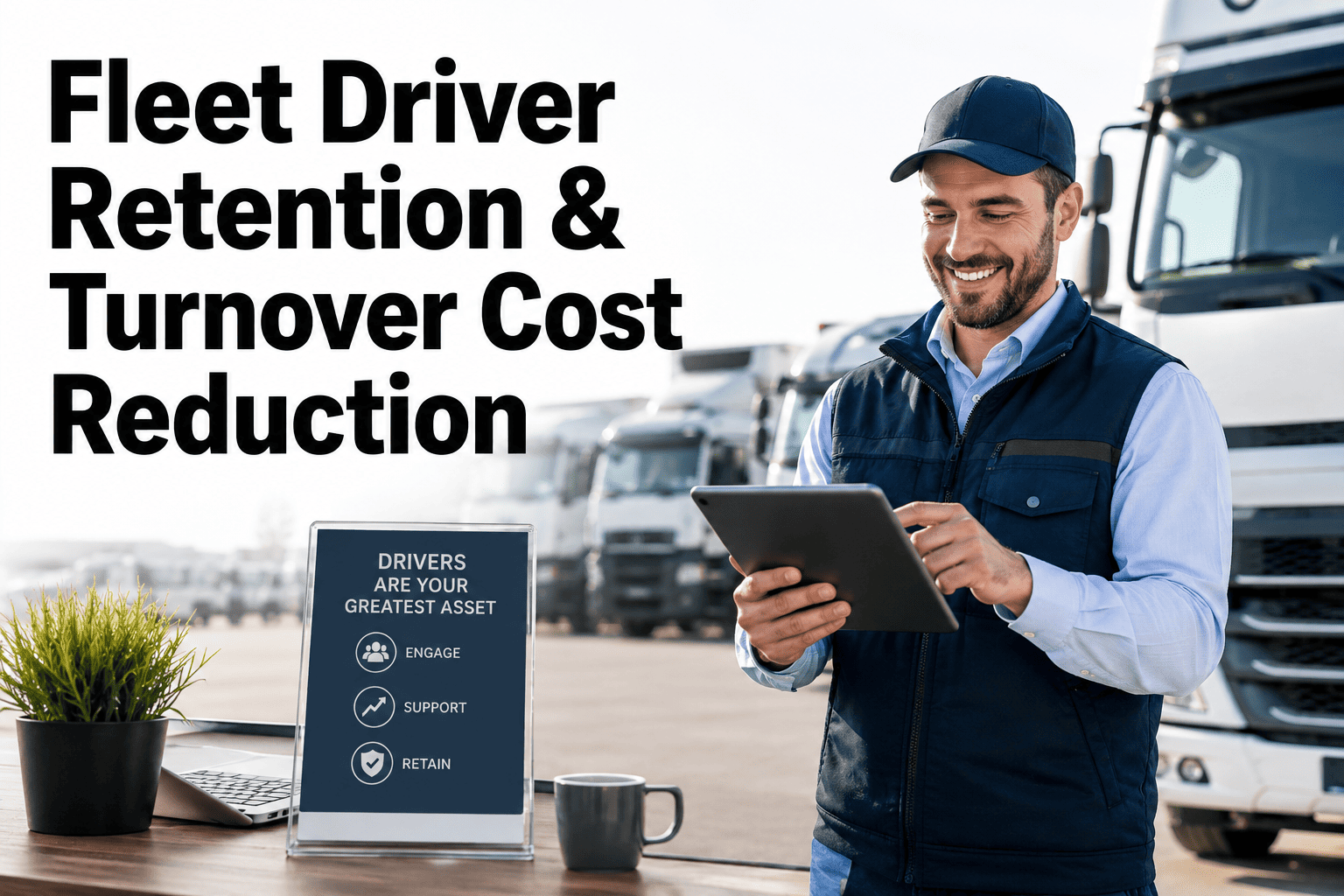
The trucking industry is facing a workforce crisis of unprecedented scale. With driver turnover rates averaging 94% for midsize to large truckload fleets and the industry needing to hire 1.2 million new drivers over the next decade, fleet managers are discovering that retention is no longer just an HR concern—it is a critical business survival strategy. The cost of losing a single driver ranges from $8,000 to $12,000 in recruitment, training, and lost productivity expenses. Yet some forward-thinking fleets have cracked the code, reducing turnover from 89% to 31% and saving millions annually through comprehensive driver-centric strategies. The difference between struggling with constant recruitment and building a stable, experienced workforce lies in understanding what drivers truly value: competitive compensation, genuine respect, predictable schedules, and technology that makes their jobs easier rather than harder.
The Retention Crisis: Understanding the True Cost of Driver Turnover
Driver retention has plummeted from priority number seven to a top strategic concern for fleet operators. When a driver walks out the door, they take with them not just their skills, but institutional knowledge, customer relationships, and months of training investment. For a 250-truck fleet, reducing turnover by just 20% translates to over $415,000 in annual savings. Yet many operators continue to treat drivers as interchangeable commodities rather than career professionals deserving investment.
The root causes extend beyond pay. While compensation matters, drivers consistently cite lack of respect, unpredictable schedules, poor communication, and inadequate equipment as primary reasons for leaving. With 67% of freight companies now relying on third-party logistics providers due to driver shortages, the competitive pressure to retain talent has never been higher. Sign up to access tools that help you identify retention risks before they result in resignations.
Large Fleet Turnover
94% average annual turnover rate
Replacement Cost Impact
$8,000-$12,000 per driver replacement
Best-in-Class Retention
31% turnover achievable with right strategy
The Five Pillars of Driver Retention Excellence
Industry leaders who have successfully transformed their retention rates consistently implement five interconnected strategies. Premier Transportation's journey from 89% to 31% turnover demonstrates that holistic approaches addressing compensation, culture, career development, work-life balance, and support systems create sustainable competitive advantages. Each pillar reinforces the others, creating an environment where drivers choose to build careers rather than view the job as temporary.
Technology plays a crucial enabling role across all five pillars. Modern fleet management platforms provide the visibility needed to ensure fair dispatching, track safety performance for recognition programs, optimize routes for better home time, and maintain equipment proactively. When drivers see technology working to make their lives easier rather than just monitoring their every move, engagement increases dramatically. Book a demo to see how integrated fleet solutions support your retention strategy.
Compensation Excellence
Market-leading pay 22% above average with guaranteed minimums, performance bonuses, and escalating retention rewards from $2,500 to $10,000.
Respect & Recognition
Monthly awards, peer nomination systems, and leadership communication that makes drivers feel valued professionals, not just resources.
Career Development
Clear advancement pathways, skills training, certifications, and mentorship programs that show long-term commitment to driver growth.
Work-Life Balance
Predictable schedules with 72% weekly home time, flexible options, and route consistency that respects family commitments.
Support Systems
24/7 assistance, family programs, mental health resources, and well-maintained equipment that minimize stress and downtime.
Creating a Driver-Centric Culture with Data
The most successful retention programs leverage technology to personalize the driver experience. In-vehicle monitoring systems and telematics, when implemented transparently, provide fleet managers with unprecedented insight into individual driver patterns, strengths, and areas for improvement. This data enables tailored coaching rather than one-size-fits-all policies, demonstrating to experienced drivers that their professional development still matters.
Recognition programs powered by real-time data transform abstract safety goals into concrete achievements. When pest control fleet Orkin implemented a gamified idling reduction contest with clear metrics and attractive prizes, they achieved an 8.4% reduction in just three months while boosting driver engagement. The key is ensuring drivers see technology as a tool for recognition and improvement rather than surveillance. Sign up to implement data-driven recognition programs in your fleet.
Stop the Revolving Door. Start Building Loyalty.
Join fleets saving millions annually by transforming driver retention from a cost center into a competitive advantage. Oxmaint provides the technology foundation for your retention strategy.
Reduce turnover by up to 60% • Save $8,000-$12,000 per retained driver • Improve safety scores • Enhance customer satisfaction
Work-Life Balance: The Non-Negotiable Priority
Modern drivers, particularly younger entrants, prioritize predictability and home time over maximum miles. The shift toward e-commerce and regional distribution has created alternatives to traditional over-the-road positions that offer daily home time and consistent schedules. Fleets that fail to adapt to these expectations lose talent to competitors who do.
Intelligent scheduling systems enable fleets to optimize routes while respecting driver preferences and HOS regulations. By analyzing historical data, delivery windows, and driver availability, these systems create schedules that balance operational efficiency with quality of life. The results speak for themselves: increasing weekly home time from 42% to 72% of drivers and improving schedule predictability from 34% to 84% correlates directly with retention improvements. Book a demo to explore scheduling optimization tools.
Before Optimization
- 42% weekly home time
- 34% schedule predictability
- 28 hours average home time
- 23% familiar routes
After Optimization
- 72% weekly home time
- 84% schedule predictability
- 38 hours average home time
- 67% familiar routes
Implementation Roadmap: From Strategy to Results
Successful retention transformation requires systematic implementation with clear phases and measurable milestones. Attempting to address all pillars simultaneously often leads to initiative fatigue and diluted impact. Instead, industry leaders recommend a phased approach that builds momentum through early wins while laying groundwork for long-term cultural change.
Phase one focuses on foundation building: conducting comprehensive driver satisfaction surveys, benchmarking compensation against market rates, and establishing baseline metrics. Phase two expands into program development including career pathways, schedule optimization, and family engagement initiatives. Throughout implementation, continuous feedback loops ensure programs evolve based on driver input rather than management assumptions. Sign up to begin your retention transformation with our assessment tools.
Foundation Building
- Driver satisfaction surveys
- Compensation benchmarking
- Management training
- Baseline metrics
Program Launch
- Recognition programs
- Pay structure updates
- Communication channels
- Technology integration
Optimization
- Career pathways
- Schedule optimization
- Family programs
- Continuous improvement
Technology as a Retention Enabler
The modern fleet manager has access to unprecedented technological tools that directly impact driver satisfaction and retention. Predictive maintenance systems eliminate the frustration of breakdowns and roadside delays by identifying potential issues before they strand drivers. Route optimization ensures fair distribution of desirable routes and minimizes unpaid wait times. Mobile applications streamline communication, reduce paperwork, and provide drivers with the information they need to succeed.
Perhaps most importantly, technology enables transparency. When drivers can see exactly how their performance is measured, track their progress toward bonuses, and understand why dispatch decisions are made, trust increases. Fleets using Oxmaint's integrated platform report that drivers appreciate the visibility into vehicle health and maintenance schedules, feeling confident that their equipment is safe and reliable. This peace of mind translates directly into retention. Sign up to discover how technology can become your retention advantage.
Predictive Maintenance
Eliminate breakdowns that strand drivers and damage trust
Route Optimization
Ensure fair dispatching and maximize home time
Performance Transparency
Clear metrics build trust and enable recognition
Mobile Connectivity
Streamline communication and reduce administrative burden
Frequently Asked Questions
What is the average cost of driver turnover for fleet operations?
The cost to replace a single driver ranges from $8,000 to $12,000, encompassing recruitment advertising, screening, onboarding, training, and lost productivity during the learning curve. For a fleet with 100 drivers and 90% annual turnover, this represents $720,000 to $1.08 million in annual replacement costs alone, not including indirect costs like customer service disruptions and safety incidents associated with inexperienced drivers.
How quickly can we expect to see results from retention initiatives?
Most fleets see measurable improvements within 3-6 months of implementing comprehensive retention strategies. Early wins typically come from compensation adjustments and recognition programs, while cultural changes and work-life balance improvements may take 6-12 months to fully impact turnover rates. Premier Transportation achieved their transformation from 89% to 31% turnover over 18 months, with significant improvements visible within the first quarter.
What role does technology play in driver retention?
Technology enables retention strategies at scale by providing visibility into driver performance for recognition programs, optimizing schedules for better work-life balance, ensuring equipment reliability through predictive maintenance, and facilitating communication between drivers and management. The key is implementing technology that drivers perceive as helpful rather than punitive—tools that make their jobs easier, reduce paperwork, and ensure fair treatment.
Is pay the most important factor in driver retention?
While competitive compensation is essential, research consistently shows that respect, recognition, and work-life balance are equally or more important for long-term retention. Drivers leave managers, not companies. Fleets that pay above-market rates but fail to address cultural issues still experience high turnover. The most successful retention strategies address compensation as a foundation while building comprehensive programs around respect, development, and quality of life.
How can smaller fleets compete with large carriers on retention?
Smaller fleets often have inherent advantages in retention: closer relationships between management and drivers, more flexibility in scheduling, and greater visibility of individual contributions. By leveraging these strengths while implementing professional recognition programs, career development pathways, and technology that improves daily operations, small fleets can achieve retention rates that match or exceed large carriers. The key is being intentional about culture and treating retention as a strategic priority.
Build the Fleet Your Drivers Never Want to Leave
Stop accepting high turnover as an industry norm. Join leading fleets proving that with the right strategy and technology, you can build a stable, experienced workforce that drives competitive advantage.
Start reducing turnover today • Save thousands per driver • Improve fleet safety • Deliver better customer service