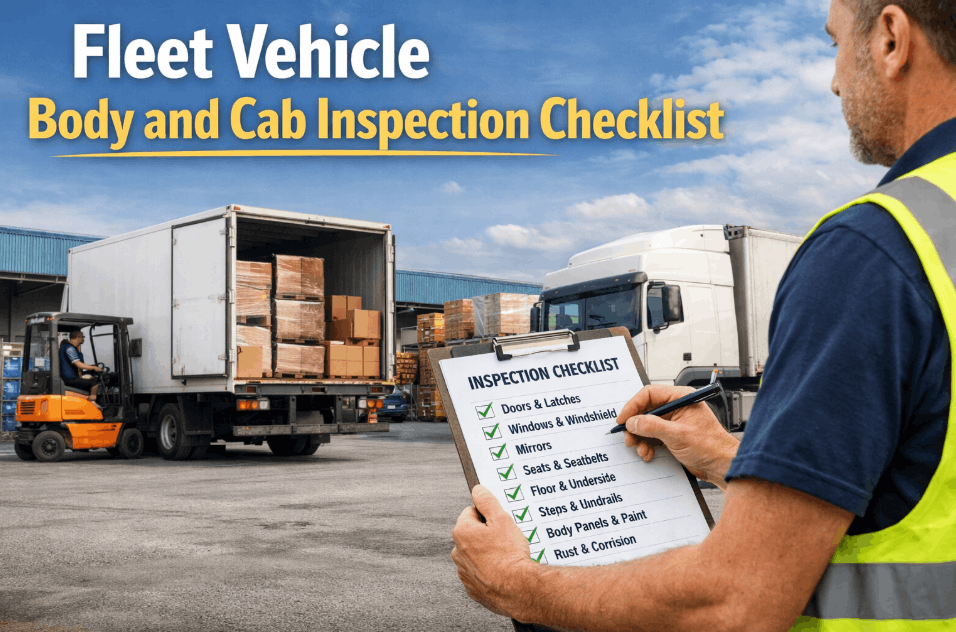
Every hour a fleet vehicle sits broken down costs your operation an average of $448–$760 in lost revenue — before counting towing, emergency labor, and rescheduling chaos. 78% of those breakdowns trace back to a failure that was preventable with routine engine inspection. Yet in 2026, most fleets still treat engine inspection as a checkbox rather than the early-warning system it actually is. The average fleet loses 8.7 days of vehicle uptime annually to unplanned failures — failures that structured preventive inspection programs have been proven to eliminate by up to 70%. This guide gives fleet managers the complete engine inspection framework for 2026: what to inspect, when, how to use digital tools, and exactly how OxMaint closes the loop between inspection findings and maintenance action. Book a demo to see OxMaint's fleet inspection and PM platform in action.
$448
Unplanned downtime cost per vehicle per hour — FMCSA 2025 benchmark
78%
Of all fleet breakdowns originate from preventable engine failures
3–9x
Cost of reactive repairs vs. scheduled preventive maintenance
70%
Reduction in unexpected breakdowns with structured PM inspection programs
What Is Fleet Engine Inspection — and Why Does It Matter More in 2026?
Fleet engine inspection is a systematic, documented process of evaluating engine components, fluid levels, belts, filters, and ancillary systems at defined intervals — before failures can develop into breakdowns. In 2026, FMCSA compliance requirements have tightened: electronic DVIRs became officially authorized on March 23, 2026 under FMCSA-2025-0115, and focused audit activity is averaging 6 violations per carrier with penalties averaging $7,155 each. The shift from paper-based to digital engine inspection is no longer optional — it is the compliance baseline.
Reactive Approach (2024 and Earlier)
Engine inspected only after driver reports a problem
Paper DVIRs lost, incomplete, or forged — no audit trail
Findings not linked to work orders — defects linger for days
No data on which vehicles or components fail repeatedly
Emergency repairs costing 3–9x more than planned service
Average 8.7 days unplanned downtime per vehicle annually
VS
Preventive Inspection Program (2026 Standard)
Scheduled digital pre-trip, interval, and annual engine inspections
eDVIR with GPS timestamp, photo documentation, and instant audit export
Defects auto-trigger work orders — resolved before next dispatch
Pattern analytics reveal repeat failure components fleet-wide
Planned PM costs 3–9x less — 85%+ of work is scheduled
Top-performing fleets achieve 75,000+ miles between breakdowns
The Complete Fleet Engine Inspection Checklist for 2026
Engine inspection is not a single event — it is a tiered system of checks performed at different intervals, each designed to catch different failure modes before they escalate. Below is the 2026 standard for commercial fleet engines.
Pre-Trip Daily
Daily Engine Walk-Around
Engine oil level and color
Coolant level and condition
Drive belt visual check (fraying, cracks)
Fluid leaks under vehicle
Air filter housing integrity
Dashboard warning lights on startup
DOT-required: Drivers must complete and sign eDVIR at each shift
Every 5,000–10,000 mi
Interval PM Inspection
Oil and oil filter replacement
Air and fuel filter inspection/replacement
Serpentine and accessory belt condition
Battery terminals and charge capacity
Cooling system hose condition
Engine mount torque check
Trigger: mileage, engine hours, or calendar — whichever comes first
Every 30,000 mi
Mid-Life Engine Service
Coolant flush and system pressure test
Fuel injector flow test and clean
Turbocharger boost pressure check
EGR valve and intake manifold cleaning
Timing belt/chain condition assessment
Compression test per cylinder
AI predictive systems flag compression variance before failure
Annual — FMCSA Required
Annual DOT Inspection
Full 49 CFR Part 393 Appendix A inspection
Engine emission compliance verification
OBD-II diagnostic trouble code scan
Exhaust system integrity and leaks
Oil consumption rate analysis
Full drivetrain load test under conditions
Report retained 14 months — copy must be carried in vehicle
4 Engine Failure Patterns That Preventive Inspection Stops
These are the failure modes that cost fleets the most in 2025–2026 — and every one of them is detectable weeks ahead of catastrophic failure with structured engine inspection protocols.
01
Oil Starvation and Bearing Failure
The most catastrophic and costly engine failure type — a seized engine from oil starvation averages $12,000–$25,000 in rebuild costs plus 5–10 days downtime. Caused by ignored oil level warnings, extended service intervals, or slow-developing leaks never caught on a daily walk-around. AI injector degradation monitoring — correlating fuel burn rate, exhaust temp, and torque — now flags oil consumption anomalies weeks before oil pressure warning lights activate.
Prevented by: Daily oil level check + interval-based oil analysis + digital defect reporting
02
Coolant System Overheat Events
Overheating events are the second-leading cause of fleet engine failures. Cracked heads, blown gaskets, and warped components from a single overheat event cost $4,000–$18,000. Coolant hose degradation, thermostat failure, and radiator blockage are all detectable during interval PM inspections — but only if the inspection protocol specifically includes pressure testing and hose condition assessment at defined mileage intervals.
Prevented by: 30,000-mile coolant flush + hose inspection + system pressure test at every PM
03
Fuel System Contamination and Injector Wear
Contaminated fuel systems and worn injectors reduce fuel efficiency 8–15%, increase exhaust emissions, and cause progressive power loss that drivers often mask by adjusting driving behavior rather than reporting. An injector replacement before failure costs $300–$800. After the injector wash causes cylinder damage, repair costs jump to $3,000–$8,000. Digital inspection checklists with required fuel system observations at defined intervals catch this early.
Prevented by: 30,000-mile injector flow test + fuel filter replacement at interval
04
Belt and Timing Component Failure
A snapped serpentine belt strands a vehicle immediately. A failed timing belt or chain causes engine destruction in interference-engine designs — repair costs of $5,000–$14,000 versus $300–$800 for a replacement belt caught during inspection. Belt condition assessment is one of the most consistently skipped steps in manual paper-based inspections — and one of the first items standardized in digital inspection checklist systems because it takes under 60 seconds and eliminates catastrophic risk.
Prevented by: Visual belt inspection at every PM interval + replacement at manufacturer spec
How OxMaint Closes the Loop: From Inspection Finding to Resolved Work Order
Inspection without action is theater. The gap between finding a defect and getting it repaired — before the vehicle goes back on road — is where most fleet PM programs fail. OxMaint's fleet CMMS closes this loop with digital workflows that connect every inspection finding to a tracked, assigned, and documented resolution.
Digital eDVIR — FMCSA Compliant from Day One
OxMaint's mobile inspection app guides drivers through standardized engine and vehicle checklists with GPS timestamp, photo documentation, and electronic signature. Compliant with FMCSA eDVIR regulations effective March 23, 2026. Audit export in one click — no file cabinet, no manual assembly.
Defect Auto-Triggers Immediate Work Order
When a driver flags an engine defect in the OxMaint inspection app, a work order is automatically created, assigned to the next available technician, and escalated by priority level. No dispatch gaps. No defects sitting in a paper queue. The average time from defect report to work order assignment drops from hours to under 2 minutes.
Usage-Based PM Scheduling — Not Just Calendar Dates
OxMaint schedules engine PM by actual mileage, engine hours, and fuel consumption — not generic calendar dates that ignore real duty cycle. Vehicles driven harder get more frequent service. Under-utilized vehicles don't accumulate unnecessary PM costs. Service intervals adapt to real-world usage automatically.
Full Inspection and Repair History Per Vehicle
Every inspection, work order, parts replacement, and technician note links to the vehicle's permanent record in OxMaint. DOT auditors see a complete cross-referenced history in a single export. Insurance carriers see documented maintenance compliance. Fleet managers see which vehicles have repeat failure patterns — before those patterns escalate into expensive failures.
Engine Component Pattern Analytics
OxMaint's analytics layer identifies which components fail repeatedly across the fleet, which vehicles show accelerating maintenance cost trends, and which service intervals are too long for your specific duty cycle. These insights convert inspection data into PM interval optimization — cutting costs and downtime simultaneously.
Mobile-First for Drivers and Technicians
OxMaint runs on any smartphone — no special hardware required. Drivers complete engine walk-arounds with guided checklists, photo capture, and offline capability. Technicians receive real-time work order assignments and close jobs with digital signatures from the shop floor. Fleet managers get live status visibility across all vehicles and all locations.
Experience a Cloud-Native Fleet CMMS Built for Real Operations
OxMaint digitizes engine inspections, auto-generates work orders from defects, and tracks every PM interval by actual vehicle usage — all in one mobile-first platform. Free to start. Results within 90 days.
Before vs. After: Fleet Engine Management Without and With OxMaint
The performance gap between paper-based reactive maintenance and a structured digital inspection program is documented across hundreds of commercial fleet deployments. These six metrics define the difference in 2026.
Metric
Without Structured Inspection
With OxMaint Engine PM
Unplanned Downtime
8.7 days per vehicle annually — $448–$760/day in lost revenue
32–70% reduction — top fleets under 2 days annual unplanned downtime
Maintenance Cost per Mile
Reactive repairs cost 3–9x more — unpredictable budget spikes every quarter
20–40% cost reduction — 85%+ planned work ratio achieved within 90 days
DOT Compliance Risk
Paper DVIRs — avg 6 violations per audit, $7,155/violation in penalties
eDVIR compliant — timestamped, photo-backed, audit-ready in one export
Defect-to-Repair Time
Hours or days — defects sit in paper queue, vehicle dispatched before repair
Under 2 minutes — auto work order created and assigned on defect flag
Miles Between Breakdowns
Industry average: 10,600 miles — unplanned roadside failures frequent
Top-performing PM programs: 75,000+ miles between breakdowns (7x difference)
Vehicle Lifespan
Reactive damage accumulates — accelerated engine wear, earlier replacement
20% longer vehicle lifespan — 15,000–20,000 additional miles per vehicle lifecycle
The ROI of Fleet Engine Inspection: What the Numbers Show
Fleet managers who track only fuel savings consistently understate the return on structured engine inspection programs. The full ROI picture has four compounding streams — and the total is substantial even for small fleets.
$600K
Annual savings for a 50-truck fleet moving from Stage 1 to Stage 2 inspection maturity
Digital inspections identify 40% more defects, reduce errors by 35%, and create the data foundation for predictive maintenance programs. The advance from reactive to structured PM pays for the system many times over.
$1 → $8
Every $1 spent on preventive engine maintenance saves $4–8 in emergency repairs and downtime costs
Emergency engine repairs include towing ($300–$1,200), overtime labor (1.5–2x), rush parts premium (20–40%), and rental vehicle costs — all avoidable with structured PM that catches the failure 3–6 weeks earlier.
37%
Increase in Mean Time Between Failures (MTBF) reported after implementing structured PM programs
MaintainX customer data (2025): 32% reduction in unplanned downtime and 37% MTBF increase after implementing preventive maintenance programs. Most fleets see positive ROI within 6 months.
47%
Of fleets implementing digital inspection programs see positive ROI in under 6 months
Digital inspection platforms run $15–45/vehicle/month. On a 50-vehicle fleet, that is $750–$2,250/month. A single prevented engine seizure ($15,000–$25,000) delivers 7–12 months of platform cost in one avoided event.
2026 Trends: What's Changing in Fleet Engine Inspection This Year
The regulatory and technology landscape for fleet engine inspection is shifting meaningfully in 2026. Fleet managers who are not tracking these changes are already behind.
Regulatory
eDVIR Now Officially Authorized
FMCSA finalized eDVIR authorization effective March 23, 2026 (FMCSA-2025-0115). Electronic driver vehicle inspection reports are now the compliant standard. Paper DVIRs remain legal but carriers using digital systems now have the audit advantage — GPS timestamps and photo documentation that paper simply cannot provide.
Technology
AI Predictive Engine Diagnostics
65% of fleet operators plan to adopt AI-assisted maintenance by end of 2026. ML models analyze inspection data, telematics, and OBD-II engine codes to predict component failures weeks ahead of failure events. A single prevented Tier-4 Final engine replacement saves $30,000–$40,000 — paying for an entire year's platform subscription in one event.
Compliance
FMCSA Audit Activity at 5-Year High
2025 FMCSA focused audits averaged 6 violations per carrier with penalties averaging $7,155 per violation. Inspectors are specifically looking for systematic documented PM programs — written procedures, evidence of scheduled services, and proof of consistent execution. Fleets without digital records are the most exposed.
Operations
OBD Hardware Integration
OxMaint's OBD Hardware Integration now pulls real-time engine fault codes, oil life monitoring, fuel consumption, and emissions readiness data directly into the CMMS. Technicians see active diagnostic trouble codes before the vehicle arrives at the shop — eliminating the scan step and reducing diagnosis time by 30–40% per vehicle.
Frequently Asked Questions: Fleet Engine Inspection
How often should fleet vehicles undergo a full engine inspection?
Fleet engine inspection operates at four tiers in 2026: daily pre-trip walk-arounds (FMCSA-required eDVIR), interval PM inspections every 5,000–10,000 miles depending on duty cycle, mid-life engine service at 30,000 miles, and an annual DOT inspection covering all 49 CFR Part 393 Appendix A items. The key principle is that intervals should be based on actual usage — mileage, engine hours, and fuel consumption — not generic calendar dates. Vehicles operating in high-duty-cycle environments (construction, long-haul, stop-and-go urban delivery) need more frequent intervals than light-use vehicles. OxMaint's usage-based PM scheduling automatically adjusts inspection intervals based on how your specific vehicles are actually being operated.
Sign up free to set up automated inspection schedules for your fleet.
What are the most common engine components missed during manual fleet inspections?
The most consistently missed items in manual paper-based engine inspections are: belt condition assessment (serpentine and timing belts take under 60 seconds to check but are the most skipped step on paper checklists), coolant hose integrity (slow degradation is invisible until a hose fails under pressure), battery terminal condition and charge capacity (missed until a cold-start no-start event), and EGR valve carbon buildup (no obvious external symptom until performance degrades significantly). Digital inspection checklists eliminate these gaps by requiring a response on every checklist item before the driver can submit — there is no "skip" option. OxMaint's guided mobile checklists include photo requirements for high-risk components, creating a documented visual record at each inspection interval.
Book a demo to see how OxMaint's inspection templates are structured for fleet engines.
How does OxMaint handle the connection between engine inspection findings and maintenance work orders?
The inspection-to-maintenance loop in OxMaint works automatically. When a driver or technician flags a defect during an engine inspection in the OxMaint mobile app, the system immediately generates a work order with the defect description, vehicle ID, photo documentation, and GPS timestamp. The work order is automatically assigned to the next available technician based on priority level and availability. The technician completes the repair and closes the work order with digital sign-off — all linked to the vehicle's permanent maintenance record. This means every engine defect is tracked from discovery to resolution with full documentation. Fleet managers see real-time status of all open defects across the entire fleet. No defects sit undiscovered in a paper queue.
Sign up free to see the closed-loop inspection workflow in your fleet.
What documentation does OxMaint provide for DOT compliance and audits?
OxMaint provides complete FMCSA-compliant documentation across all three regulatory requirements: eDVIRs with GPS timestamp, electronic signature, and photo documentation (compliant with FMCSA-2025-0115 effective March 23, 2026, with 3-month automated retention), annual inspection records per 49 CFR Part 396 (retained 14 months, exportable for vehicle copy requirement), and general maintenance records including parts replacement, labor, and technician documentation (retained minimum 1 year plus 6 months). When a DOT auditor requests records, OxMaint generates the complete cross-referenced file for any vehicle in a single export — inspection history, work order history, parts records, and driver DVIR logs all linked. The average fleet using paper systems spends 4–8 hours assembling an audit package. OxMaint users spend under 15 minutes.
Book a demo to see OxMaint's compliance documentation tools.
Stop Discovering Engine Problems After They Break Your Fleet
OxMaint gives every fleet manager the digital engine inspection system, automated PM scheduling, and closed-loop work order platform that top-performing fleets use to achieve 75,000+ miles between breakdowns. Mobile-first. FMCSA-compliant. Live across your fleet in days — not months. Join 1,000+ fleet operations running smarter maintenance programs with OxMaint.