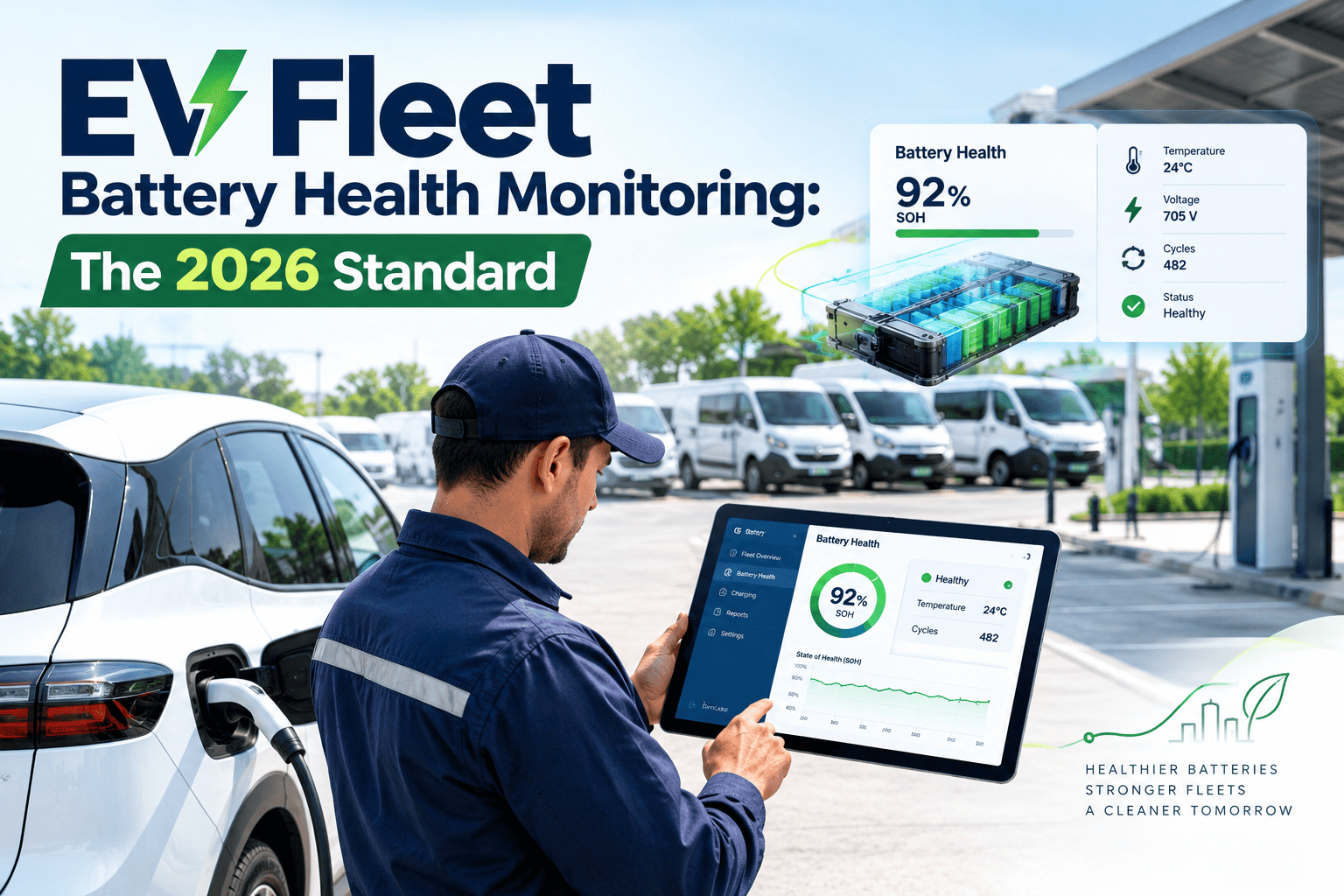
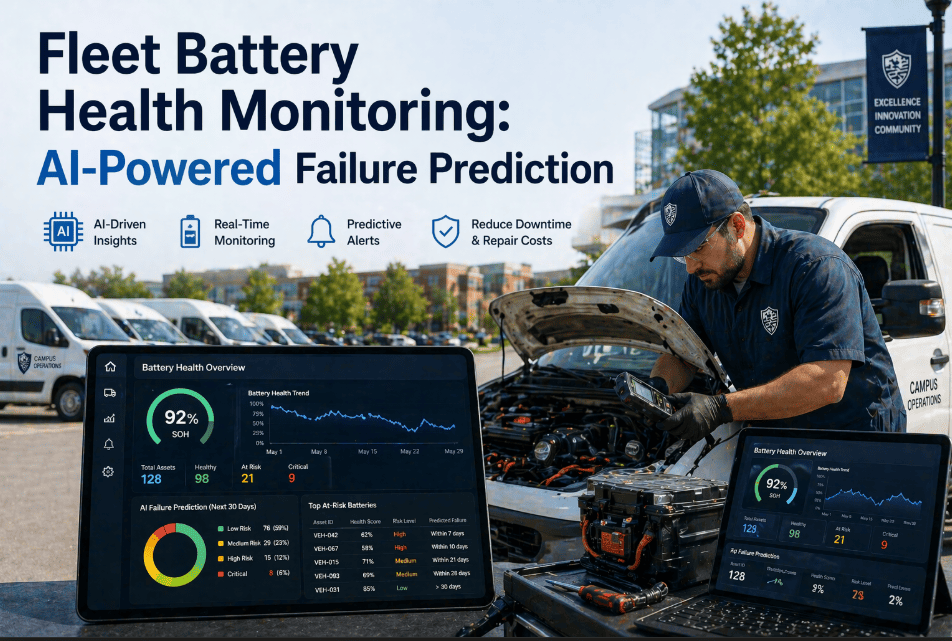
Every fleet manager running electric vehicles knows the sinking feeling: a truck that showed 95% state of health six months ago now reads 82%, range has dropped by 40 miles, and the driver is stranded at a depot 15 miles short of the route endpoint. Battery degradation doesn't announce itself with a warning light — it compounds silently through thousands of charge cycles, temperature extremes, and fast-charging sessions until the day your route planning falls apart. The average Class 6-8 EV battery pack costs $25,000–$45,000 to replace, and most fleets have zero visibility into which vehicles are degrading fastest or why. That gap between "we have EVs" and "we manage EV battery health" is exactly where fleets lose money, miss routes, and face premature pack replacements. A connected maintenance platform like Oxmaint turns battery telemetry into actionable degradation curves, charging optimization rules, and replacement forecasts — so your EV fleet delivers the ROI your business case promised.
EV Battery Degradation Monitoring for Fleet Managers
Track state of health, predict capacity loss, optimize charging patterns, and plan battery replacements across your entire electric fleet — before range anxiety becomes route failure.
What Actually Kills EV Batteries — And What Doesn't
Battery degradation isn't random — it follows predictable chemical and thermal pathways. Understanding the six primary degradation drivers lets fleet managers intervene early, adjust charging policies, and extend pack life by 2–4 years. Every dollar spent on degradation monitoring returns $8–$12 in avoided replacement costs.
Operating above 95°F or below 32°F accelerates SEI layer growth and lithium plating.
Repeated DCFC above 150kW generates heat spikes — limit to under 20% of charging events.
Cycling 0–100% stresses chemistry. Keeping SOC 20–80% extends cycle life 40–60%.
Every full cycle consumes active lithium. Calendar aging occurs even when idle.
Parking at 100% SOC accelerates calendar aging. Set overnight targets to 80%.
Weak cells limit pack capacity and can trigger thermal events without BMS monitoring.
Battery Health Over Time — The Degradation Curve Your Fleet Follows
Every EV battery follows a predictable capacity curve. The first 2 years show rapid initial loss (3–5%), followed by a long linear decline, then accelerating loss as the pack approaches end-of-life. Monitoring state of health (SOH) at each stage determines when intervention pays off.
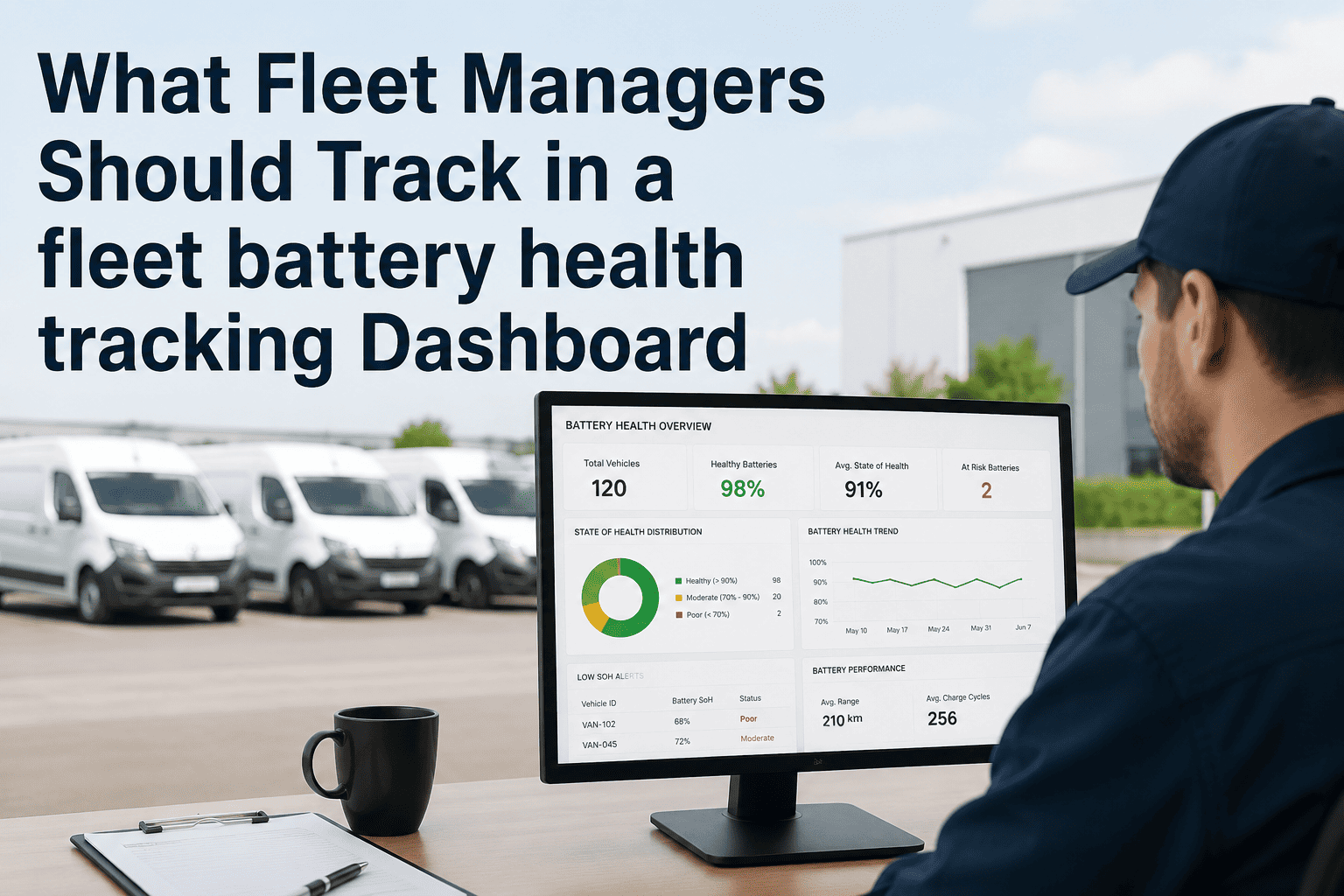
See Every Battery's Health Score
Track SOH, charging patterns, and degradation trends in one dashboard.
Charging Optimization — The Biggest Lever You Have
How you charge determines how long your batteries last. Most fleet degradation is self-inflicted through charging policies that prioritize convenience over battery chemistry. These five rules, enforced through your CMMS and telematics integration, can extend pack life by 30–50%.
Set charge limits to 80% for daily operations. Charge to 100% only when routes require max range.
Overnight L2 charging at 7–19kW generates minimal heat. Reserve DCFC for emergencies only.
Activate battery preconditioning before charging in sub-32°F or above-95°F conditions.
Charge between 10 PM–6 AM to reduce demand charges and allow cooler charging cycles.
Track kWh delivered, peak kW rate, SOC start/end, and ambient temperature per session.
Technology That Makes Battery Monitoring Scalable
Manual SOH checks don't scale past 10 vehicles. The technology stack below — integrated through Oxmaint — turns raw telemetry into fleet-wide battery intelligence. AI digital twins predict degradation 6–12 months ahead. PLC and OBD integrations pull real-time cell data. Predictive maintenance algorithms trigger work orders before capacity drops become route failures.
Virtual model learns degradation patterns and predicts SOH 6–12 months forward.
Pulls cell voltage, temperature, and BMS fault codes directly from vehicles.
ML models flag anomalous degradation and auto-generate work orders before failure.
Battery costs, warranty claims, and depreciation flow directly into financial systems.
EV Battery Maintenance Intervals — The Working Reference
EV batteries have fewer moving parts than ICE drivetrains, but the maintenance they do require is higher-stakes and more data-dependent. This is the schedule Oxmaint ships as a starter template for EV fleet customers.
| Interval | Task | Method | Alert Trigger |
|---|---|---|---|
| Every Charge | Log SOC start/end, kWh, peak kW | Telematics auto-capture | DCFC > 20% sessions |
| Weekly | Review SOH trend per vehicle | Dashboard review | SOH drop > 0.5%/month |
| Monthly | Cell voltage balance check | OBD data pull | Cell delta > 50mV |
| Quarterly | Coolant system inspection | Visual + flow rate test | Flow < 80% of spec |
| Semi-Annual | Full diagnostic scan + capacity test | OEM diagnostic tool | Capacity < 85% nominal |
| Annual | Thermal management overhaul | Technician inspection | Coolant degradation |
The Financial Case for Battery Monitoring
For a fleet of 50 EVs with $35,000 average pack cost, extending battery life by just 2 years defers $1.75M in replacement capital. Here's how the savings stack up across the four primary value levers.
"We were replacing packs at Year 4 because we had no visibility into degradation patterns. After implementing Oxmaint's battery monitoring, we identified that 60% of our degradation was coming from DCFC overuse on three specific routes. We changed the charging policy, and our projected pack life extended to Year 7."
— Fleet Operations Director, 120-vehicle delivery fleet, Texas
How Oxmaint Manages EV Battery Health at Scale
Oxmaint isn't a generic fleet tool with an EV tab bolted on. It's built for the data-intensive, chemistry-aware reality of managing battery-electric vehicles — from a single delivery van to a 500-truck regional fleet. Book a demo to see it configured for your vehicle types.
SOH Dashboard by Vehicle
Real-time state of health for every pack, color-coded by risk tier.
Charging Pattern Analytics
Track L2 vs. DCFC ratio, SOC windows, and charge timing per vehicle.
Thermal Event Monitoring
Alerts when pack temperatures exceed safe ranges during charging or driving.
Mobile Work Orders
Technicians receive inspection tasks with checklists and photo capture.
Replacement Forecasting
AI predicts when each pack hits 80% SOH and calculates replacement cost.
OBD + SAP Integration
Pull BMS data via OBD/CAN and sync costs with SAP or your ERP.
Frequently Asked Questions
How do I check EV battery state of health for my fleet?
Does fast charging really damage EV batteries?
When should I plan for battery pack replacement?
Can Oxmaint integrate with my existing telematics provider?
What size EV fleet benefits from battery monitoring?
Protect Your Biggest EV Investment
Track every battery, optimize every charge, plan every replacement.