A fleet manager running 40 vehicles without a real-time analytics dashboard is making replacement decisions from last month's spreadsheet, fuel decisions from last week's receipt pile, and safety decisions from the last incident report — by which point the expensive mistake has already happened. The gap between what fleet data tells you and what a dashboard makes actionable is where most fleet operating cost disappears. Oxmaint's fleet analytics dashboard pulls maintenance records, telematics, fuel logs, and driver behavior signals into one live view — recalculated every shift, alerting automatically when any KPI drifts outside target range, and available on mobile for managers who are not at a desk when things go wrong. Book a demo to see your fleet's live analytics dashboard built in Oxmaint within the first session.
Oxmaint's fleet analytics dashboard tracks cost per mile, vehicle utilization, PM compliance, fuel efficiency, and driver safety scores — live, per vehicle, with automated alerts and custom report exports that replace the weekly spreadsheet grind entirely.
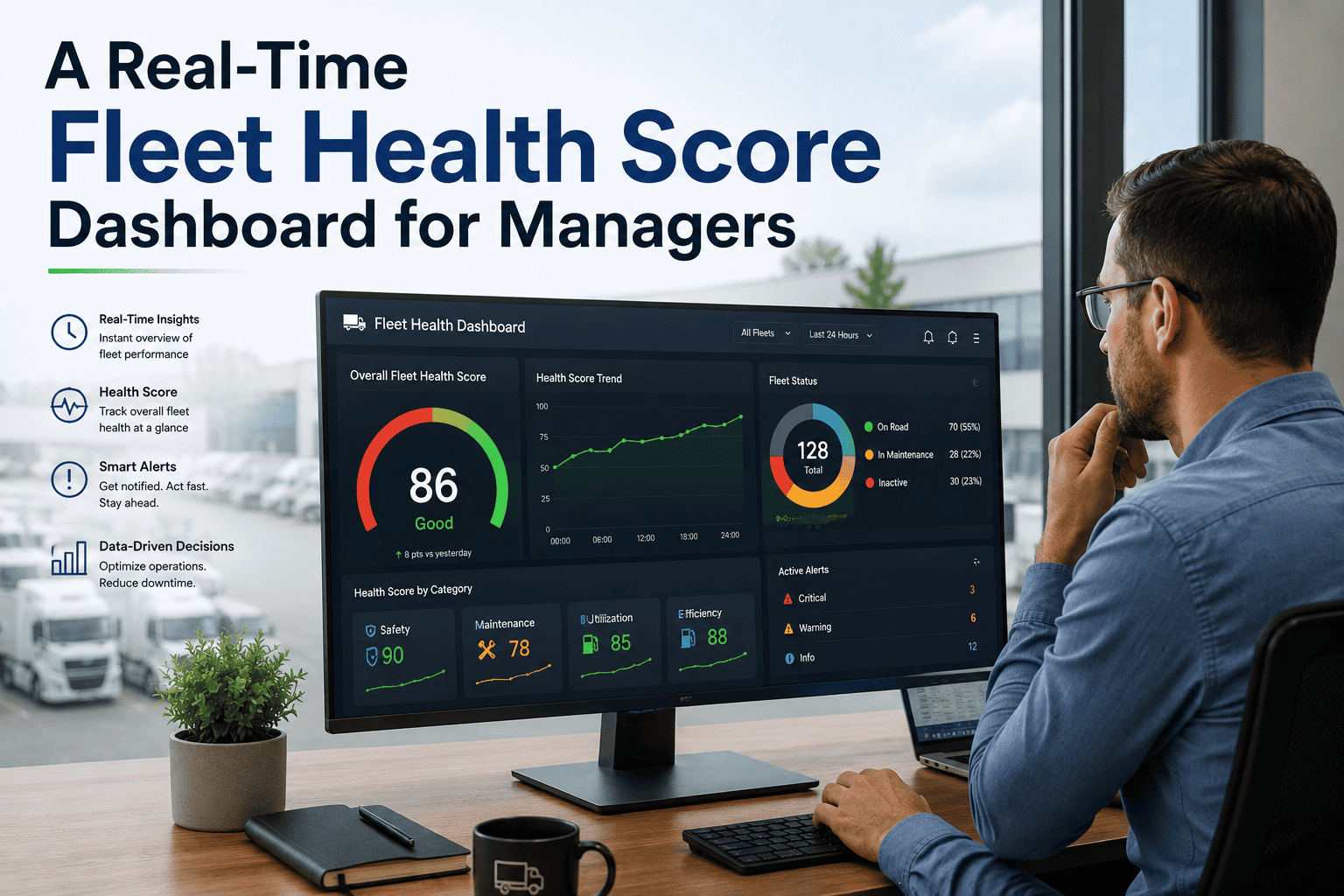
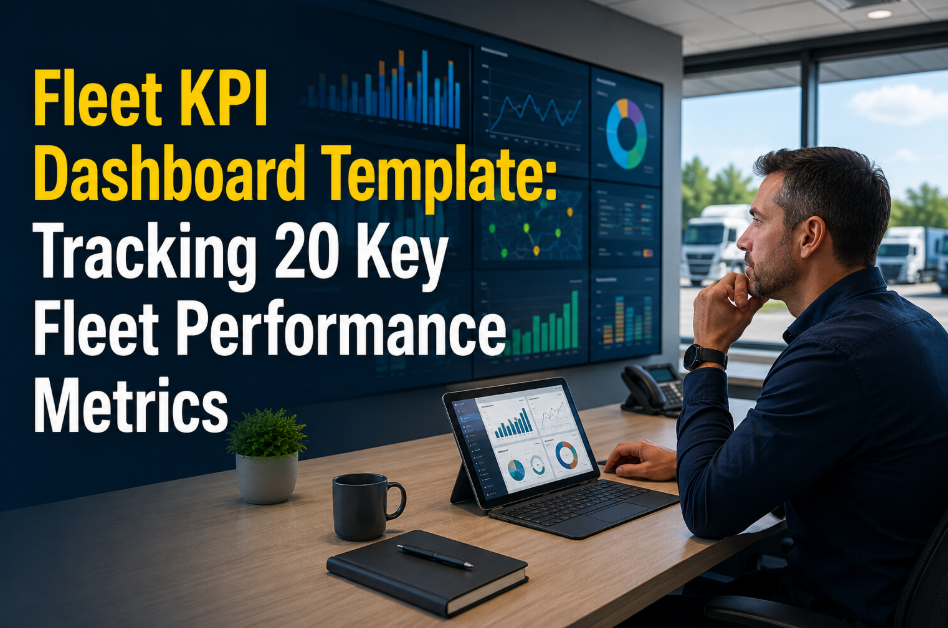
A real-time fleet analytics dashboard tracks four KPI categories simultaneously: financial metrics (cost per mile by vehicle, fuel spend per route, maintenance cost vs budget, emergency parts ratio), operational metrics (vehicle utilization rate, on-time performance, route efficiency, idle time percentage), maintenance metrics (PM compliance rate, MTBF, MTTR, work order backlog), and safety metrics (driver safety score, accident rate, inspection compliance, near-miss frequency). Oxmaint calculates all four from live data — no manual entry, no spreadsheet pulls, no weekly reporting delay.
What a Real-Time Fleet Dashboard Tracks — Four KPI Categories
Most fleet managers track 3 or 4 metrics. The fleets beating industry benchmarks by 30% track all four categories simultaneously — because the categories are connected. A utilization problem is often a maintenance problem in disguise. Book a demo to see all four dashboard categories configured for your fleet size.
Cost per mile by vehicle class, total fuel spend vs budget, maintenance cost per vehicle per month, emergency parts spend ratio, and planned vs reactive cost split — all calculated live from work orders, fuel logs, and parts invoices. Oxmaint flags vehicles running 25%+ above fleet-average CPM with an automatic alert before they become replacement debates.
Vehicle utilization rate (active hours ÷ available hours), on-time delivery rate per route, idle time percentage by driver and vehicle, route efficiency score, and fleet availability — connected to telematics for live updates. A vehicle at 52% utilization while others are over-dispatched costs $1,800/month in asset waste that the dashboard surfaces automatically.
PM compliance rate by vehicle and class, MTBF per vehicle trending over 12 months, MTTR by fault type, unplanned downtime hours per month, and work order backlog age. MTBF trending is the most predictive metric — a vehicle whose MTBF is declining 15% quarter-over-quarter needs attention before the breakdown confirms it.
Driver safety score per driver (composite of harsh braking, speeding, cornering, and phone use), accident rate per million miles, pre-trip inspection compliance, near-miss event frequency — all pulled from telematics and DVIR records automatically. A driver whose safety score drops 20 points over 6 weeks is 3× more likely to have an at-fault accident in the next quarter.
Six Live KPIs on the Oxmaint Fleet Dashboard
These are the six metrics fleet directors examine first when a vehicle is up for replacement, a route is flagged for cost review, or a driver is called into a performance meeting. Oxmaint tracks all six automatically — updated every shift.
Your Fleet's Live Dashboard — Built in Oxmaint During the First Demo Session
Oxmaint connects to your telematics in the first session — your live CPM, utilization, PM compliance, and safety scores are visible before the demo ends. Book a demo to see your fleet's numbers in real time.
How Oxmaint AI Turns Dashboard Data Into Fleet Actions
Raw KPI numbers tell you where you are. AI-generated insights tell you what to do next. Oxmaint analyses patterns across your fleet data and generates specific, prioritised action recommendations — not just threshold alerts that leave the next step to you.
Oxmaint analyses each vehicle's maintenance cost trajectory, mileage, MTBF trend, and current market residual value — generating a replacement recommendation with the break-even date when keeping the vehicle becomes more expensive than replacing it. Replacement decisions driven by AI timing save an average of $3,200 per vehicle decision over manager instinct alone.
When a route's cost-per-mile rises 15% above its 90-day baseline, Oxmaint flags it for investigation — cross-referencing fuel consumption, driver assignment, vehicle condition, and payload data to pinpoint the specific cause. Most route cost spikes trace to a single event: a driver change, vehicle assignment swap, or fuel card misuse that surfaces in the dashboard before the monthly cost review.
Each vehicle receives a real-time breakdown risk score (1–10) based on maintenance history, MTBF trend, current fault codes, overdue PM status, and mileage since last service. Vehicles scoring 7 or above are flagged for immediate inspection — Oxmaint generates the work order automatically and routes it to the next available technician slot before the vehicle goes out on the next shift.
Oxmaint analyses 6-month rolling driver data to identify patterns that predict incidents — not just flag past events. A driver whose harsh-braking frequency increases 40% over 8 weeks is 3× more likely to have an at-fault accident in the following quarter. The dashboard surfaces this pattern with a targeted coaching recommendation before the next incident report.
Fleet Dashboard Setup — Day 1 to Full Insights
Most fleet analytics platforms require 3 to 6 months before KPIs are reliable. Oxmaint connects to existing telematics and produces live KPIs within the first session — and builds to full AI insights within 90 days.
Oxmaint connects to your GPS telematics provider (Samsara, Verizon Connect, Geotab, Fleet Complete, Teletrac Navman, or 40+ others via API) and imports vehicle records, maintenance history, and fuel card data. Cost per mile, utilization, and idle time KPIs are live within the first 4-hour session — no IT project required.
Fleet manager configures target ranges for each KPI — CPM threshold, utilization floor, PM compliance target, safety score minimum — and sets alert escalation rules. Oxmaint benchmarks current performance against industry peers and recommends achievable 90-day targets based on fleet size, vehicle type, and operating region. Book a demo to see KPI target configuration for your fleet type.
As Oxmaint accumulates 30 to 60 days of operational data, the AI insights engine activates — generating vehicle replacement recommendations, route cost anomaly alerts, and driver behaviour pattern flags. Breakdown risk scoring is live from day one; replacement timing recommendations reach full accuracy after 90 days of per-vehicle data.
Weekly fleet performance reports generate automatically and email to configured recipients — no manual compilation. Executive summary dashboard for fleet directors and CFOs shows top-line financial and operational KPIs with trend charts and peer benchmarks. Custom report formats for operations, finance, and safety stakeholders configurable by role.
Fleet Dashboard Comparison — Manual Reporting vs Oxmaint Real-Time
The difference between a spreadsheet-based KPI process and a real-time dashboard is not just speed — it is the quality of decision that each enables.
| Decision Type | Manual Reporting | Oxmaint Real-Time Dashboard | Cost Impact |
|---|---|---|---|
| Vehicle replacement | Based on age and gut feel — average 8 months late | AI break-even recommendation — optimal timing | $3,200/vehicle saved |
| Route cost overrun | Detected at month-end — full month of excess cost incurred | Detected at 15% deviation — week 2 of the month | $1,800/event saved |
| Breakdown prevention | PM missed silently — breakdown discovered on route | Risk score 7+ triggers inspection before next shift | $4,200/breakdown avoided |
| Driver safety intervention | Reactive — after incident or complaint | Proactive — pattern flag 8 weeks before incident probability peaks | $28K/incident avoided |
| Fuel cost control | Idle time unknown — fuel card review monthly | Idle time per driver live — alert at 15% above baseline | $340/vehicle/year |
Before Oxmaint I was spending 6 hours every Friday pulling KPI data into a spreadsheet that was outdated before I finished it. Now the dashboard updates every shift and I spend that 6 hours acting on what the data is telling me. In 8 months we dropped cost per mile from $0.57 to $0.41 and our breakdown rate by 60%.
Frequently Asked Questions
Live Fleet KPIs. AI Insights. Zero Spreadsheets — Active in Your First Session.
Cost per mile, utilization, PM compliance, and safety scores — live in Oxmaint from your existing telematics. No IT project. No wait.