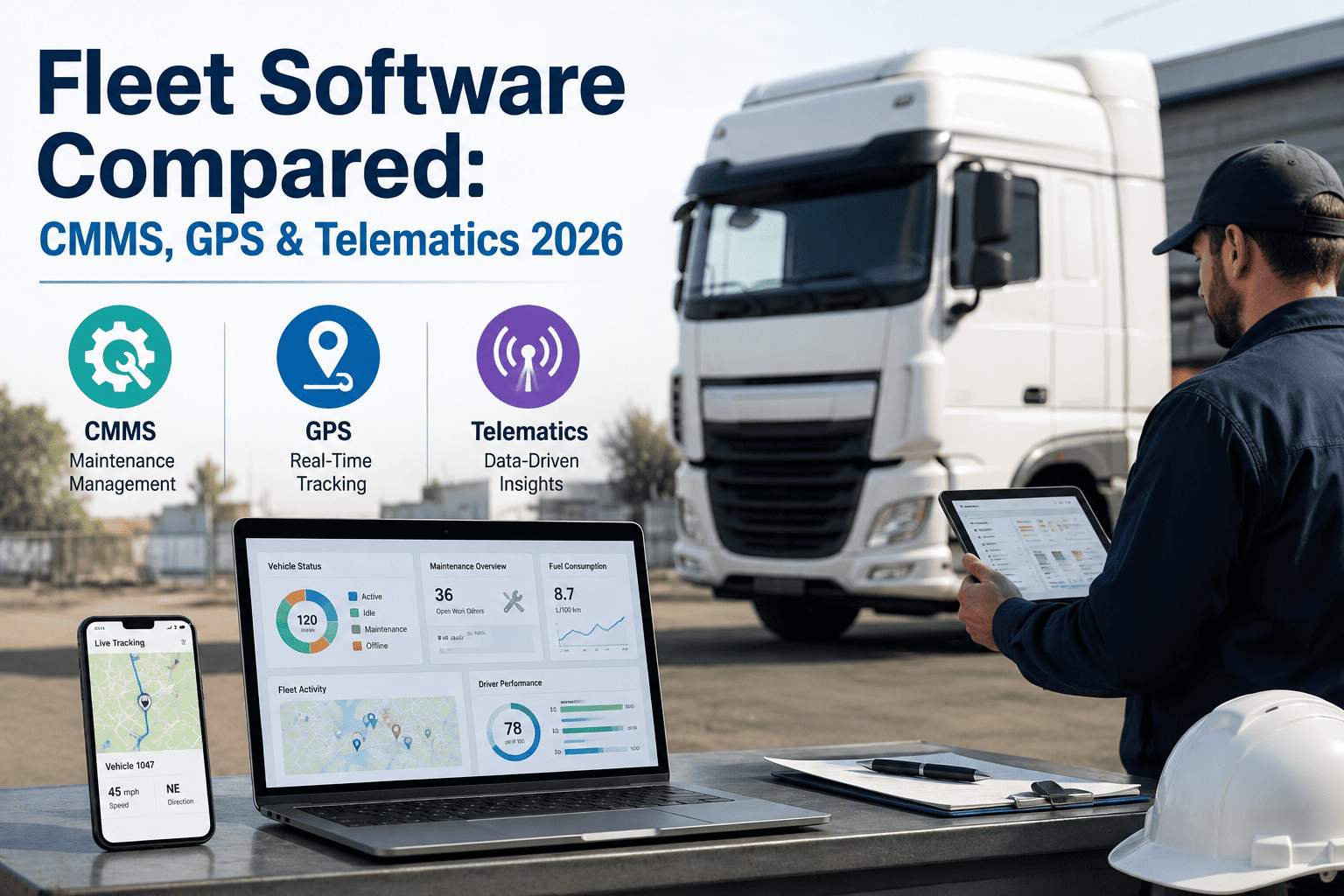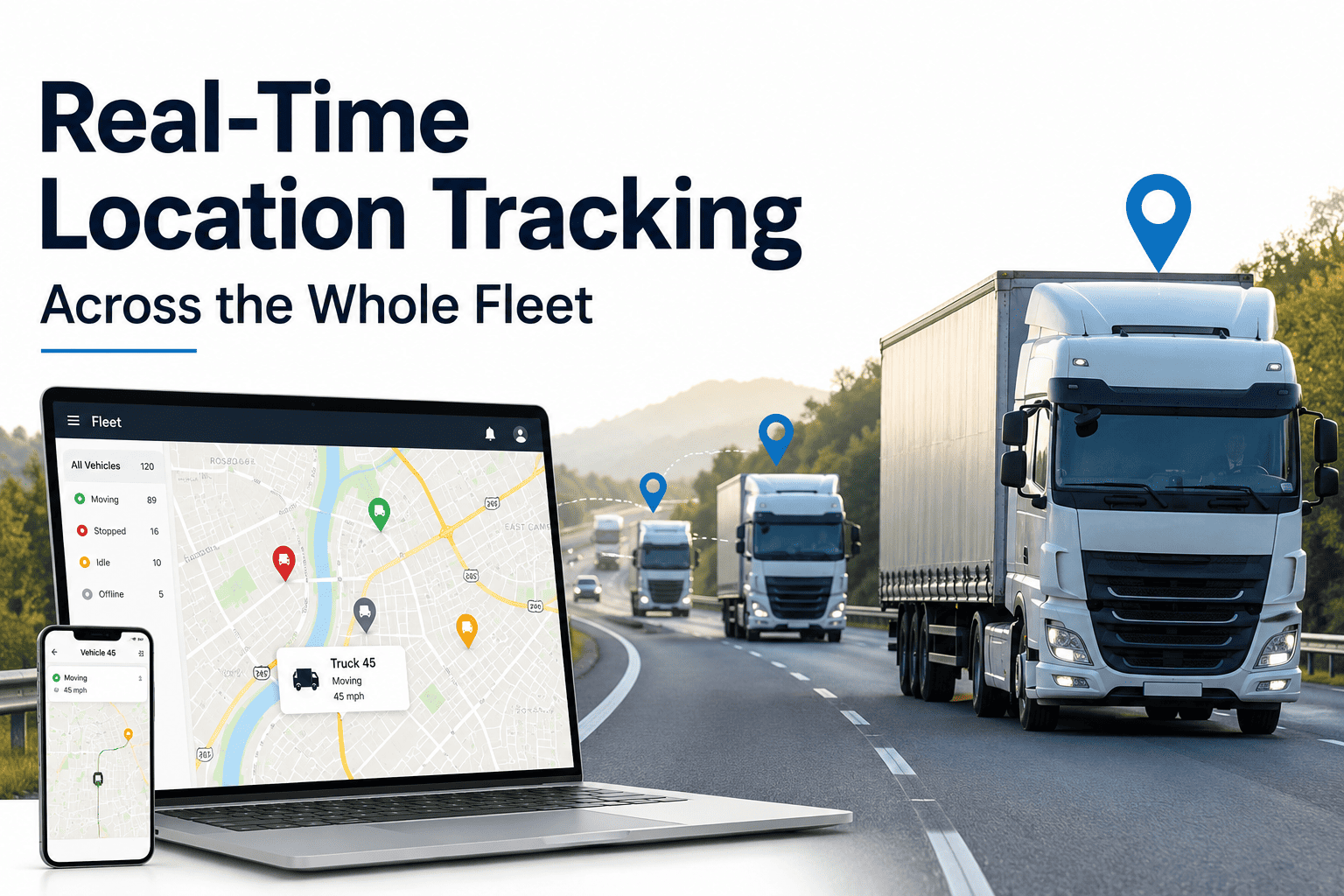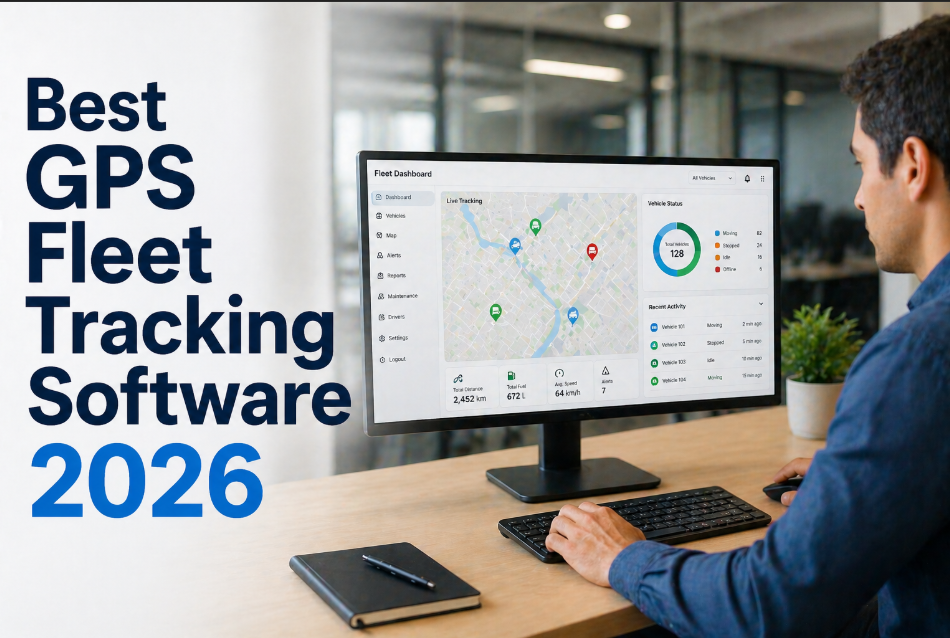
Real-time vehicle tracking is the operational foundation that every other fleet management capability depends on — you cannot optimize routes for vehicles you cannot locate, cannot enforce maintenance schedules for assets whose mileage you cannot verify, and cannot dispatch efficiently without knowing where every vehicle is and what it is doing right now. In 2026, GPS fleet tracking has moved well beyond simple dot-on-a-map location — modern platforms deliver live location updates every 10–30 seconds, geofence-triggered alerts, speed and behavior monitoring, breadcrumb trail history, and direct integration with CMMS systems that use location data to drive maintenance scheduling and dispatching decisions. For fleet directors managing 20 or more vehicles, the operational gap between a connected and unconnected fleet is now measured in fuel spend (12–18% difference), driver productivity (23% higher in tracked fleets), and total incident rate (31% lower). OxMaint's GPS-integrated fleet management platform connects live vehicle location with location-aware maintenance scheduling, geofencing enforcement, and real-time dispatch optimization — turning raw tracking data into operational decisions that reduce cost every hour the fleet is running.
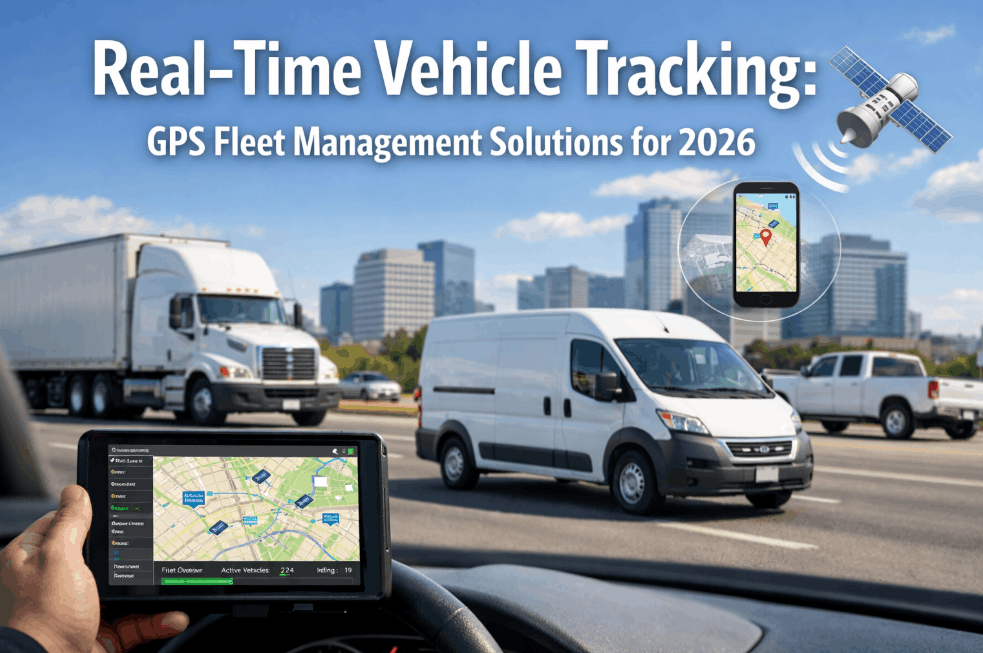
Real-Time Vehicle Tracking: GPS Fleet Management Solutions for 2026
Live GPS tracking, geofencing, speed monitoring, breadcrumb trails, and CMMS integration — everything fleet directors need to deploy location-aware fleet management that reduces fuel costs, improves dispatch efficiency, and drives maintenance scheduling from actual vehicle data.
What Real-Time GPS Fleet Tracking Actually Delivers in 2026
The term "GPS tracking" undersells what modern fleet telematics platforms actually provide. Location is the data input — the operational outputs are what create value. Live location feeds every 10–30 seconds enable dispatchers to respond to customer delivery inquiries with precision, not estimates. Breadcrumb trails covering every minute of a vehicle's operating day reconstruct exactly where a vehicle was when an incident or complaint occurred. Speed monitoring tied to route-segment speed limits creates a per-driver, per-route compliance record that survives insurance investigations and DOT audits. Geofencing generates automatic alerts when vehicles enter or leave defined zones — customer sites, depots, restricted areas — without any dispatcher monitoring the map. And CMMS integration converts live odometer readings into automatic PM work order triggers, eliminating the manual mileage-entry process that is the most common source of missed maintenance intervals.
Live GPS Location: Update Frequency, Accuracy, and What Matters Most
Not all GPS tracking systems deliver equivalent location data — and the differences matter operationally. Update frequency determines how stale your map data is when a dispatcher makes a decision. A 2-minute GPS update interval means a vehicle traveling at 65 mph is 2.2 miles away from its last known position by the time the next ping arrives — that is not real-time tracking, it is recent tracking. For urban delivery operations and dispatch-intensive fleets, update intervals of 10–30 seconds are the operational standard in 2026. For long-haul OTR operations where precise location matters less between decision points, 60-second intervals provide adequate visibility at lower data transmission cost. OxMaint's GPS fleet management platform delivers configurable update intervals per vehicle type — balancing data granularity with connectivity costs across mixed-duty fleets.
Geofencing: Automated Zone Intelligence for Fleet Operations
Geofencing converts passive GPS tracking into active operational intelligence. A geofence is a virtual boundary drawn around any geographic area — a customer site, a depot, a restricted zone, a state line for IFTA reporting, or a high-theft area where after-hours vehicle presence is unauthorized. When a tracked vehicle crosses that boundary, the system fires a configurable alert: email, SMS, in-platform notification, or an automated workflow in the CMMS. The operational value is that geofence events are recorded without requiring anyone to watch a map — the system monitors every vehicle simultaneously and reports exceptions automatically.
Breadcrumb Trail History: When You Need to Know Exactly Where a Vehicle Was
Breadcrumb trail GPS recording stores a timestamped location point for every GPS update interval — creating a complete, continuous history of every vehicle's path for every operating day. In practice, breadcrumb trails resolve four recurring fleet operations challenges that no other data source can address: post-incident reconstruction (where was the vehicle at 2:47 PM on Tuesday?), customer delivery dispute resolution (did the driver visit the site or not?), route deviation investigation (why did the trip take 40 minutes longer than the optimized path?), and insurance defense (what speed and path did the vehicle take in the 3 minutes before the accident?). OxMaint stores 90 days of breadcrumb history per vehicle by default, with configurable retention up to 365 days for fleets with longer investigation exposure windows.
Speed Monitoring: Segment-Level Compliance and Driver Scoring
Speed monitoring in 2026 operates at the route-segment level — matching each GPS point against the posted speed limit for that specific road segment rather than applying a generic threshold. This matters because a 70 mph reading on an interstate is legal while the same speed on a residential arterial is a significant violation — and a simple threshold system treats them identically. Segment-level speed monitoring produces a driver speed compliance score that accounts for road type, posted limits, and violation severity — and generates the per-driver speed record that insurers and DOT investigators request during accident investigations. OxMaint's speed monitoring feeds directly into driver safety scorecards and generates automated coaching triggers for violations that exceed configurable thresholds.
CMMS + GPS Integration: Location-Aware Maintenance Scheduling
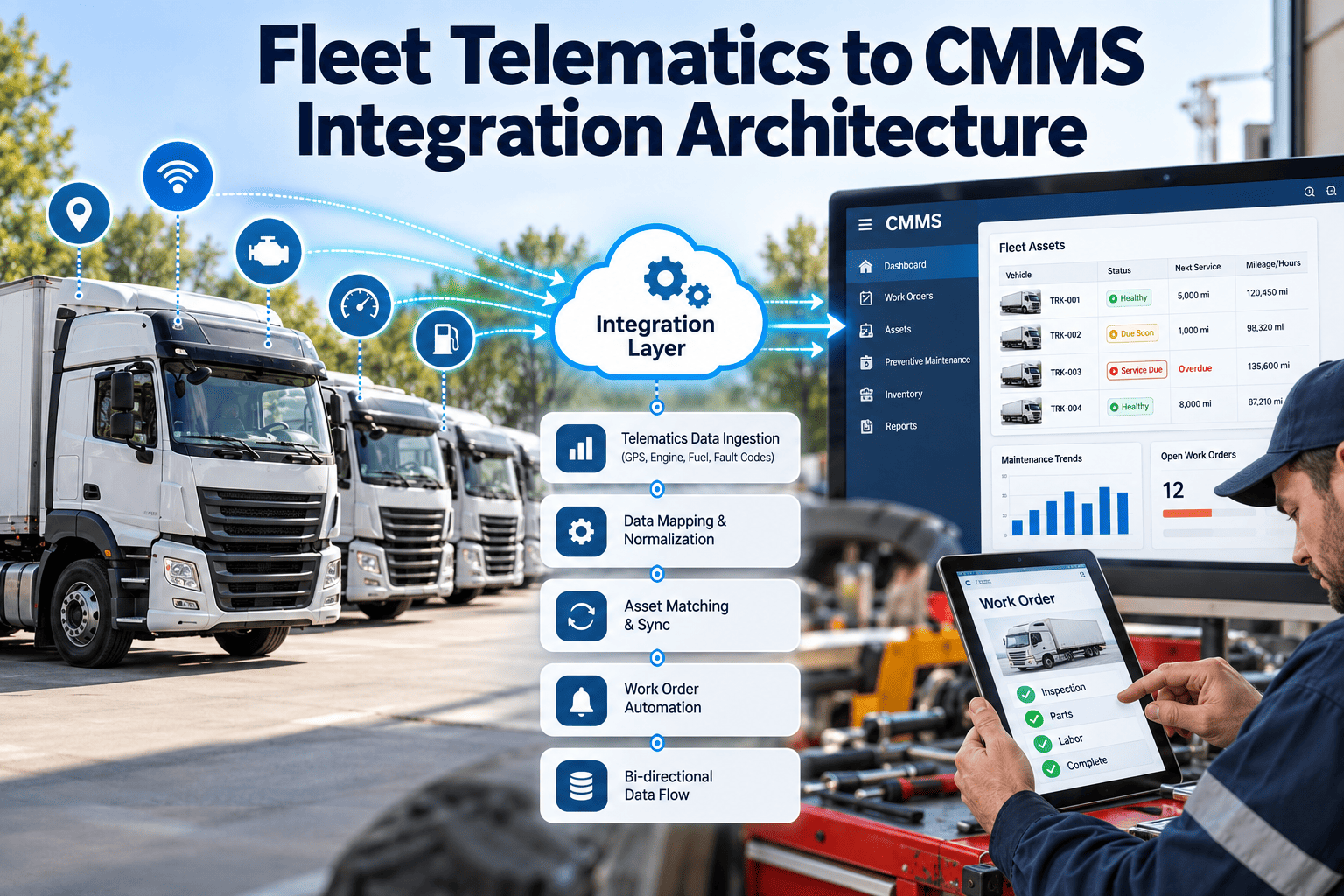
The most underdeployed capability in GPS fleet management is CMMS integration — because most fleets operate their tracking platform and their maintenance system as separate, disconnected tools. When GPS and CMMS are integrated, live odometer data from telematics automatically updates each vehicle's mileage record in the maintenance system — eliminating the manual entry process that is responsible for 34% of missed PM intervals in fleets without integration. Beyond mileage sync, location-aware maintenance scheduling uses real-time vehicle position to optimize maintenance routing: when a vehicle in the field triggers a PM alert, the CMMS knows which service location is closest, calculates the route adjustment needed to bring the vehicle in at the next natural stop, and modifies the active route accordingly — without requiring dispatcher or technician intervention.
every 60 sec
Real-Time Tracking for Dispatch: Decisions Based on Current Reality
Dispatch without real-time location data is dispatch based on assumptions — where drivers reported they were on their last check-in, where they should be based on the planned route, and how long the last stop was estimated to take. All three assumptions drift from reality within the first hour of a shift. Real-time GPS dispatching in OxMaint shows every active vehicle's current position, current status (driving, stopped, idling, at customer site), and estimated availability — so the next dispatch decision is made on what is actually happening, not what was planned to happen. When an urgent delivery arises, the dispatcher identifies the nearest available vehicle in seconds rather than calling through a driver roster.
Connect Every Vehicle in Your Fleet to Real-Time GPS Tracking
OxMaint's GPS fleet management integrates live location, geofencing, speed monitoring, and CMMS maintenance scheduling in a single platform. No new hardware required for most fleets. Free to start.
Basic GPS Tracking vs. Integrated Fleet Management Platform
Frequently Asked Questions
Every Untracked Vehicle Is a Cost You Can't See or Control.
OxMaint connects live GPS location, geofencing, speed monitoring, breadcrumb trail history, and CMMS maintenance scheduling into a single fleet management platform — giving you complete visibility into every vehicle, every driver, and every maintenance event in real time. Reduce fuel costs by 18%, eliminate 34% of missed PM intervals, and give your dispatchers the live data they need to make every assignment in seconds. Free to start. No hardware required for most fleets. Join 1,000+ fleet operations running location-aware management with OxMaint.