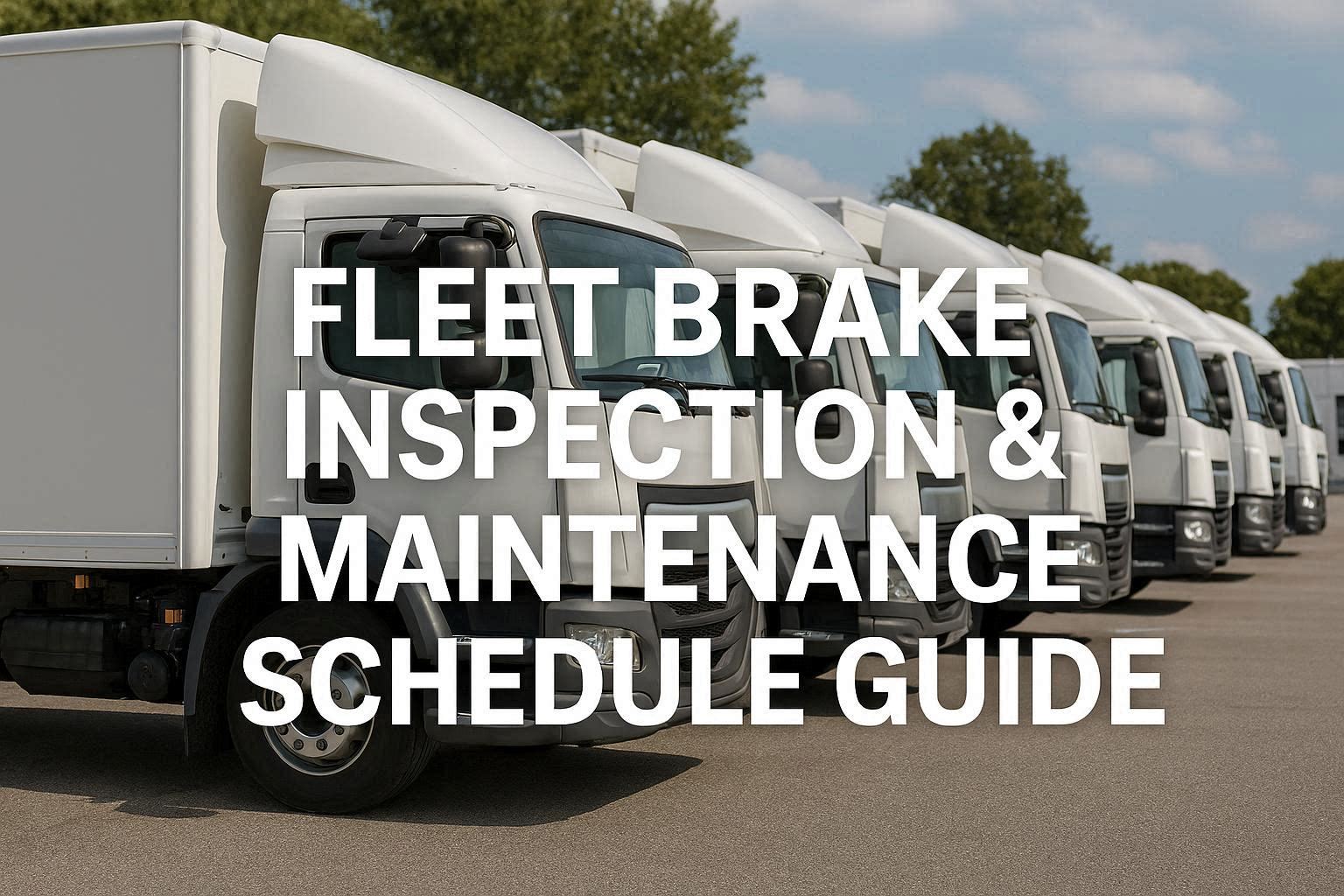
Brake system failures are the second-leading mechanical cause of commercial vehicle crashes in the United States, accounting for 29% of crash-related out-of-service orders at roadside inspections — yet the majority of brake defects found during CVSA inspections were present and detectable before the vehicle left the yard. The problem is not that fleet brake systems fail without warning. It is that most fleet maintenance programmes do not have systematic brake inspection scheduling, real-time brake wear tracking, or automated alerts that flag a vehicle approaching minimum pad thickness before it arrives at a weigh station. A driver who calls in a brake issue at mile 400 of a 500-mile run is not identifying a sudden failure — he is reporting a developing condition that a proper brake management programme would have caught at the last PM service. Brake maintenance in a commercial fleet is not just a safety obligation. It is a regulatory requirement under FMCSA 49 CFR Part 393 and Part 396, a DOT out-of-service criteria risk that can freeze a vehicle mid-route, and a liability exposure that multiplies dramatically when a brake-related accident investigation reveals that the condition was detectable and unaddressed. Sign in to OxMaint to configure automated brake inspection scheduling and wear tracking for your fleet, or book a demo to see how OxMaint manages every brake compliance requirement across your entire vehicle roster.
Fleet Brake Management · DOT Brake Compliance · Brake Wear Tracking · OxMaint AI
Brake Wear Alerts Before Minimum Spec. Inspection Schedules That Never Miss. DOT Compliance Documentation on Demand. AI Brake Management That Catches Defects Before the Roadside Inspector Does.
OxMaint fleet brake management automates inspection scheduling, tracks pad and lining wear by axle position, monitors brake adjustment status, manages fluid change intervals, and generates the DOT compliance documentation that protects your fleet from out-of-service orders and post-accident liability exposure.
29%
of commercial vehicle crash-related out-of-service orders involve brake system defects — the second-leading mechanical cause of CMV crashes in the US
5 yrs
maximum driver disqualification for knowingly operating a CMV with brake violations under FMCSA — the individual penalty beyond vehicle out-of-service
78%
of brake defects found at CVSA inspections were present and detectable before the vehicle left the originating terminal — a preventable maintenance failure
78%
Nearly four in five brake defects found at CVSA roadside inspections were detectable at the last pre-trip inspection or scheduled maintenance service — meaning the defect was present, went unidentified, and the vehicle was dispatched anyway. This is not a driver awareness problem. It is a maintenance programme structure problem. When brake inspection is a generic checkbox on a pre-trip form rather than a measured, documented, and trended evaluation of pad thickness, drum wear, adjustment, and fluid condition, defects accumulate invisibly until a roadside inspector measures what the maintenance programme should have caught. OxMaint structured brake management closes this gap — with axle-level wear tracking, inspection checklists that require measured values not checkmarks, and AI alerts that flag deteriorating brake condition before it reaches the DOT out-of-service threshold.
Four Brake Management Domains OxMaint Automates for Fleet Operations
WEAR — Pad & Lining Wear Tracking
Axle-Level Brake Wear Measurement and Replacement Threshold Alerts
Brake pad and lining wear tracking requires more than noting "brakes checked" on a service record. Each axle position — steer, drive, and trailer — wears at a different rate depending on load distribution, terrain, speed profile, and brake balance. OxMaint tracks measured pad thickness and lining thickness by axle position for every vehicle — recording actual measurements in millimetres or fractions of an inch at each inspection, trending wear rate across consecutive measurements, and generating alerts when any axle position approaches the FMCSA minimum allowed thickness for disc brakes (1.6mm for steers, 3.2mm for drives under 49 CFR 393.47) or drum lining (1/4 inch minimum). AI wear rate projection calculates the predicted replacement date based on the observed wear rate and average daily mileage — giving fleet managers 2–3 weeks of advance notice rather than a same-day emergency change.
Sign in to OxMaint to configure axle-position brake wear tracking for your vehicle types.
Key Wear Parameters OxMaint Tracks per Axle
Current pad/lining thickness — measured in mm or fractions per axle position
Wear rate — thickness lost per 1,000 miles at current operating conditions
Miles to minimum spec — AI-projected miles remaining before DOT threshold
Left-right variance — uneven wear indicating caliper, drum, or adjustment issue
Last measurement date and technician — accountability for inspection accuracy
Wear Tracking Failures OxMaint Prevents
No thickness measurement — "brakes OK" recorded without actual measurement taken
Single-position check — only one axle measured, uneven wear on others undetected
No wear rate projection — replacement scheduled reactively rather than predictively
INSP — Inspection Scheduling
Automated Brake Inspection Scheduling and DOT Compliance Interval Management
FMCSA 49 CFR 396.17 requires systematic inspection of brake systems at defined intervals — annual inspections for all CMVs, with more frequent checks for certain vehicle types and operating categories. Beyond regulatory minimums, best-practice brake management requires intermediate inspections at PM service intervals that specifically include brake system measurement, adjustment verification, and air system leak-down testing. OxMaint configures brake inspection schedules at two levels simultaneously — the regulatory compliance level (annual DOT inspection with brake system certification) and the operational maintenance level (PM-interval brake measurement and adjustment check). Both levels generate automatic work orders with structured inspection checklists requiring measured values, not generic pass/fail checkmarks. Missed inspections trigger escalating alerts to the fleet manager and safety director, with the vehicle flagged for brake hold until inspection is completed and documented.
Book a demo to see brake inspection schedule configuration for your fleet in OxMaint.
Key Inspection Intervals OxMaint Manages
Annual DOT inspection — FMCSA 49 CFR 396.17 compliance interval per vehicle
PM-interval brake check — integrated into scheduled preventive maintenance visits
Post-repair re-inspection — brake check required after any brake system repair
High-wear route check — shortened intervals for mountain grades or heavy stop routes
Inspection Scheduling Failures OxMaint Prevents
Annual inspection lapse — DOT inspection date passes without scheduling alert
PM brake check skipped — brake measurement omitted from PM checklist completion
No post-repair verification — brake repair closed without documented re-inspection
ADJT — Adjustment & Air System
Brake Adjustment Monitoring and Air System Integrity Tracking
Air brake adjustment is the most frequently cited brake defect at CVSA inspections — accounting for more than 40% of all brake out-of-service findings. Slack adjuster travel that exceeds FMCSA limits (typically 2 inches at the brake chamber pushrod for Type 24 chambers under 49 CFR 393.47) places the vehicle immediately out of service. Automatic slack adjusters that are failing, seized, or contaminated can allow brakes to gradually fall out of adjustment between service intervals without any visible indication to the driver. OxMaint brake adjustment tracking records pushrod travel measurements at each inspection interval by chamber position, flags measurements approaching the 2-inch FMCSA limit with an amber alert, and flags measurements exceeding the limit with an immediate red out-of-service alert that notifies the fleet manager and blocks dispatch assignment for the vehicle. Air system leak-down test results are recorded at each annual inspection and PM service.
Sign in to OxMaint to configure brake adjustment tracking for air-braked vehicles in your fleet.
Key Adjustment Parameters OxMaint Tracks
Pushrod travel — measured in inches per chamber position, compared to FMCSA limit
Slack adjuster condition — note of ASA function, contamination, or damage
Air leak-down rate — PSI drop per minute in 90-second leak-down test
Compressor cut-in/cut-out pressure — governor function verification
Adjustment Failures OxMaint Catches
Out-of-spec pushrod travel — vehicle dispatched with adjustment exceeding FMCSA limit
Failed ASA undetected — automatic slack adjuster not maintaining adjustment between services
Leak-down rate above threshold — air system loses pressure faster than allowable rate
FLUID — Brake Fluid Management
Brake Fluid Condition Monitoring and Hydraulic System Service Scheduling
For hydraulically-braked fleet vehicles — light commercial vehicles, vans, smaller trucks, and passenger vehicles — brake fluid condition directly affects stopping performance and system reliability. Brake fluid absorbs moisture over time, lowering its boiling point and increasing the risk of vapour lock under heavy brake application on mountain grades or during emergency stops. DOT 3 and DOT 4 brake fluid should be tested for moisture content at each annual service and replaced when moisture content exceeds 3% by weight — a condition that is invisible without testing but measurable in seconds with a refractometer or test strip. OxMaint hydraulic brake management tracks fluid change dates and mileage, schedules fluid condition testing at annual intervals, records moisture content test results per vehicle, and generates fluid replacement work orders when moisture content approaches the 3% action threshold. Fleet vehicles operating in high-humidity environments (coastal Gulf states, Southeast Asia, UK, tropical markets) require more frequent testing and replacement intervals.
Book a demo to see hydraulic brake fluid management in OxMaint for mixed fleet operations.
Key Fluid Parameters OxMaint Tracks
Last fluid change date and mileage — per vehicle service record
Moisture content test result — percentage by weight at last test date
Fluid type — DOT 3, DOT 4, or DOT 5.1 per vehicle specification
Brake caliper condition — caliper slide, piston, and boot condition note per inspection
Fluid Management Failures OxMaint Prevents
Fluid never tested — moisture content unknown, vapour lock risk unquantified
Overdue fluid change — interval exceeded without automated scheduling alert
Wrong fluid type — incorrect fluid used without vehicle spec verification
OxMaint AI · Fleet Brake Management
Pad Wear Tracked by Axle. Adjustment Measured by Chamber. Inspections Scheduled and Never Missed. DOT Compliance Documented and Instantly Accessible. Brake Management That Works Before the Inspector Arrives.
OxMaint turns brake maintenance from a checkbox on a pre-trip form into a measured, trended, and scheduled programme that catches defects before they become roadside out-of-service orders or post-accident evidence.
Three AI Technologies Behind OxMaint Brake Management
How OxMaint AI Makes Fleet Brake Management Proactive
Technology · Wear AI
Predictive Wear Rate Modelling per Vehicle and Route
OxMaint AI calculates individual wear rates from consecutive thickness measurements and correlates them with route data — identifying which routes accelerate brake wear and which vehicles wear faster than fleet average. Vehicles assigned to high-wear routes (mountain grades, heavy city traffic, high-load applications) receive compressed inspection intervals automatically based on projected wear rate at current operating conditions.
Outcome: Replacement scheduled 2–3 weeks before minimum spec, not discovered at inspection
Technology · Compliance AI
FMCSA Threshold Monitoring and Out-of-Service Alert
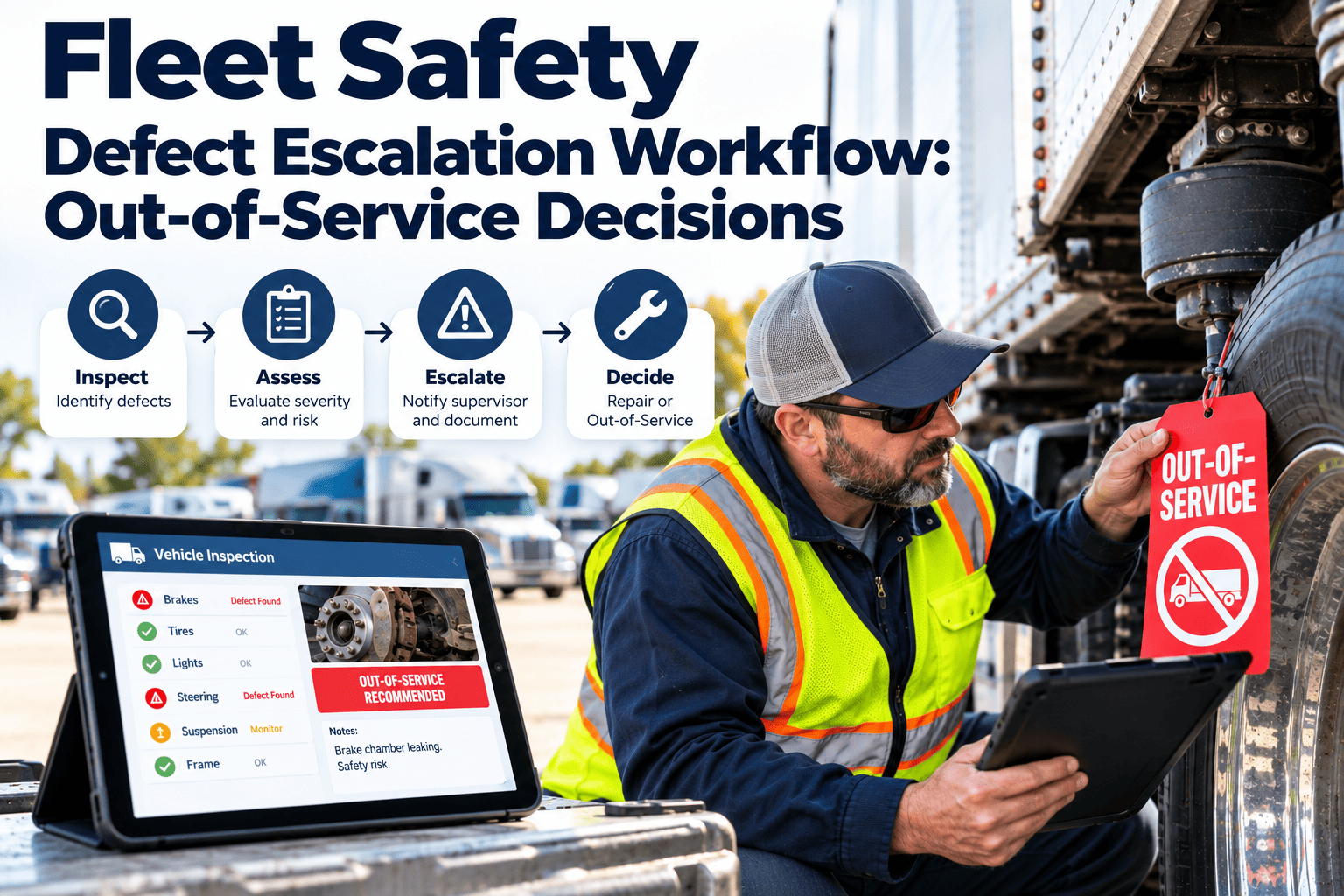
OxMaint maintains current FMCSA brake out-of-service criteria thresholds by vehicle type and brake system — automatically comparing each recorded measurement against the applicable regulatory limit. Any measurement at or beyond the OOS threshold generates an immediate vehicle hold flag, fleet manager notification, and blocks dispatch assignment until the brake defect work order is closed with a documented repair and re-inspection result.
Outcome: No vehicle with OOS-level brake defect dispatched without correction documented
Technology · DOT Documentation AI
Inspection Record Generation for DOT Compliance Audits
OxMaint generates brake inspection and maintenance history reports formatted for DOT compliance reviews — showing every inspection date, inspector identity, measurement recorded, action taken, and follow-up work order for each vehicle across the audit lookback period. Complete brake records for any vehicle are accessible in under 3 minutes, satisfying the 49 CFR 396.21 record retention requirement without any manual filing system.
Outcome: Complete DOT brake compliance record for any vehicle in under 3 minutes
Brake Compliance Risk Register — Where Defects Carry the Highest Consequence
Critical — Immediate OOS
Air Brake Pushrod Travel Exceeding FMCSA Limit
Pushrod travel beyond the FMCSA limit is an immediate OOS violation — the vehicle is removed from service on the spot. OxMaint flags any measurement at or approaching the limit with vehicle hold status before dispatch, not after the roadside inspector measures it during a route stop.
Critical — Safety & OOS
Brake Lining Below FMCSA Minimum
Brake lining or pad below FMCSA minimum thickness is a DOT out-of-service violation at any roadside inspection. OxMaint predictive wear alerts create a 2–3 week window to schedule replacement before reaching minimum — eliminating the scenario where a vehicle is found non-compliant mid-route.
Critical — Liability
Missing Annual DOT Brake Inspection Record
A vehicle without a current annual inspection record is operating in violation of 49 CFR 396.17 — regardless of its actual mechanical condition. In a post-accident investigation, a missing inspection record is treated as evidence of a negligent maintenance programme. OxMaint annual inspection alerts prevent this gap from occurring silently.
Elevated — Developing
Uneven Pad Wear Across Axle Positions
Significant left-right thickness variance on a single axle indicates a stuck caliper, seized slide pin, or adjustment imbalance — conditions that worsen progressively and can cause brake pull during hard applications. OxMaint variance alerts flag the condition for investigation before it creates a handling safety issue or accelerates to OOS-level thickness on one side.
Elevated — Seasonal
Brake Fluid Moisture Above 3% Threshold
High moisture content brake fluid in a vehicle assigned to mountain grades or heavy-load routes creates vapour lock risk during repeated high-load brake applications — exactly the conditions where vapour lock has the most catastrophic consequences. OxMaint moisture test result tracking ensures fluid is replaced before the risk materialises.
Elevated — Recurring
Repeated Adjustment After Short Interval
A vehicle that requires brake adjustment at consecutive service visits within a short interval likely has a failing automatic slack adjuster — a component that should maintain adjustment between services. OxMaint adjustment history tracking flags this pattern for ASA inspection and replacement before the component fails completely.
FMCSA Brake Compliance Requirements — OxMaint Coverage by Regulation
Documented Outcomes — Fleets Using OxMaint Brake Management
91%
reduction in roadside brake-related out-of-service orders at fleets using OxMaint axle-level wear tracking and inspection scheduling vs. pre-deployment baseline
Zero
annual DOT brake inspection record gaps at fleets using OxMaint automated scheduling — every vehicle inspection scheduled, completed, and documented within the required interval
3 min
time to produce a complete brake maintenance history for any vehicle during a DOT compliance audit — from OxMaint records including all measurements, inspections, and repairs
40%
of all brake OOS violations at CVSA inspections involve adjustment issues — the most preventable brake defect category with proper adjustment tracking
12 mo
minimum inspection record retention required under 49 CFR 396.21 — OxMaint retains full brake history for vehicle operational life plus statute of limitations period
2–3 wks
advance notice provided by OxMaint predictive wear alerts before minimum spec is reached — the window to schedule replacement without emergency response
3%
brake fluid moisture content action threshold — above this level, stopping distance increases and vapour lock risk develops under heavy brake application
78% of brake defects found at CVSA inspections were detectable before the vehicle left the yard. That means your fleet's brake OOS record is a maintenance programme design problem — not a bad luck problem. OxMaint fixes the programme.
Axle-level wear tracking. Adjustment measurement per chamber. DOT inspection scheduling. Fluid condition management. Compliance documentation on demand. OxMaint makes every brake defect findable before the inspector does.
We had three roadside brake OOS events in 14 months. Each one cost us $2,800 in towing, emergency repair, and lost revenue — on top of the safety score damage. After OxMaint, we started measuring every axle position at every PM and tracking the wear rates. In the next 18 months, zero brake OOS events. We caught nine brake conditions early enough to schedule the repair during a planned maintenance window instead of on the side of I-80. The data was always there — we just weren't collecting it systematically.
— Fleet Safety Manager, Regional LTL Carrier · 85 Units · Midwest US · OxMaint user since 2022
Frequently Asked Questions — Fleet Brake Inspection and Maintenance Management
How does OxMaint track brake pad thickness by individual axle position?
Technicians enter measured thickness values by axle and side (steer left/right, drive 1 left/right, trailer, etc.) directly into the OxMaint mobile app during inspection — values are stored against the vehicle and axle position, trended across consecutive measurements, and compared to FMCSA thresholds automatically. No manual calculation or spreadsheet required.
Sign in to OxMaint to configure axle-position brake inspection templates for your vehicle types.
How does OxMaint handle brake compliance for both air-braked and hydraulically-braked vehicles in the same fleet?
OxMaint applies separate inspection checklists and threshold values based on each vehicle's brake system type — air brake checklists include pushrod travel measurement and air system leak-down testing, while hydraulic brake checklists include pad measurement, fluid moisture testing, and caliper condition inspection. Both vehicle types share the same PM scheduling and compliance documentation framework.
Book a demo to see mixed-fleet brake management in OxMaint.
Does OxMaint integrate with DOT roadside inspection records to update vehicle brake history?
Yes. OxMaint integrates with FMCSA's DataQs system to receive completed roadside inspection reports — automatically updating the vehicle's brake history with any findings recorded by the roadside inspector. Brake deficiencies noted in roadside inspections generate immediate corrective work orders in OxMaint and flag the vehicle for repair before next dispatch.
How does OxMaint generate brake documentation for a DOT compliance review or accident investigation?
OxMaint produces a complete brake maintenance history report for any vehicle — covering all inspection dates, measured values by axle position, adjustment records, fluid change history, repair work orders, and inspector identities — in PDF format within minutes of the document request. The report satisfies 49 CFR 396.21 retention requirements and is structured for DOT investigator review.
Can OxMaint adjust brake inspection intervals for high-wear routes like mountain grades?
Yes. OxMaint allows route-specific brake inspection interval configuration — vehicles regularly assigned to high-wear routes such as mountain passes, high-stop urban delivery, or high-load mining operations receive compressed inspection intervals that reflect their accelerated wear profile. AI wear rate monitoring further adjusts intervals dynamically as actual wear data is collected for each vehicle-route combination.
Brake Defects Don't Appear Without Warning. They Develop Slowly While Your Maintenance Programme Isn't Measuring Them. OxMaint Measures What Matters — Before It Matters on the Side of the Highway.
Axle-level wear tracking. Air brake adjustment monitoring. DOT inspection scheduling. Fluid condition management. FMCSA compliance documentation. OxMaint manages every brake system requirement for every vehicle in your fleet — so the next CVSA inspector finds nothing to write up.