A regional parcel delivery company in Dallas ran 220 trucks and spent $1.4 million on liability claims in 2022 — the worst year in their history. When their risk manager pulled the incident data, the pattern was consistent: 78% of at-fault incidents involved a driver who had received three or more ADAS forward collision warnings in the 30 days before the incident but had never been coached on the pattern. The trucks had collision avoidance systems — the data was being captured by telematics — but nobody was systematically reviewing it, correlating warning frequency with individual driver risk, or acting on the signals before they became crashes. The ADAS hardware was doing its job. The management system was not. OxMaint ADAS management converts raw collision avoidance event data — forward collision warnings, AEB activations, lane departure alerts, and blind spot warnings — into actionable driver risk profiles and maintenance triggers, so the fleet acts on ADAS signals before they become incidents. Book a demo to see how Dallas-area fleets reduced at-fault incidents by 43% in the first year.
ADAS Management — Turn Collision Warning Data Into Driver Coaching Before the Crash
FCW tracking · AEB event analysis · Lane departure scoring · Sensor calibration PM · Risk profile per driver — all in OxMaint
Of at-fault incidents in one 220-truck Dallas fleet involved a driver with 3+ ADAS warnings in the prior 30 days — never acted on
$1.4M
Liability claim cost in one year — the fleet had ADAS hardware capturing warning data that nobody was systematically reviewing
43%
At-fault incident reduction in year one when OxMaint ADAS event data drives proactive driver coaching and risk scoring
The ADAS Event Severity Matrix — What Each Warning Type Means for Driver Risk
Not all ADAS events carry the same risk signal. A lane departure warning on an empty highway at 65 mph is different from an automatic emergency braking activation in a school zone. OxMaint classifies every ADAS event by type and severity — building a driver risk score from the pattern, not the individual event.
ADAS Event Severity Matrix — Risk Signal by Event Type and Frequency
Single Event
3+ in 30 Days
Daily Pattern
OxMaint Action
Forward Collision Warning
Monitor
Coaching WO
Immediate Coach
Risk score raised — coach scheduled
Automatic Emergency Braking
Review
P1 Coach + Review
Supervisor alert
Video clip pulled — incident review
Lane Departure Warning
Monitor
Fatigue flag
Fatigue protocol
Hours-of-service cross-check
Blind Spot Warning
Monitor
Coaching WO
Route review
Urban route coaching assigned
Rear Cross-Traffic Alert
Log only
Backing review
Backing retrain
Depot backing protocol assigned
ADAS Sensor Fault Code
Maint WO now
Recalibration
Vehicle hold
ADAS PM work order — auto-created
OxMaint evaluates every ADAS event against this matrix automatically — driver risk scores update in real time, coaching work orders generate without dispatcher action
ADAS Management — OxMaint
Your ADAS Hardware Is Capturing the Warning Data. Is Your Management System Acting on It?
Four ADAS Systems OxMaint Manages — What Each Requires
Modern commercial fleet vehicles carry four to six ADAS systems that require ongoing management — both the driver behaviour data they generate and the sensor calibration maintenance they require. OxMaint manages all four from one platform, connecting telematics event data to driver coaching workflows and sensor maintenance schedules.
OxMaint ADAS Management — Four Systems, Two Workflows
FCW / AEB
Every FCW event logged with speed and context
AEB activation auto-pulls dashcam clip
Radar sensor calibration PM — 12mo / post-impact
False positive rate monitored per vehicle
LDW / LKAS
LDW events correlated to hours-of-service data
Camera lens cleaning PM — 6mo interval
Camera recalibration — windshield replace
Night event rate vs day rate — driver coaching
BSM / RCTA
Rear radar sensor — quarterly inspection
Bumper cover sensor obstruction check
RCTA event rate — depot backing risk flag
Post-collision sensor replacement workflow
ADAS Sensor Maintenance — What Fails, Why It Matters, and What OxMaint Schedules
ADAS systems are only effective when their sensors are functioning accurately — a miscalibrated forward collision camera triggers false positives that drivers learn to ignore, and a blocked radar sensor provides no protection at all. OxMaint auto-schedules ADAS sensor maintenance across four trigger types. Sensor calibration work orders are generated automatically from telematics events, mileage thresholds, and shop-trigger events like windshield replacement.
ADAS Component
Calibration Trigger
Failure Consequence
OxMaint PM Action
Front radar (FCW/AEB)
Post-impact · Annual · Alignment change
False positives or total AEB failure
WO triggered post-collision or 12mo
Forward camera (LDW/LKAS)
Windshield replace · Post-impact · 6mo clean
No lane detection — system inactive
Calibration WO auto-linked to windshield WO
Rear radar (BSM/RCTA)
Quarterly · Post-bumper repair
Blind spot unprotected — backing risk
Bumper repair auto-triggers recal WO
Ultrasonic sensors
Monthly inspection · Obstruction check
False alerts or no low-speed detection
Monthly PM checklist per vehicle
ADAS control module
DTC fault code · OBD scan
Multiple ADAS systems disabled
DTC → WO in under 4 minutes
"We had the ADAS data. We just weren't reading it. After we deployed OxMaint ADAS event tracking, we found seven drivers with warning patterns that predicted their next incident. We coached them before it happened. Our at-fault incident count dropped from 19 to 11 in year one. That is $600,000 in avoided claims."
Different fleet operations produce different ADAS event profiles — last-mile urban delivery generates high BSM and RCTA events; long-haul OTR generates high FCW and LDW events; construction equipment generates different sensor risks from vibration and debris. OxMaint configures ADAS event thresholds and coaching triggers by operation type.
Last-Mile / Urban
BSM + RCTA Dominant
High BSM event rate in urban density — normal
RCTA threshold adjusted for depot backing
Stop-and-go FCW from following distance
Pedestrian detection AEB calibration focus
Camera lens cleaning — urban grime rate
Long-Haul / OTR
FCW + LDW Dominant
LDW events correlated to hours-of-service data
FCW events at highway speed — high severity
Fatigue protocol triggers on LDW pattern
Radar calibration — annual + post-impact
Adaptive cruise sensor drift — 6mo check
Field Service / Mixed
Variable Terrain Events
Off-road operation disables some ADAS systems
Towing configuration changes sensor zones
Mud and debris — sensor obstruction daily check
Return-to-highway calibration check protocol
Work zone ADAS threshold — adjusted per site
Transit / Passenger
Pedestrian + Compliance
Pedestrian AEB — highest priority calibration
FCW threshold tighter — passenger liability
ADAS event data for insurer reporting
Post-incident ADAS data pull — evidence chain
Annual ADAS system certification per vehicle
Technology: How OxMaint Connects ADAS Data to Fleet Safety Management
OxMaint integrates with telematics providers, dashcam systems, and fleet safety platforms to build a complete ADAS management workflow — from raw event data to driver coaching to sensor calibration maintenance. Every ADAS signal flows into one platform.
OxMaint integrates with Samsara, Geotab, Lytx, and Verizon Connect ADAS event streams via API — receiving forward collision warnings, AEB activations, lane departure events, and blind spot alerts in real time. Every event is logged with vehicle ID, driver ID, GPS location, speed, and time of day — building the event context required to distinguish systemic driver risk from isolated road conditions.
AI Camera Vision — Dashcam Clip Auto-Retrieval on AEB Activation
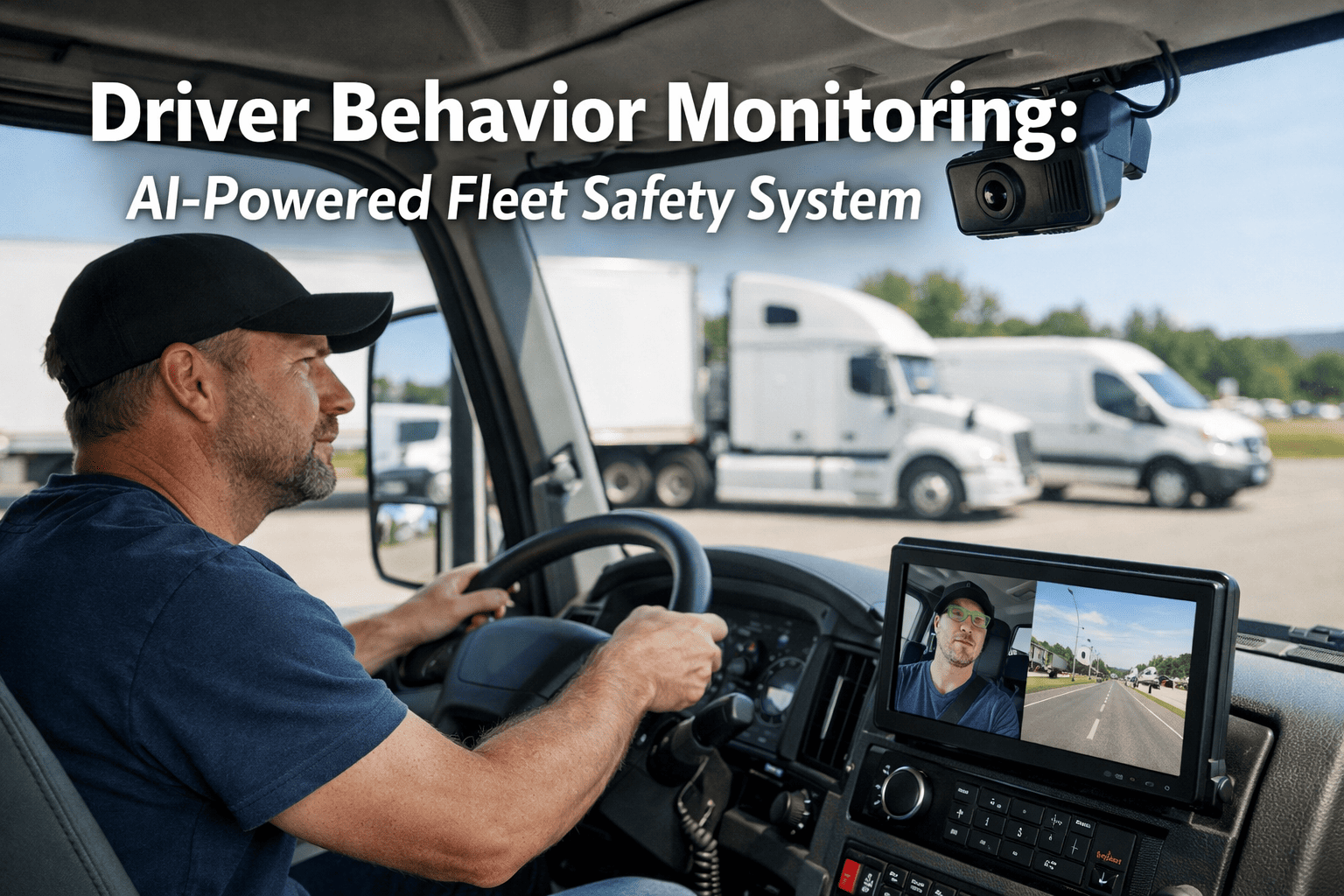
When OxMaint receives an AEB activation event, the platform automatically requests the dashcam clip for the 30-second window around the event from the Lytx or Samsara camera system. AI camera vision analyses the clip — classifying the event as system-appropriate response, driver-preventable situation, or false positive. The classification feeds both the driver coaching workflow and the ADAS calibration assessment.
AI Digital Twin — Driver Risk Profile from ADAS Event Pattern
OxMaint AI builds a risk profile for each driver from their ADAS event history — modelling event frequency, event type distribution, time-of-day patterns, and route context to calculate a predictive risk score. Drivers in the top 15% of risk score receive proactive coaching work orders before any incident occurs. The model identifies which drivers are on an incident trajectory 30–60 days before a claim is filed.
SAP / HR Integration — ADAS Coaching Records to HR File
OxMaint coaching work orders — assigned, completed, and acknowledged — post to the driver's HR record automatically in SAP SuccessFactors or Workday HCM. The coaching documentation creates the progressive discipline record required for termination decisions and insurer audits. When a carrier's risk manager requests evidence of systematic safety management during a large claim investigation, the complete ADAS coaching history exports from OxMaint in one click.
Fleet Safety KPI Dashboard — ADAS Metrics for Leadership
Fleet safety managers and VPs see the complete ADAS picture on one OxMaint dashboard — total FCW events fleet-wide, AEB activation rate per 100,000 miles, highest-risk drivers by event score, ADAS sensor calibration compliance, and coaching completion rate. The dashboard provides the metrics carriers and self-insured retention programs require for quarterly safety committee reporting — without manual data assembly.
Insurer Data Export — ADAS Safety Record for Premium Review
OxMaint generates an ADAS safety performance report — FCW rate, AEB activation frequency, coaching completion rate, and sensor calibration compliance — in the standardised format used by leading commercial fleet insurers including Nationwide, Sentry, and Travelers for usage-based insurance premium reviews. Fleets with documented ADAS management programmes consistently qualify for 8–18% premium reduction at annual renewal.
43%
At-fault incident reduction in year one with OxMaint ADAS event-driven coaching
4 min
ADAS fault code to calibration work order — auto-generated from OBD DTC
78%
Of at-fault incidents preceded by 3+ ADAS warnings — all detectable 30 days before the crash
14%
Average insurance premium reduction with documented ADAS management programme
Frequently Asked Questions
OxMaint integrates with Samsara AI dashcam, Geotab Drive, Lytx DriveCam, Mobileye Fleet, and Verizon Connect ADAS event streams via API. FCW, AEB, LDW, BSM, and RCTA events are received in real time. OEM telematics from Daimler, Volvo, and Kenworth with factory ADAS systems are also supported via J1939 CAN bus integration.
OxMaint generates ADAS calibration work orders from four triggers: a fault code from OBD (under 4 minutes), a collision event (linked from incident report), a shop trigger event (windshield replacement auto-links camera calibration), or a calendar-based PM interval (radar annual, camera lens 6-month cleaning). The system also flags vehicles whose ADAS false positive rate has increased — a leading indicator of sensor drift.
Yes — OxMaint evaluates ADAS event frequency against configurable thresholds by event type. When a driver exceeds the threshold (e.g. 3 FCW events in 30 days), a coaching work order is created automatically and assigned to the driver's fleet safety manager. The coaching record — assigned, completed, driver acknowledged — posts to the driver HR file automatically in connected HR systems.
OxMaint normalises ADAS event data across vehicle makes — mapping proprietary event codes from each OEM and telematics provider to a standardised event taxonomy (FCW, AEB, LDW, BSM, RCTA). Fleet-wide risk reporting is comparable regardless of whether the vehicle is a Kenworth T680 with Bendix Wingman or a Freightliner Cascadia with Detroit Assurance. Multi-make fleets see consistent event classification across all assets.
Yes — OxMaint generates an ADAS safety performance report covering FCW rate per 100,000 miles, AEB activation frequency, coaching completion rate, and sensor calibration compliance in formats accepted by Nationwide, Sentry, Travelers, and other leading commercial fleet carriers for usage-based insurance reviews. Most fleets submitting OxMaint ADAS reports qualify for 8–18% premium reduction at annual renewal.
ADAS Management — OxMaint
Your ADAS Data Is Predicting the Next Incident. Is Anyone Reading It?



.png)