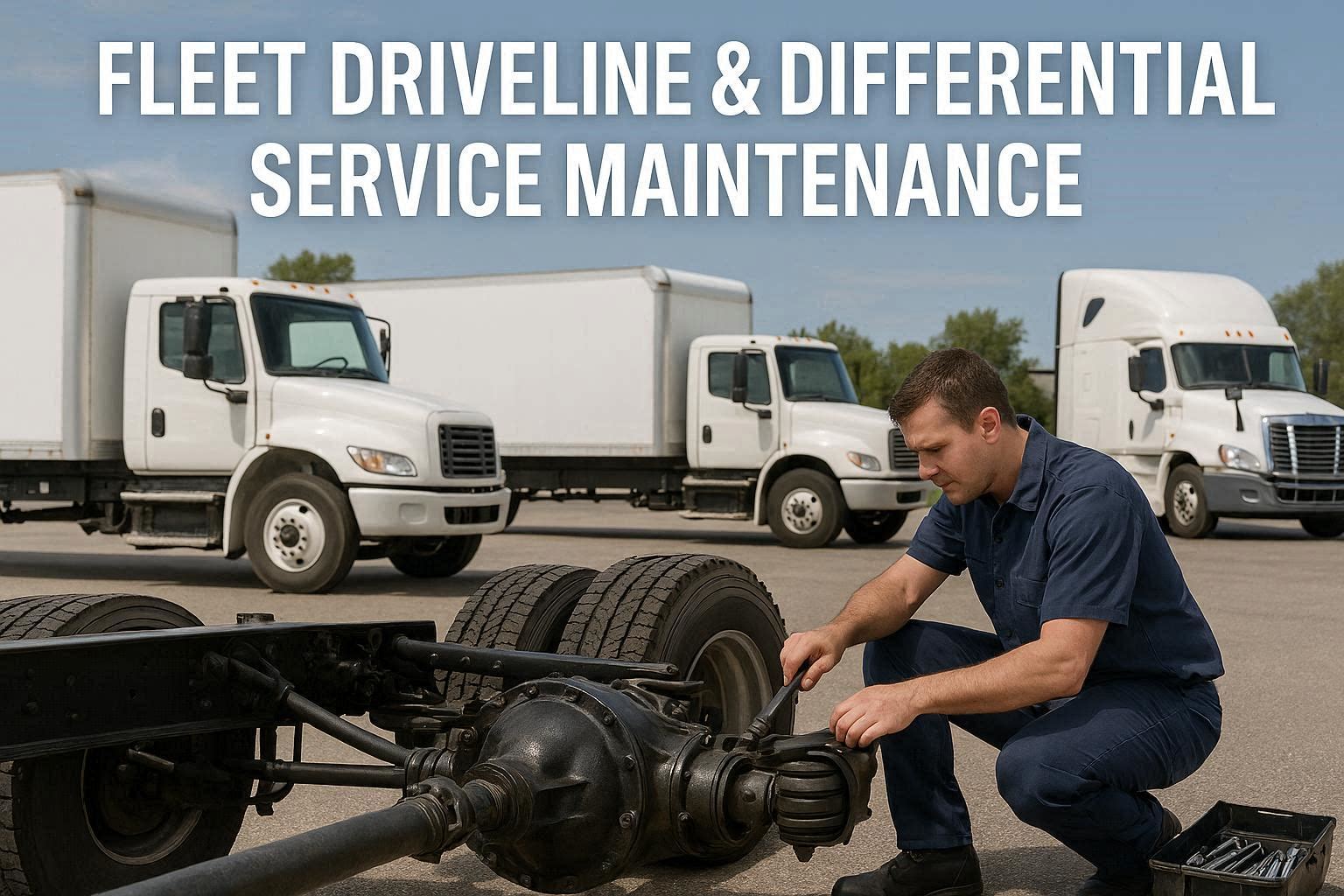
Fleet Driveline & Differential Service Maintenance
By Jack Miller on April 22, 2026
A long-haul fleet manager at a bulk cement carrier in Phoenix discovered that three of his tractors had the same failure in a six-week window — rear differential housing cracks caused by lubricant breakdown in extreme heat. The repair bill for each ran between $4,800 and $6,200, excluding downtime. When he pulled the service records, every truck was overdue for differential fluid changes by 40,000 to 60,000 miles. The trucks had been serviced — oil changes were current, tires were rotated, air filters were replaced on schedule. But the drivetrain interval schedule lived in a separate spreadsheet that nobody was cross-referencing with the PM system. Differential fluid, U-joint lubrication, driveshaft slip spline grease, and axle vent checks had all been treated as "someone else's column" in a divided maintenance workflow. Driveline failures are the second-most common category of roadside breakdown after tire events in US commercial trucking — and they are almost entirely preventable with consistent interval-based service. The challenge is not the knowledge of what to do — it is building a system that automatically generates the driveline work orders at the correct intervals alongside all other PM work, so the differential service column never becomes an orphaned spreadsheet. OxMaint fleet driveline maintenance integrates differential service, U-joint inspection, driveshaft lubrication, and axle maintenance into the same PM schedule as engine and brake work — one queue, one system, nothing falling through the gap between spreadsheets.
Differential Service. U-Joint Inspection. Driveshaft Lube. Axle Checks. All in the Same PM Queue — Automatically.
OxMaint generates driveline work orders at the correct mileage and hour intervals alongside all other fleet PM — no separate spreadsheet, no orphaned service column, no $6,200 differential replacements from neglected fluid changes
Average rear differential replacement cost — Phoenix cement carrier fleet, three failures in six weeks from overdue fluid changes by 40,000–60,000 miles
2nd
Most common roadside breakdown category in US commercial trucking — driveline failures behind tires, almost entirely preventable with consistent interval service
82%
Of driveline failures at US commercial fleets are linked to missed or overdue lubrication and fluid service intervals — not part failures (TMC data)
Six Driveline Maintenance Items OxMaint Tracks and Schedules Automatically
Commercial vehicle driveline maintenance covers six distinct service categories — each with different intervals, different failure modes, and different consequences when deferred. The problem is not knowing what to service — it is building a system that generates every driveline work order at exactly the right mileage or hour interval without manual calendar management. OxMaint automates all six driveline service categories from OBD mileage and engine hour data.
Differential Fluid and Housing Service
Most costly failure when deferred — $4,800–$8,000 replacement
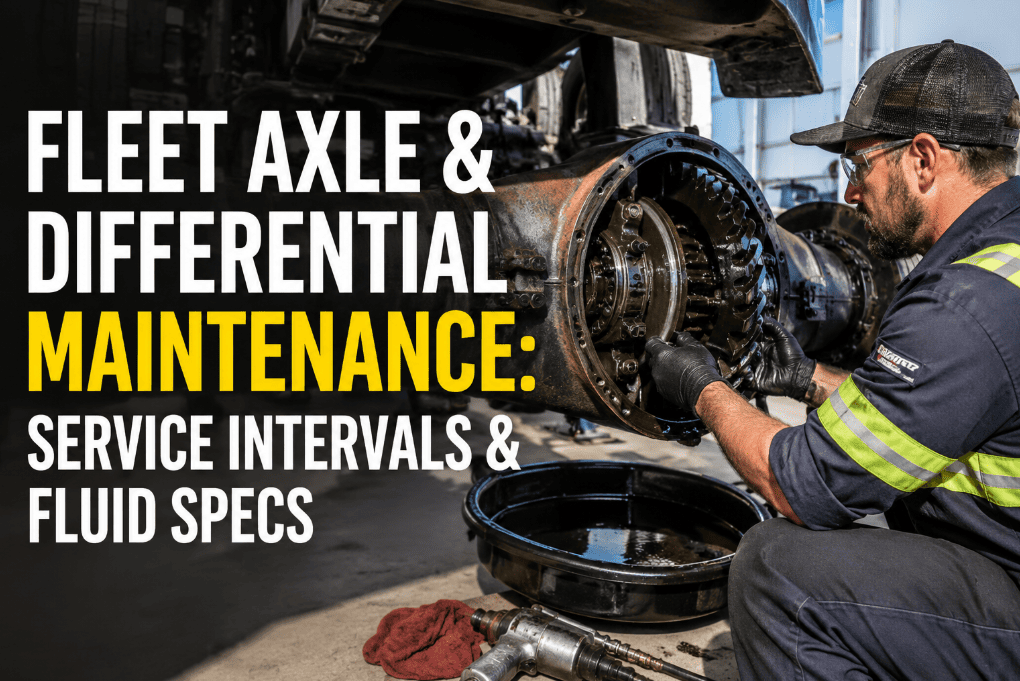
Front and rear differential fluid changes at manufacturer-specified intervals (typically 50,000–100,000 miles depending on duty cycle and operating temperature) are the single most important driveline PM task. OxMaint generates differential service work orders from OBD mileage, attaches the specified fluid grade and quantity, and flags the housing for visual inspection for leaks and crack propagation at each service. Fleets operating in high-ambient temperature environments (Southwest USA, UAE, Middle East) should apply a 20% reduced interval multiplier — configurable per vehicle in OxMaint.
U-Joint Inspection and Replacement
High failure frequency — greaseable and sealed joint tracking
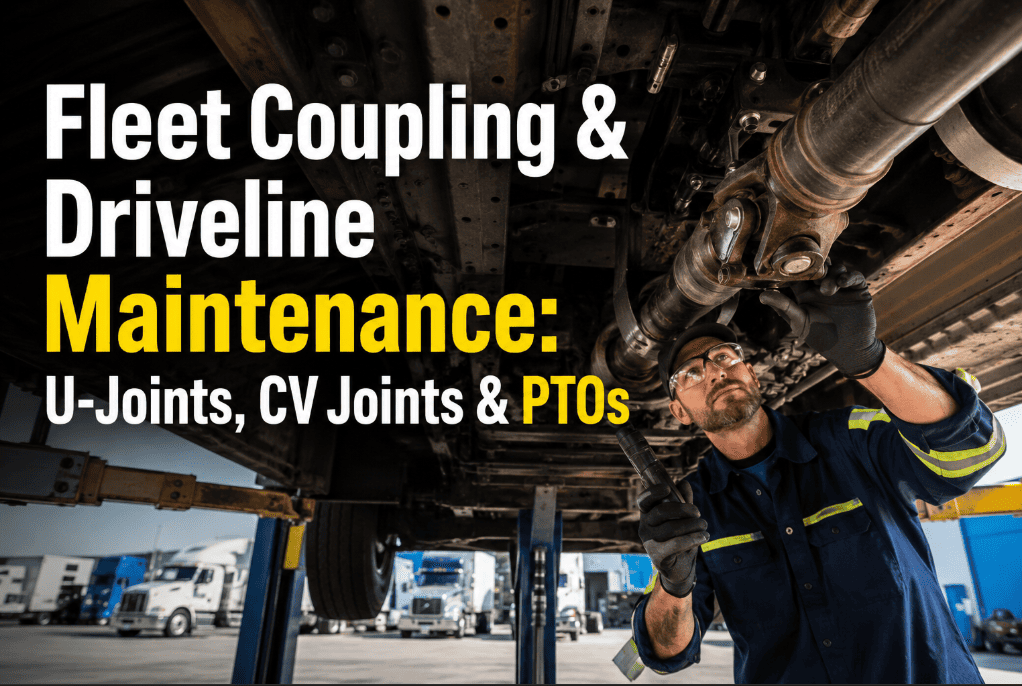
Universal joint wear is the most common driveline failure on commercial vehicles — U-joint failure causes immediate and dramatic driveshaft separation that can damage the truck, injure the driver, and create a road hazard for other vehicles. OxMaint tracks U-joint grease intervals for greaseable joints (typically every 25,000 miles or per manufacturer recommendation), and replacement cycle monitoring for sealed joints based on mileage and vibration event data from G-sensor analysis. High-vibration events logged in OxMaint trigger an unscheduled U-joint inspection work order.
Driveshaft Slip Spline Lubrication
Prevents binding, vibration, and spline failure
Driveshaft slip splines require grease to allow the shaft to extend and compress during suspension travel without binding. Dry splines cause vibration that accelerates U-joint wear and can lead to spline seizure — a repair that typically requires complete driveshaft replacement. OxMaint schedules slip spline lubrication at the same interval as U-joint greasing to consolidate the work at one service event, reducing technician time and ensuring neither item is missed when service windows are tight.
Axle Bearing and Seal Inspection
Wheel-off events — bearing failure consequences are severe
Axle bearing failure can cause wheel-end separation at highway speed — a catastrophic safety event with severe consequences for the vehicle, driver, and other road users. OxMaint tracks axle bearing inspection intervals, hub oil level checks, and seal condition assessments per axle position. Pre-trip DVIR defect data that reports unusual wheel-end noise or heat is automatically linked to the axle's maintenance record, creating a documented pre-failure warning trail before a wheel-end event occurs.
Differential Vent and Breather Service
Contamination prevention — moisture and debris ingress
Differential breather vents allow internal pressure equalisation while preventing moisture and contamination ingress. Blocked or damaged vents cause positive pressure buildup that forces differential fluid past axle seals — resulting in seal failure, fluid loss, and accelerated bearing wear. OxMaint includes differential vent inspection in the standard differential service work order, ensuring the vent check is performed at every fluid change interval without requiring a separate work order.
Transfer Case Service — AWD and 4WD Vehicles
Fleet AWD, crane trucks, and off-road vehicles
Fleet vehicles with transfer cases — AWD work trucks, crane carriers, and off-road utility vehicles — require transfer case fluid changes at intervals typically equal to or shorter than differential service intervals. OxMaint maintains separate service records for front differential, rear differential, and transfer case per vehicle — all triggered from the same OBD mileage source — ensuring that multi-axle drivetrain vehicles receive complete service rather than having the transfer case overlooked when front and rear differentials are serviced.
OxMaint — Fleet Driveline Maintenance
All Six Driveline Service Categories. One PM Queue. No Orphaned Spreadsheets.
Differential fluid, U-joints, slip splines, axle bearings, breathers, and transfer cases — all scheduled automatically from OBD mileage alongside all other fleet PM work.
Driveline Service Intervals by Vehicle Class — OxMaint Reference
These intervals are manufacturer-baseline recommendations — fleets operating in extreme heat (Phoenix, UAE, Saudi Arabia), heavy towing, or off-road conditions should apply a 15–25% reduction in service intervals. OxMaint applies configurable duty-cycle multipliers per vehicle to adjust intervals for operating environment automatically.
Class 6–7 Medium Duty
Box trucks, service vehicles, smaller tractor units
Technology Stack: How OxMaint Manages Fleet Driveline Health
OxMaint driveline maintenance is connected to four technology integrations that provide the mileage data, vibration signal analysis, DVIR reporting, and SAP cost tracking needed to maintain driveline health proactively — not reactively. Connect your fleet driveline maintenance through OxMaint.
OBD Mileage and Interval Automation
OxMaint reads OBD odometer data in real time and generates driveline service work orders automatically when each vehicle reaches the configured service interval. Differential, U-joint, slip spline, and axle service work orders appear in the technician queue at the correct mileage — alongside engine oil, air filter, and all other PM work — so a technician opening one vehicle's PM work sees every driveline item due at that service event in one consolidated task list.
AI Vibration Analysis — Pre-Failure Detection
OxMaint AI analyses G-sensor vibration signatures from telematics data to identify patterns consistent with developing U-joint wear, driveshaft imbalance, and differential bearing deterioration — before the failure produces audible noise or driver-reported symptoms. Vibration anomalies generate an unscheduled inspection work order with the suspected component flagged, enabling the shop to confirm and correct the developing failure during a planned visit rather than a roadside breakdown.
DVIR Pre-Failure Warning Integration
Driver pre-trip DVIR submissions that note driveline symptoms — vibration under load, clunking during engagement, unusual noise from the rear — are automatically linked to the vehicle's driveline maintenance record in OxMaint. DVIR-flagged driveline symptoms generate a priority inspection work order that routes ahead of scheduled PM items — the driver's observation becomes the early warning system that prevents the on-road failure that the Phoenix cement fleet experienced.
SAP and ERP Driveline Cost Tracking
OxMaint driveline work orders sync with SAP Plant Maintenance and ERP systems — capturing differential fluid cost, U-joint parts, and labour hours against each vehicle's asset record. Lifecycle driveline maintenance cost per vehicle, cost per mile, and failure-to-PM ratio are available from OxMaint and SAP simultaneously — enabling capital decisions on vehicle replacement to be based on actual driveline maintenance cost history rather than age or mileage alone.
"We were running a separate spreadsheet for driveline intervals that nobody was looking at during the monthly PM review. After OxMaint, differential and U-joint work orders show up in the same queue as oil changes. In 18 months we have had zero driveline roadside breakdowns. Before OxMaint we averaged 4–5 per year."
— Fleet Maintenance Manager, Bulk Cement Carrier · 38 Class 8 Tractors · Arizona, USA
Frequently Asked Questions
Q1Does OxMaint track driveline service separately from engine PM — or in the same work order?▼
OxMaint can generate consolidated PM work orders that include both engine and driveline service items when their intervals align within a configurable window (default 5,000 miles), or separate work orders when intervals differ significantly. The consolidation logic is configurable per vehicle type — most Class 8 operators prefer consolidated work orders to reduce shop visit frequency, while vocational fleets with more frequent driveline service often prefer separate orders for technician clarity.
Q2How does OxMaint handle multi-axle tandem rear differentials — does it track each separately?▼
Yes — OxMaint maintains a separate service record for each differential on multi-axle vehicles, including forward rear and rear rear differentials on tandem axle configurations. Each differential has its own fluid change history, seal inspection record, and breather check log. Inter-axle differential and differential lock components are tracked as separate service items when applicable to the vehicle configuration.
Q3Can OxMaint apply different driveline service intervals for vehicles operating in hot climates like UAE or Arizona?▼
Yes — OxMaint supports configurable duty-cycle multipliers per vehicle or vehicle group. Fleets operating in high-ambient temperature environments can apply a 15–25% interval reduction to all driveline service items, effectively shortening fluid change and inspection intervals without manually editing each vehicle's PM schedule. The multiplier is set once per vehicle group and applied automatically to all interval calculations from that point forward.
Q4Does OxMaint track U-joint replacement history per shaft and position — not just vehicle-level?▼
Yes — OxMaint supports component-level tracking within a vehicle's driveline record. U-joint replacement events are logged per driveshaft position (front prop shaft, rear prop shaft, inter-axle shaft) with the replacement date, mileage, part number, and technician. This component history enables pattern analysis — identifying specific shaft positions that require more frequent U-joint replacement due to operating conditions or vehicle configuration factors.
Q5How does OxMaint help fleets comply with OEM warranty requirements for driveline components?▼
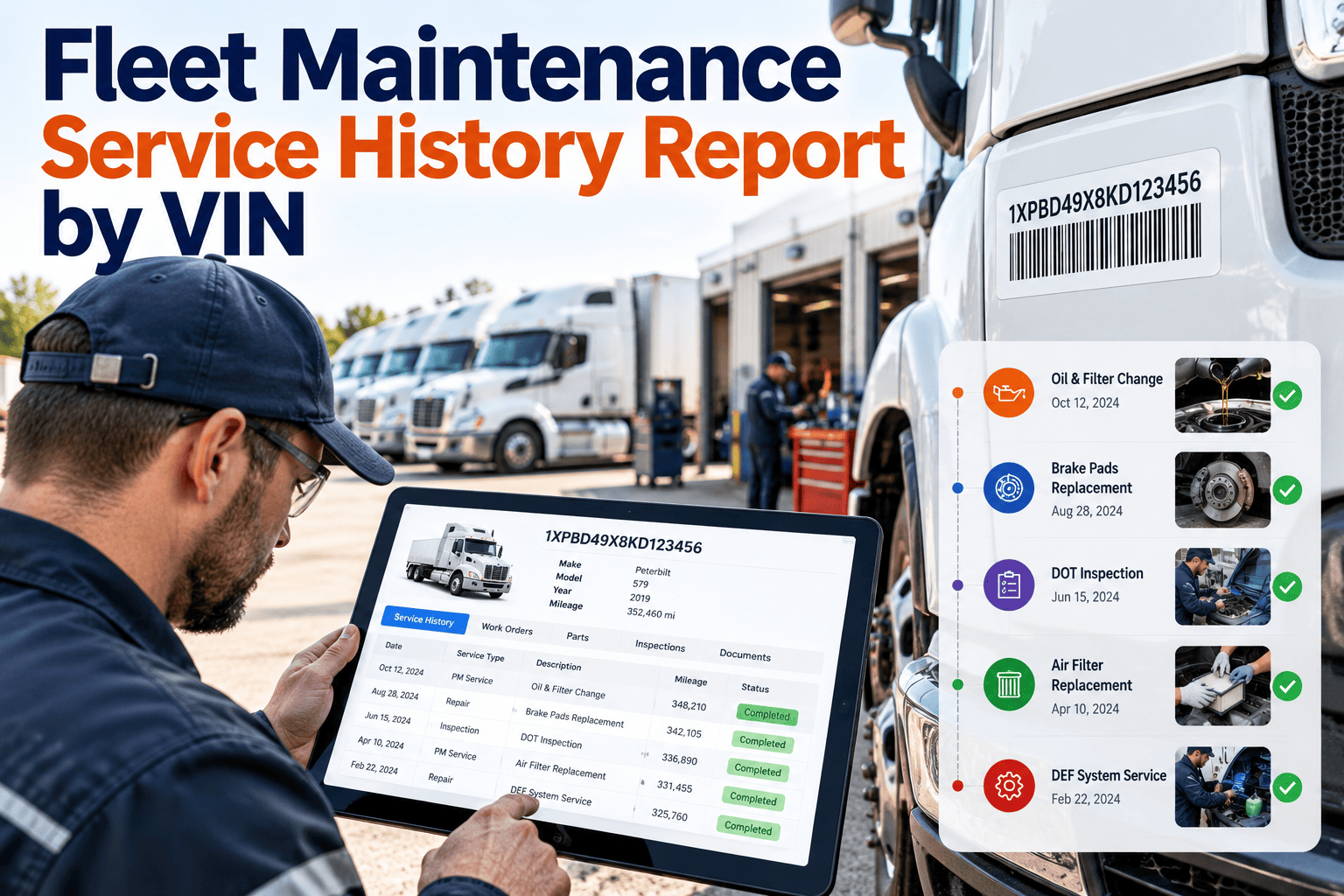
OxMaint generates service records that document interval compliance with OEM specifications — including the fluid grade used, mileage at service, and technician performing the work. For warranty claim support, OxMaint exports a driveline maintenance history report per vehicle showing every service event against the OEM-specified interval. Fleets that have experienced warranty denial due to absent service records use OxMaint's documented history to support warranty claim reinstatement.
OxMaint — Fleet Driveline Maintenance
Zero Driveline Roadside Breakdowns Starts with One PM Queue.